




Vintage French Wall Clock
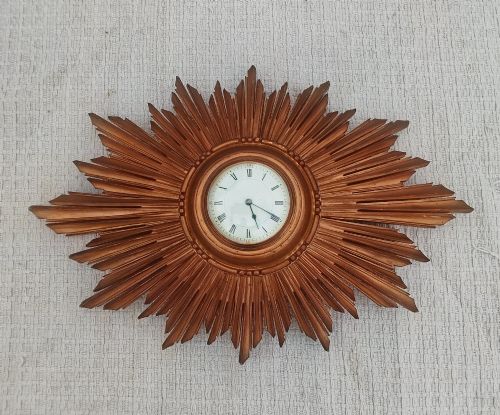
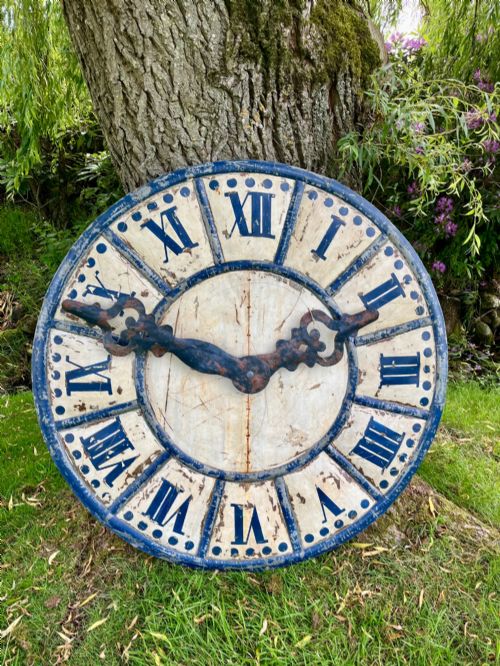
A vintage french wall clock brings architectural presence and mechanical character into a room, spanning styles from ornate gilded sunbursts to industrial iron dials.
Vintage French Wall Clock
When you search for a vintage french wall clock, you encounter a diverse group of timepieces ranging from nineteenth-century giltwood cartel designs to mid-twentieth-century walnut art deco models and stripped industrial faces.
The selections span distinct periods including the nineteenth century, eighteen-eighties, eighteen-nineties, nineteen-twenties, nineteen-thirties, nineteen-forties, and nineteen-fifties, featuring regional iterations like Morbier mechanisms and Venetian-influenced walnut pieces alongside large railway and tower dials.
Forms vary significantly beyond standard domestic wall clocks to encompass massive tower clock faces, enamel turret dials, copper clock faces, and elaborate architectural salvage pieces.
How they were made
These clocks utilise traditional cabinetry woods such as walnut, oak, and rosewood, alongside hand-carved and gilded giltwood frames shaped into sunburst, starburst, and cartel silhouettes.
Dials and mechanical housings incorporate durable metals including brass, iron, steel, and copper, paired with protective glass covers and vitreous enamel faces that display Roman or Arabic numerals.
Specialised examples integrate decorative treatments like faux tortoiseshell finishes and intricate mechanical automation systems to drive carillon chimes and striking trains.
Vintage French Wall Clock Retail Price Guide 2026
Typical asking prices for vintage french wall clock among the pieces listed under this phrase on Sellingantiques today, from the lower quarter to the upper quarter. They describe what is for sale here now, not the wider market.
Some clocks come with mysterious globes and musical carillons, proving that telling the time was once an elaborate theatrical performance.
What varies in quality
The standard of craftsmanship is defined by the depth and precision of carving in giltwood frames, the fidelity of period styling such as Louis XV or Art Deco proportions, and the integrity of original wooden cases.
Horological quality distinguishes mass-produced movements from sophisticated carillon strikes, master clock systems, and signed mechanisms by known makers that retain their original striking trains and dials.
Odo·Vedette·Charvet·Girod·Perivale of England
The Vintage French Wall Clock Glossary
- Cartel clock
- A wall-mounted clock housed in an ornate frame made of giltwood, bronze, or gilt metal, popular throughout French decorative periods.
- Sunburst clock
- A radial wall clock featuring carved wooden or gilded rays emanating from a central circular dial, also known as a starburst or burst design.
- Turret clock
- A large exterior or architectural clock face originally designed for public buildings, towers, or stations, frequently stripped down for interior display.
- Carillon
- A set of tuned bells or gongs within a clock mechanism that plays a musical melody on the hour or quarters.
- Morbier clock
- A traditional regional French longcase or wall clock originating from the Jura region, recognised for its substantial metal dial and distinct pendulum.
Vintage French Wall Clock: Frequently Asked Questions
How do I date a french wall clock?
Dating relies on stylistic clues, materials, and construction techniques visible in the case and dial. Nineteenth-century examples often feature elaborate giltwood or rosewood, whereas nineteen-thirties and forties pieces lean towards geometric art deco walnut designs.
Examining the movement, pendulum type, and enamel work provides further context regarding the manufacturing era.
What is a cartel clock?
A cartel clock is a wall-mounted timepiece housed in an ornamental frame rather than a traditional wooden box case. These decorative frames are frequently carved from wood and covered in gilt leaf or cast in gilt metal.
Originating in France, they were designed to hang directly on drawing room walls as integrated decorative art.
How do carillon clocks work?
Carillon clocks utilise an expanded mechanical train that strikes multiple gongs or bells in a specific sequence to play a tune. These movements require careful levelling and periodic adjustment to maintain correct synchronisation.
They represent a more complex evolution from standard hour-striking clocks found in domestic settings.