

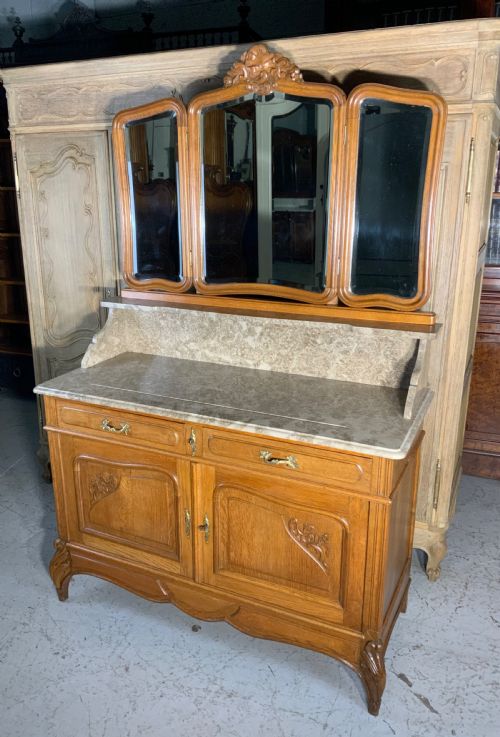
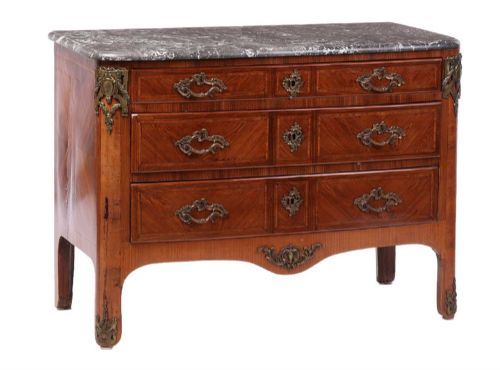
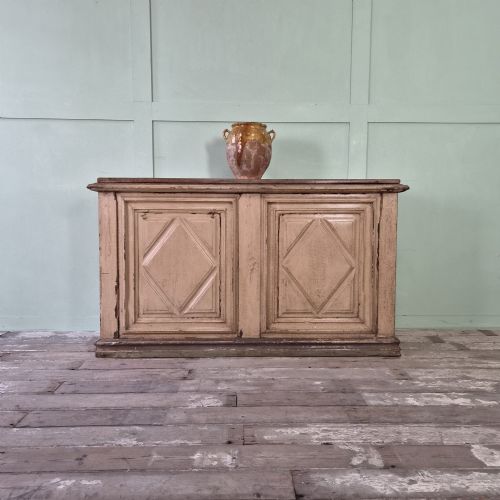
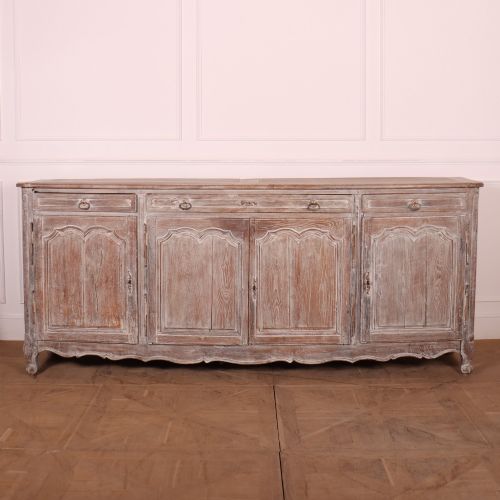
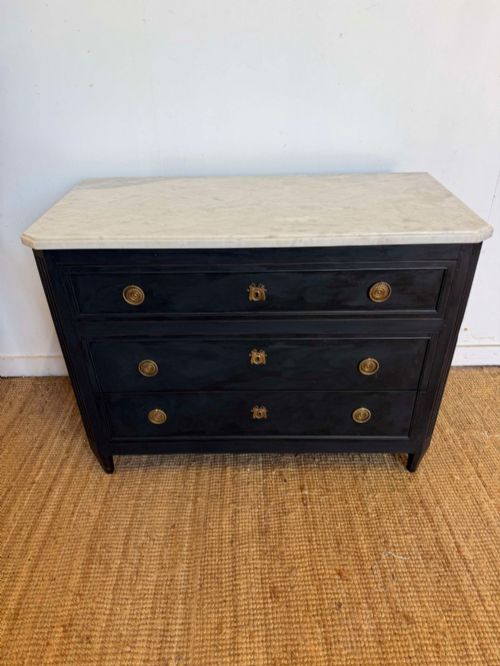
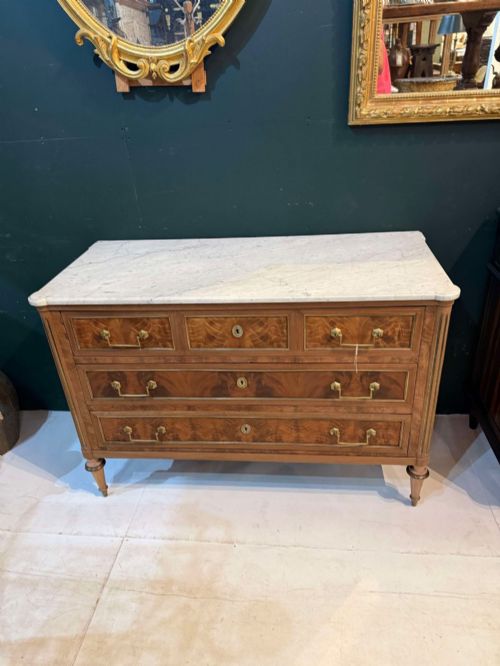
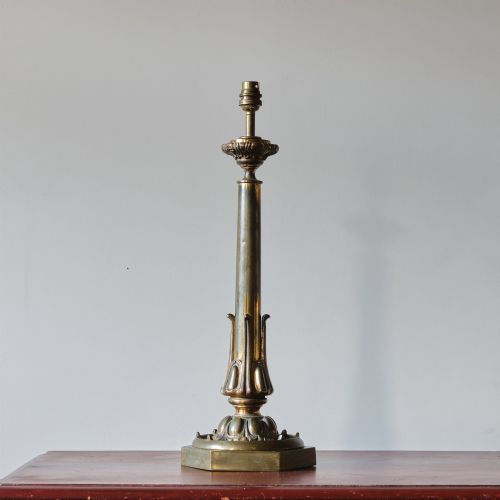
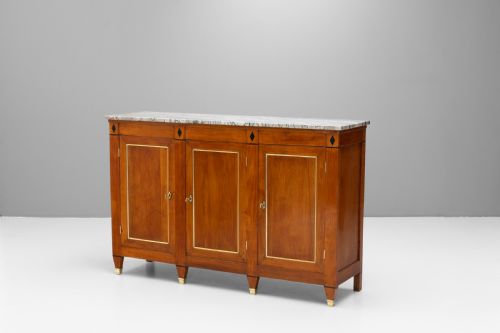
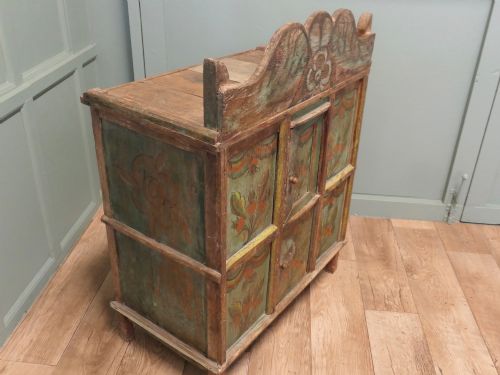
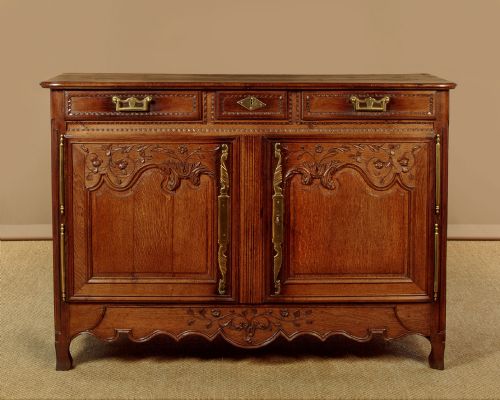
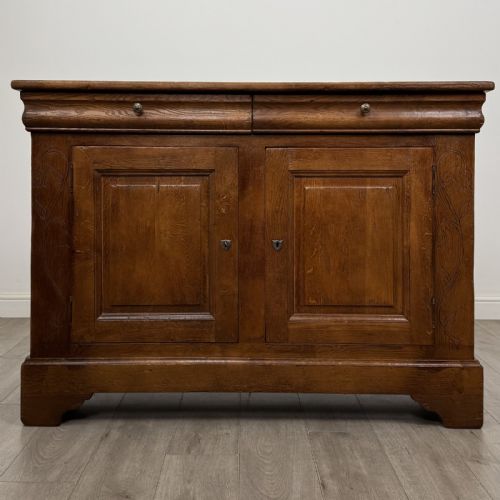
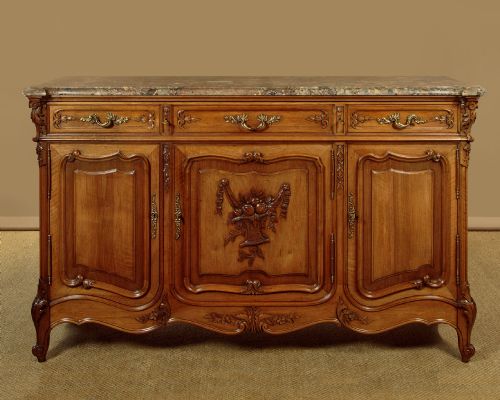
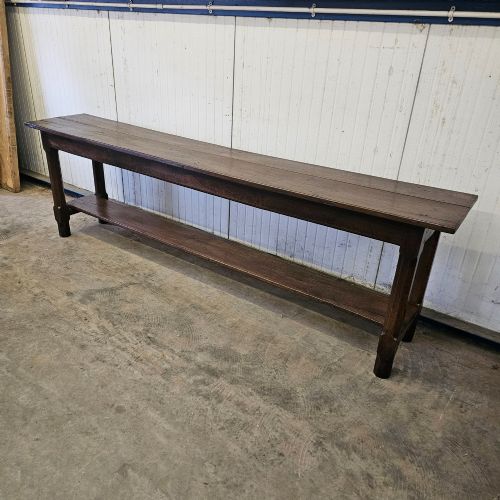
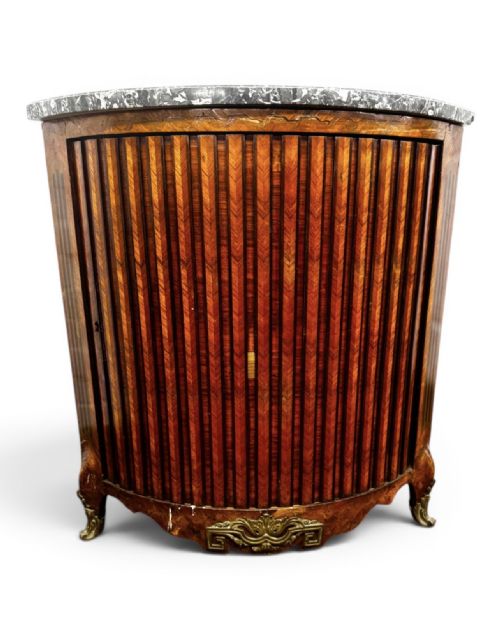
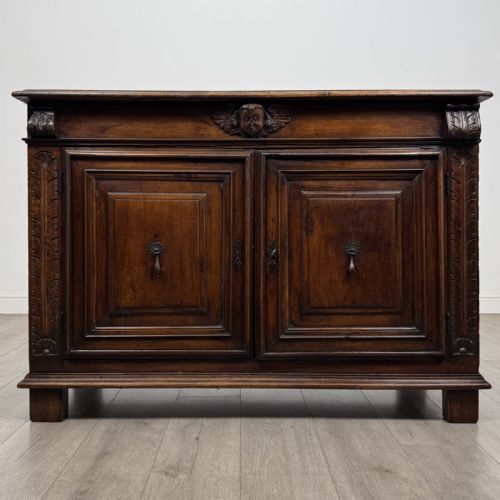
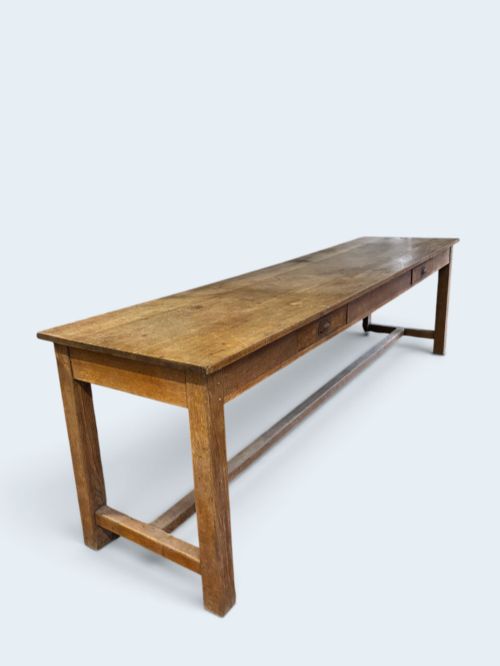
Vintage French Sideboard
A vintage french sideboard brings architectural presence and generous storage to a room, offering the timeworn character of walnut, oak, and painted finishes.
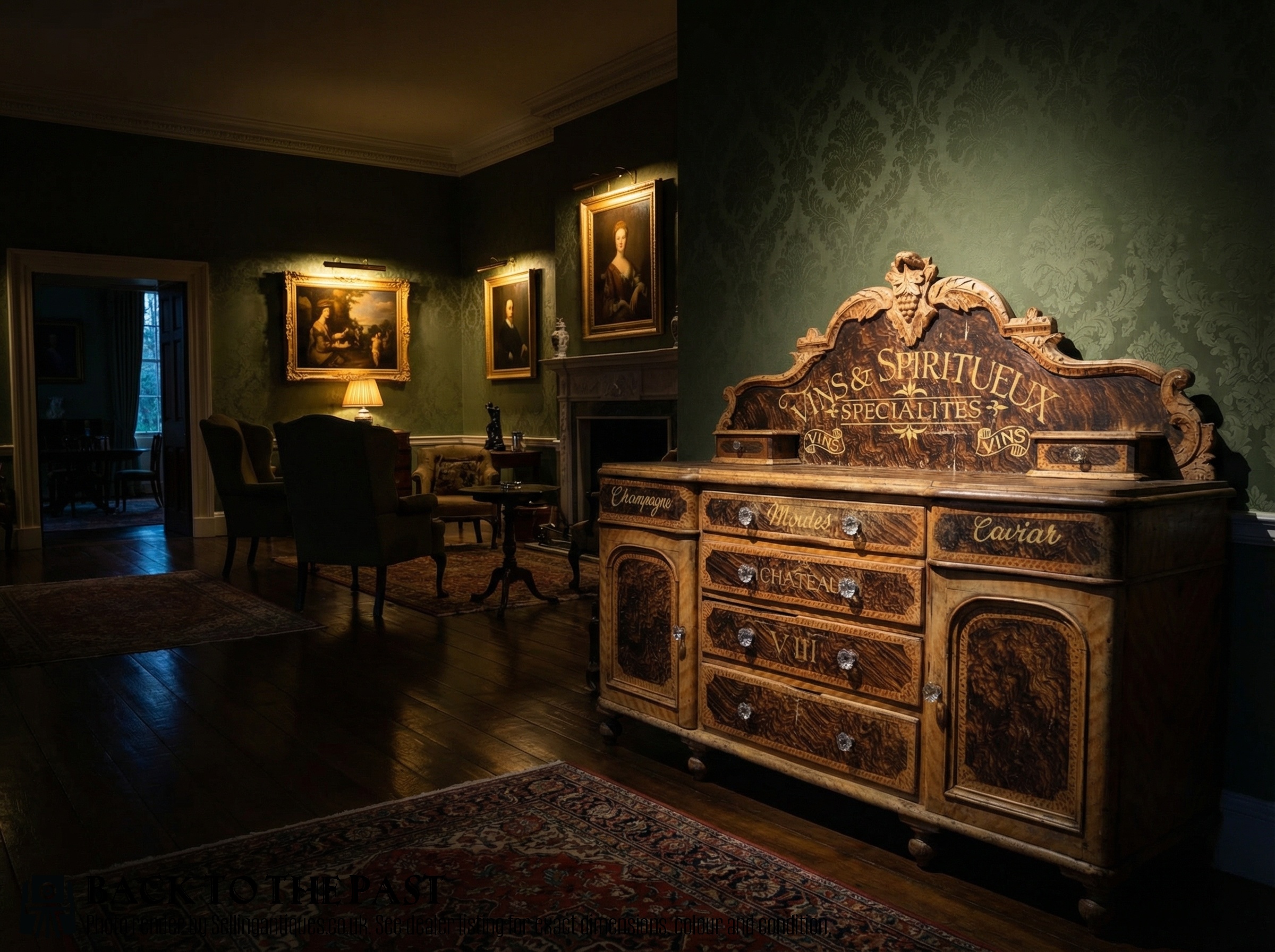
Vintage French Sideboard
When you search for a vintage french sideboard, you encounter substantial storage furniture spanning the eighteenth, nineteenth, and early twentieth centuries. These pieces encompass regional commodes, servers, and buffets built for domestic use across various French provinces.
The selections available here lean heavily toward commodes and servers shaped in Louis XV and Louis XVI styles, alongside rustic provincial forms. Oak, walnut, and pine provide the foundational carcase structures, while decorative surfaces utilise painted finishes and inlaid wood.
Makers working in these traditions created both formal chateau furniture with serpentine fronts and simpler provincial pieces. The range covers centuries of design evolution, from elaborate rococo revival curves to restrained neoclassical straight lines.
How they were made
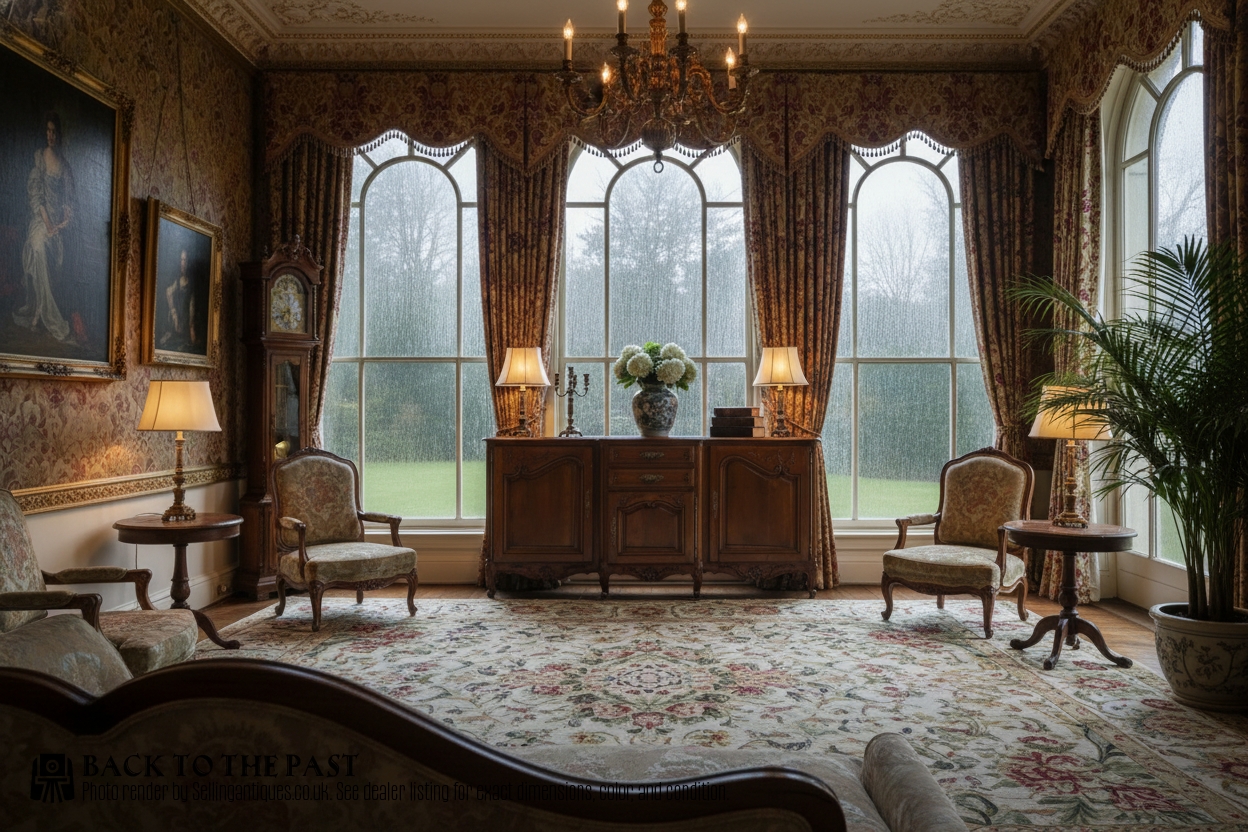
Cabinetmakers constructed these sideboards and commodes using solid hardwoods such as oak, walnut, and pine, frequently applying finer veneers like kingwood to exterior surfaces. Traditional joinery techniques secure the frames, ensuring structural longevity across generations of daily use.
Surface ornamentation relies on applied brass and ormolu mounts, intricate parquetry top designs, and inlaid wood patterns. Marble tops feature on select commodes, providing a durable and decorative working surface above the timber drawers and cupboards.
Painted finishes appear on provincial pieces, offering a softer aesthetic that complements the carved details and serpentine profiles. Metal hardware, including brass handles and escutcheons, completes the construction of each drawer and door.
Vintage French Sideboard Retail Price Guide 2026
Typical asking prices for vintage french sideboard among the pieces listed under this phrase on Sellingantiques today, from the lower quarter to the upper quarter. They describe what is for sale here now, not the wider market.
The listings span the eighteenth to the early twentieth century, incorporating walnut, oak, pine, marble, and ormolu.
What varies in quality
Quality in these pieces rests upon the precision of the timber selection and the complexity of the parquetry or inlay work. Superior examples display seamless matching of wood grains across drawer fronts and harmonious proportions in their serpentine shapes.
The refinement of the carving and the weight of the bronze or ormolu mounts distinguish standard provincial output from high-status chateau furniture. Hand-chiselled mounts and crisp joinery indicate a workshop of superior skill.
Condition of the original marble tops, where fitted, and the integrity of the underlying timber carcase dictate the enduring value of the piece. Untouched patination on the walnut and oak surfaces holds greater appeal than over-restored exteriors.
The Vintage French Sideboard Glossary
- Commode
- A low chest of drawers or sideboard, typically featuring two or more drawers and originating in French domestic interiors.
- Ormolu
- Gilded bronze ornamentation applied to furniture as mounts, feet, and keyhole escutcheons during the eighteenth and nineteenth centuries.
- Parquetry
- Geometric patterns constructed from small pieces of wood veneer, commonly arranged on the top surfaces of tables and sideboards.
- Serpentine
- A furniture front or surface design featuring a wavy line with a convex centre flanked by concave curves.
- Kingwood
- A dense, richly figured tropical timber utilised extensively for high-end veneer work and inlay across French cabinetmaking.
Vintage French Sideboard: Frequently Asked Questions
What is a french commode?
A French commode is a low chest of drawers or cabinet designed for storage, frequently featuring decorative hardware and shaped fronts.
These pieces served functional purposes in bedrooms and reception rooms across centuries of domestic life.
How do I identify louis xv style?
Louis XV style furniture is characterised by asymmetrical curves, cabriole legs, and elaborate rococo botanical carving.
Sideboards and commodes from this tradition avoid straight lines in favour of fluid, organic silhouettes.
Where were sideboards used?
Sideboards and buffets found their primary placement in dining rooms and grand hallways for serving food and storing tableware.
Smaller commode variations were positioned in bedrooms and salons to hold personal items and linens.
How do I care for antique timber?
Protect antique walnut and oak surfaces by avoiding direct sunlight and maintaining stable indoor humidity levels.
Apply traditional beeswax periodically to nourish the wood and preserve the natural patination.
What is parquetry?
Parquetry is a woodworking technique where small geometric wooden tiles are fitted together to create decorative patterns.
On these sideboards, parquetry appears most frequently on the top surfaces to showcase contrasting timber colours.