


Vintage French Glass Dish
These vintage french glass dish selections bring decorative bowls, plates, and centrepieces spanning the nineteenth century through the art deco period into your home.
Vintage French Glass Dish
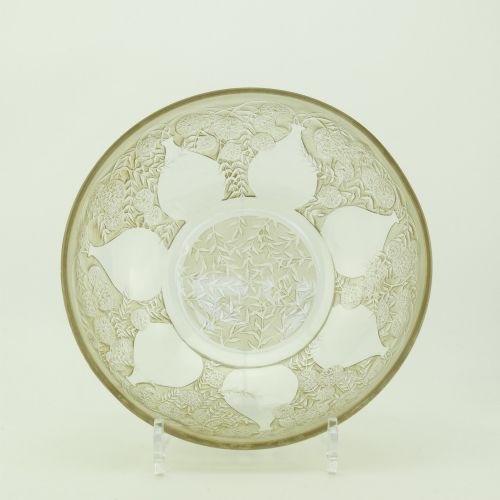
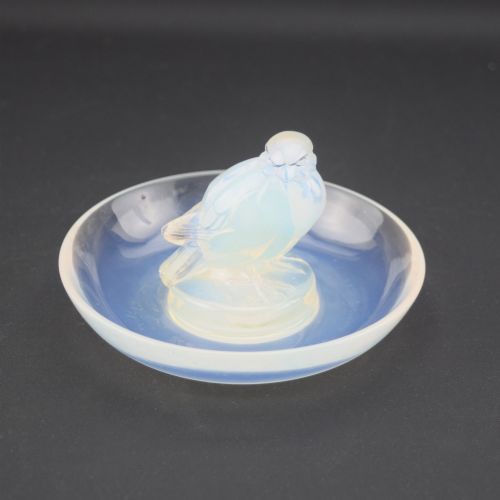
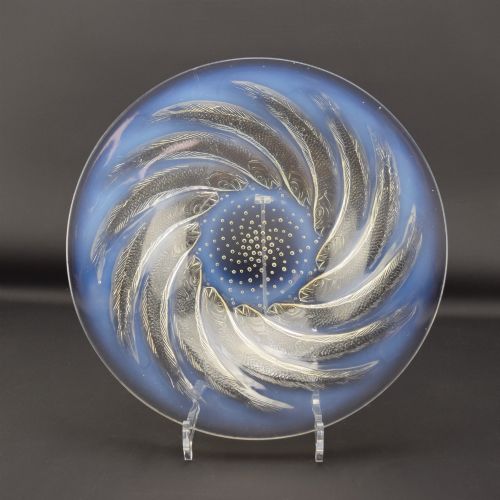
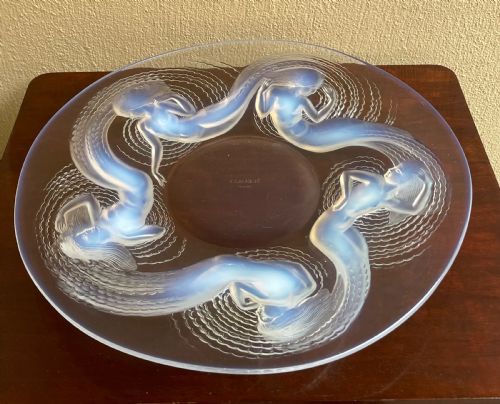
A vintage french glass dish encompasses decorative bowls, plates, and shallow vessels originating from workshops and makers across France during periods ranging from the Victorian era to the nineteen-thirties. You will frequently encounter opalescent glass, moulded glass, and crystal pieces shaped into floral or animal motifs characteristic of the art nouveau and art deco movements.
The selections on this page bridge utilitarian tablewares and pure display items, including ashtrays, pin dishes, and large chargers designed to catch the light. Forms vary from simple scalloped shells in opaline glass to complex bowls featuring sepia staining or enamel decoration.
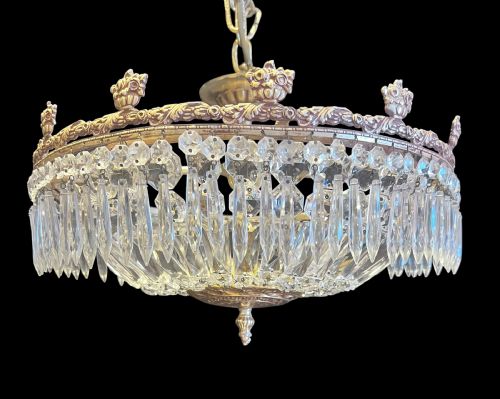
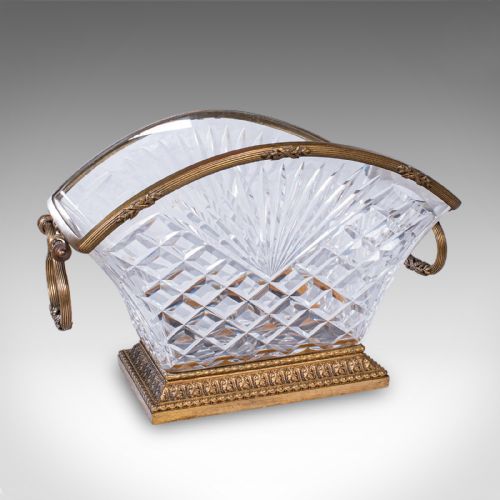
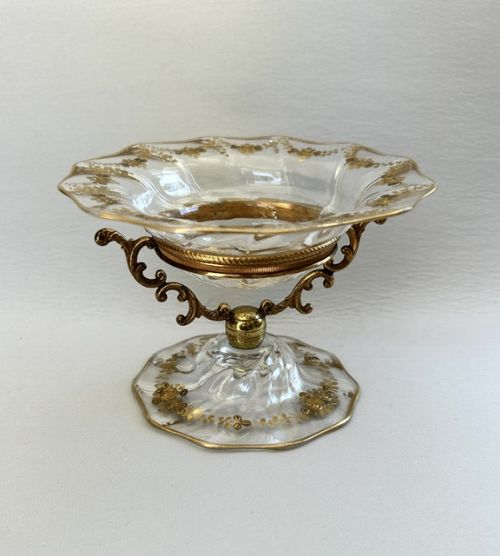
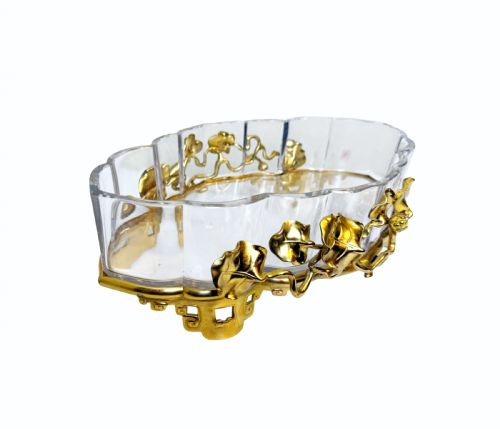
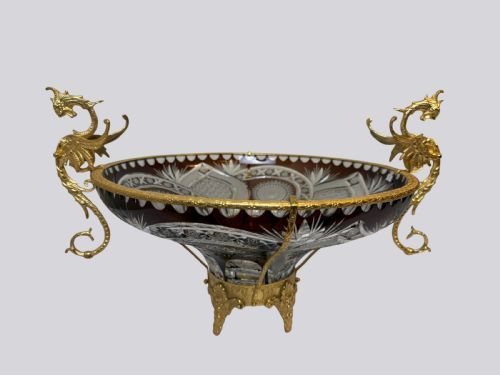
Earlier nineteenth-century examples often incorporate gilt bronze, ormolu stands, or brass mountings alongside cut glass, reflecting french empire and rococo revival tastes. By the early twentieth century, moulded and pressed techniques dominated production, yielding tactile surfaces with high relief.
Materials and production methods
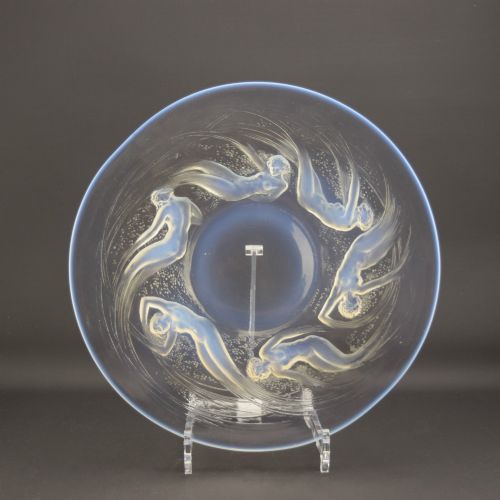
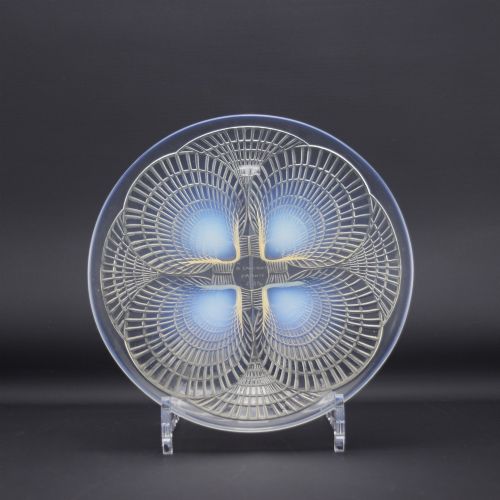
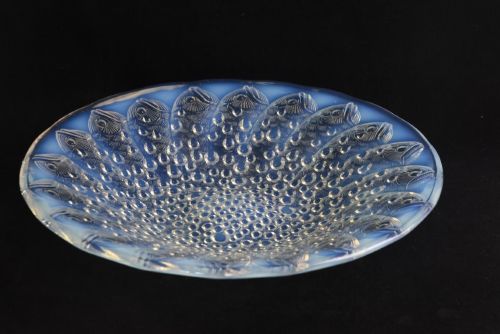
Makers utilised pressed, moulded, and cut glass techniques to achieve varying degrees of opacity, clarity, and relief texture. Opalescent glass required specific chemical additions during melting to produce characteristic milky blue and amber shifts when turned in the light.
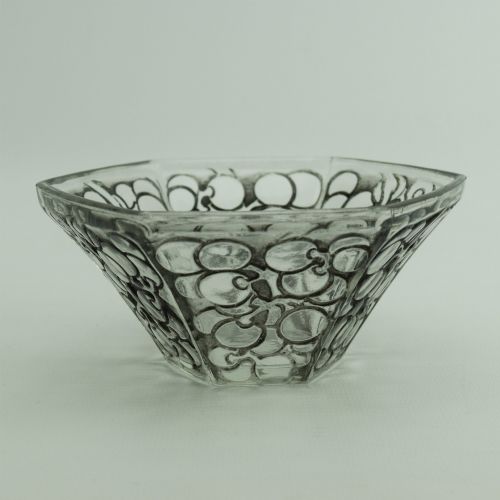
Many decorative vessels incorporate patination, sepia staining, or enamel decoration applied to recessed details of the glass design to accentuate the motifs. Mountings in ormolu, gilt bronze, and brass were cast separately and fitted to hold the glass securely.
Several dishes depict racing hounds chasing hares across art deco glass plates.
Distinguishing quality across pieces
Quality depends upon the crispness of the mould relief and the depth of the opalescent or coloured glass body. Finer examples display sharp definition in pressed or moulded floral and figural motifs without blurring at the edges.
The integration of secondary materials such as gilt bronze frames, ormolu stands, and hand-applied enamel work separates standard production vessels from more ambitious works. Preservation of original patination, staining, and maker signatures adds to the integrity of the piece.
Rene Lalique·Daum France·St Louis glassworks·Baccarat·G Vallon·Etling
The Vintage French Glass Dish Glossary
- Opalescent glass
- Glass containing agents that cause it to milky-white or bluish appearance when viewed by transmitted light and yellowish-brown by reflected light. This optical property defines many twentieth-century decorative bowls.
- Pâte de verre
- A glass-casting method where finely crushed glass is mixed with a binder, packed into a mould, and fused in a kiln. This technique produces dense, softly textured objects with mottled colour.
- Ormolu
- Gilded brass or bronze used as mounts and stands for decorative vessels. It provides a warm metallic contrast to clear or coloured glass elements.
- Latticinio
- Glassware decorated with fine opaque white or coloured threads embedded in the clear glass matrix. It appears in traditional sugar bowls and decorative tablewares.
- Plafonnier
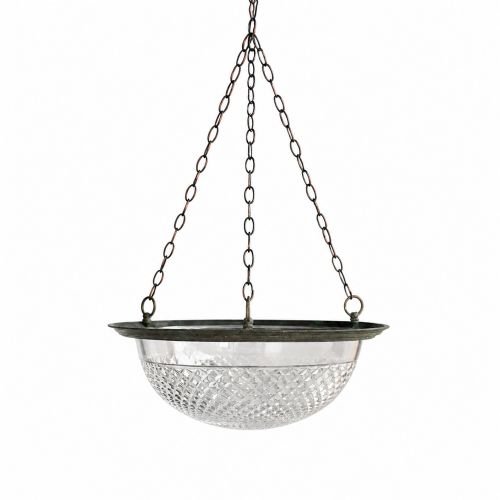
- A ceiling-mounted glass bowl or shade designed to diffuse light. These fixtures often utilise moulded or frosted glass plates held by metal hardware.
Vintage French Glass Dish: Frequently Asked Questions
Were these dishes meant for food or display?
Most decorative bowls, pin dishes, and chargers served both functional and aesthetic purposes in period interiors. Shallow dishes held calling cards, sweets, or small trinkets on tables and mantelpieces.
Larger pieces functioned as centrepieces or serving vessels. Many surviving examples are collected primarily for their sculptural glass designs.
How can I tell art deco pieces from earlier styles?
Art deco designs from the nineteen-twenties and nineteen-thirties favour stylised symmetry, geometric patterns, and bold animal or floral reliefs. These often utilise opalescent or frosted glass moulded with deep textures.
Earlier Victorian and nineteenth-century items tend to incorporate heavy cut glass, elaborate gilt bronze frames, and revivalist motifs drawn from rococo or empire styles.
What causes the milky blue effect in opalescent glass?
The milky blue effect results from the precise formulation of chemical compounds added to the molten glass batch. When exposed to light, these suspended particles scatter shorter wavelengths, creating the characteristic opalescence.
This optical quality was mastered by twentieth-century french glasshouses to highlight moulded reliefs on bowls and plates.