


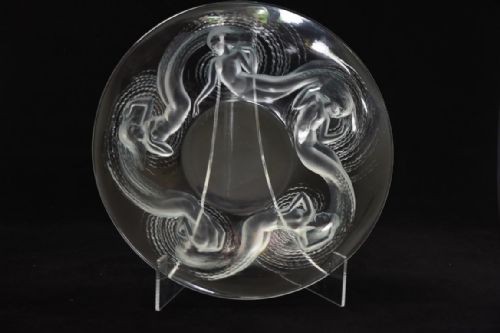


Art Deco Glass Coupe
An art deco glass coupe brings tactile geometry and light to a table, combining pressed or blown forms with the signature motifs of the period.
Art Deco Glass Coupe
When searching for an art deco glass coupe, buyers encounter a specific range of shallow vessels designed for champagne, desserts, or display. These pieces span the 1920s and 1930s, alongside Edwardian examples, capturing the transition toward modernist symmetry.
Originating largely from French workshops and British makers, these vessels showcase the characteristic breadth of interwar table glass. The most common survivals combine functional shallow bowls with thick stems or footed bases.
Materials and methods
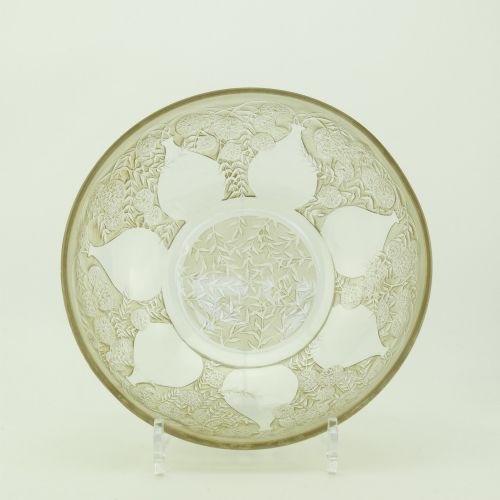
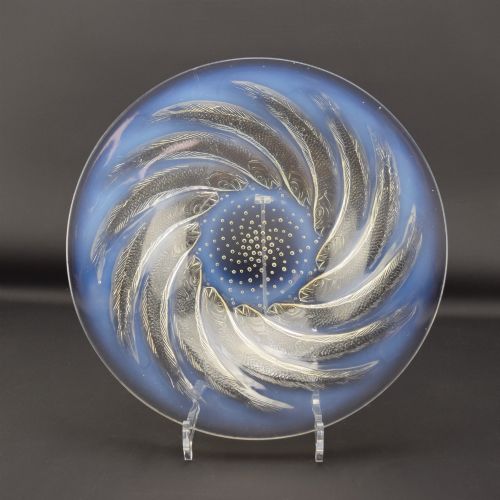
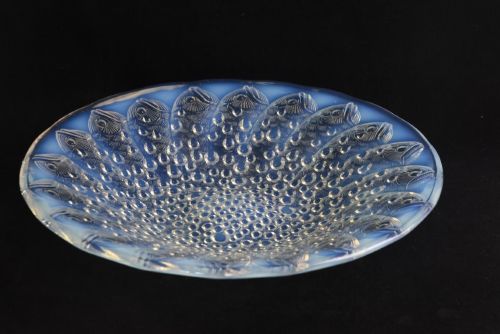
Makers shaped these vessels using clear, frosted, and opalescent glass, occasionally augmenting the surface with gold leaf or pairing the glass body with sterling silver mounts and liners. Opalescent glass relies on chemical additives during melting to produce a milky, shifting blue or amber iridescence under changing light.
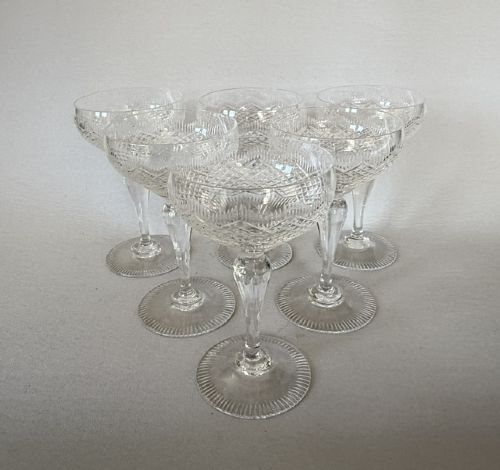
Moulding and pressing techniques allowed workshops to achieve deep relief patterns, such as repeating fish, flower heads, and stylized feathers. Cut glass examples instead depend on wheel-engraved facets to catch the light across champagne bowls and dessert dishes.
Art Deco Glass Coupe Retail Price Guide 2026
Typical asking prices for art deco glass coupe among the pieces listed under this phrase on Sellingantiques today, from the lower quarter to the upper quarter. They describe what is for sale here now, not the wider market.
Several designs feature schools of moulded glass fish swimming in concentric circles around the base of the bowl.
Assessing quality and execution
Quality in these vessels rests upon the crispness of the moulded relief and the depth of the opalescence. Superior examples exhibit sharp detail in complex motifs like fish or flora, whereas lesser pieces show soft edges and uneven glass distribution.
The weight of the metal components and the precision of the glass cutting determine the distinction at the upper end of the range. Finished pieces with integrated sterling silver mounts or finely polished pontil marks demonstrate greater care in the final workshop stages.
Rene Lalique·Viners
The Art Deco Glass Coupe Glossary
- Coupe
- A shallow, broad-rimmed vessel traditionally used for champagne or desserts. Its wide bowl allows the aromas of sparkling wine to release quickly.
- Opalescent Glass
- Glass that appears milky or translucent with a pearlescent play of colour. The effect shifts depending on whether light passes through or reflects off the surface.
- Comport
- A raised decorative dish or bowl standing on a foot or pedestal. These pieces typically sit centrally on a dining table for fruit or sweetmeats.
- Frosted Glass
- Glass treated to create a textured, matte surface resembling ice. This finish was frequently used to highlight raised decorative motifs against clear backgrounds.
Art Deco Glass Coupe: Frequently Asked Questions
What is an art deco glass coupe used for?
These shallow vessels served primarily for serving champagne or structured desserts during interwar dinner parties. Their wide aperture was specifically designed for sparkling wines before the flute gained preference.
Today, collectors use them for modern dining or display them as decorative objects on sideboards and tables.
How do I date an art deco glass coupe?
Dating relies on stylistic markers, maker signatures, and the specific manufacturing techniques recorded across the 1920s and 1930s. Pieces from this era often feature geometric relief or characteristic opalescent finishes.
Comparing the rim thickness and base markings against documented workshop catalogues helps establish the precise production decade.
How do opalescent coupes differ from clear glass?
Opalescent glass incorporates specific mineral agents during the melting process to scatter light, creating a characteristic milky blue glow. Clear glass remains transparent and relies entirely on surface cutting or form for visual impact.
Both styles emerged from the same decorative movements but offer distinctly different optical qualities in domestic lighting.