



Moulded Glass Centrepiece
A moulded glass centrepiece brings striking form and texture to a dining table, combining pressed and frosted techniques from the Art Deco and Victorian eras.
Moulded Glass Centrepiece
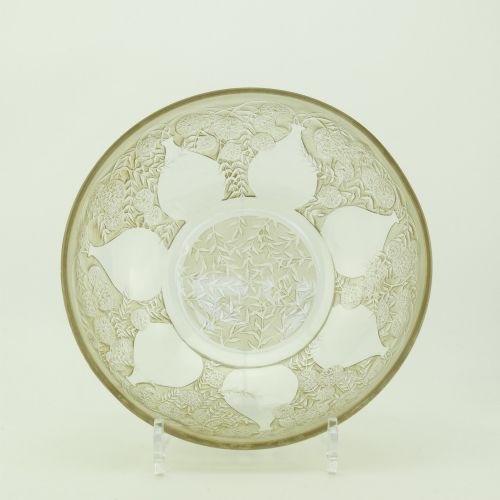
A moulded glass centrepiece serves as a striking focal point for a table or sideboard, taking the form of large bowls, shallow chargers, footed vessels, and decorative plates. When exploring a moulded glass centrepiece on this page, buyers encounter significant examples spanning the Victorian period through to the 1930s.
The selection ranges from expansive open bowls to substantial vases and salvers, capturing distinct stylistic shifts. Art Deco creations dominate the selection alongside Victorian and Art Nouveau pieces, reflecting diverse tastes in domestic display.
How they were made
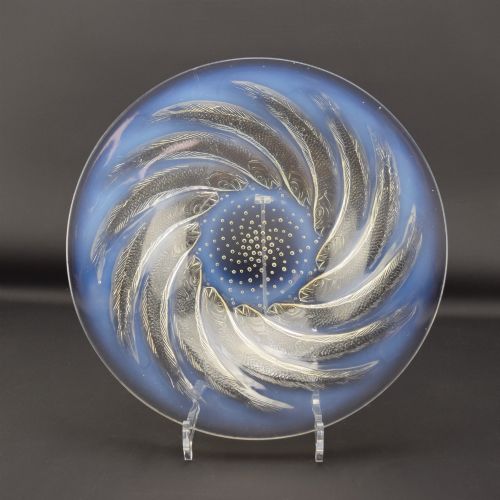
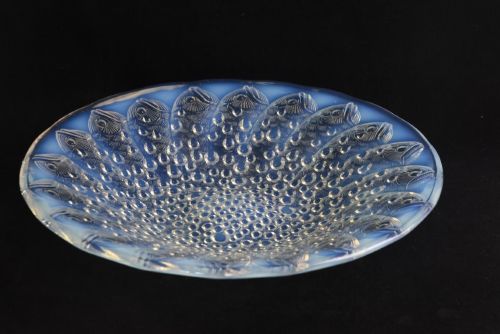
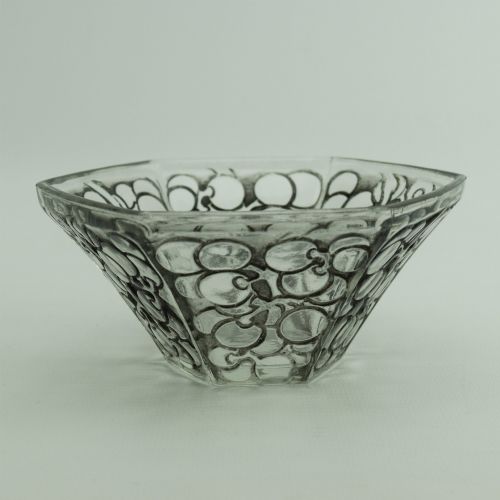
These items utilise moulded glass, pressed glass, and crystal, often enhanced by frosted, opalescent, amber, or grey stained finishes. Molten material is shaped in metal or iron moulds to achieve intricate relief decoration and dimensional depth across bowls and chargers.
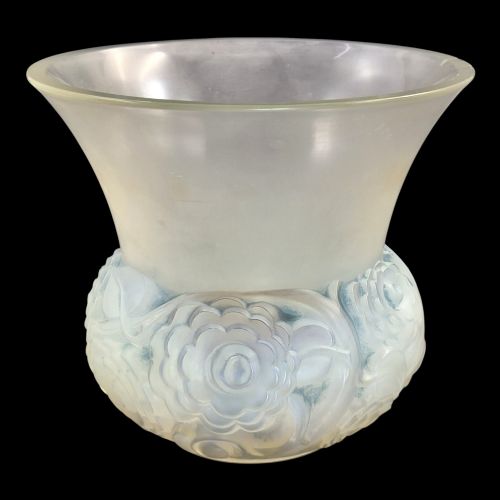
Makers employ specialised techniques to create the characteristic milk-blue opalescence and contrasting surface textures seen on the glass. Silver-plated mounts occasionally complement the glass components, particularly on complex candelabra and multi-branch table pieces.
Moulded Glass Centrepiece Retail Price Guide 2026
Typical asking prices for moulded glass centrepiece among the pieces listed under this phrase on Sellingantiques today, from the lower quarter to the upper quarter. They describe what is for sale here now, not the wider market.
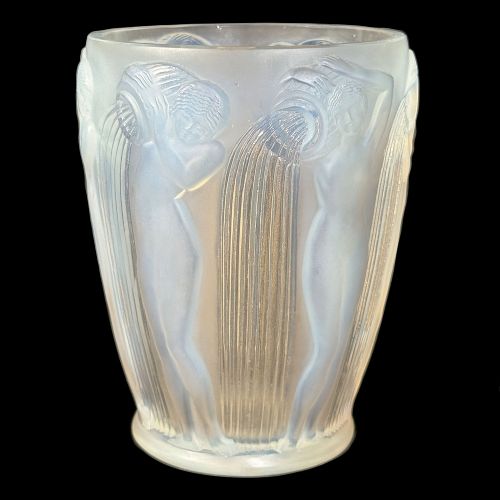
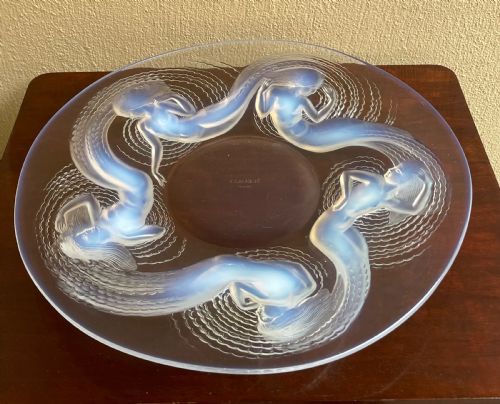
Several pieces feature water carriers and sirens swimming permanently frozen in cloudy opalescent waves.
What varies in quality
The distinction between tiers rests on the crispness of the moulded relief and the depth of the opalescent effect within the glass. Superior examples display precise botanical or figural details, where the play of light through the frosted and clear surfaces is most pronounced.
Design complexity and the handling of coloured stains, such as grey enamelling or amber hues, further differentiate the pieces. Stronger artistic execution in the floral and aquatic motifs elevates an object from a standard vessel to a significant decorative work.
Rene Lalique·JOBLING·Etling
The Moulded Glass Centrepiece Glossary
- Opalescent Glass
- Glass that exhibits a milky, bluish haze when lit from the front and an amber glow when lit from behind. This optical effect results from the controlled cooling and chemical composition of the material.
- Coupe Ouverte
- An open bowl shape frequently utilised for large table centrepieces and decorative displays. These wide vessels showcase expansive moulded reliefs across their interior bases and flaring walls.
- Salver
- A flat or shallow serving vessel, often mounted or footed, used to display decorative objects. In glasswork, these pieces function primarily as central table adornments.
- Vaseline
- A type of yellowish-green glass coloured with uranium oxide that glows brightly under ultraviolet light. It appears frequently in pieces from the Art Deco period.
- Frosted Glass
- Glass with a textured, scatter-reflective surface achieved by acid etching or sandblasting. This finish accentuates the sculptural relief of floral and figurative designs.
Moulded Glass Centrepiece: Frequently Asked Questions
How were these bowls used historically?
These large bowls and chargers served primarily as ornamental centrepieces for dining tables and sideboards during formal meals. Their wide, shallow basins were sometimes left empty to display the intricate bottom reliefs or filled with floating flowers.
They functioned as status symbols in domestic interiors, particularly during the Art Deco period when dining room aesthetics emphasised coordinated glass and silver table settings.
How do I identify Art Deco pieces?
Art Deco pieces typically feature stylised floral motifs, geometric symmetry, and bold figural reliefs such as water carriers or sirens. The glass often incorporates opalescent finishes, amber tones, or grey staining to highlight the crispness of the moulded design.
These works date predominantly from the 1920s and 1930s, contrasting sharply with the more flowing, organic curves of earlier Victorian and Art Nouveau styles.
How should I display opalescent glass?
Opalescent glass requires thoughtful lighting to reveal its dual colour properties, as it shifts between milky blue and warm amber tones depending on the light source. Placing the vessel near a window or under a directed spotlight accentuates the translucent qualities and the depth of the relief.
Keep the surrounding surface uncluttered to allow the intricate moulded details and frosted textures to remain the primary focus of the display.