



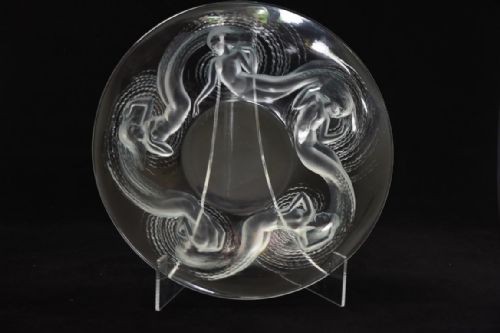


Art Deco Glass Platter
An art deco glass platter brings geometric punch and period glamour to a table, combining moulded forms with mirrored surfaces from the interwar years.
What an art deco glass platter is
When you search for an art deco glass platter, you find serving trays, decorative plates, salvers, and drinks trays produced primarily around nineteen thirty and nineteen twenty. These pieces serve functional and display roles, often incorporating chrome mounts or mirrored bases alongside moulded glass.
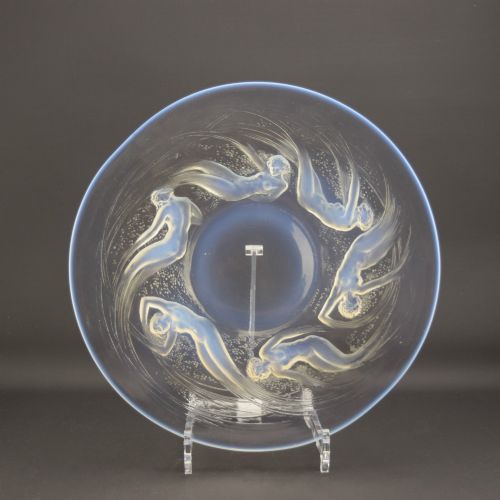
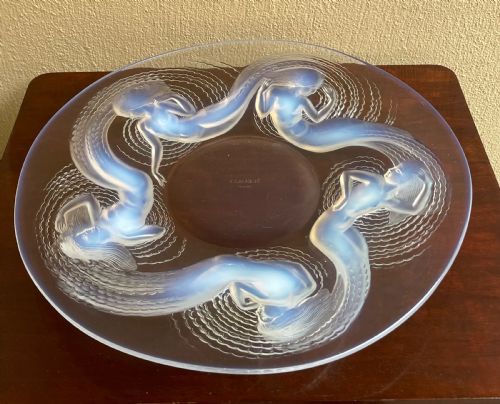
The objects span domestic barware, novelty designs depicting figures such as Charlie Chaplin, and animal motifs like the Chasse Chiens plate or the Sirène salver. Most items on this page align with the nineteen thirty period, showing the characteristic bold styling of the era.
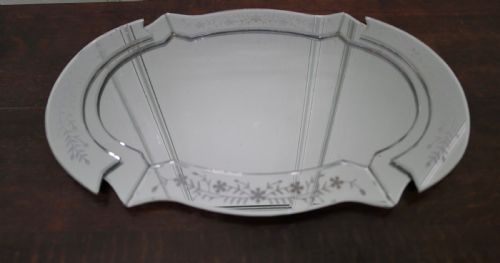
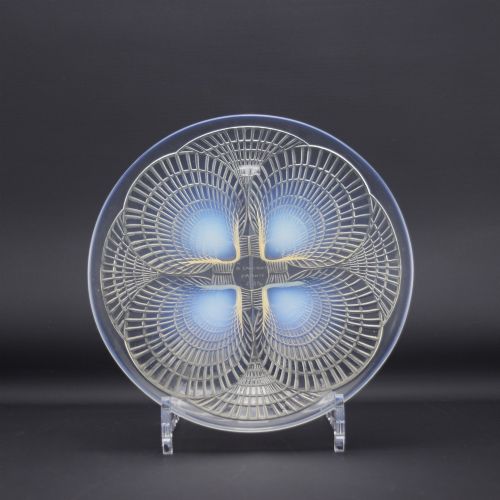
Venetian cut glass mirror trays and French opalescent vessels sit alongside moulded glass bowls and serving dishes. Each form demonstrates the transition from earlier styles into the sharp lines and decorative themes of the interwar decades.
Materials and techniques
Makers utilised clear glass, frosted glass, and opalescent glass, occasionally applying sepia stain to highlight relief details and figures. Mirror plates provide reflective bases for drinks trays, while chrome frames and handles complete the construction.
Moulded glass techniques allowed workshops to produce complex figurative scenes and geometric borders in high volume. Venetian cutting methods delivered crisp facets on mirror glass trays, pairing heavy glass components with polished metal mounts.
Retail Price Guide 2026
Typical UK retail prices for art deco glass platter, calculated from the Sellingantiques database of over a million retail prices indexed since 2003. This retail price guide relies exclusively on Sellingantiques data; no external sources or auction records are used, so the figures do not describe the wider market.
What separates the best pieces
Execution of the moulded detail distinguishes master production from standard wares, particularly in the crispness of figurative reliefs like animal and human subjects. The depth of opalescence and the controlled application of sepia stain add visual complexity that elevates certain examples above plain clear glass.
The integration of materials determines the structural integrity and finish of a piece. Heavy chrome mounts and well-preserved Venetian mirror plates demonstrate superior original manufacturing standards compared to simpler pressed glass alternatives.
René Lalique
The Art Deco Glass Platter Glossary
- Opalescent glass
- Glass that displays a milky, translucent appearance with shifting iridescent tones, often catching light in pale blues and ambers. This effect is achieved through chemical additives during the melting process.
- Sepia stain
- A dark brownish pigment applied to moulded glass recesses to accentuate relief carvings and figures. It provides contrast against frosted or clear surfaces.
- Frosted glass
- Glass rendered opaque through acid etching or sandblasting to create a matte finish. This texture diffuses light and highlights carved details.
- Moulded glass
- Glass shaped by being pressed into a metal or wooden form while molten. This technique enables mass production of complex decorative patterns.
Frequently Asked Questions
How do I clean an art deco glass platter?
Wash these pieces gently by hand using lukewarm water and mild soap, avoiding abrasive pads that can scratch mirrored backs or frosted surfaces.
Dry them immediately with a soft cloth to prevent water spots, particularly around chrome mounts and cut glass edges.
Can I use these trays for serving drinks?
Mirrored drinks trays and glass serving dishes were originally designed for entertaining and function well for light service today. Ensure you lift them by their intended handles or frames rather than the glass edges alone.
Take care with moisture pooling on older mirror backings to preserve the reflective silvering beneath.
What is the difference between opalescent and frosted glass?
Opalescent glass contains chemical agents that create a milky, shifting colour effect across the surface, often glowing differently under varied light. Frosted glass has a uniform matte texture produced by mechanical or chemical etching.
Both finishes were used during the nineteen twenties and nineteen thirties to create contrast with clear glass elements.
How do I identify nineteen thirties glass pieces?
Look for characteristic geometric motifs, stylised figurative subjects, and the combination of moulded glass with chrome or mirror components. The manufacturing techniques and subject matter reflect the design priorities of the interwar period.
Consult signatures or moulded marks where present to confirm specific makers and production dates.