
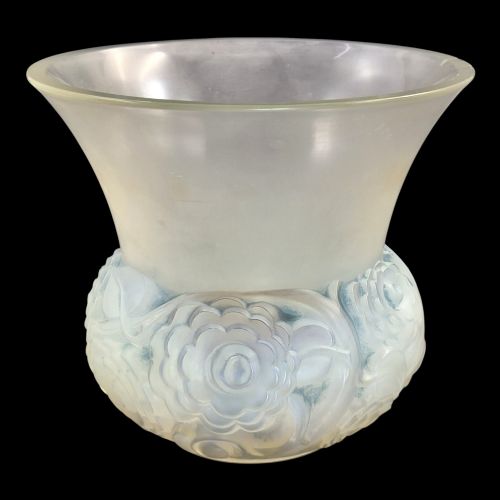
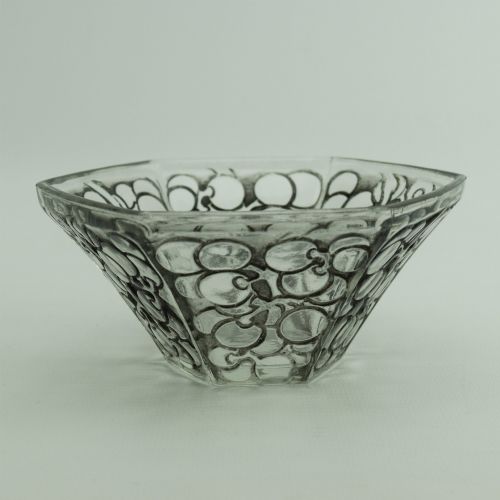


Frosted Glass Bowl
These frosted glass bowls bring a tactile, diffused quality to table settings and interiors, capturing light with a soft, opaque finish.

What frosted glass bowls are
A frosted glass bowl is a decorative or functional vessel shaped from glass treated to create a non-reflective, matte surface. The selection spans distinct eras, moving from the decorative cut details of the Victorian period through the fluid lines of Art Nouveau and into the geometric symmetry of Art Deco.
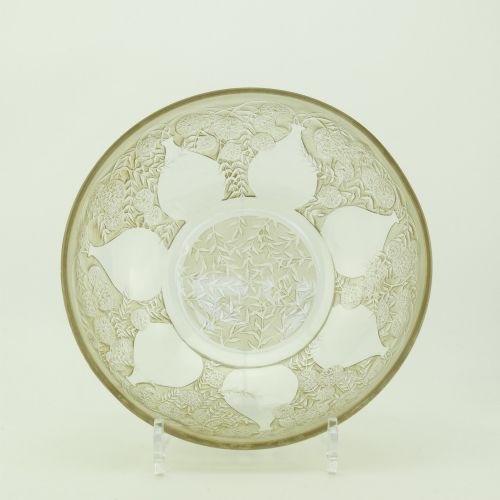
You are most likely to encounter pieces from the early twentieth century alongside mid-nineteenth-century examples. Forms range from heavy pedestal fruit vessels and decorative table bowls to matched pairs of finger bowls and specialised opalescent designs featuring raised fruit motifs.
Origins represented in these listings include British and French workshops, encompassing both individual master designers and prominent silversmith collaborations that integrated glass liners into metal frames. Each piece balances utility with sculptural presence, functioning equally as a container or a standalone display item.
How they were made
Makers achieved the characteristic matte texture of a frosted glass bowl through mechanical abrasion such as sandblasting or acid etching, which pitted the transparent surface to scatter light. These techniques were frequently combined with mould-pressed production methods, allowing complex three-dimensional fruit and floral motifs to emerge directly from the heated metal form.
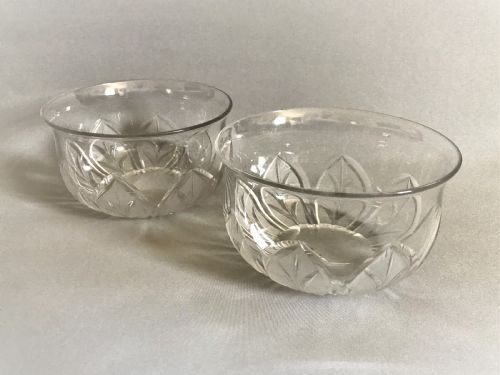
Certain twentieth-century pieces incorporated additional surface treatments, applying grey stain, enamel highlights, or patination to accentuate the moulded details in the glass. Victorian examples often relied on a combination of wheel-cutting and frosting, leaving polished clear panels to contrast directly with the opaque textured areas.
Retail Price Guide 2026
Typical UK retail prices for frosted glass bowl, calculated from the Sellingantiques database of over a million retail prices indexed since 2003. This retail price guide relies exclusively on Sellingantiques data; no external sources or auction records are used, so the figures do not describe the wider market.
The listings here span four distinct decades, moving from Victorian cut designs to Art Deco opalescent and enameled forms.
What varies in quality
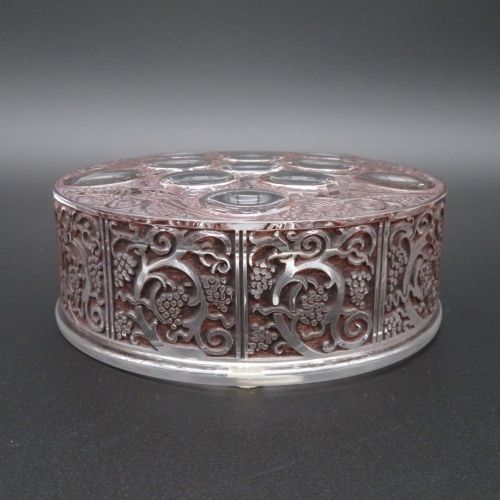
The distinction between ordinary and exceptional work rests on the crispness of the mould relief and the intentionality of the surface finish. In finer pieces, acid etching or staining is meticulously controlled to define shadows and contours within naturalistic designs like cherries or grapes, rather than resting uniformly across the surface.
Material choice and handling also dictate standing, with opalescent and patinated variants demonstrating a more complex interaction with ambient light than standard monochrome versions. The integration of maker signatures or firm marks adds documentary weight, while the precision of any secondary cut or polished elements reveals the underlying discipline of the workshop.
Rene Lalique·G Vallon·Mappin And Webb
The Frosted Glass Bowl Glossary
- Opalescent glass
- Glass that displays a milky, translucent quality with shifting blue or amber tones when viewed under different lights. This effect occurs through the addition of specific chemical agents during the melting process.
- Patinated glass
- Glass treated with applied pigments or stains rubbed into recessed areas to create contrast and depth. This technique highlights moulded details in decorative vessels.
- Finger bowl
- A small bowl filled with water, placed before a diner between courses to rinse the fingers. Victorian examples often featured heavy cut and frosted surfaces.
- Pressed glass
- Glass shaped by being pressed into a metal mould using a plunger. This method allowed for the rapid production of complex patterns and raised motifs.
- Enamel
- A decorative vitreous composition fused to the surface of the glass through firing. It adds permanent colour and opaque detail to specific design elements.
Frequently Asked Questions
How do I clean a frosted glass bowl?
Wash the vessel gently by hand using warm water and a mild detergent, avoiding harsh abrasives that can damage the matte texture. Dry it with a soft lint-free cloth to prevent water spots from forming on the treated surface.
Take particular care with pieces that feature added enamel or staining, as aggressive scrubbing can lift these surface applications over time.
Were these bowls meant for food?
Many of these pieces served practical dining functions, such as holding fruit or serving as finger bowls between courses at the table. Others were designed purely as decorative objects or centrepieces for display.
When using older glass for serving, consider the specific finish and material composition, as some nineteenth and early twentieth-century manufacturing methods suit display better than daily culinary use.
How do I distinguish Art Deco from Victorian bowls?
Victorian examples generally rely on hand-cut geometric patterns combined with heavier frosting, often appearing as matched pairs for dining use. They favour traditional forms like pedestal fruit vessels and finger bowls.
Art Deco pieces embrace stylised natural motifs, opalescent finishes, and moulded signatures, reflecting the industrial design trends of the interwar period.
What is opalescent glass?
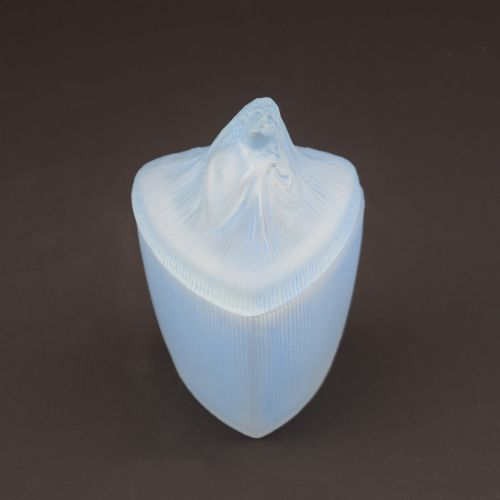
Opalescent glass is a semi-translucent material that shifts in colour appearance depending on the angle of the light, often showing milky highlights and fiery edges. It became especially popular in French studio production during the early twentieth century.
This optical property adds significant visual depth to moulded fruit and floral designs on decorative bowls.