



Enamelled Glass Bowl
An enamelled glass bowl brings together vibrant colour and refined form across periods from the eighteenth century to the mid-twentieth century.

Enamelled Glass Bowl
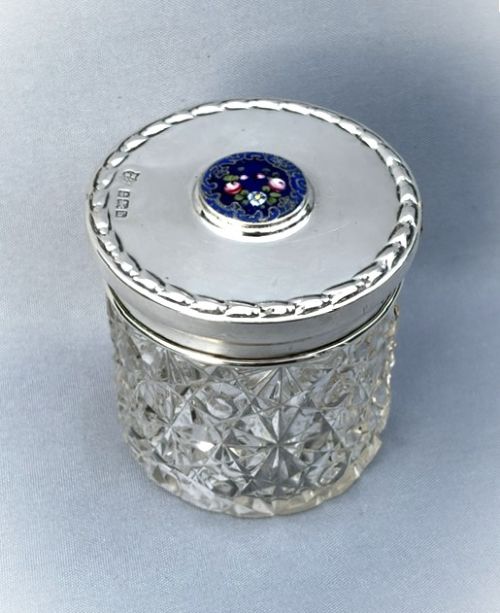
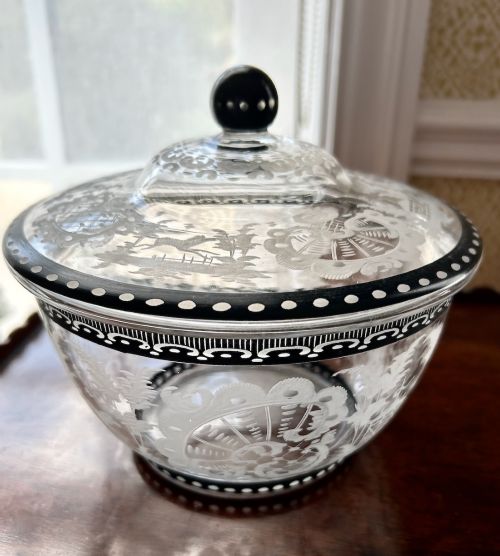
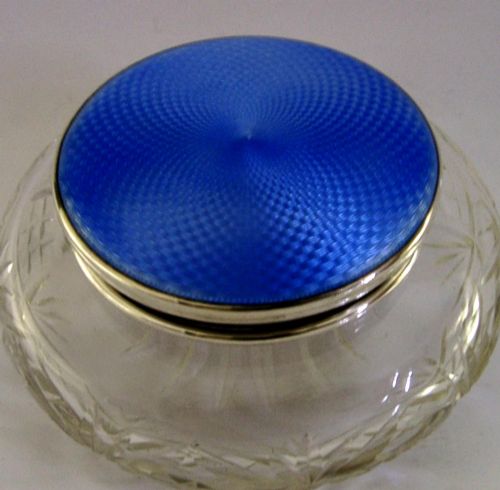
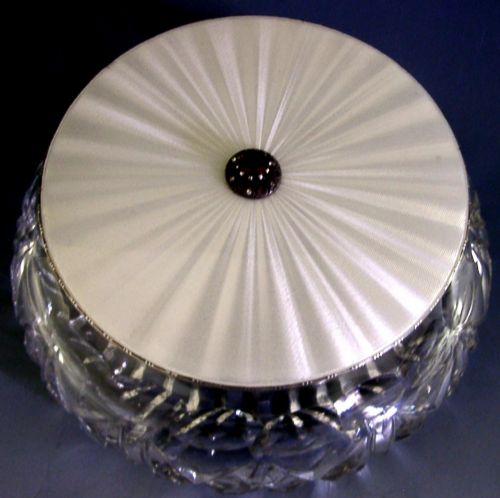
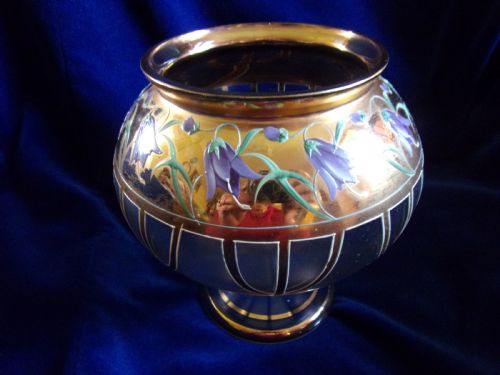
An enamelled glass bowl appears in various forms throughout these records, including decorative vessels, dressing table jars, and finger bowls. The selection spans centuries from Georgian table glass to Art Deco and Art Nouveau pieces, showing how makers applied colour to glass vessels.
The objects combine glass bodies with applied enamel work, sometimes paired with sterling silver mounts, gold leaf, or gilt metal covers. Many examples originate from British, French, Russian, and Austrian workshops, representing distinct stylistic periods like Victorian, Edwardian, and the 1930s.
Buyers will encounter items ranging from simple Bristol blue and cranberry glass containers to intricate crystal bowls decorated with floral motifs or overlaid portraits. These pieces served functional roles on dressing tables and dining surfaces as well as purely decorative purposes.
How they were made
Makers utilised lead glass, crystal, cut glass, and coloured glass such as cranberry and Bristol blue as the primary base for these vessels. Workers shaped the glass through blowing, moulding, or cutting before applying the decorative surface treatments.
Enamel colours were painted or fused onto the glass body, frequently combined with gilding, gold leaf, or engraved details. Artisans also integrated sterling silver lids, mounts, and rims produced by silversmiths into the finished objects.
Listings feature items incorporating sterling silver, gold leaf, and lead glass alongside enamelled decoration.
What varies in quality
The refinement of the enamel work dictates much of the visual success of each piece, distinguishing delicate, precise hand-painted motifs from heavier applications. The clarity of the underlying glass, whether lead crystal, cut glass, or coloured glass, also contributes to the overall presence of the object.
The integration of precious materials such as sterling silver mounts and gold leaf separates standard utilitarian vessels from finer luxury items. Pieces retaining their original silver lids, fittings, or matching covers command greater interest from collectors.
St Louis glassworks·Rene Lalique·Hannah Walton·François-Eugène Rousseau·Baccarat·Fritz Heckert
The Enamelled Glass Bowl Glossary
- Cranberry glass
- A rich red transparent glass coloured with gold chloride during production. It is frequently seen in Victorian and Edwardian tableware and dressing table items.
- Bristol blue
- A deep cobalt blue glass traditionally produced in the Bristol area. Makers often decorated this distinctive glass with enamel and gilding.
- Plique-a-jour
- An enamelling technique resembling miniature stained glass where enamel is fired in open cellular frames without a backing. It creates a translucent effect that allows light to pass through.
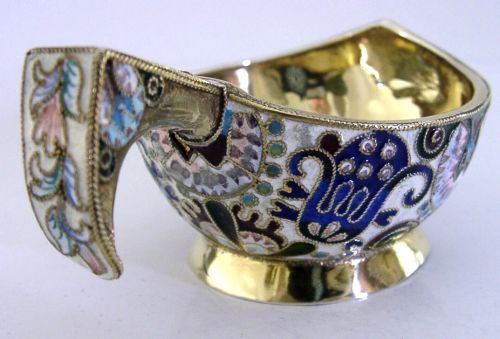
- Kovsh
- A traditional Russian vessel shape with a boat-like body and a single flat handle. These are often rendered in solid silver with polychrome enamel decoration.
- Opaque twist
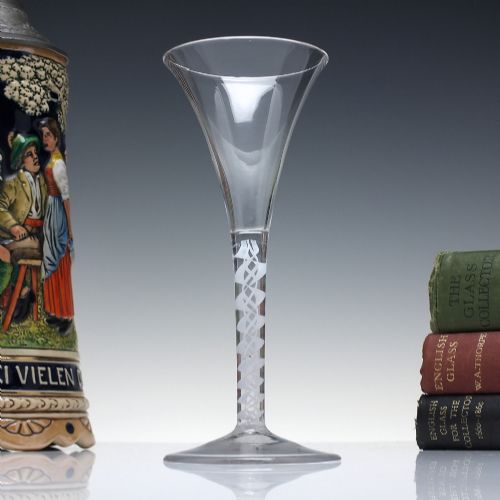
- A type of glass stem found in eighteenth-century drinking vessels formed by drawing out opaque white or coloured glass rods within the clear metal.
Enamelled Glass Bowl: Frequently Asked Questions
What periods do these bowls come from?
The pieces span multiple centuries, starting from Georgian examples in the seventeen-hundreds through Victorian, Edwardian, and Art Deco eras up to the mid-twentieth century.
Different stylistic movements left distinct marks on the designs, ranging from eighteenth-century wine glasses to nineteen-thirties silver-topped dressing table jars.
How do I care for enamelled glass?
Enamelled glass requires gentle handling and should be cleaned manually using lukewarm water and mild soap. Avoid harsh detergents or soaking, as chemical cleaners can damage the fused enamel surface or the underlying glass.
Silver mounts and gold leaf need careful maintenance separately from the glass body to preserve their finish.
Were these bowls used daily?
Many items served practical functions in period homes, such as finger bowls at dinner tables, drinking vessels, or vanity jars for dressing tables. Others were created strictly as decorative display pieces.
The presence of lids, silver mounts, or delicate painted scenes often indicates whether a vessel was intended for storage or display.