
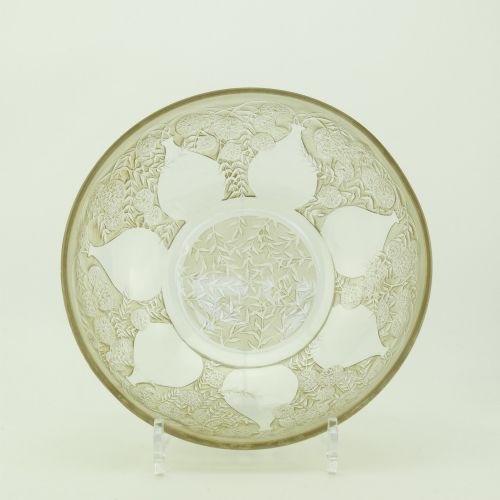
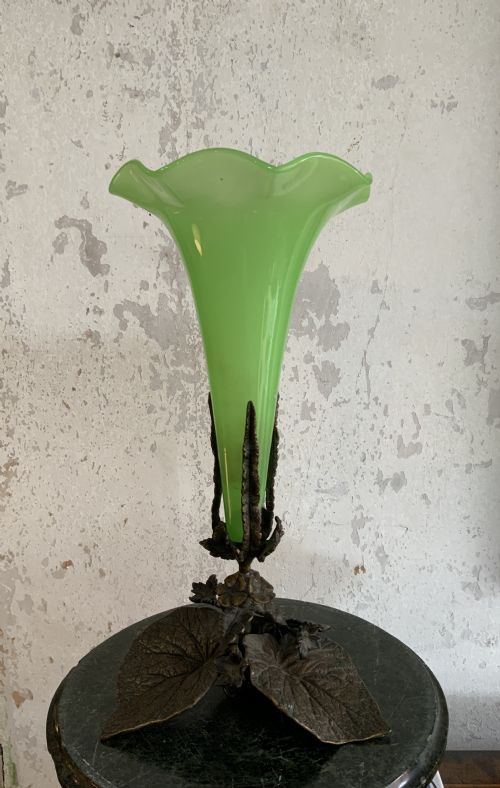
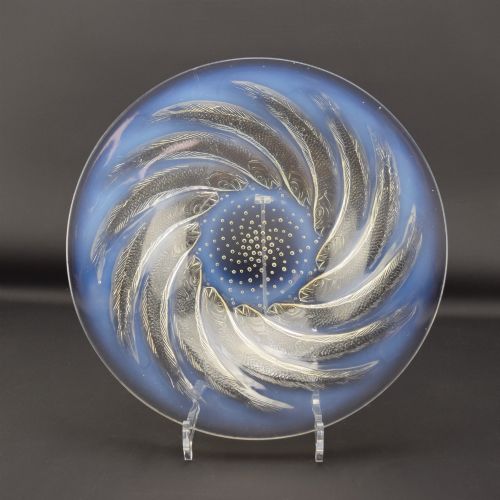
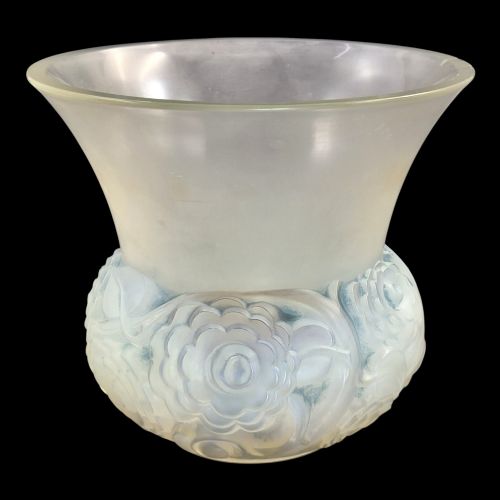
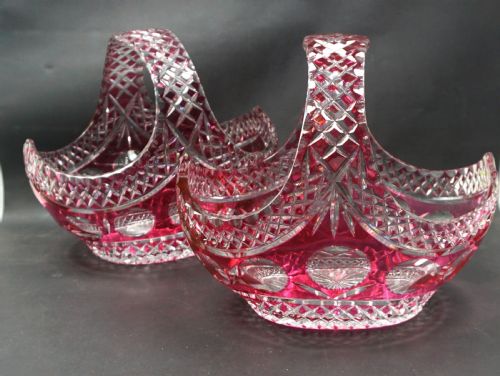


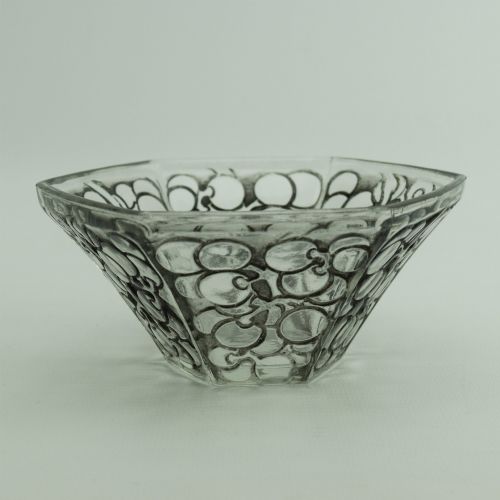


Art Glass Centrepiece
An art glass centrepiece anchors a room through colour and form, bringing together period glass and metalwork.

Art Glass Centrepiece
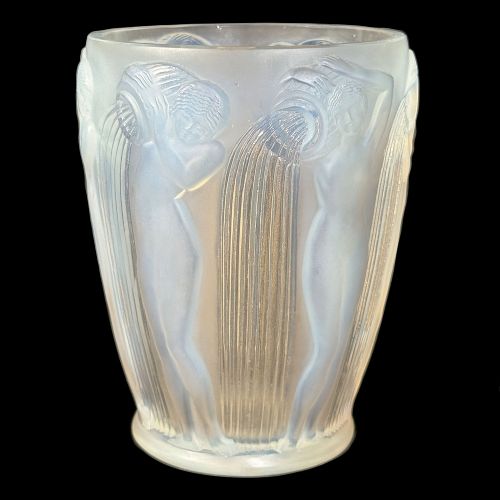
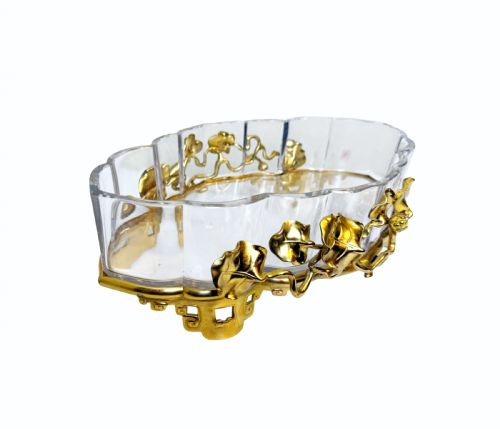
Buyers will encounter moulded glass, lead crystal, and opalescent pieces often mounted in silver plate, gilt bronze, or pewter frames. These works originate from prominent European and British houses, displaying distinct styles from Art Nouveau curves to geometric Art Deco lines.
The most common formats on this page are decorative bowls and shallow coupes resting on pedestals or metal stands. Many examples incorporate coloured glass liners or incorporate figural supports characteristic of turn-of-the-century dining tables.
How they were made
Makers utilised hot glass techniques, blowing molten material into moulds or free-handing vessels with layered colours, over-crystal, and applied cane decoration. Acid-etching, frosting, and enamelling added surface texture and detail to the cooled vessels.
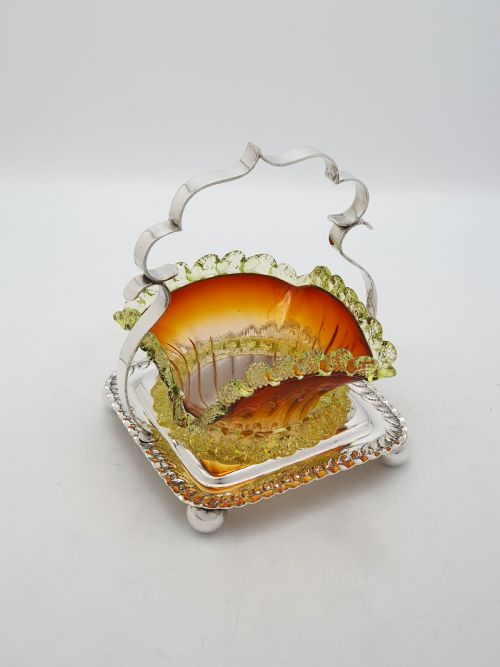
Metal components involved silver plating, pewter casting, and bronze work to form structured mounts, handles, and frames. Artisans secured glass liners into pierced metal baskets and pedestal stands using precise mechanical fittings.
Listings feature glass and silver plate from the late nineteenth century through to the nineteen-thirties, spanning Art Nouveau and Art Deco styles.
What varies in quality
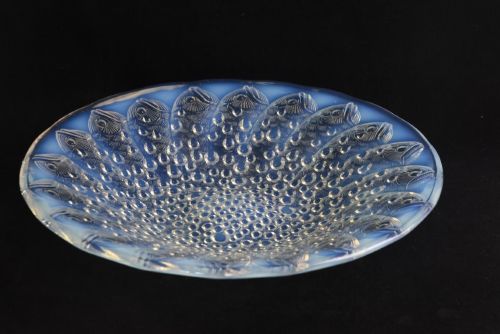
Quality rests in the crispness of the glass moulding, the depth of the opalescence, and the finesse of the metal mounting. Superior pieces display sharp relief in moulded designs and careful hand-finishing on both the glass and its metal frame.
The integrity of the combination defines the grade, where glass liners fit their original frames precisely without wobble or mismatch. Maker signatures, registration marks, and well-preserved silver plating elevate the standing of an individual piece.
Rene Lalique·Val St Lambert·Loetz Witwe·WMF
The Art Glass Centrepiece Glossary
- Epergne
- A large table centrepiece featuring a central dish with multiple branching arms holding smaller vases or baskets. These tiered structures allowed for elaborate fruit and flower displays.
- Opalescent Glass
- Glass containing agents that create a milky, translucent appearance with blue or amber highlights when lit. This technique was used extensively by French makers in the early twentieth century.
- Over-crystal
- A manufacturing method where a layer of coloured glass is cased beneath a clear outer layer of crystal. This creates depth and allows artisans to cut through the top layer for contrast.
- Vaseline Glass
- Glass coloured with uranium oxide that exhibits a distinct yellow-green hue and glows under ultraviolet light. It found wide popularity in Victorian and Art Nouveau tablewares.
- Pâte de Verre
- A kiln-casting method where finely crushed glass is mixed with a binder and fired inside a mould. The resulting pieces possess a dense, sugary texture and rich colour saturation.
- Comport
- A raised dish or bowl on a stem, used for serving fruit or sweets on a dining table. They frequently combine pressed glass bowls with metal pedestal bases.
Art Glass Centrepiece: Frequently Asked Questions
What is an art glass centrepiece used for?
These pieces served as decorative table ornaments for dining rooms and drawing rooms, holding fruit, flowers, or bonbons during formal meals.
Today, collectors use them as standalone focal points on sideboards, coffee tables, or dining tables where their colour and form can catch the light.
How do I identify Art Nouveau from Art Deco pieces?
Art Nouveau works, produced around nineteen hundred, feature asymmetrical floral motifs, whiplash curves, and iridescent or green vaseline glass.
Art Deco items from the nineteen-thirties display symmetrical geometry, stylised plant and animal reliefs, and heavy opalescent or frosted glass moulding.
Are glass liners interchangeable in metal frames?
Original glass liners are specifically blown or moulded to fit the exact contours of their metal stands and baskets.
Replacing a broken liner requires finding the correct historic dimensions and shape, as standard modern glassware rarely matches period mounts.
How should I clean antique glass and silver plate?
Wash glass components gently in lukewarm water using mild detergent, avoiding harsh abrasives that can damage frosted or enamelled surfaces.
Clean silver-plated mounts with a soft cloth and a specialised metal polish, taking care to keep polish away from the glass.