



Blue Opalescent Glass Plate
A blue opalescent glass plate catches the light with milky, fire-blue edges that shift tone as you move around the room.
Blue Opalescent Glass Plate
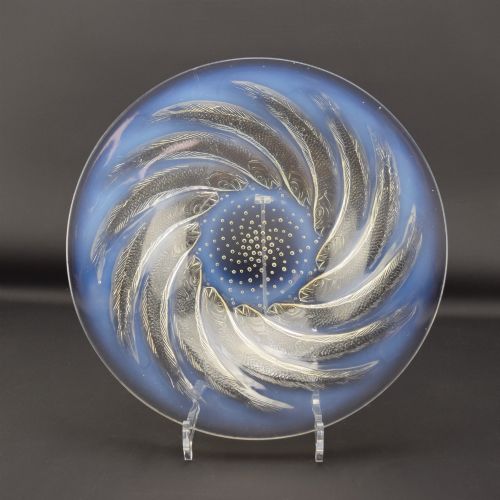
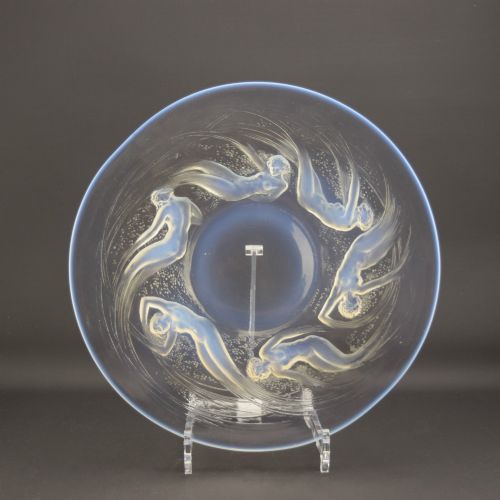
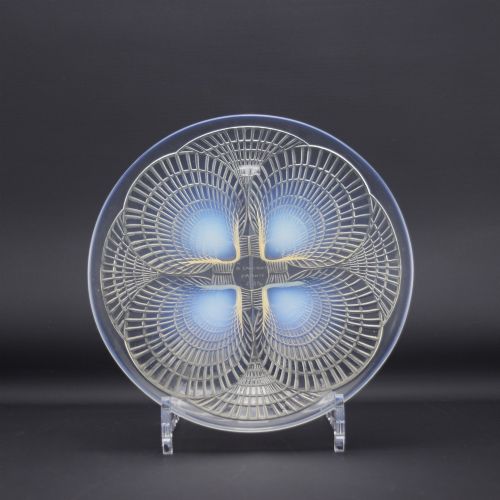
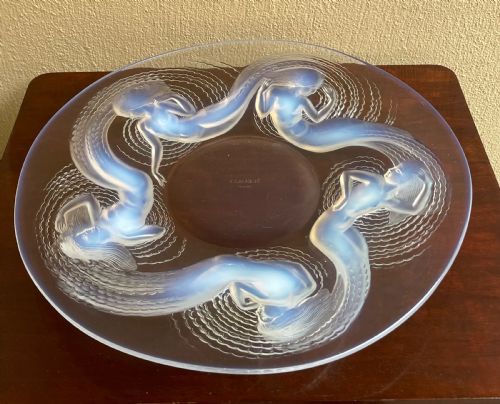
When you search for a blue opalescent glass plate, you enter a field dominated by the sculptural pressed glass of René Lalique alongside Victorian pieces. These items serve as decorative plates, shallow bowls, chargers, and cake stands rather than everyday tableware.
The objects span the Victorian era into the 1920 and 1930 Art Deco period. Lalique designs such as Poissons, Ondines, and Coquilles appear frequently alongside Victorian Pearline pressed glass.
Materials and manufacture
Makers utilised pressed glass and frosted glass to achieve the characteristic milky blue optical effect. Molten glass was pressed into metal moulds or blown into shape, then treated to create the distinctive opalescence that glows against the light.
The interplay between clear, frosted, and tinted surfaces defines these pieces. The opalescent quality arises from chemical additives in the glass melt that scatter light rays, turning amber or milky white when viewed from the front and vivid blue against the light.
Listings span the Victorian era through the Art Deco years of the 1920 and 1930 decades, utilising pressed and frosted opalescent glass.
Assessing quality and finish
Quality rests in the crispness of the moulded relief and the depth of the opalescence. Sharper definition in the floral, aquatic, or geometric motifs separates superior examples from softer, worn productions.
The intensity and evenness of the milky blue glow dictate the visual success of the piece. Master glassmakers achieved a balanced diffusion across the entire surface rather than patchy or dull discoloration.
Rene Lalique·Davidson·Verlys
The Blue Opalescent Glass Plate Glossary
- Opalescent glass
- Glass containing agents that cause a milky, translucent appearance with a blueish or fire-like glow when lit from the front or side. This optical effect shifts colour depending on the angle of observation.
- Pressed glass
- Glass shaped by being pressed into a metal mould with a plunger. This technique allowed intricate patterns to be produced efficiently during the Victorian era and the twentieth century.
- Frosted glass
- Glass rendered translucent and non-shiny by acid-etching or sandblasting. It provides a matte contrast to the clear or opalescent highlights on decorative plates.
- Coupe ouverte
- French term for an open bowl or shallow vessel used in twentieth-century glass production. These open forms display deep relief moulding across the interior base.
Blue Opalescent Glass Plate: Frequently Asked Questions
What is blue opalescent glass?
Blue opalescent glass is a decorative material formulated with specific mineral additives that scatter light. This creates a milky, glowing blue edge or surface highlight when illuminated.
The technique gained popularity during the Victorian period for pressed tableware and reached artistic heights in the Art Deco creations of French glassmakers.
How were these plates used?
These pieces served primarily as decorative plates, shallow display bowls, salvers, and cake stands rather than utilitarian dining ware. Their intricate raised motifs and glowing rims made them centrepieces for sideboards and drawing rooms.
Today, collectors tend to display them where natural daylight or dedicated lighting can pass through the glass to activate the opalescent effect.
How do I date a piece?
Dating relies on stylistic markers, maker signatures, and manufacturing techniques. Victorian items often feature geometric or floral Pearline patterns, while 1920 and 1930 pieces typically display Art Deco motifs and moulded signatures.
Comparing the rim style and relief depth against documented factory catalogues helps narrow the decade of production.