
Vintage French Accent Chairs
Vintage french accent chairs bring character and comfortable seating to a room, spanning periods from the nineteenth century through the art deco era.
Vintage French Accent Chairs
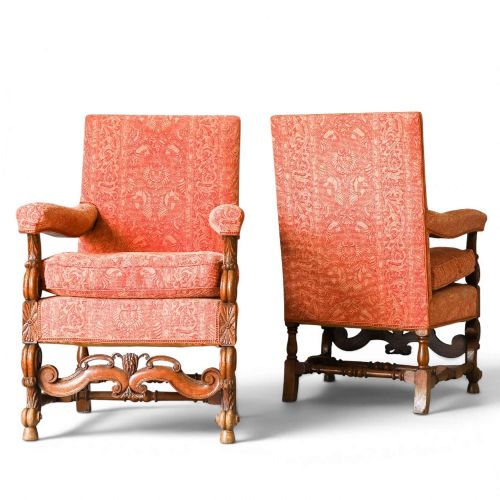
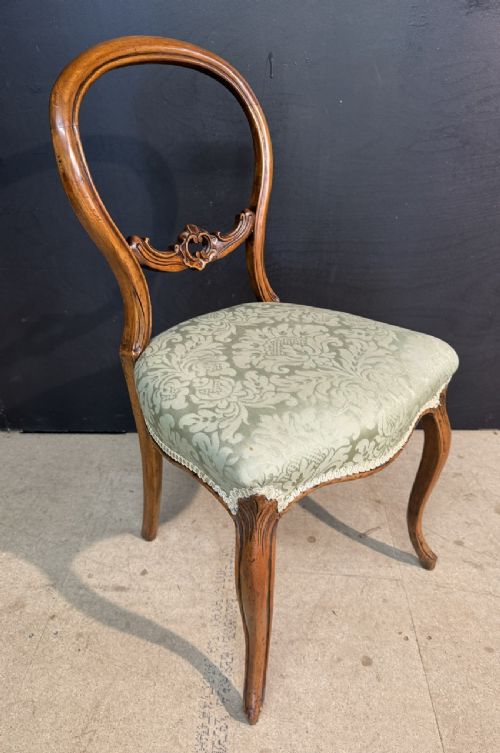
Vintage french accent chairs encompass a diverse selection of seating, ranging from substantial armchairs to lighter side chairs and slipper chairs. When exploring vintage french accent chairs on this page, buyers frequently encounter pieces originating from the nineteenth century alongside later twentieth century iterations.
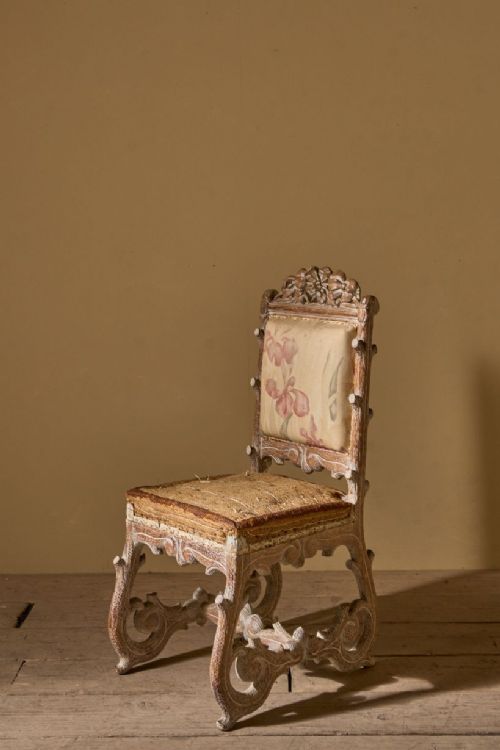
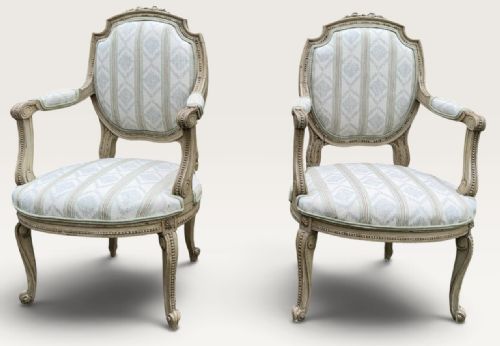
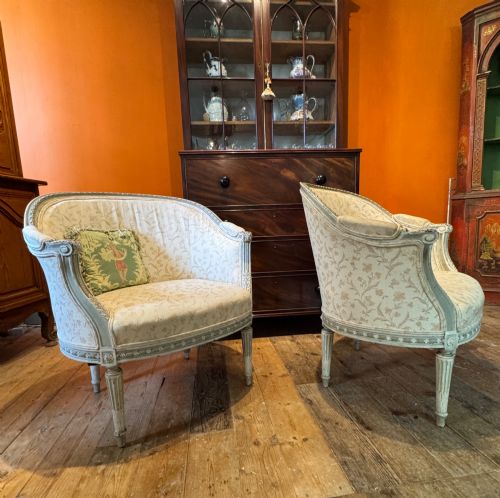
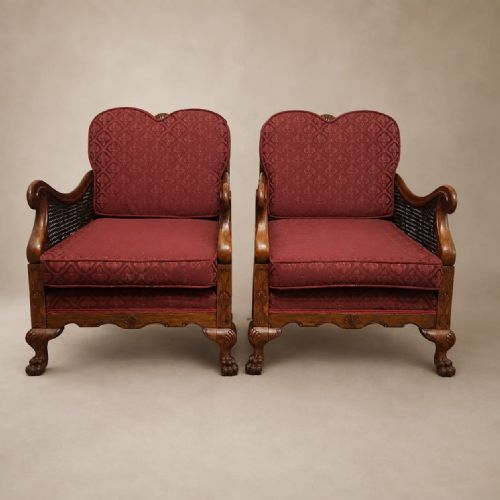
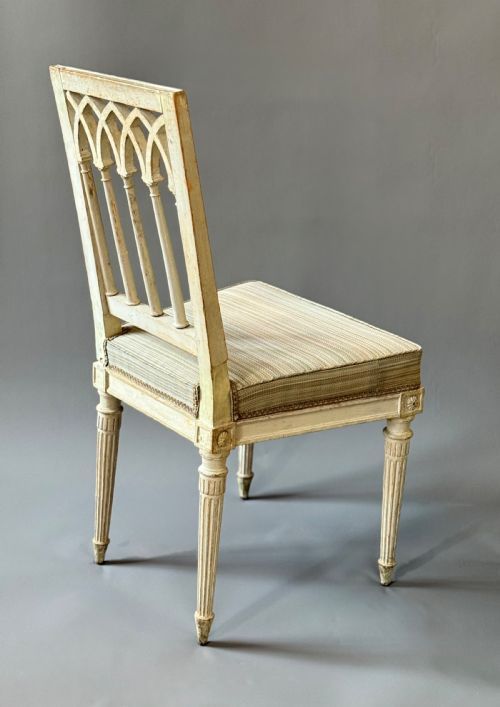
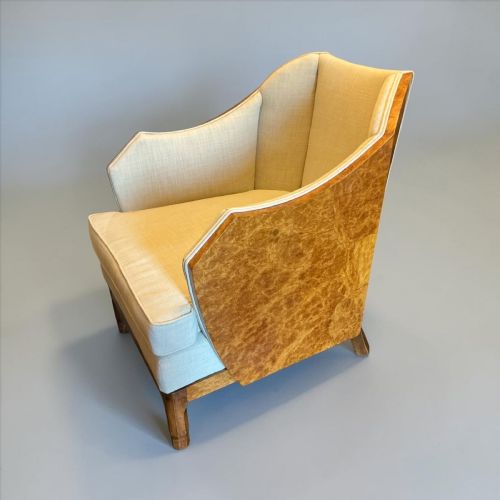
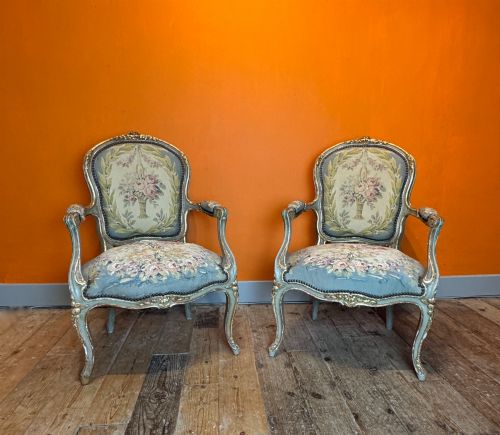
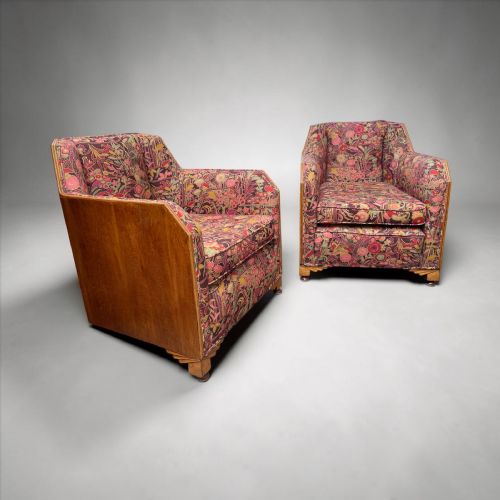
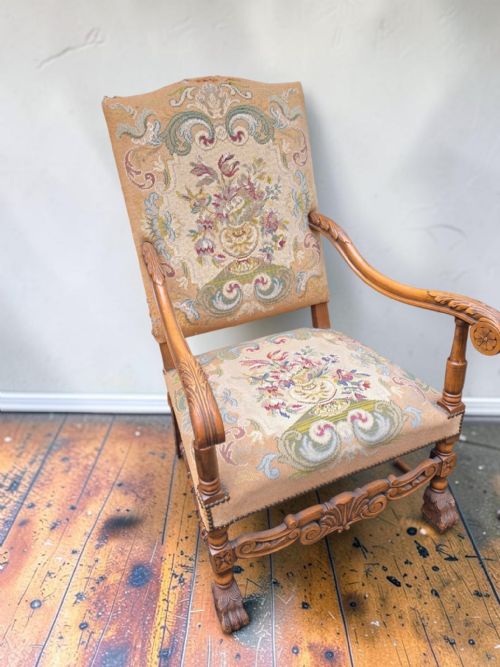
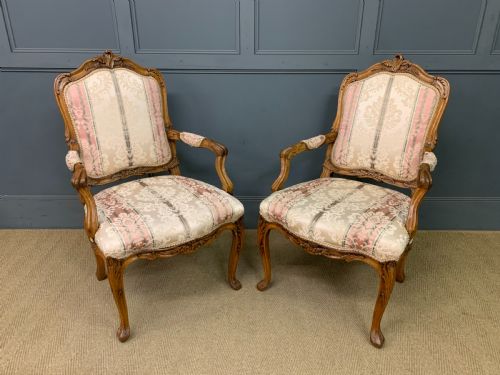
The selection includes distinct forms such as bergere tub armchairs, fauteuils, and open armchairs shaped by classic design movements. Makers drew inspiration from Louis XV, Louis XVI, and Napoleon III aesthetics, alongside regional French chateau styles and later art deco sensibilities.
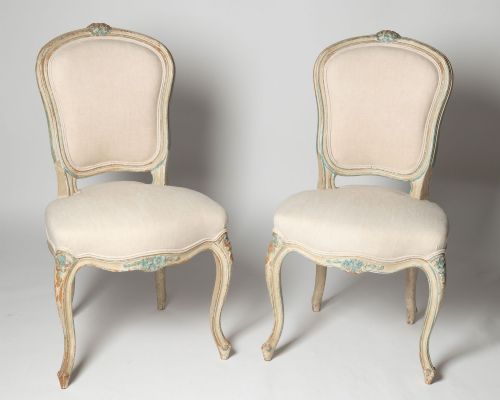
Many examples survive in pairs, offering symmetry for a living space or bedroom scheme. Construction utilises woods such as walnut, beech, and oak, often finished with original paint, giltwood, or polished mahogany.
Materials and construction
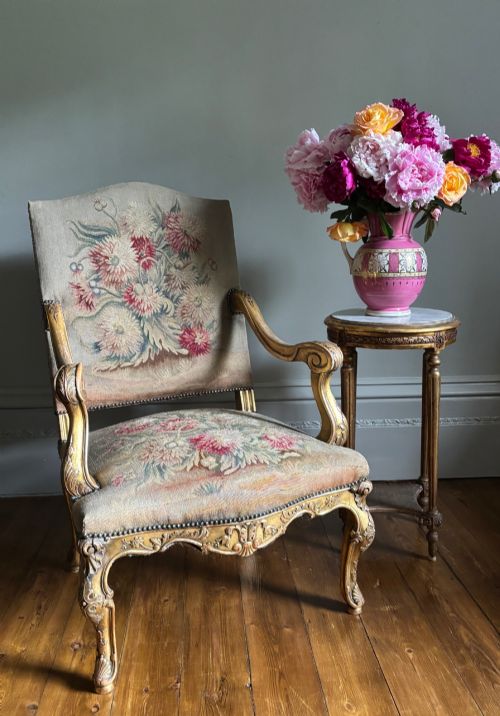
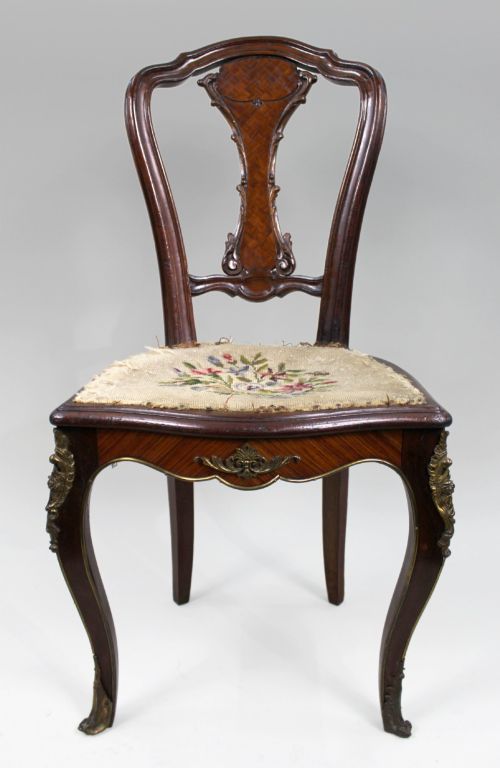
Frames are constructed from hardwoods like walnut, beech, and oak, frequently shaped with intricate hand-carved details and cabriole legs. Giltwood finishes, ormolu mounts, and original paint surfaces are applied to enhance the formal presence of the seating.
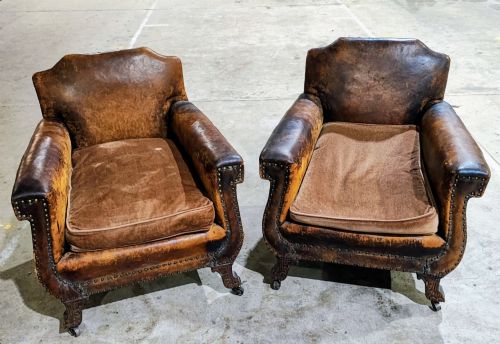
Upholstery relies on traditional textiles including tapestry, velvet, leather, and split cane panels. Brass tacks and careful button-backing secure the coverings to the wooden frameworks, reflecting period craftsmanship.
Painted finishes and giltwood are frequently paired with original fabric, velvet, tapestry, and leather upholstery.
Judging quality in the range
Quality rests in the depth and sharpness of the wood carving, the crispness of gilt finishes, and the integrity of the structural frame. Superior examples display balanced proportions and refined curves that align with specific historical revival styles.
The choice of covering material and the preservation of original paint or patinated leather heavily influence the character of each piece. Finer seating combines robust joinery with authentic period textiles or supple leathers that show genuine age.
The Vintage French Accent Chairs Glossary
- Bergere
- An enclosed upholstered armchair with wooden framing, frequently featuring cane sides or backs. These chairs became popular in France during the eighteenth century and were revived in later periods.
- Fauteuil
- An open-arm armchair with upholstered back and seat, typically featuring exposed carved wooden armrests. The arms are open at the sides, distinguishing it from the fully enclosed bergere.
- Giltwood
- Timber that has been coated with a thin layer of gold leaf or gilt finish. This technique highlights carved details on formal nineteenth century seating.
- Ormolu
- Cast bronze mounted details that are finished with mercury gilding or a similar golden coating. These decorative mounts accent the woodwork on elite seating.
- Cabriole leg
- A furniture leg featuring a double curve, stepping outward at the knee and tapering inward toward the foot. This form derives from animal legs and defines many rococo-inspired designs.
- Parquetry
- Geometric wood inlay work arranged in patterns on flat surfaces. It adds decorative texture to the wooden components of select French side chairs.
Vintage French Accent Chairs: Frequently Asked Questions
What defines a vintage french accent chair?
These chairs are decorative seating options originating from France or styled after traditional French designs across the nineteenth and early twentieth centuries.
They combine historical revival aesthetics, such as Louis XV or Napoleon III motifs, with practical forms like armchairs and side chairs designed to accent a room.
How do I identify different periods?
Differentiating periods relies on observing stylistic details, such as the curved cabriole legs of nineteenth century rococo revivals versus the streamlined geometry seen in art deco examples from the nineteen-thirties.
Materials also offer clues, with heavy oak and walnut revival pieces sitting alongside painted finishes and giltwood frames typical of formal nineteenth century production.
Where should I place an accent chair?
These chairs suit living rooms, studies, and bedrooms where they provide both extra seating and a distinct decorative focal point.
Pairs work well flanking a fireplace or console table, while single slipper or side chairs fit neatly into corners or vanity spaces.