


Upholstered Bergere Armchairs
Upholstered bergere armchairs combine deep wooden frames with woven cane and soft fabric to create seats designed for long hours of reading or conversation.
Upholstered Bergere Armchairs
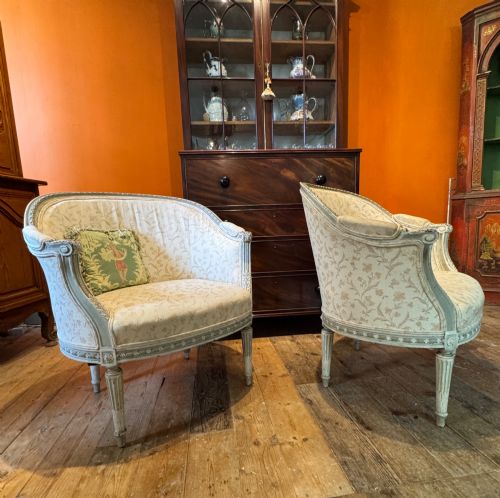
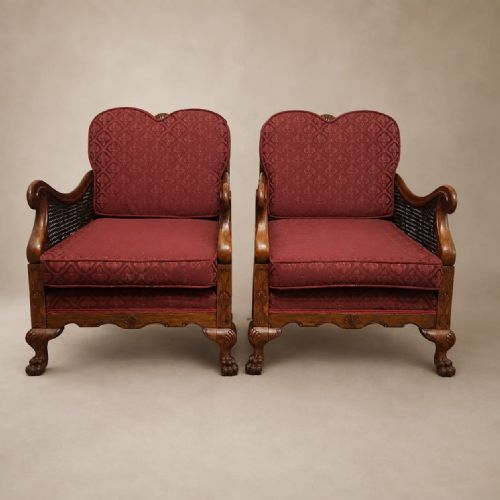
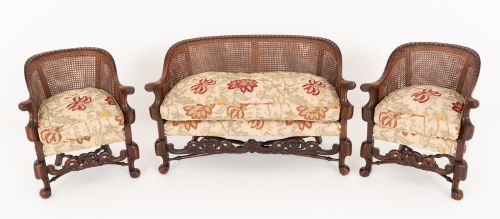
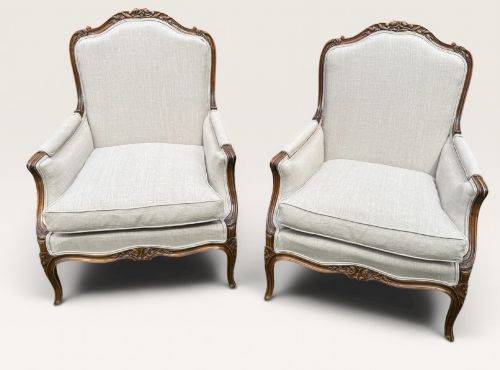
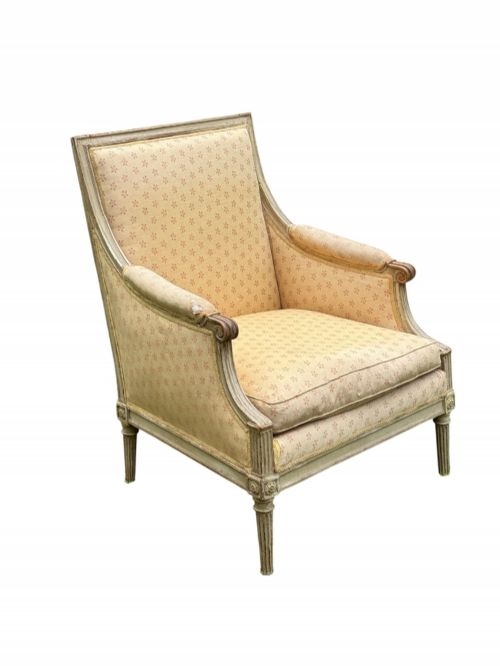
When searching for upholstered bergere armchairs, you encounter deep, low-slung seats featuring exposed wooden frames, woven cane panels, and padded upholstery. These pieces draw heavily on historical French aesthetics, notably the Louis XV and Louis XVI styles, alongside Regency and Edwardian interpretations.
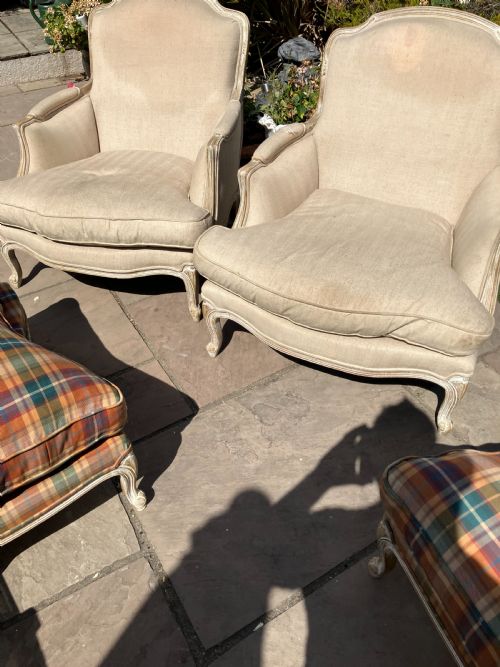
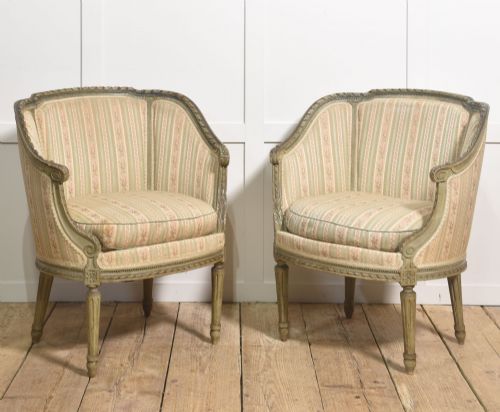
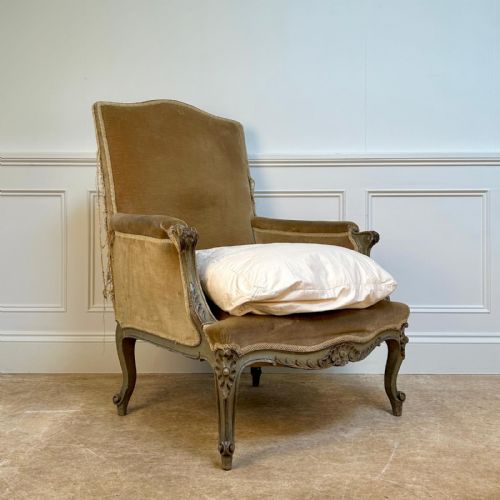
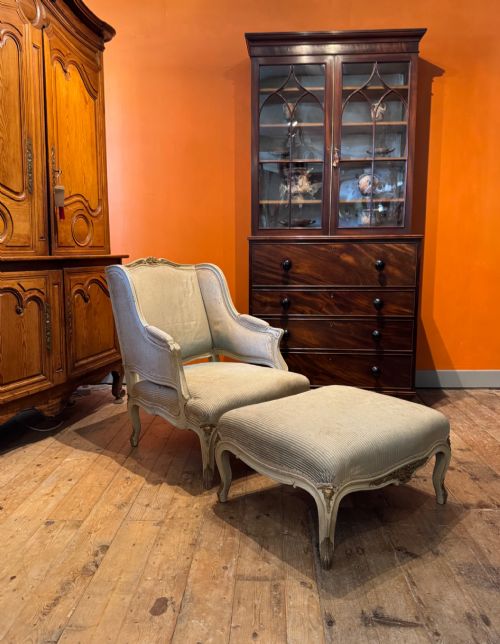
The version you meet most frequently on this page is the nineteenth-century French armchair, often carved from walnut, beech, or mahogany, and finished in giltwood or original paint. Pairs and larger sets appear alongside single examples, sometimes accompanied by matching footstools or forming part of broader salon suites.
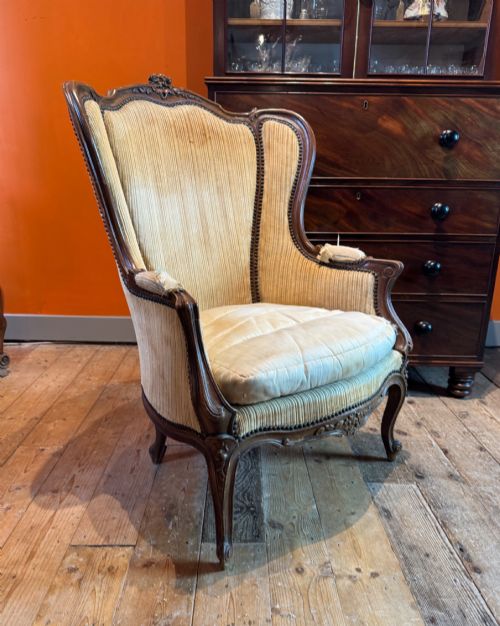
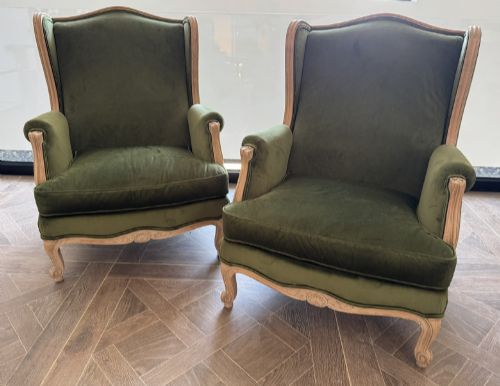
Originating primarily from French and British workshops, these chairs bridge formal reception room seating and domestic comfort. The incorporation of upholstered cushions and wing backs alters the rigid profile of standard frames, offering a distinct combination of structural woodwork and textile softness.
How they were made
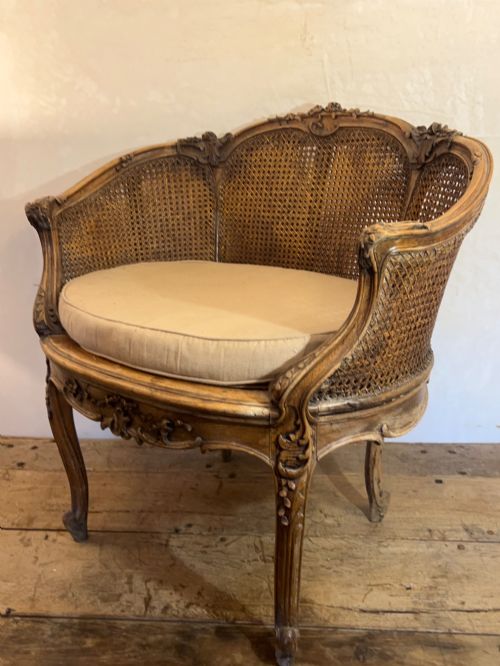
Cabinetmakers constructed the primary skeletons using dense hardwoods such as mahogany, walnut, and beech, frequently shaping the rails and arms with hand-carved floral or scroll motifs. Giltwood and painted finishes were applied directly to the timber surfaces, while specialist joinery secured the curved components that define the distinctive tub and wing forms.
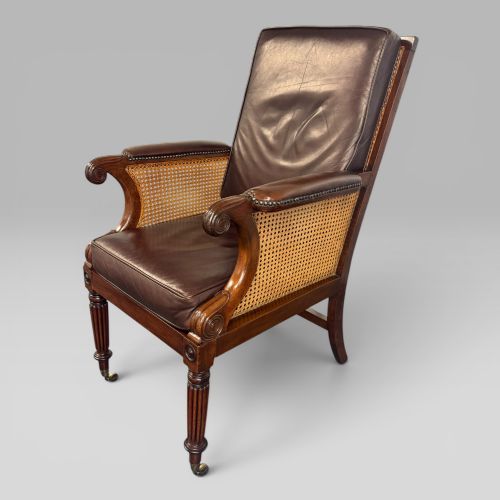
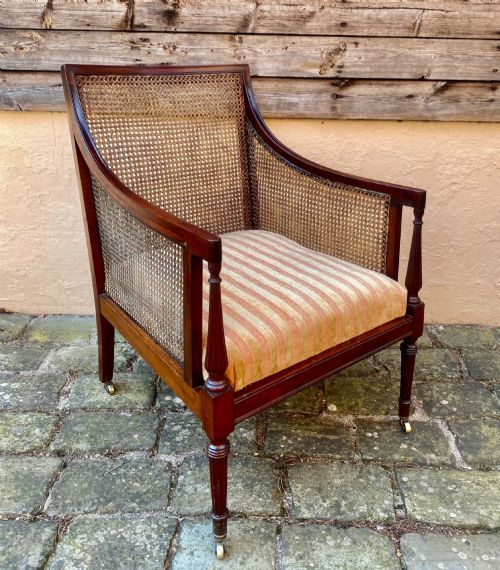
The characteristic side panels and backs rely on split cane or woven cane tightly threaded through drilled frames, allowing flexibility behind the upholstery. Traditional stuffing and sprung interiors sit beneath layers of fabric, velvet, or silk, held in place by close-nailed brass tacks along the wooden borders.
Listings feature mahogany, walnut, beech, and giltwood frames paired with cane, velvet, and silk upholstery across nineteenth-century and early twentieth-century periods.
What varies in quality
The standard of carving on the wooden frame dictates much of the visual distinction, separating mechanically produced edges from crisp, hand-chiselled foliage and flowing cabriole lines. Crisp depth in walnut and mahogany mouldings indicates skilled handwork by the original maker.
The integrity of the woven cane work and the weight of the underlying timber frame govern structural longevity. Chairs retaining original paint surfaces or genuine period gilding hold greater historical fidelity than later decorative overpainting.
Henri Jacob
The Upholstered Bergere Armchairs Glossary
- Bergere
- An enclosed upholstered armchair with wooden frames and cane side panels. Originating in France, these seats prioritise deep cushioning over formal upright postures.
- Giltwood
- Timber coated with a thin layer of gold leaf or metallic gilt gesso. This finish appears frequently on formal nineteenth-century salon seating.
- Duchesse Brisee
- A multi-part chaise longue or armchair accompanied by a matching stool or footrest. These pieces allow the sitter to recline fully within a single integrated design.
- Caned
- A technique where split rattan or cane is woven into an open mesh pattern across the back or sides of a chair. This method reduces frame weight while adding textural contrast to the wood.
Upholstered Bergere Armchairs: Frequently Asked Questions
What is a bergere armchair?
A bergere armchair is a French-inspired seat characterised by a wide, enclosed wooden frame, low proportions, and cane-work sides paired with loose upholstered cushions.
These chairs emerged to provide greater domestic comfort than rigid ceremonial seating, evolving through various revival periods into the twentieth century.
Were these chairs used in dining rooms?
These seats were designed primarily for parlours, libraries, and drawing rooms rather than formal dining spaces. Their low height and deep cushions suited reading and conversational gatherings.
Libraries often housed mahogany and caned variants, while giltwood versions furnished formal reception salons.
How do I identify Louis XV style?
Louis XV style framing is distinguished by flowing asymmetrical curves, cabriole legs, and carved floral motifs without sharp right angles. The woodwork appears softer and more organic than later neoclassical designs.
This aesthetic returned frequently in nineteenth-century revivals, particularly in walnut and painted French armchairs.
How do I live with upholstered armchairs?
Living with these chairs involves placing them away from direct heat sources to protect the wooden frames and cane panels from drying out. Regular gentle dusting preserves the carved details and painted finishes.
Silk and velvet upholstery benefits from professional maintenance and careful positioning to avoid excessive fading from sunlight.