




Painted Frame Armchairs
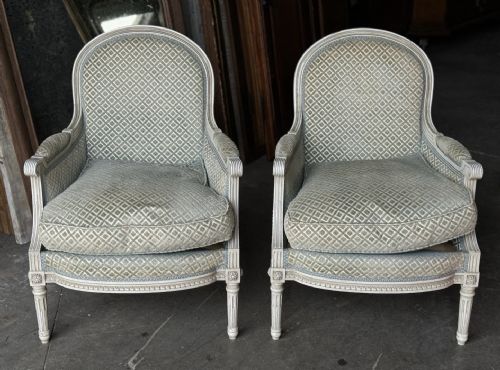
These painted frame armchairs bring decorative character to a room, offering historic forms finished in period colour.
Painted Frame Armchairs
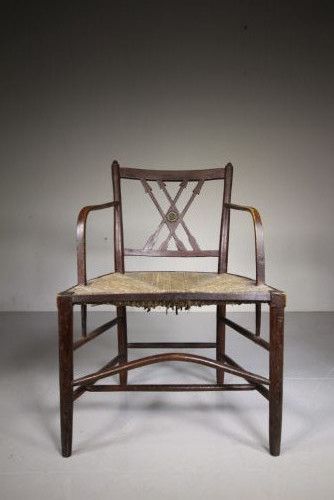
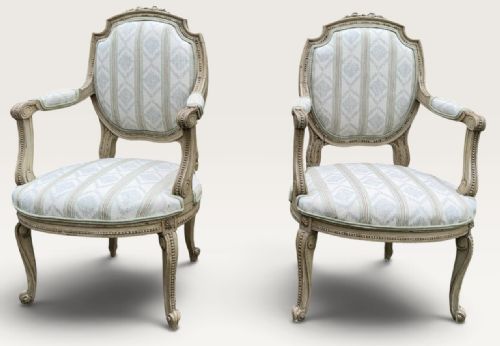
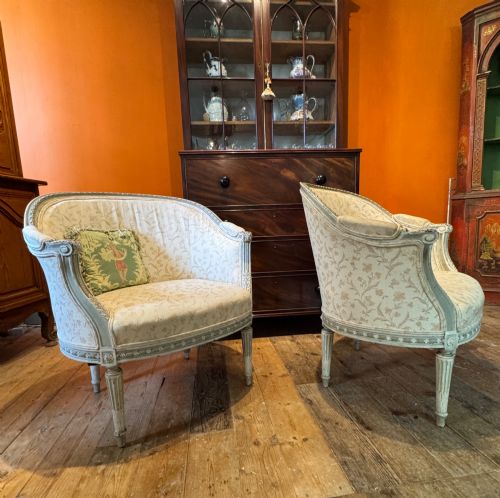
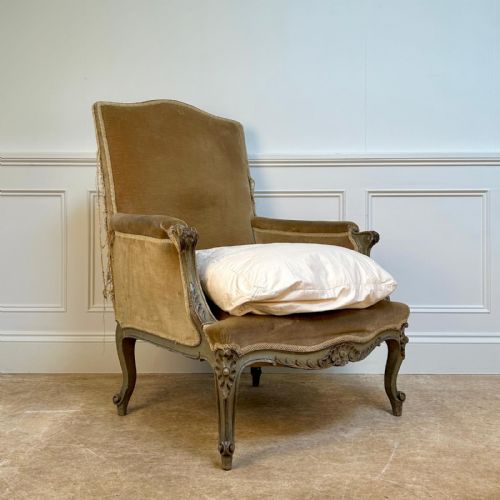
When you search for painted frame armchairs, you encounter seating built across several centuries, with French pieces dominating the selection. The listings show forms ranging from Georgian country chairs to late nineteenth century bergères and Louis XV style armchairs. French examples frequently appear in pairs, offering traditional seating with visible painted surfaces.
Makers and workshops across Britain and France produced these seating types in wood, utilising beech and gesso underneath decorative painted finishes. Alongside armchairs, the inventory includes related seating like settees and bergere tub chairs. These objects combine upholstered elements with structural woodwork designed for formal and domestic interiors.
How they were made
The construction of these chairs relies on traditional timber framing, with beech frequently selected for its strength in carved show frames. Artisans applied gesso to prepare wooden surfaces before adding layers of paint, often retaining original decorative finishes. Upholstery, textiles, and rush seating completed the internal structure of these armchairs.
Carving and joinery techniques define the style eras, from Renaissance revival details to flowing Louis XV curves. Show frames expose the carved wooden structure around upholstered panels, combining structural joinery with decorative surface treatments.
Listings feature painted frame armchairs spanning the Georgian period, the nineteenth century, and twentieth-century decades up to nineteen-forty.
What varies in quality
Quality in these armchairs rests upon the integrity of the original paint surface and the crispness of the carved woodwork. Pieces retaining untouched historic paint demonstrate superior preservation compared to later overpainting. The depth and skill of the carving on beech frames further separate standard output from finer workshop productions.
Proportion and structural balance dictate the presence of a superior piece. Chairs maintaining balanced framing and authentic upholstery materials show greater adherence to period design standards.
White, Allom & Co.·Zsuzsanna Suger
The Painted Frame Armchairs Glossary
- Fauteuil
- An open-framed upholstered armchair originating in France. The arms remain open with padded elbow rests supported by carved wooden posts.
- Gesso
- A plaster-like mixture applied to wood to create a smooth surface for painting or gilding. It provides the foundation for decorative finishes on historic frames.
- Show frame
- A wooden structural framework left visible around the upholstered portions of a chair. It displays the carved decoration and painted finish.
- Savonarola
- A folding armchair constructed from intersecting wooden slats. This Renaissance revival form takes its name from a famous Florentine friar.
Painted Frame Armchairs: Frequently Asked Questions
What is a bergere armchair?
A bergere is a French style of upholstered armchair characterised by enclosed sides. These chairs typically feature a padded back and seat built into a visible wooden frame.
They appear frequently in nineteenth-century French designs, often retaining painted finishes and cane or fabric panels.
How do I identify Louis XV style?
Louis XV style chairs feature asymmetrical flowing curves, cabriole legs, and naturalistic carved motifs like foliage. The frames display graceful serpentine lines rather than rigid symmetry.
This aesthetic experienced significant revival periods during the nineteenth and twentieth centuries.
Are painted finishes original?
Many pieces retain their original historic paint surfaces applied during manufacture. Close examination reveals the layering and wear patterns expected from age.
Some items show subsequent overpainting applied during later decorative updates by previous owners.
Where were these chairs used?
These armchairs served as principal seating in formal drawing rooms, parlours, and private chambers. Their decorative frames were designed to complement interior colour schemes.
Today, they function as accent seating in modern or traditional living spaces.