


Curved Back Accent Chairs
Curved back accent chairs bring architectural grace to a room, offering sculptural comfort through rounded timber frames and upholstered tub profiles.
Curved Back Accent Chairs
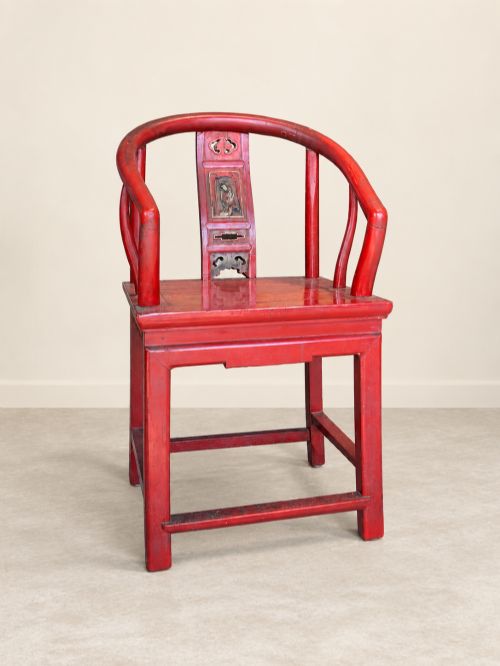
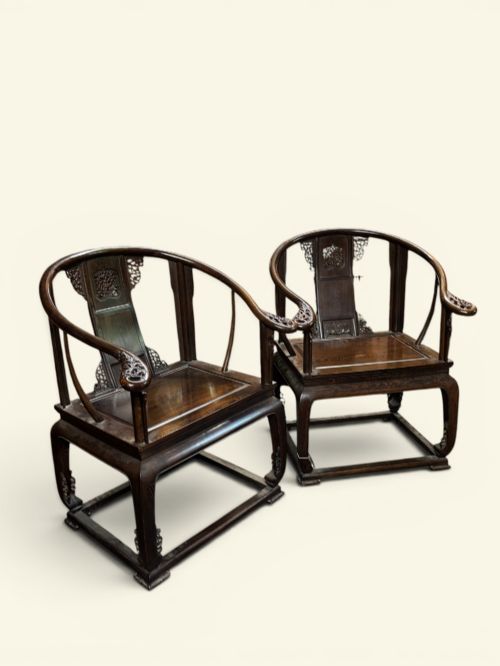
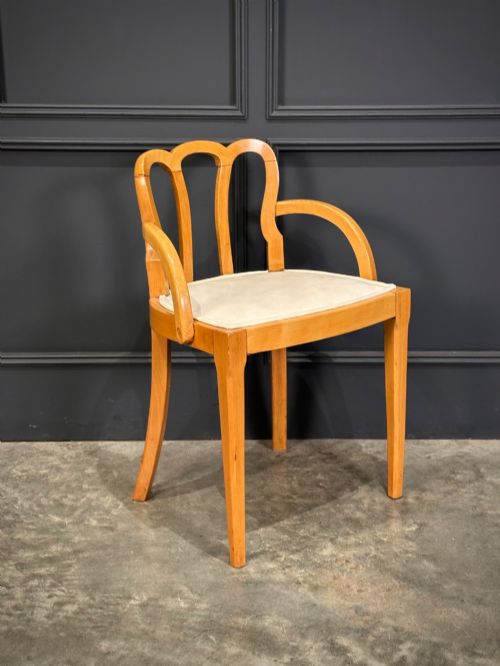
Curved back accent chairs encompass a diverse selection of seating forms designed with rounded or enclosed backrests, ranging from Edwardian barrel backs to mid-century cocktail chairs. These pieces appear in varied regional interpretations, including traditional Chinese horseshoe designs and European revival styles.
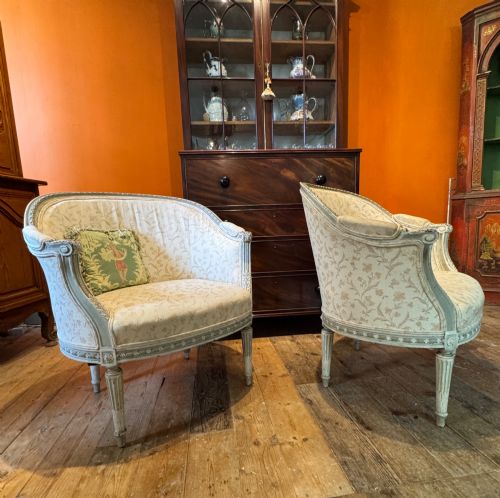
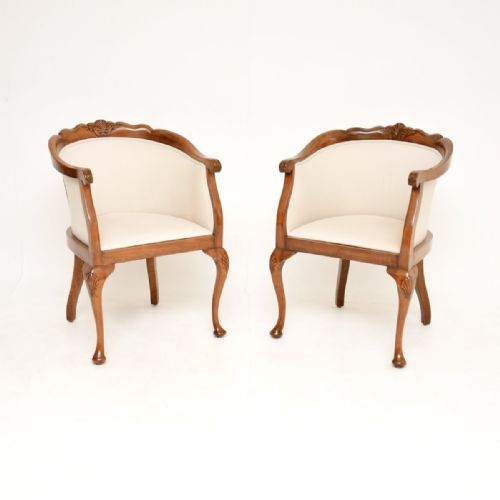
The selection on this page relies heavily on nineteenth-century and early twentieth-century examples, featuring specific iterations such as French bergere tub armchairs, nursing chairs, and occasional seating. Buyers encounter both wood-framed Asian armchairs and deeply upholstered Western salon chairs.
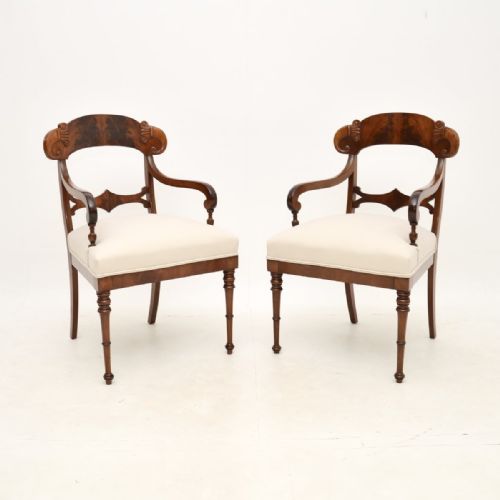
Makers and manufacturers utilised specific historical vocabularies, producing Queen Anne style walnut frames, Arts and Crafts oak structures, and Art Deco satinwood or walnut pieces. Each period contributes a distinct silhouette, prioritising either exposed polished timber or fully upholstered curving lines.
Materials and construction methods
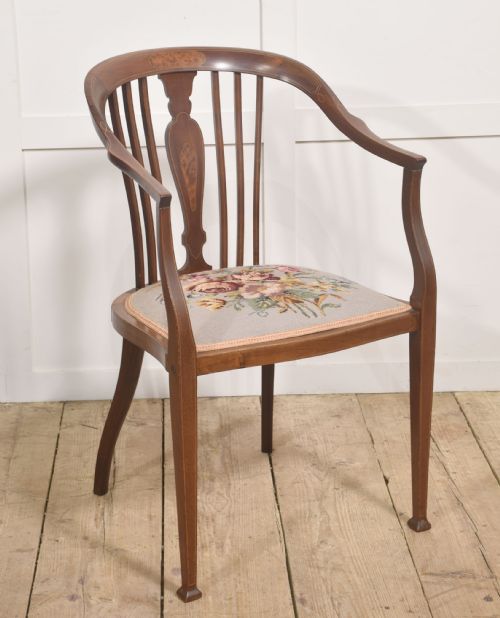
Makers constructed these frames using hardwoods such as mahogany, elm, walnut, oak, and satinwood, frequently bending timber or carving solid sections to achieve the signature curved backrest. Inlay work, brass embellishments, and painted finishes frequently decorate the exposed wooden structures.
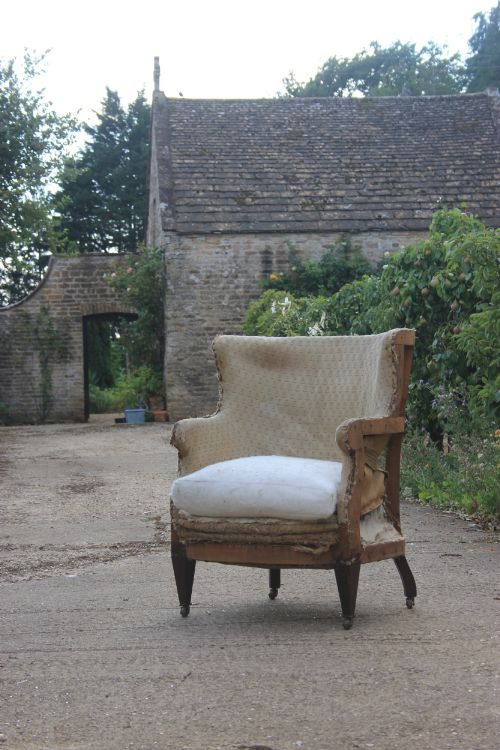
Upholstered variants rely on traditional stuffing and textile or leather coverings, sometimes paired with buttoning to maintain the tension across the rounded back. Original paint surfaces and newly applied fabric coverings both appear across the inventory.
One nineteenth-century Windsor chair bears the stamp of Benjamin Gilling, proving that even a humble curved back can boast a maker's proud signature.
Assessing quality in curved back accent chairs
Quality rests upon the integrity of the timber joinery and the fluidity of the carved or steam-bent curves that form the backrest. Superior pieces exhibit precise inlay, harmonious proportions, and stable structural frames that withstand daily use.
The treatment of the upholstery and the preservation of original decorative surfaces, such as paint or polished wood grain, heavily influence the standing of each piece. Retaining original finishes or employing sympathetic re-upholstery distinguishes the finer examples.
Benjamin Gilling
The Curved Back Accent Chairs Glossary
- Tub armchair
- A fully upholstered chair with a continuous curved back and arms forming a single enclosed barrel shape. This design provides snug lateral support.
- Horseshoe-back armchair
- A traditional Chinese chair style featuring a crest rail that curves in a continuous circular sweep around the back and arms. It typically rests on solid wooden joinery without upholstery.
- Bergere
- A French-style enclosed armchair with an upholstered back and armrests, usually featuring an exposed wooden frame. It often includes cane work or padded panels.
- Marquetry
- The art of applying decorative veneer pieces to a structure to form ornamental designs. Craftsmen use varied wood types to create contrasting pictorial patterns on the surface.
- Spoon back
- An upholstered chair back shaped distinctly like the bowl of a spoon, popular during the nineteenth century. The wooden rim frames the padded central panel.
Curved Back Accent Chairs: Frequently Asked Questions
Are these chairs suitable for daily use?
Many examples are robust enough for everyday seating, particularly those with solid hardwood frames and sturdy joinery. Buyers should consider whether the piece prioritises decorative salon use or practical lounging.
Upholstered versions offer softer support, while wooden horseshoe chairs provide firmer, upright seating suited to occasional placement.
How do I identify the period of a chair?
Dating relies on stylistic clues such as revival motifs, inlay techniques, and the specific woods employed by makers. Edwardian, Art Deco, and nineteenth-century pieces each carry distinct structural proportions.
Examining the underside, joinery methods, and fastening types helps confirm the age and manufacturing era of the furniture.
What is the difference between a tub chair and a cocktail chair?
Tub chairs typically feature a deep, rounded, fully enclosed back and sides reminiscent of a basin. They emerged strongly in nineteenth-century and Edwardian domestic spaces.
Cocktail chairs generally date from later periods like the 1940s, offering a more compact profile designed for smaller modern rooms.