
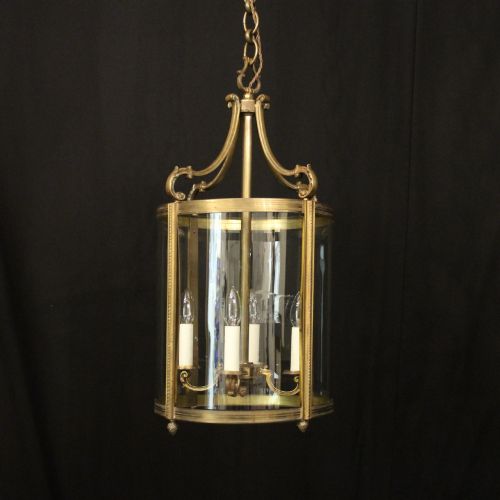
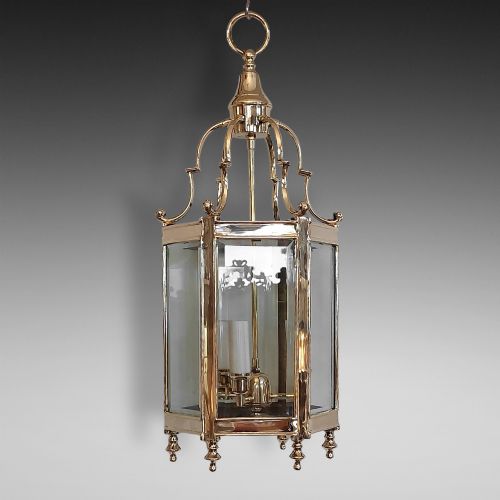
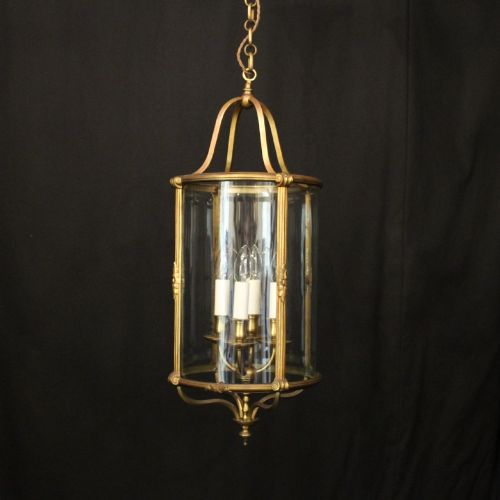
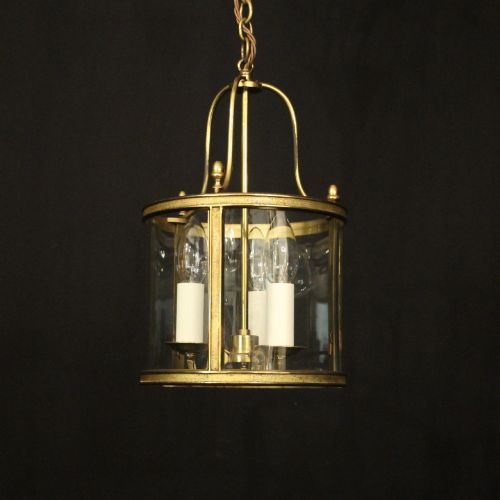
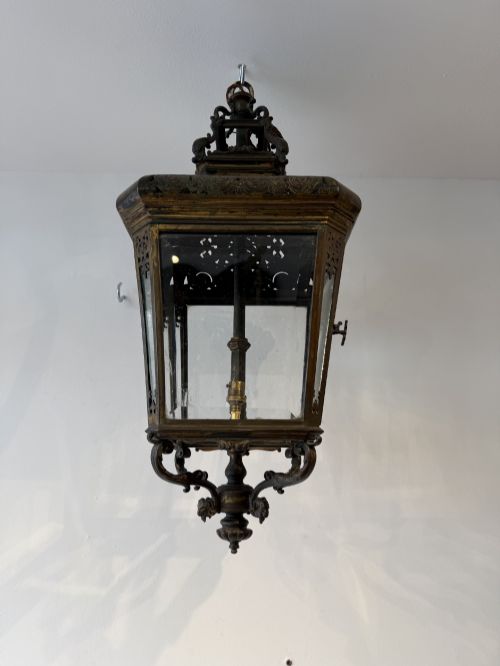


Vintage Foyer Lantern
A vintage foyer lantern lights a hallway with period character, offering warmth and style to an entryway.
Vintage Foyer Lantern
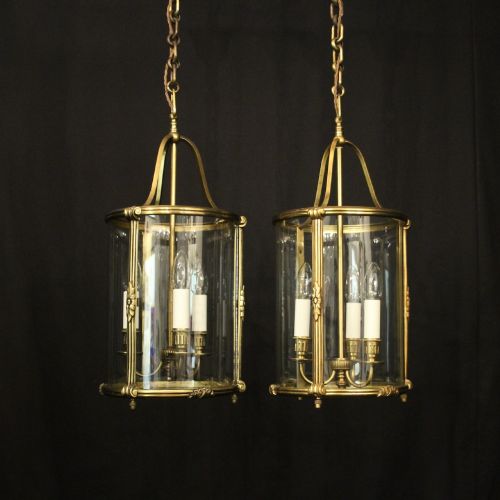
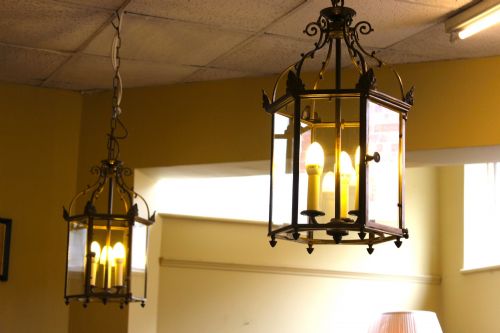
A vintage foyer lantern serves as an overhead statement piece in an entryway, combining structural metalwork with glass panels. These fixtures illuminate entrance halls and landings while setting a distinct historical tone from the moment one steps inside.
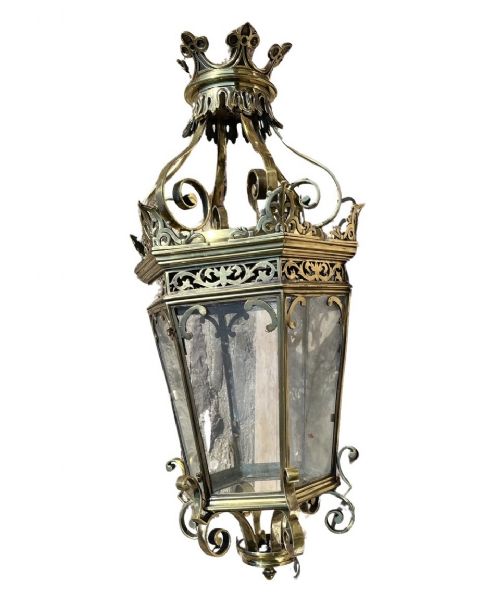
Most examples found here hail from the nineteenth and early twentieth centuries, spanning Edwardian and French stylistic traditions. Buyers will frequently encounter brass, bronze, and gilded frames configured as hexagonal lanterns or multi-light ceiling pendants.
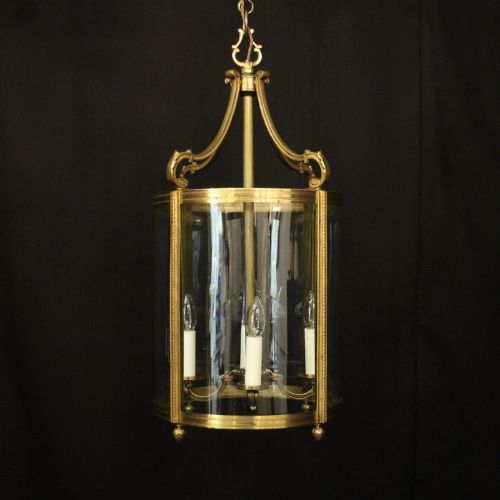
The selection ranges from simple English brass fixtures to elaborate French chateau and neoclassical hanging lanterns. Single, triple, and four-light configurations provide varying degrees of illumination suited to compact vestibules or grand entranceways.
How they were made
Constructed primarily from cast bronze, brass, and gilded metals, these lanterns rely on durable metal frameworks to support panes of glass. Artisans shaped and joined the metal components to create rigid structures capable of housing multiple internal light sources safely.
Glass panels, including flat, convex, and bevelled panes, were fitted precisely into the metal frames to diffuse light evenly across the hall. Gilded bronze and silvered bronze finishes were often applied to enhance the reflective quality and visual weight of the hanging fixture.
French aesthetic influences dominate the inventory, with numerous gilded bronze and convex glass models representing neoclassical and empire styles.
What varies in quality
The sophistication of the cast metal ornamentation and the weight of the bronze or brass framework define the upper tier of these lanterns. Heavier gauge metals, meticulous chasing on gilded surfaces, and integrated doors separate superior examples from standard production pieces.
Glazing quality also distinguishes finer lanterns, particularly those utilising thick bevelled or curved convex glass panels rather than simple flat panes. The cohesion of the period style, whether French Empire or Rococo Revival, dictates the refinement of the overall design.
The Vintage Foyer Lantern Glossary
- Bevelled glass
- Glass with a polished angled edge that catches and refracts light. This technique adds depth and sparkle to the lantern's illumination.
- Convex glass
- Curved glass panes that project outward from the metal frame. They soften the interior light and offer a wider distribution across the hallway.
- Gilded bronze
- Bronze metal coated with a thin layer of gold or gold leaf. It provides a rich, durable surface finish popular in French decorative arts.
- Hexagonal lantern
- A hanging light fixture featuring six distinct sides. This geometric form allows for multiple glass panels and balanced light dispersion.
- Neoclassical
- A style inspired by classical antiquity featuring symmetry and restrained ornamentation. It influences many of the French and English lanterns from this era.
Vintage Foyer Lantern: Frequently Asked Questions
Where should I hang a foyer lantern?
These lanterns suit entrance halls, vestibules, and stairwell landings where overhead illumination sets the tone for the home.
Ensure adequate ceiling height and clearance below the fixture for safe passage through the space.
How do I date a brass lantern?
Examine the construction methods, metal patination, and stylistic cues such as Edwardian restraint or French Empire detailing.
Screws, joinery methods, and glass bevelling techniques often provide reliable clues to the period of manufacture.
Are these lanterns suitable for low ceilings?
Most hanging lanterns require sufficient vertical drop, though compact hallway ceiling lights and flush-adjacent models exist.
Check the suspension length and overall drop measurements before selecting a fixture for a standard-height room.
What maintenance do antique lanterns need?
Regular dusting of the glass panels and gentle cleaning of the metal frame preserve the finish over time.
Avoid harsh chemical polishers on gilded or patinated bronze surfaces to protect the historical patination.