
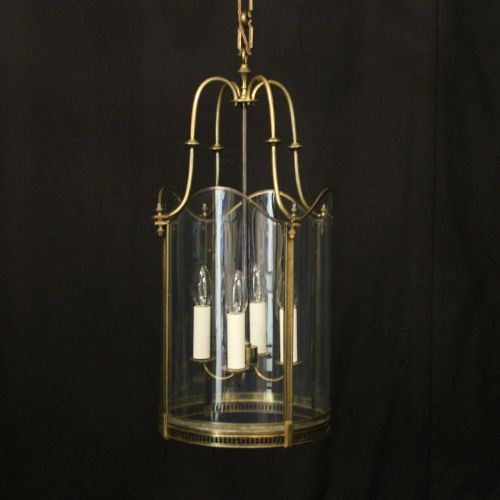
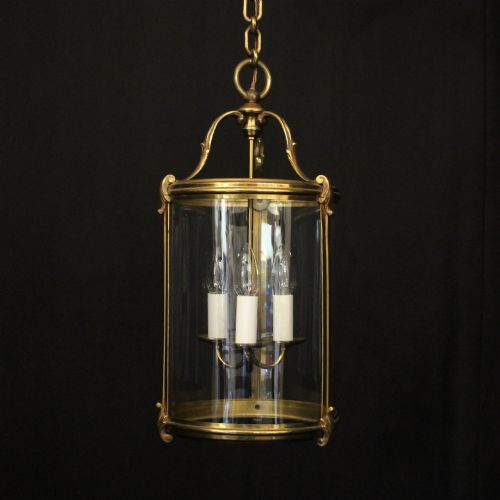
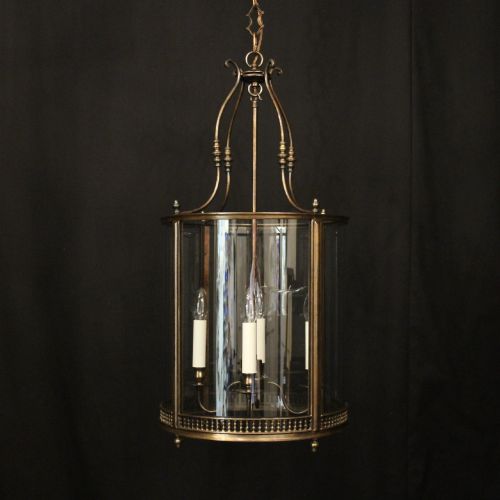
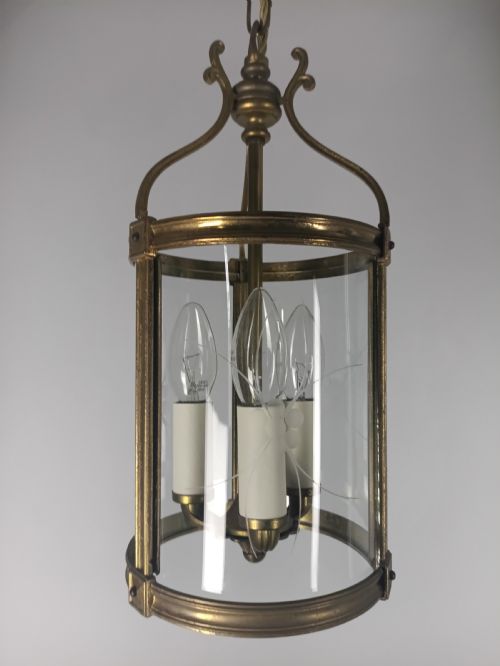
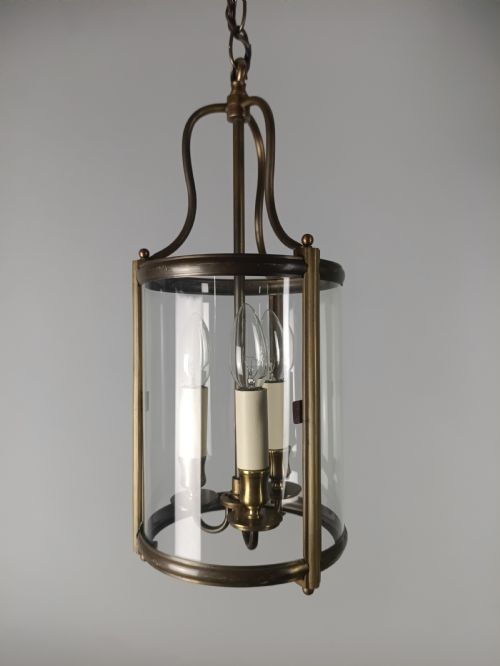
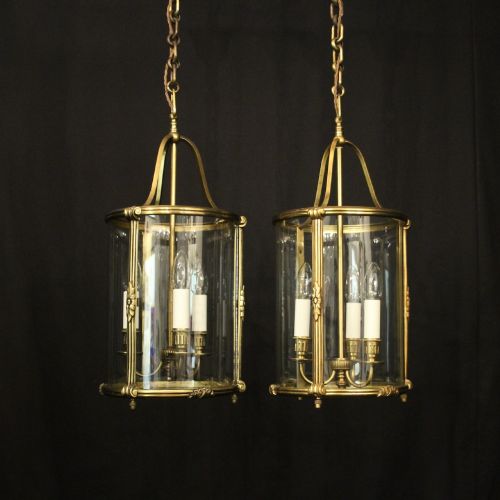
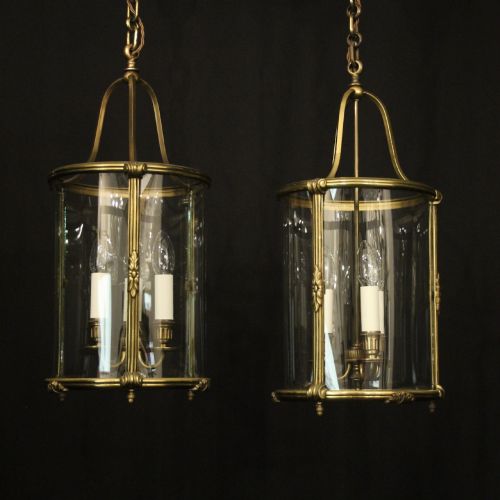
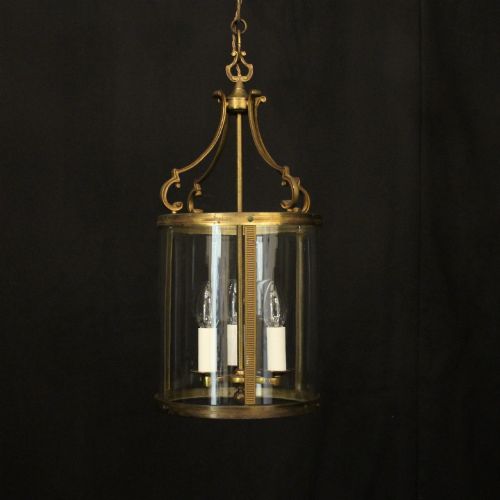
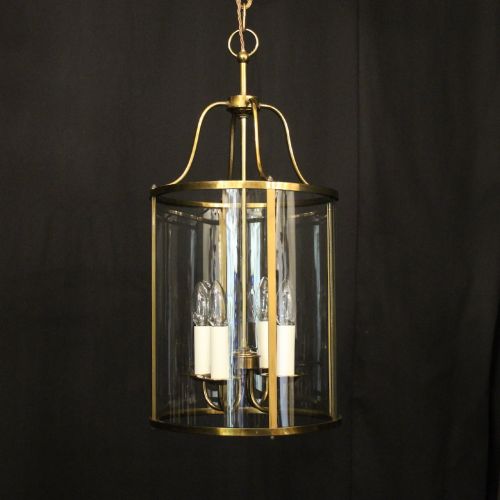


Convex Glass Pendant
These convex glass pendant lights cast a warm, curved glow in hallways and entrances.
Convex Glass Pendant
A convex glass pendant brings directional illumination and period character to an entrance hall or corridor. These fittings take the form of hall lanterns suspended from ceilings, designed to light narrow spaces with elegance.
Buyers browsing this selection will most frequently encounter French and English examples dating from the 1920 and 1930 decades. These pieces span styles from French Neoclassical and Louis formats to English Regency interpretations.
The dominant forms here are hall lanterns and ceiling lights featuring curved glass panes held within metal frameworks. They serve as primary overhead lighting for period interiors and grand hallways alike.
How they were made
Makers constructed these lanterns using brass, gilt brass, gilded bronze, and general metal frameworks to house the curved glass. The metal components were frequently gilded to impart a rich, reflective surface finish.
The defining feature is the convex glass panel, shaped to bulge outward and diffuse the internal light sources. These panes were sometimes etched for decorative effect before being secured into multi-light frames.
Current listings exclusively feature pieces from the 1920 and 1930 periods, constructed in glass, brass, and gilt bronze.
What varies in quality
The calibre of a convex glass pendant rests in the weight and finish of its bronze or brass mountings. Heavier cast bronze frames with crisp chasing sit at the upper end of the scale, outperforming lighter stamped metal alternatives.
Complexity of internal lighting also distinguishes the pieces, ranging from single bulb setups to triple and four light arrangements. The clarity and execution of any etched glass detailing further separate standard production from finer examples.
The Convex Glass Pendant Glossary
- Convex glass
- Glass formed with an outward curve that distorts reflections and diffuses light evenly across a space. This curved profile is the defining characteristic of the lantern style.
- Gilt bronze
- Bronze metal treated with a thin layer of gold or gold-coloured finish to enhance visual richness. It provides durable ornamentation for period lighting frames.
- Hall lantern
- An enclosed ceiling-hung light fixture specifically proportioned for corridors, vestibules, and entranceways. They provide secure overhead illumination in transitional spaces.
- French Neoclassical
- A decorative style drawing inspiration from classical antiquity, featuring restrained symmetry and refined ornamentation. It heavily influences many continental lanterns from the early twentieth century.
Convex Glass Pendant: Frequently Asked Questions
Where should I hang a convex glass pendant?
These lanterns suit entrance halls, narrow corridors, and vestibules where overhead illumination is required without taking up floor space.
Their enclosed design protects the light source while casting light downward and outward across the surrounding walls.
How do I date a convex glass pendant?
Dating relies on examining the metal alloys, construction methods, and stylistic cues present in the framework. The pieces listed here span the 1920 and 1930 periods, showing French and English design traits.
Later adaptations or rewiring can also be identified through modern electrical components fitted into historical bodies.
What is the difference between brass and bronze lanterns?
Brass is an alloy of copper and zinc, offering a bright golden tone that can be polished or gilt. Bronze contains copper and tin, yielding a heavier, denser metal suitable for intricate casting.
Both materials appear frequently across French and English lighting fixtures from the interwar decades.
Can these lanterns be used with modern wiring?
Many surviving examples receive updated internal wiring to meet contemporary safety standards while retaining their original metal and glass housing.
Professional electrical checks ensure that historic fixtures operate safely in modern domestic settings.