
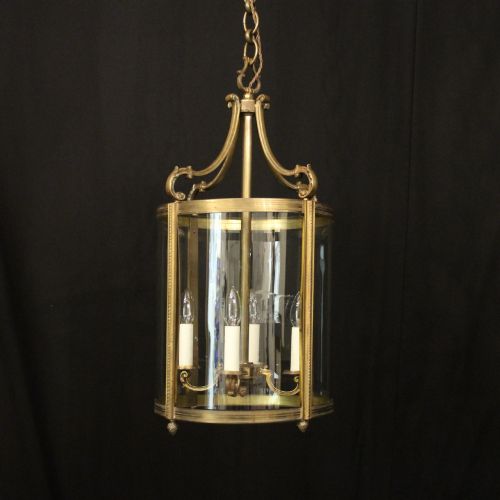
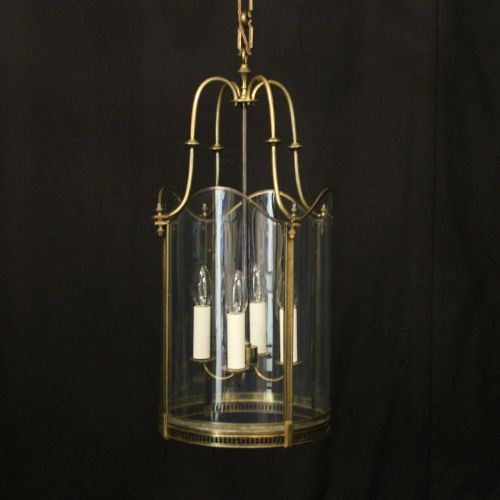
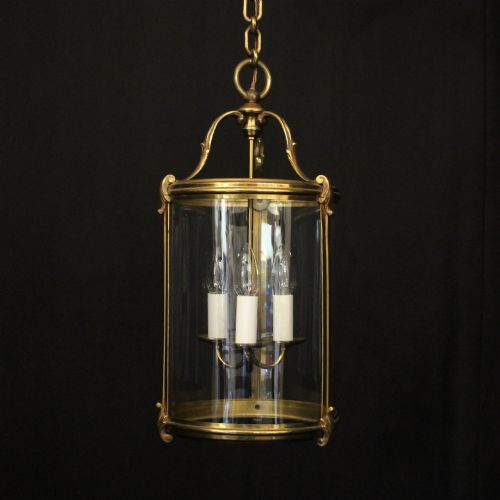
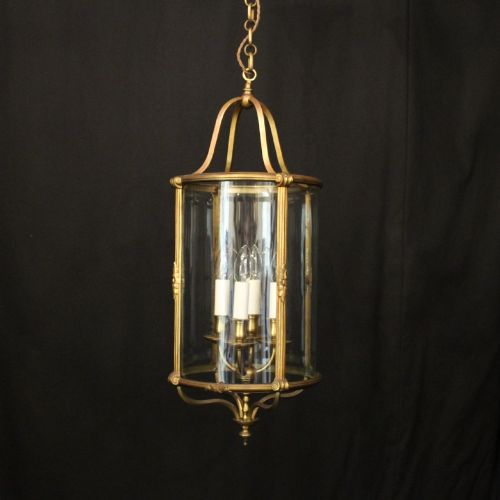
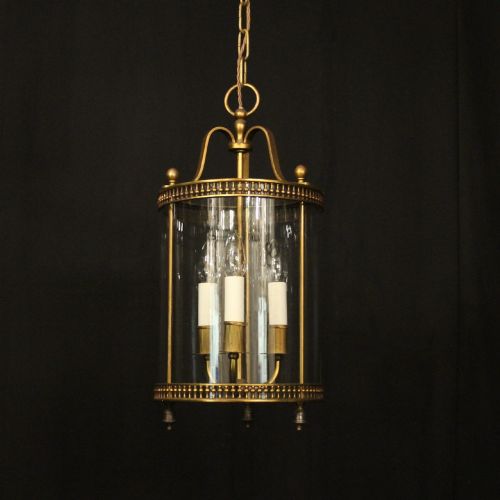
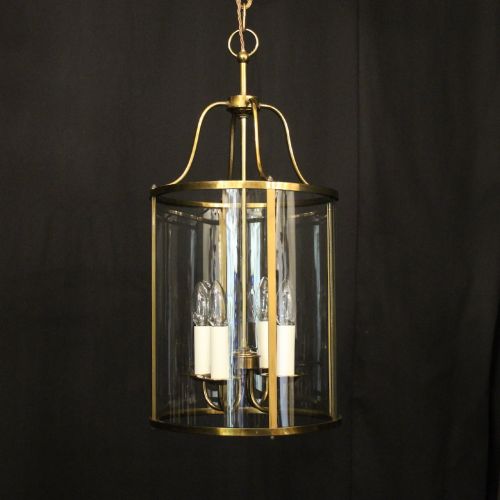
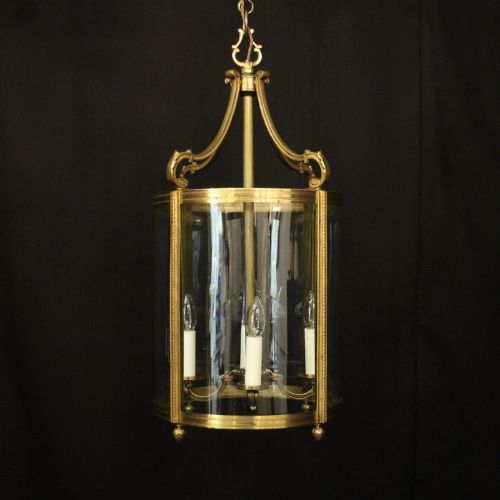

Gilded Brass Lantern
A gilded brass lantern brings immediate architectural weight and warm illumination to an entrance hall or high-ceilinged room.
Gilded Brass Lantern
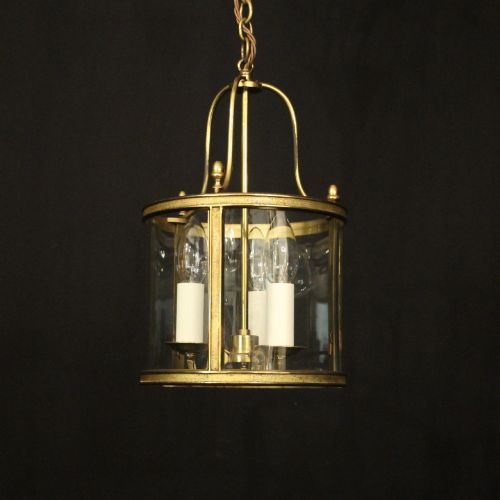
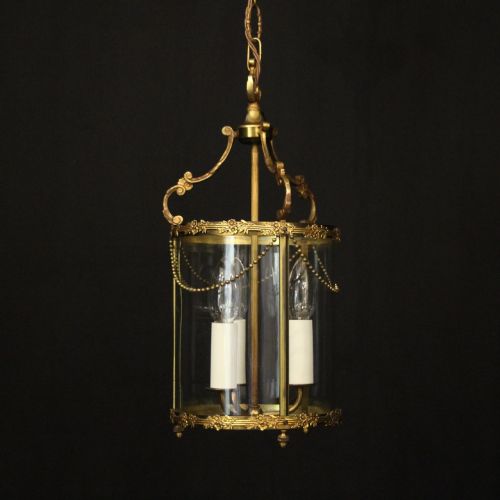
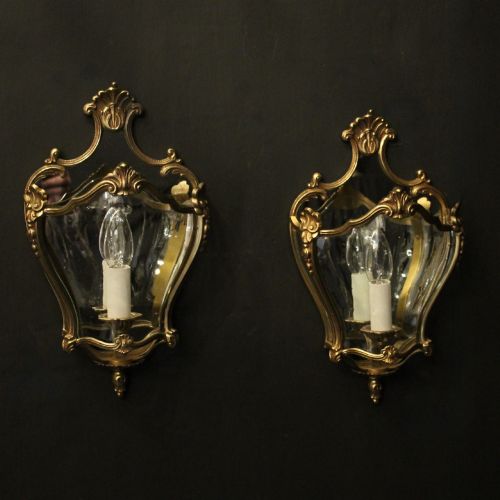
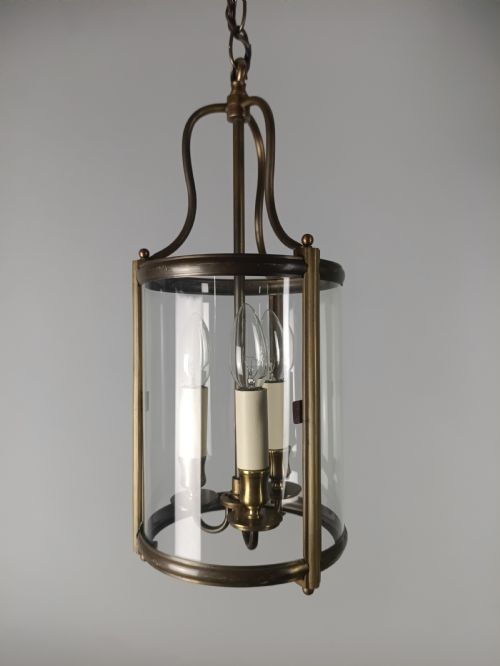
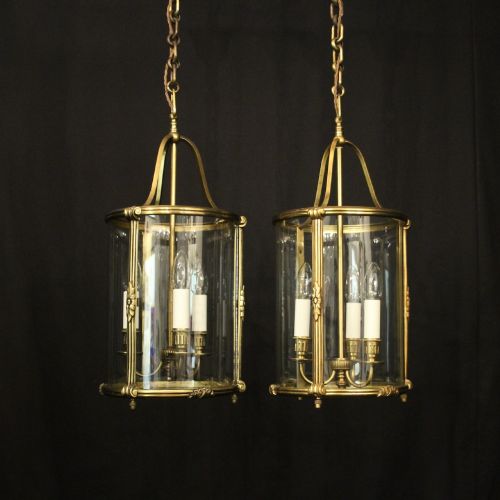
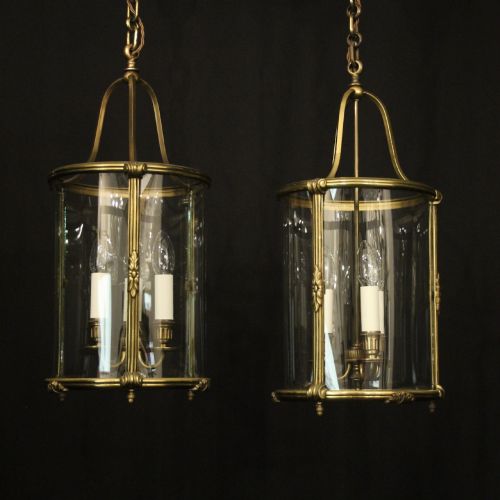
A gilded brass lantern is an overhead hanging light enclosed in glass, designed principally to illuminate entrance halls, stairwells and landings. The pieces found here span from the nineteenth century into the 1930s, encompassing English and French workshops working in styles from neoclassical restraint to exuberant rococo revival.
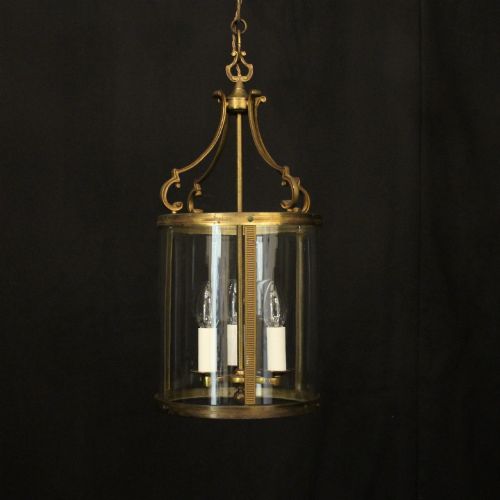
The most common form on this page is the French hall lantern, frequently housing multiple internal lights and utilising convex glass panes to diffuse the illumination. These fixtures combine structural metal frameworks with transparent panels, serving both a functional lighting purpose and an ornamental role in interior spaces.
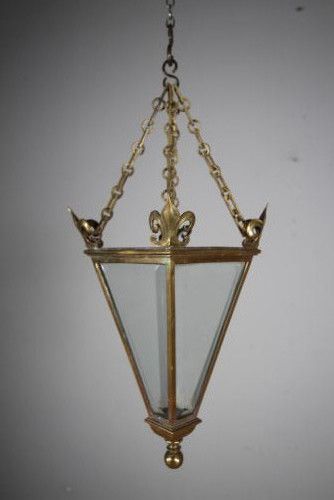
Originating predominantly from continental and domestic makers, these lanterns reflect historical design idioms such as Louis XVI symmetry, Gothic revivalism, and Empire grandeur. Buyers encounter variations ranging from single-light hanging fixtures to substantial four-light ceiling pendants.
Materials and construction methods
The primary structural components rely on cast and sheet brass or bronze, treated with a gilt finish to impart a rich golden surface sheen. This metal armature supports panes of glass, which are frequently cut, bevelled, or curved into convex profiles to catch and refract the light.
Assembly methods involve mechanical fixings such as pins, screws, and brazed joints to secure the metal framework around the glazed panels. Ormolu mounts and cast decorative details are often applied to the corners and crowns of the lanterns, demonstrating traditional foundry techniques of the nineteenth and early twentieth centuries.
Gilded Brass Lantern Retail Price Guide 2026
Typical asking prices for gilded brass lantern among the pieces listed under this phrase on Sellingantiques today, from the lower quarter to the upper quarter. They describe what is for sale here now, not the wider market.
Listings feature pieces spanning from the nineteenth century through the Edwardian era up to the 1930s.
Distinguishing quality across examples
Quality in these lanterns is measured by the crispness of the casting work on the brass and bronze mounts, where sharper architectural details and deeply chased ornamentation indicate superior craftsmanship. The weight of the metal framework and the thickness of the glass panels also contribute significantly to the overall solidity of the piece.
The integrity of the original gilding remains a major factor in separating standard productions from finer examples, alongside the complexity of the glass work, such as heavily bevelled edges or specialised convex blowing. Furthermore, the cohesion of stylistic execution - whether following a strict neoclassical design or an elaborate gothic pattern - determines the visual authority of the lantern.
The Gilded Brass Lantern Glossary
- Convex glass
- Curved glass panels that project outward, designed to soften and widen the spread of light from the internal bulbs.
- Ormolu
- Gilded bronze or brass applied as decorative mounts and ornamental details on the metal framework of the lantern.
- Hall lantern
- An overhead hanging light fixture specifically proportioned for narrow spaces, corridors, and entrance vestibules.
- Gilt bronze
- Bronze metal treated with a thin layer of gold or gold-coloured finish to provide a bright, enduring metallic surface.
- Bevelled glass
- Glass panes featuring angled edges ground down to refract light and create a decorative prismatic effect.
Gilded Brass Lantern: Frequently Asked Questions
Where should a hanging lantern be placed?
These lanterns are traditionally hung in entrance halls, high-ceilinged vestibules, or above stairwell landings where their downward illumination and decorative metalwork can be fully appreciated.
Because they provide direct ambient light from an elevated position, they serve as a striking focal point upon entering a property.
Can these antique lights be rewired safely?
Most surviving lanterns of this age require modern electrical components to meet current safety standards and connect properly to domestic ceiling circuits.
A qualified electrician can easily update the internal wiring and bulb fittings while preserving the original metal armature and glass panels.
What maintenance do gilt metal surfaces need?
Gilded brass and bronze surfaces require gentle dusting with a soft cloth to prevent the accumulation of grime without abrading the delicate gold finish.
Harsh chemical cleaners must be avoided entirely, as they can strip away the historic gilt layer and permanently damage the metal.