
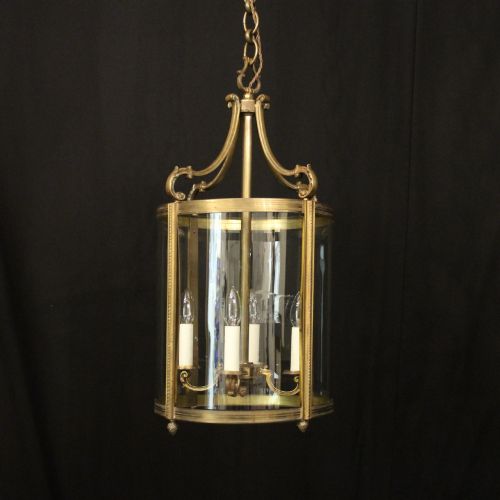
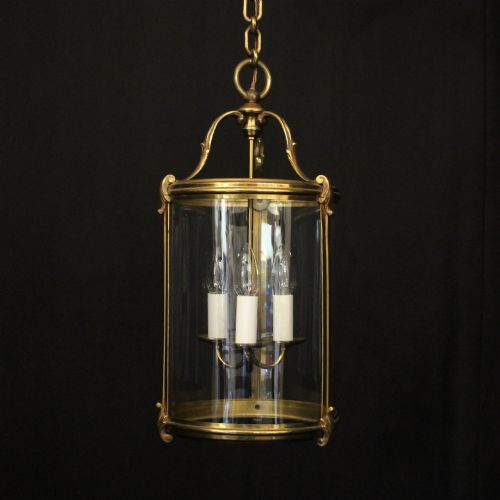
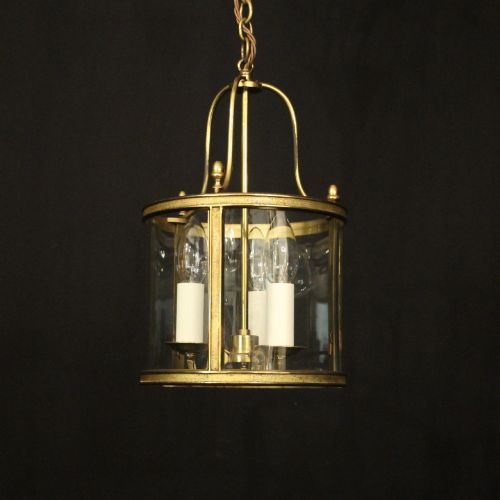
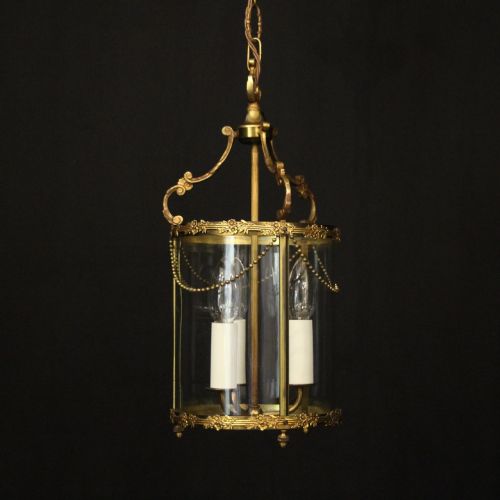


Cylindrical Glass Lantern
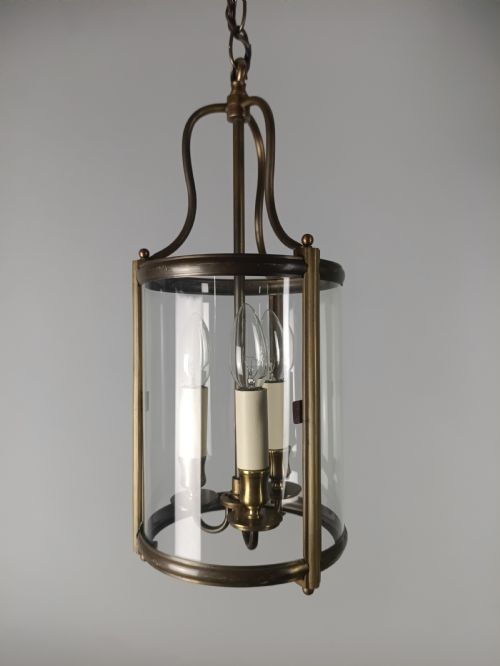
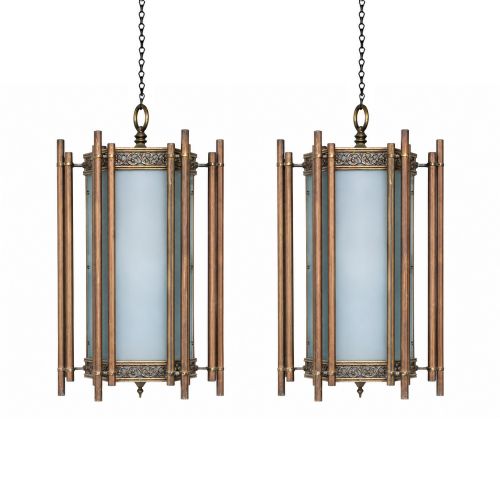
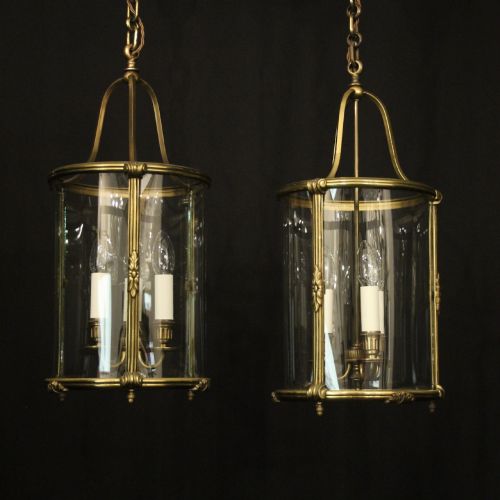
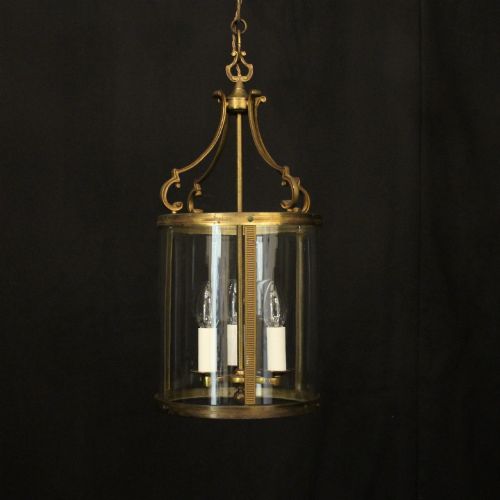
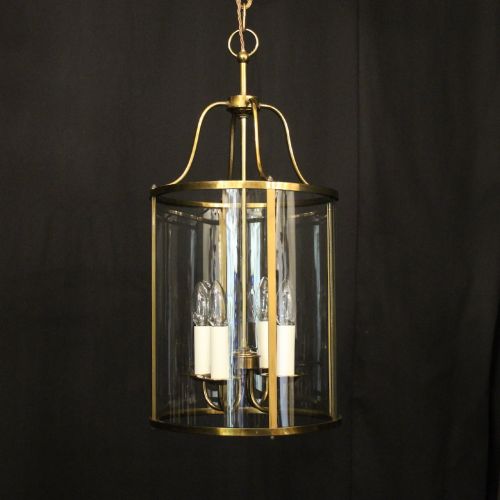
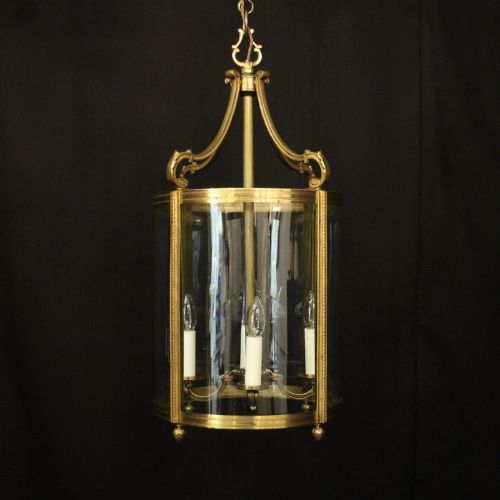
These cylindrical glass lantern examples bring unmistakable period character to an entrance hall, combining brass framing with classic hanging forms.

Identifying your cylindrical glass lantern
A cylindrical glass lantern provides focused illumination for hallways and vestibules while establishing a distinct architectural presence overhead. You will primarily encounter French and English examples dating from the early decades of the twentieth century, specifically spanning the nineteen hundreds to the nineteen thirties. These fixtures typically function as ceiling lights, pendant lighting or hall lanterns designed to hang centrally in entrance spaces.
The aesthetic leans heavily into classical design idioms, with French Neoclassical, French Louis XV, French Chateau, French Classical, Grand Regency and Edwardian influences appearing across the selection. Many pieces incorporate convex glass panels that gently curve outwards, softening the light output and adding visual depth to the cylinder silhouette. Configurations range from single bulbs to triple and quadruple light arrangements within the metal framework.
Construction and materials
The structure relies on robust metal frames fashioned from brass, polished brass, gilded brass, gilt brass or gilded bronze. These metal components provide the essential armature that secures the surrounding glass panels and suspends the internal electrical fittings safely from the ceiling.
Clear or curved glass panes are fitted neatly into the metal surrounds, creating the characteristic tubular housing that defines each piece. Gilded or polished surface treatments are applied to the metal frames to catch and reflect the ambient light.
Retail Price Guide 2026
Typical UK retail prices for cylindrical glass lantern, calculated from the Sellingantiques database of over a million retail prices indexed since 2003. This retail price guide relies exclusively on Sellingantiques data; no external sources or auction records are used, so the figures do not describe the wider market.
Materials recorded across the current selection include standard glass paired with brass, gilded brass, gilded bronze and gilt brass.
Assessing quality and craftsmanship
Distinction across these fixtures lies in the substance of the metalwork and the complexity of the casting, where heavier bronze or substantial brass frames outshine lighter alternatives. The presence of fine gilding or a high-grade polish elevates the visual weight of the lantern.
The refinement of the glass components also marks the tier of the piece, particularly where convex glass panels are smoothly shaped and securely seated within the frame. Details such as triple or quadruple light clusters indicate more ambitious interior lighting designs intended for larger reception spaces.
The Cylindrical Glass Lantern Glossary
- Hall lantern
- A ceiling-suspended light fixture specifically scaled and styled for corridors, vestibules and entrance halls. These pieces often feature enclosed glass sides to protect the flame or bulb from drafts.
- Convex glass
- Curved glass panes shaped outward to create a rounded profile. This technique adds dimension to the cylindrical silhouette and alters the refraction of internal light.
- Gilded bronze
- Bronze metal treated with a thin layer of gold leaf or gold paint applied to the surface. It provides a rich, warm finish that resists tarnishing.
- Triple light
- A lighting configuration holding three distinct bulb holders within a single fixture. This arrangement ensures brighter illumination for larger spaces.
Frequently Asked Questions
Where should I hang a cylindrical glass lantern?
These fixtures work best suspended centrally in high-ceilinged entrance halls, corridors or stairwells where their vertical proportions can be fully appreciated.
Ensure you allow sufficient clearance beneath the lowest point of the hanging lantern for comfortable passage below.
How do I date an antique lantern?
Dating relies on stylistic markers, materials and construction techniques recorded across early twentieth-century examples. Pieces from the nineteen hundreds through to the nineteen thirties exhibit specific decorative traits associated with Edwardian or French classical movements.
Examining the metal casting style and the type of electrical fittings helps narrow down the period of manufacture.
What is convex glass?
Convex glass refers to panes that curve outward from the vertical plane of the lantern frame. This traditional method diffuses the light outward in a softer beam.
It also gives the cylindrical shape a more voluminous and decorative profile.