
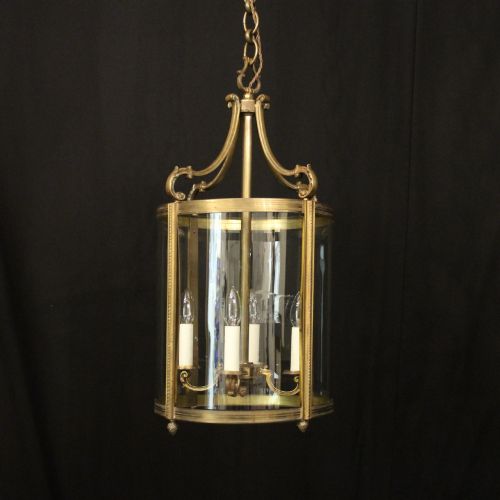
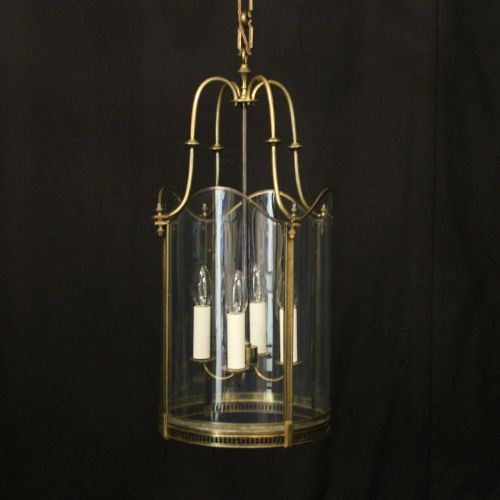
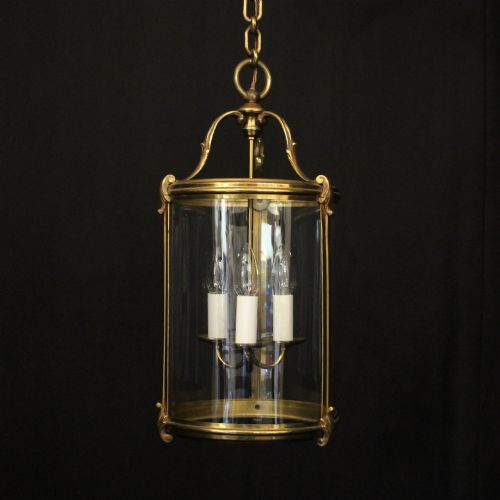
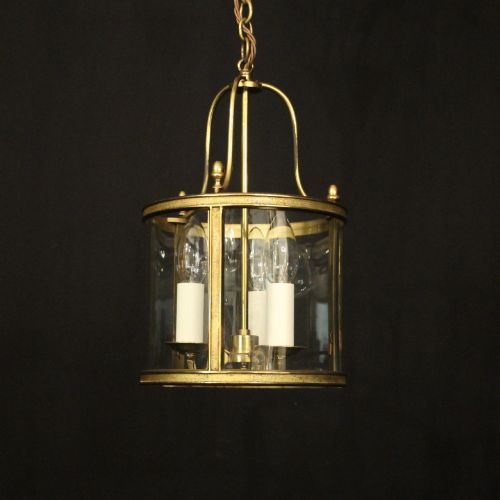
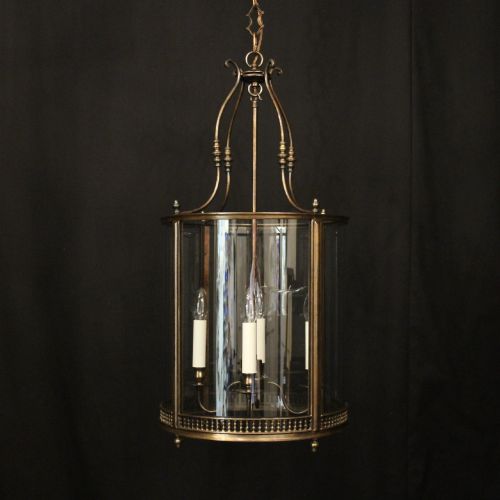
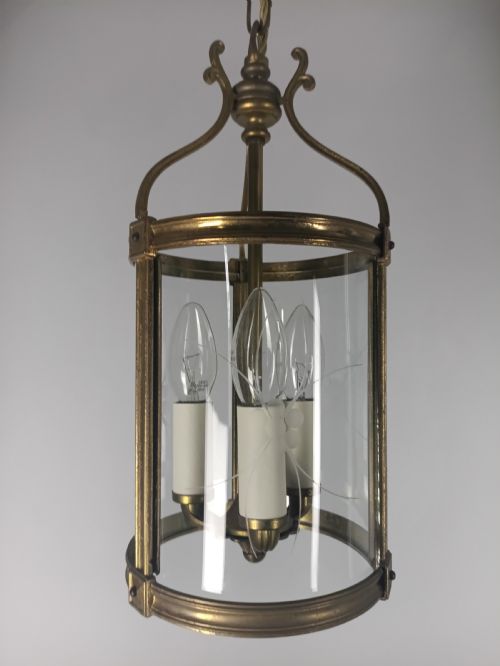
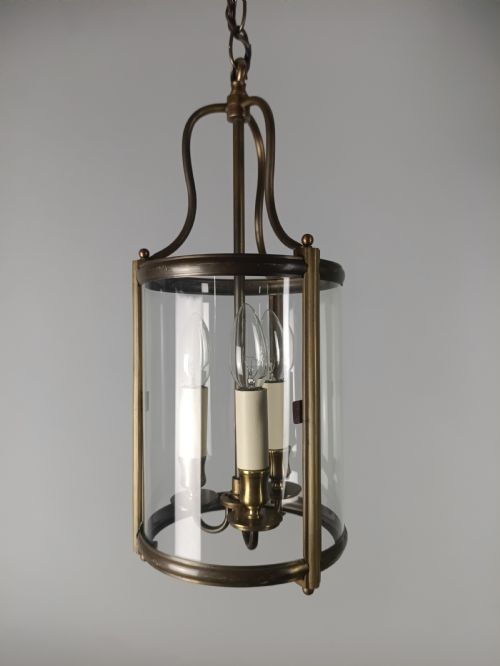
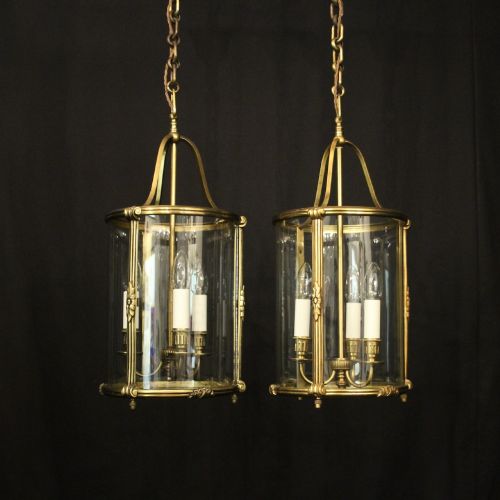
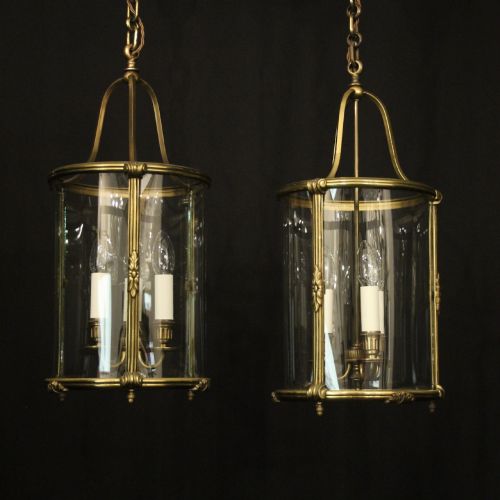
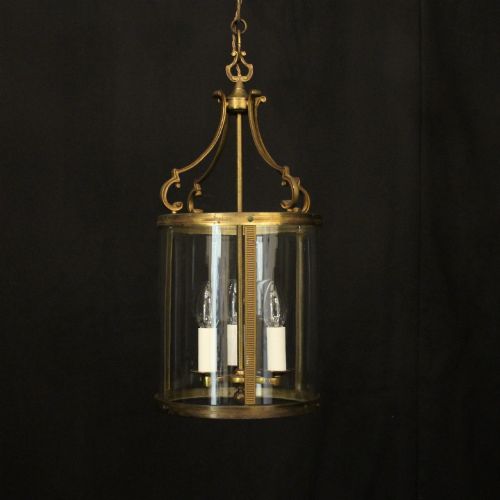
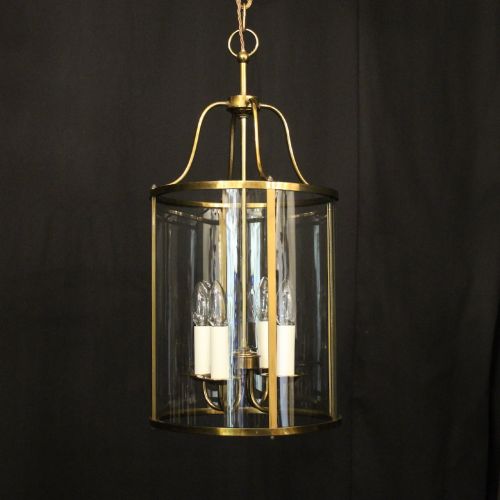
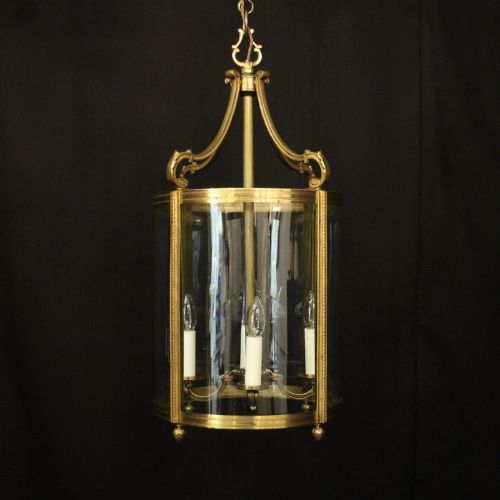


Curved Glass Pendant
These curved glass pendant lights are hall lanterns and ceiling fixtures from the nineteen-twenties and thirties, prized for shaping light through convex glass.
What they are
A curved glass pendant is typically encountered here as a hall lantern or ceiling light from the nineteen-twenties and nineteen-thirties. These fixtures illuminate entrance halls and corridors with distinctive convex lenses held within metal frames.
The selections span English and French workshops, encompassing styles such as French Chateau, French Louis XV, English Regency, and Grand Regency. Pieces range from single-light lanterns to four-light configurations.
How they were made
Makers constructed these lanterns using brass, gilt brass, gilt bronze, and gilded bronze for the structural framework. Glass was shaped into convex panes to fit securely within the metal housings.
Metalwork often incorporated neoclassical or rococo decorative motifs, combining cast bronze or brass mounts with glazed panels. The finishes rely on gilding applied to bronze and brass substrates.
Retail Price Guide 2026
Typical UK retail prices for curved glass pendant, calculated from the Sellingantiques database of over a million retail prices indexed since 2003. This retail price guide relies exclusively on Sellingantiques data; no external sources or auction records are used, so the figures do not describe the wider market.
What varies in quality
Distinctions in quality arise from the weight and detailing of the metal mountings, where cast gilded bronze displays sharper ornamentation than pressed brass. The clarity and thickness of the curved glass panels also separate standard examples from finer commissions.
Proportion and scale dictate the visual impact of each lantern, with larger or multi-light fixtures demanding more complex internal framing. The integrity of the original gilding and the precision of the glass curvature determine the overall character.
The Curved Glass Pendant Glossary
- Convex
- Curved outward like the exterior of a sphere. This describes the rounded glass panels fitted into the lantern frames.
- Gilt bronze
- Bronze that has been coated with a thin layer of gold. It provides a durable and decorative metallic finish.
- Hall lantern
- A ceiling-hung light fixture designed for entranceways and corridors. These fixtures often feature protective glazed panels.
- Rococo
- An ornate design style characterised by asymmetrical scrollwork and natural motifs. It appears on French brass and glass lanterns.
Frequently Asked Questions
Where should I hang a curved glass pendant?
These lanterns suit entrance halls, corridors, and high-ceilinged landings where directional downward illumination is required.
Their enclosed design protects the light source while casting diffused light through the curved glass panes.
How do I distinguish English from French lanterns?
English examples from this period often align with Regency styles, focusing on formal symmetry and cleaner brass frameworks.
French pieces frequently incorporate rococo or neoclassical flourishes, utilising gilt bronze and elaborate cast ornamentation.
What periods do these pendant lights represent?
The available lighting originates primarily from the nineteen-twenties and nineteen-thirties.
These decades saw a continuation of traditional chateau and regency aesthetics adapted for modern domestic interiors.
How many bulbs do these lanterns hold?
Configuration varies between single-light designs and larger four-light setups depending on the physical scale of the fixture.
Larger hall lanterns utilise multiple sockets to adequately illuminate substantial entrance spaces.