
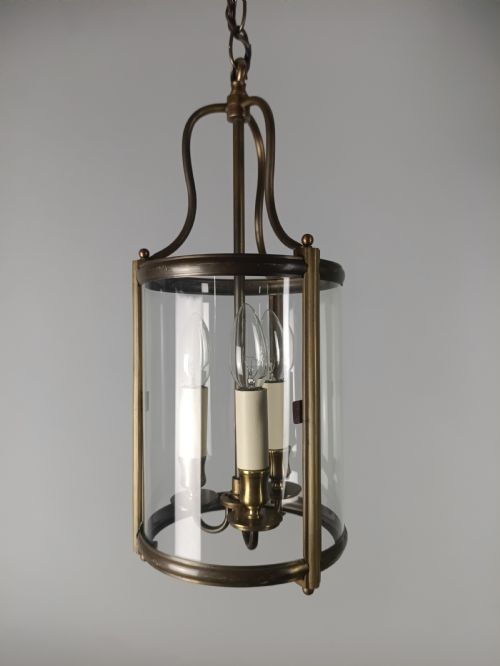
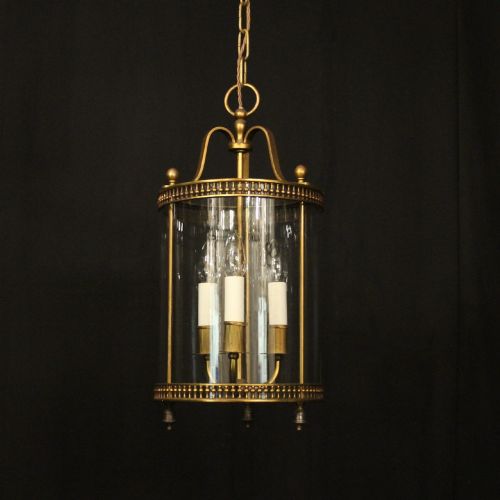


Triple Light Lantern
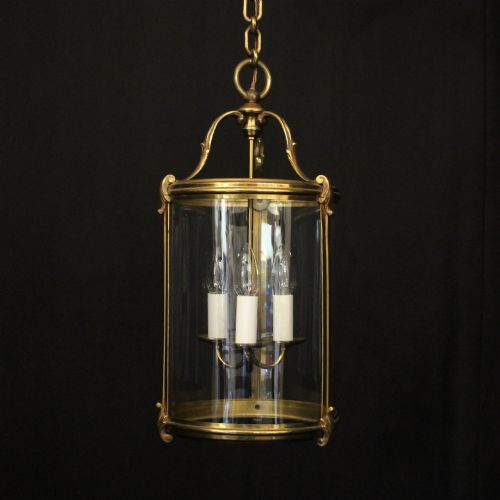
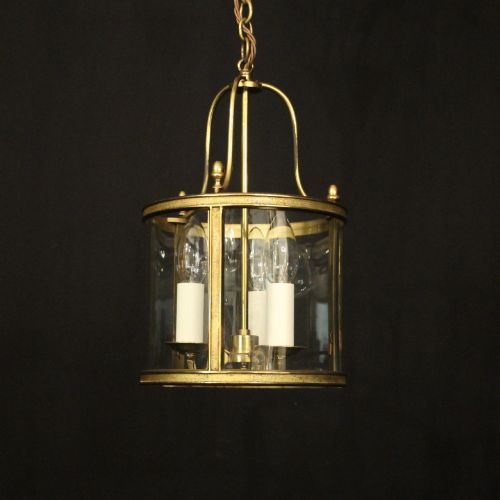
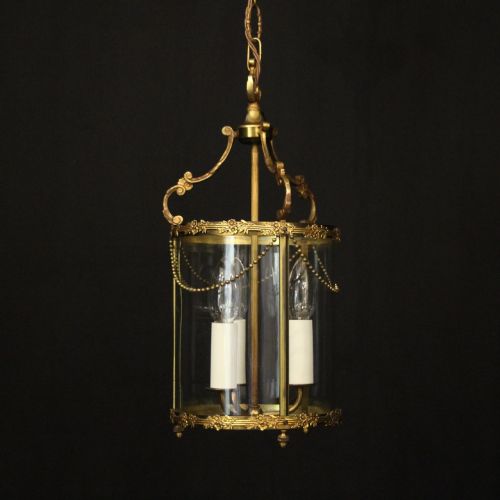
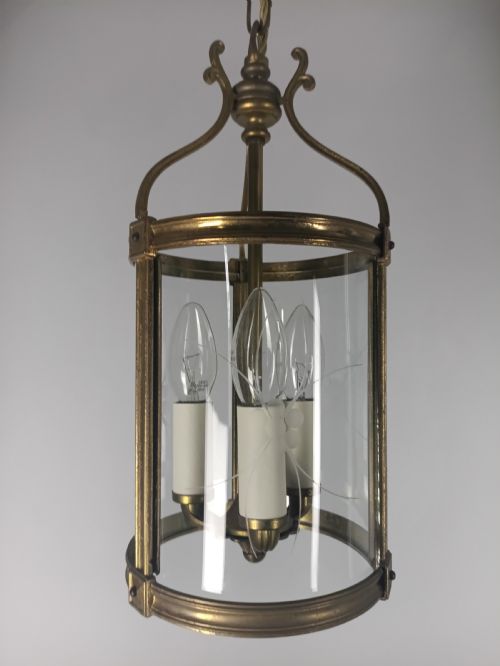
These triple light lantern fixtures bring dramatic illumination to entryways, combining three internal bulbs with glazed metal frames.
Triple Light Lantern
A triple light lantern provides vertical ceiling lighting designed principally for entrance halls, stairwells and corridors. The form houses three distinct lamp holders inside a glazed enclosure suspended by a chain or rod.
Most examples found here originate from France or England, spanning the early decades of the twentieth century. French interpretations dominate the selection, frequently carrying aesthetic influences from the Empire and Rococo styles.
The objects function primarily as hall lanterns or pendant lights, casting illumination downwards and outwards through clear or etched glass panels. They serve to punctuate transitional spaces with architectural presence.
Materials and construction
Makers constructed the structural frames using brass, gilt brass, gilded bronze, standard bronze, and miscellaneous metals. Gilding and polishing treatments applied to the metalwork create varying degrees of surface reflectance.
Panels of glass fit tightly into the metal frameworks, occasionally featuring etched decorative motifs or curved convex surfaces. These curved glass panes require careful glassblowing and moulding techniques to achieve the rounded profile.
Internal electrical components allow three bulbs to sit centrally within the enclosure, though many pieces receive modern rewiring to meet contemporary safety standards.
Triple Light Lantern Retail Price Guide 2026
Typical asking prices for triple light lantern among the pieces listed under this phrase on Sellingantiques today, from the lower quarter to the upper quarter. They describe what is for sale here now, not the wider market.
Materials recorded across the archive include glass, brass, gilt brass, gilded bronze, bronze, and standard metal.
Assessing quality in hanging lanterns
Quality rests heavily on the crispness of the cast metal ornamentation and the thickness of the brass or bronze framework. Heavier metal gauge indicates a more substantial piece that retains its structural integrity over decades of hanging.
The glass panels reveal distinct tiers of craftsmanship, particularly where convex glass curves smoothly without distortion. Etched glass details show greater artisan involvement than plain, flat panes.
Surface finishes also dictate the grade of an object, as durable fire gilding or well-maintained patination on bronze demonstrates superior original execution compared to simpler polished brass.
The Triple Light Lantern Glossary
- Convex glass
- Curved glass panels that bulge outward from the metal frame. This shape disperses light across a wider angle than flat glass.
- Gilt bronze
- Bronze metal coated with a thin layer of gold using fire gilding or other historical techniques. It provides a rich, warm surface lustre.
- Hall lantern
- A ceiling-hung lighting fixture specifically scaled for narrow entryways and corridors. They typically feature enclosed glass sides to protect the flame or bulb from drafts.
- Empire style
- A neoclassical design movement originating in France during the early nineteenth century. It draws heavily on ancient Roman and Greek motifs.
Triple Light Lantern: Frequently Asked Questions
Where should I hang a triple light lantern?
These fixtures suit high-ceilinged entrance halls, stairwells and spacious hallways where vertical hanging space allows the light to command the room.
Ensure adequate clearance beneath the fixture so pedestrian movement remains unobstructed.
How do I clean the glass panels?
Carefully remove dust using a soft dry cloth before applying a mild glass cleaner directly to a cloth rather than the fixture.
Take care to avoid spraying liquid cleaning products onto the surrounding brass, bronze or gilt surfaces.
How do I distinguish French and English lanterns?
French examples frequently incorporate ornate decorative idioms such as Empire, Rococo or classical detailing alongside gilded bronze.
English variants tend towards more restrained brass frames and simpler convex glass configurations.