



Gothic Revival Lantern
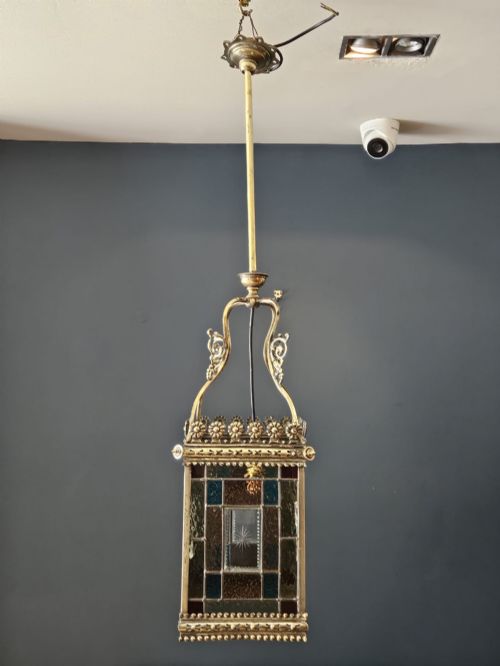
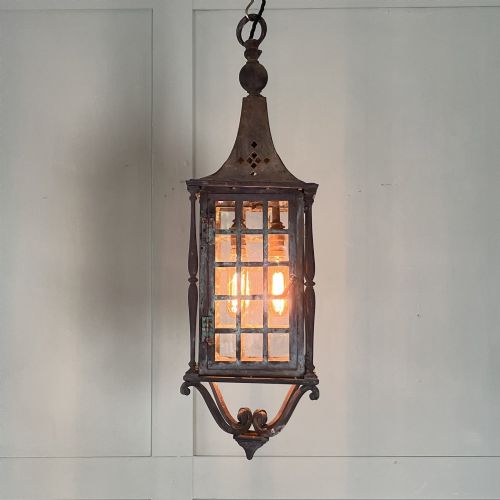
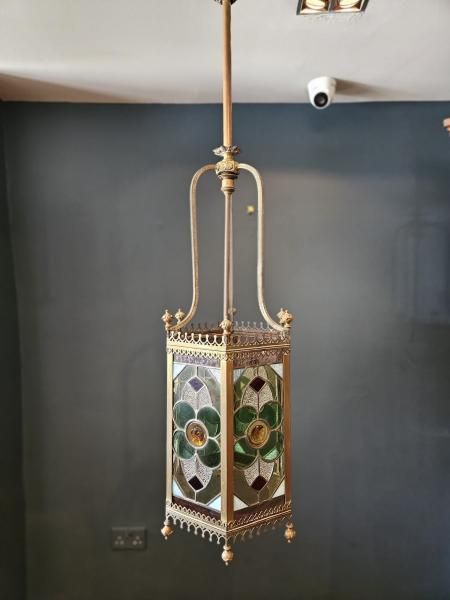
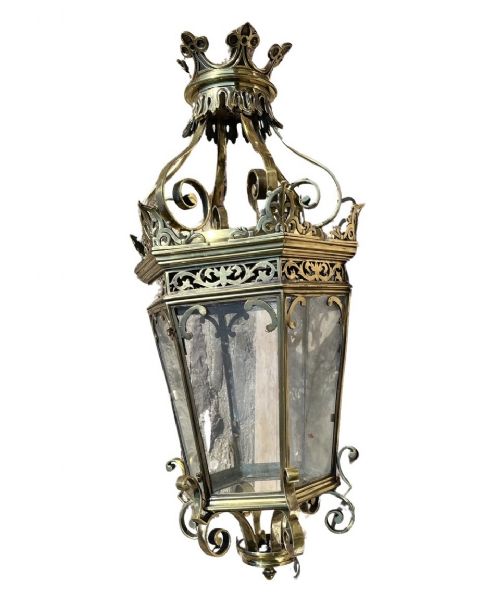
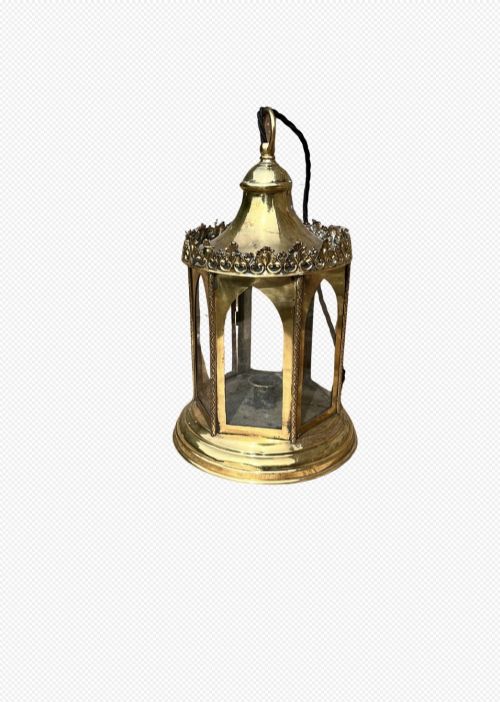
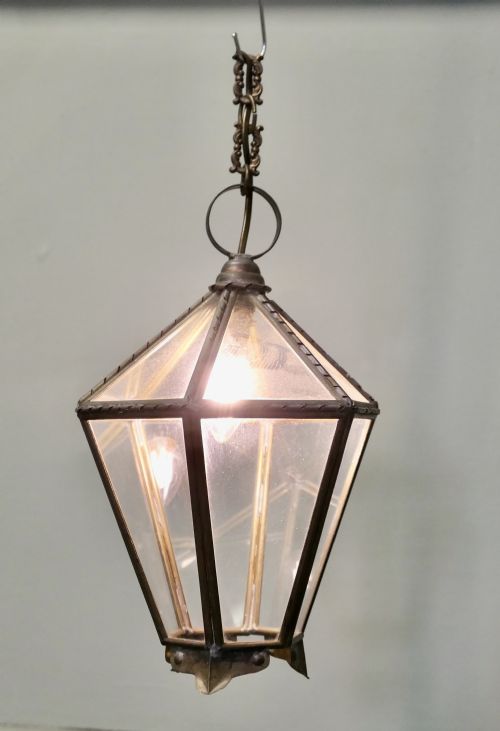
These gothic revival lantern pieces combine period metalwork and architectural glass to light a hallway with distinct historical character.
What these pieces are
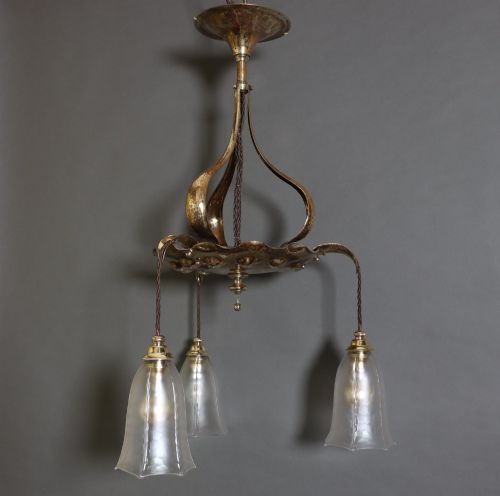
A gothic revival lantern is a hanging light fixture designed to bring medieval architectural styling into domestic spaces. The listings here include ceiling lights, pendant lights, hall lanterns, and ceiling lighting.
You will most commonly encounter brass frames paired with glass panels, reflecting the Victorian, Edwardian, and nineteenth-century periods recorded in the evidence. Pieces span from the mid nineteenth century through to the early twentieth century.
Makers and designers drew upon gothic forms for halls and porches, resulting in hexagonal and door-fitted variations. Bronze and copper examples also appear alongside the more frequent brass and gilded brass constructions.
How they were made
Craftsmen built these lanterns using brass, bronze, copper, and lead to construct sturdy structural frames. Glass panels, including dimpled red glass, were then fitted into the metal frameworks.
Surface treatments involved gilding and patination, while specific designs incorporated functional doors for internal access. Metalwork techniques joined heavy cast elements with soldered lead glass channels.
Retail Price Guide 2026
Typical UK retail prices for gothic revival lantern, calculated from the Sellingantiques database of over a million retail prices indexed since 2003. This retail price guide relies exclusively on Sellingantiques data; no external sources or auction records are used, so the figures do not describe the wider market.
What varies in quality
The distinction between standard production and finer execution lies in the weight of the metal and the precision of the frame construction. Heavier brass and bronze castings demonstrate superior material substance compared to lighter utilitarian alternatives.
The complexity of the glass work and the integration of decorative details, such as figurative copper elements, separate simpler hanging lights from more ambitious architectural interpretations.
The Gothic Revival Lantern Glossary
- Gothic Revival
- An architectural and decorative style drawing inspiration from medieval design. It frequently employs pointed arches and heavy structural metalwork in domestic lighting.
- Hall Lantern
- A pendant light fixture specifically scaled for entranceways and corridors. These pieces typically feature enclosed glass panels to protect the internal candle or bulb.
- Hexagonal Form
- A six-sided geometric shape utilised for lantern bodies. This configuration allows for expanded glass surface area and directional light distribution.
- Lead Glass
- Glass panels held together within a framework of lead cames. This technique originates from traditional stained glass window manufacture.
Frequently Asked Questions
Where should I hang a gothic revival lantern?
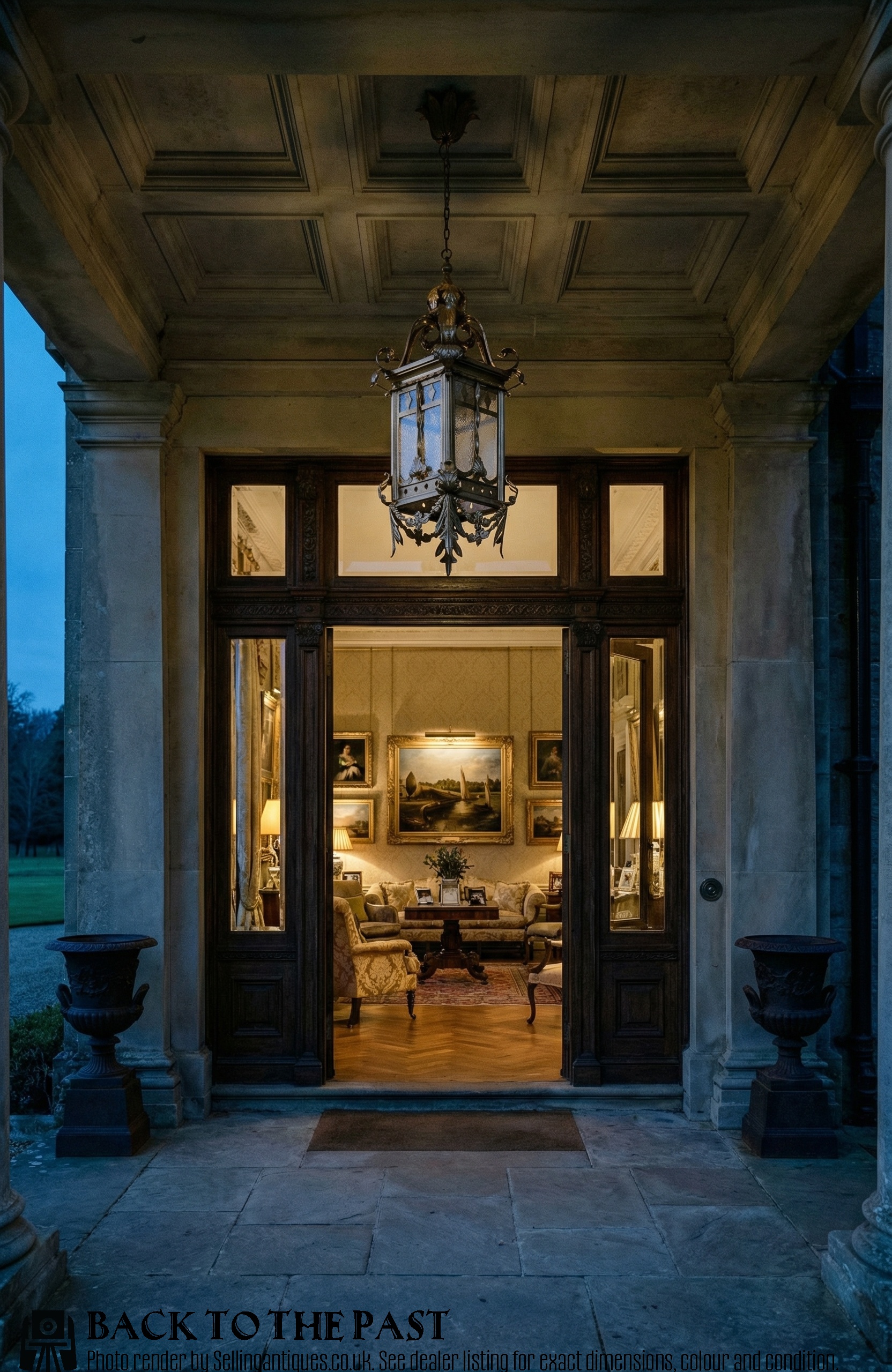
These fixtures suit entrance halls, corridors, and high-ceilinged porches where their architectural proportions can be fully appreciated.
Ensure adequate ceiling height is available to accommodate the drop of a pendant hall light safely.
What materials are used in these lanterns?
The primary structural materials recorded are brass, bronze, copper, and lead. Glass panels complete the enclosed bodies of the lights.
Surface finishes range from polished brass to gilded metal and patinated copper.
How do I date a gothic revival lantern?
Dating relies upon stylistic indicators, construction methods, and material choices associated with Victorian, Edwardian, and nineteenth-century production.
Examining the fixings and the type of glass used helps place the object within its historical period.
Are these lights suitable for modern electrical systems?
Most surviving period lanterns have been adapted for contemporary wiring to function safely in modern homes.
Consult a qualified electrician to check the internal fittings and ensure compatibility with current safety standards.