
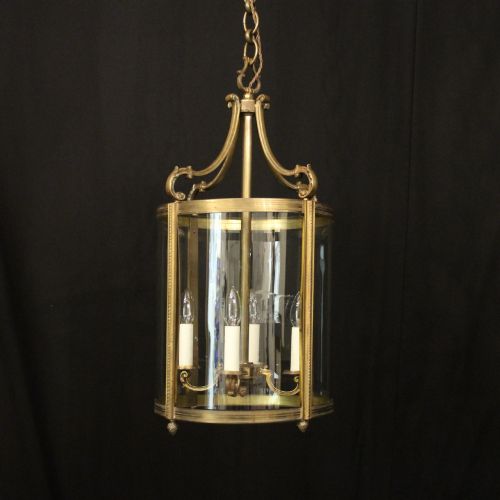
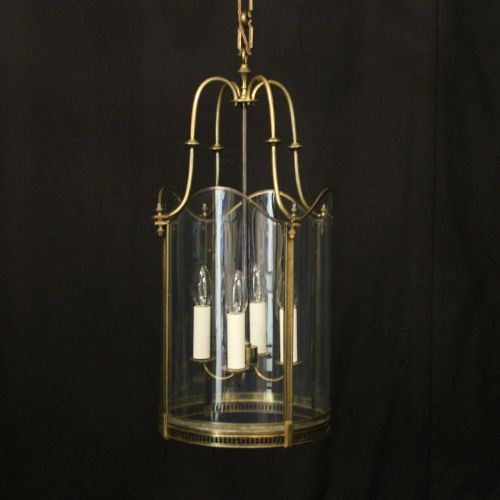
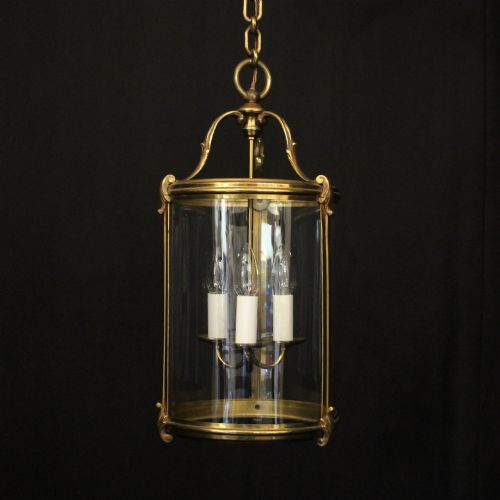
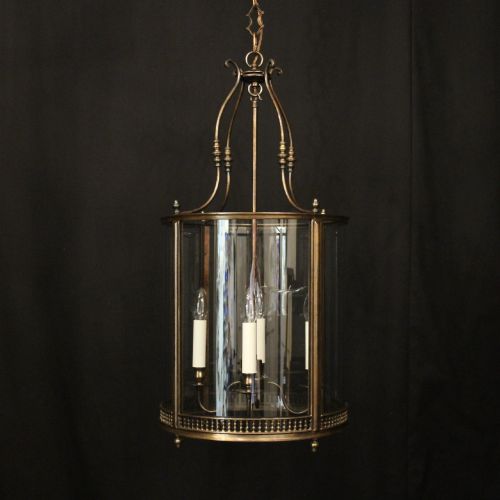


Entryway Hanging Lantern
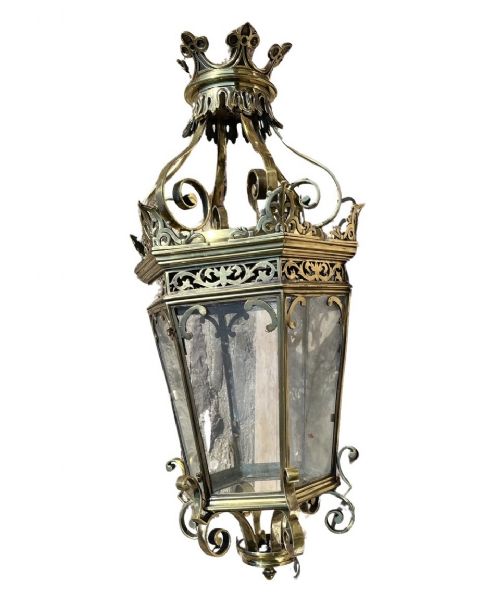
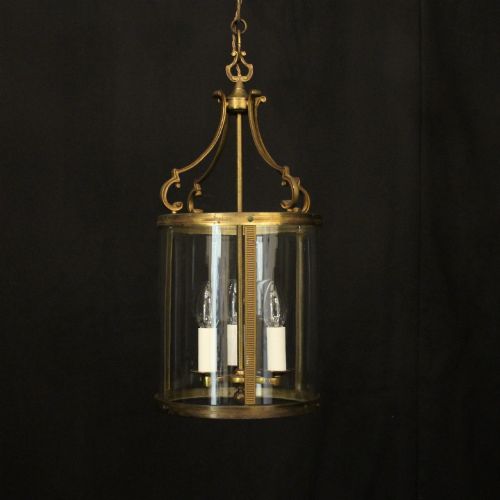
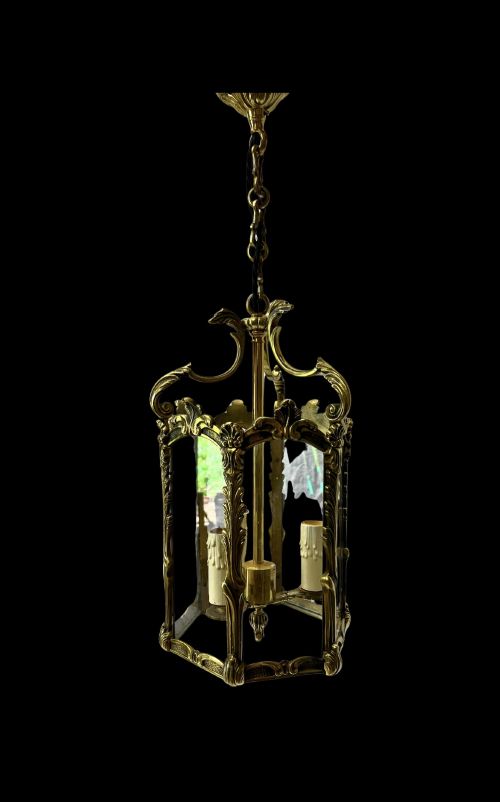
An entryway hanging lantern sets the tone for a home, casting warm light through glass panels held by metal frames.
Entryway Hanging Lantern
An entryway hanging lantern is a practical and decorative light fixture designed to illuminate corridors, hallways, and porches. When you search for an entryway hanging lantern, you encounter pieces originating from the nineteenth century through to the 1930s. The selection spans English, French, and Italian origins, ranging from simple designs to elaborate multi-light configurations.
How They Were Made
Makers constructed these lanterns using metals such as brass, wrought iron, bronze, steel, and copper, frequently applying gilt or silvered finishes to the bronze and brass surfaces. Structural frames support glazed panels of clear or convex glass, securing them with hinges or integrated doors.
Metalwork techniques involve hand-wrought iron framing, cast bronze mounts, and soldered brass joins. Surface treatments range from polished or gilded finishes to the natural dark patina of aged iron and copper.
Entryway Hanging Lantern Retail Price Guide 2026
Typical asking prices for entryway hanging lantern among the pieces listed under this phrase on Sellingantiques today, from the lower quarter to the upper quarter. They describe what is for sale here now, not the wider market.
Several lanterns include small hinged doors, built so servants could easily reach inside to light candles without dismantling the fixture.
What Varies in Quality
The distinction between standard and exceptional pieces rests in the weight of the metal casting and the precision of the joinery. Superior examples display crisp chasing on gilded bronze mounts and heavy gauge brass or iron frames that maintain structural rigidity.
Another measure of quality is the use of curved convex glass and the complexity of internal lighting arrangements, such as triple or quadruple light clusters. Original finishes and intact glass panels also elevate the standing of a lantern.
The Entryway Hanging Lantern Glossary
- Convex glass
- Glass panes blown or slumped to curve outward from the frame. This technique magnifies the internal light source and adds visual depth.
- Gilt bronze
- Bronze metal treated with a thin layer of gold applied via mercury amalgamation or electroplating. It provides a durable golden surface that resists tarnish.
- Hall lantern
- A ceiling-suspended light fixture specifically scaled for narrow passageways and entrance halls. These fixtures combine protective metal cages with glass panels.
- Wrought iron
- Iron beaten and shaped by hand while hot using a blacksmith's anvil and tools. It yields strong structural components with visible hammer marks.
Entryway Hanging Lantern: Frequently Asked Questions
How high should I hang my lantern?
Suspended entryway fixtures require enough clearance beneath them for people to walk past safely. In standard hallways, the bottom of the lantern typically sits well above head height.
For double-height entrance spaces, the fixture hangs lower to align visually with the volume of the room while maintaining adequate overhead clearance from the floor below.
Can these antique lanterns be wired safely?
Electrical adaptation is common for vintage and antique lighting fixtures. Modern wiring can be threaded through the original central tubes and candle sockets without altering the exterior metalwork.
Professional electricians routinely inspect the internal channels and sockets of nineteenth and early twentieth-century fixtures to ensure they meet current safety standards prior to installation.
How do I clean brass and bronze frames?
Dust accumulation on metal frameworks and glass panels is best managed with a soft, dry cloth. Avoiding abrasive cleaners preserves the historical patinas and delicate gilded surfaces found on older metals.
Specialist metal polishes should be restricted to unlacquered raw brass where bright shine is preferred over the darker tones developed through natural oxidation.
What is the difference between a hall lantern and a pendant light?
Hall lanterns generally feature an enclosed metal cage fitted with glass panels on all sides to protect the flame or bulb from drafts. This protective housing distinguishes them from open pendant lights.
Pendant lights hang from a single chain or rod but often lack the surrounding glass lantern body, functioning instead as simpler suspended shades or bowls.