

Gilt Brass Pendant
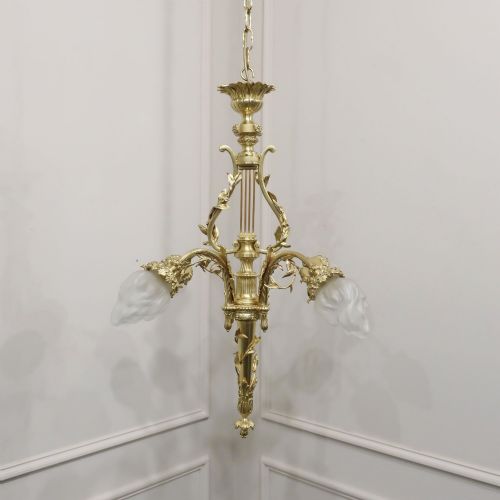
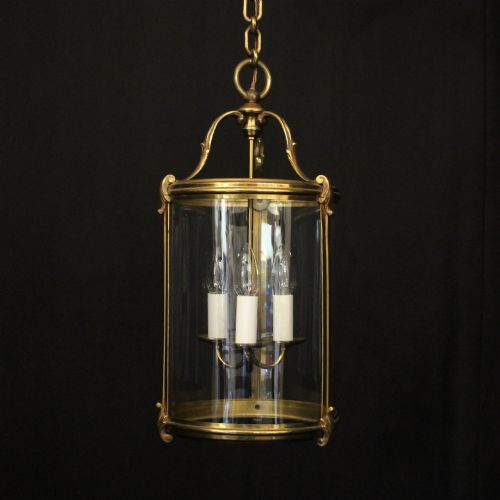
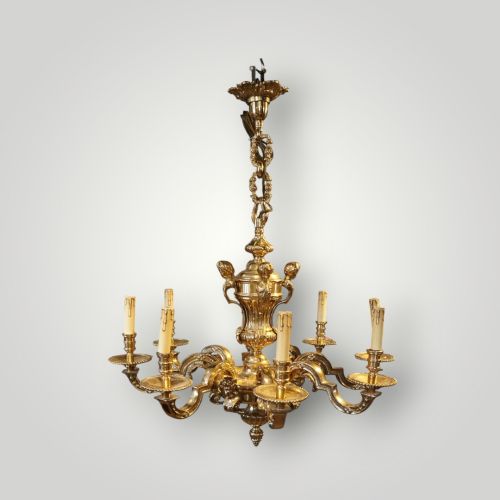
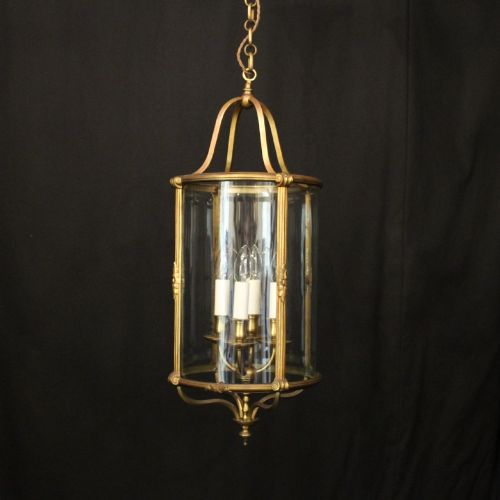
A gilt brass pendant provides focused overhead illumination, combining metallic lustre with glass elements in designs ranging from French lanterns to classical chandeliers.
Gilt Brass Pendant
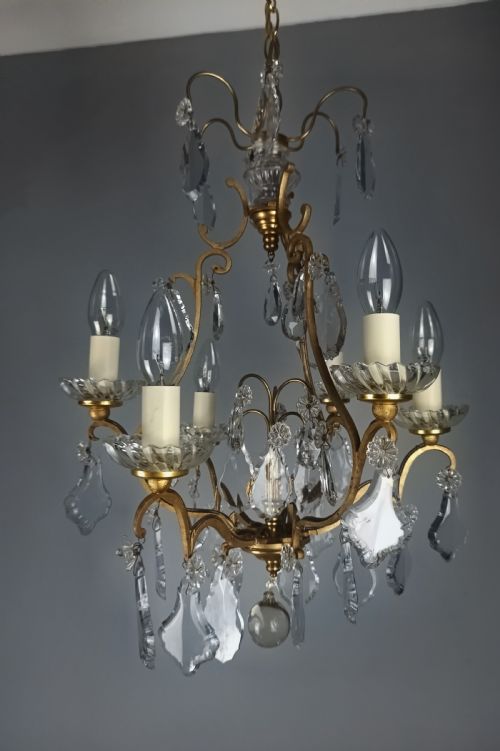
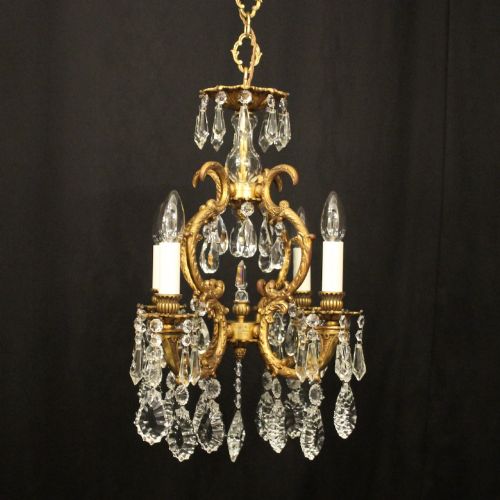
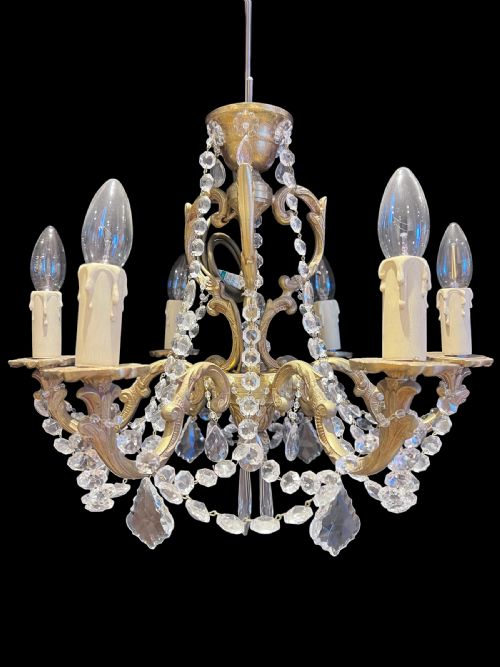
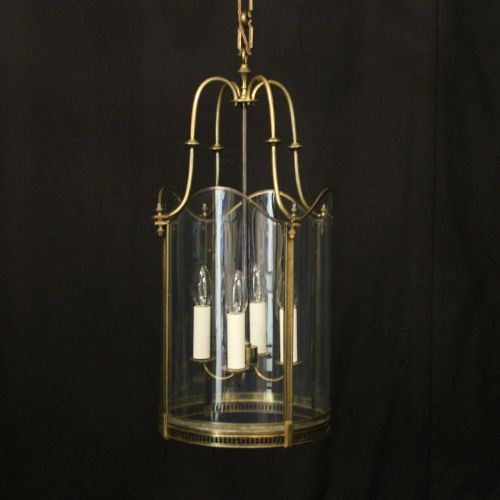
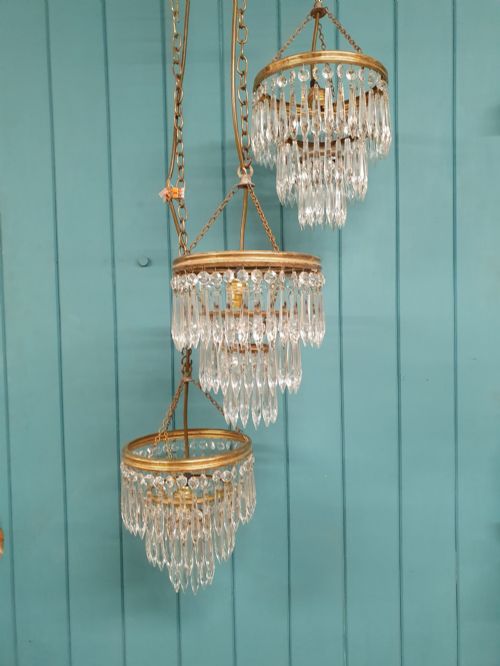
The selection spans from the late nineteenth century through the early twentieth century, capturing periods such as the Edwardian era and the nineteen-twenties. Forms vary from simple convex lanterns to elaborate Empire style tent and waterfall configurations adorned with crystal prisms.
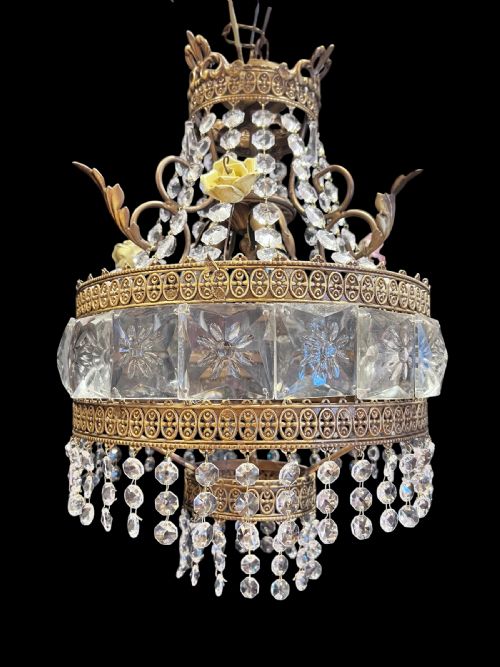
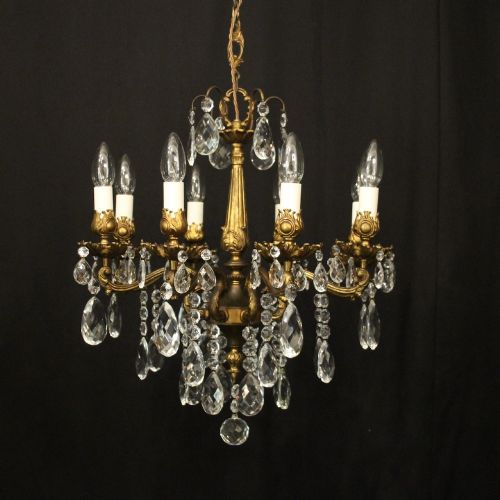
Most examples originate from continental European makers, with French chateau, neoclassical, and rococo revival styles dominating the selection. Buyers also find Italian Florentine pieces featuring porcelain flowers alongside utilitarian hall lanterns designed for narrow entryways.
How they were made
Makers constructed these fixtures using cast brass, bronze, and gilt metal frameworks finished with applied gold leaf or chemical gilding. Structural integrity relied on mechanical joints, threaded rods, and riveted brass strapwork designed to support heavy glass bowls and crystal drops.
Optical and decorative effects derived from integrating cut crystal prisms, etched glass panels, and slumped art deco glass globes. Workshops incorporated organic details such as porcelain flowers, ceramic leaves, and cast winged cherubs directly into the metal armature.
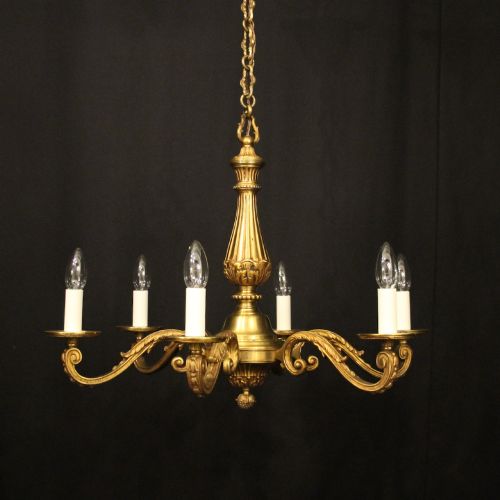
Object types documented here range from multi-arm chandeliers and Empire style tent designs to etched glass hall lanterns and art deco globes.
What varies in quality
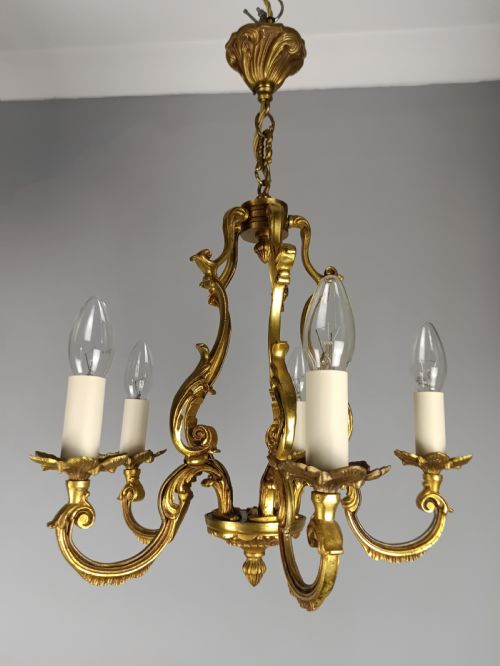
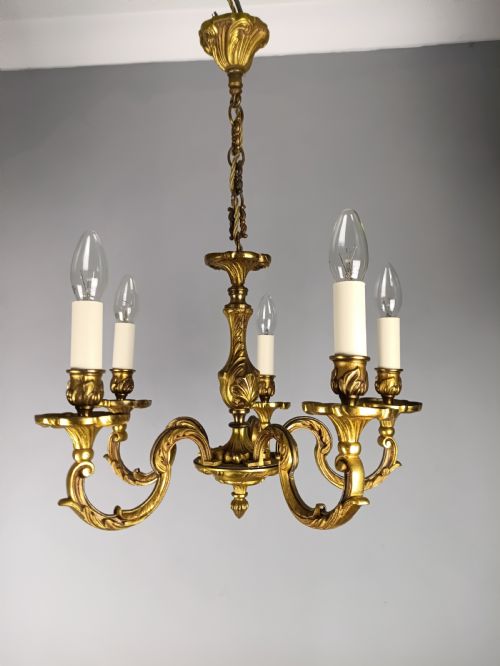
The standard of a gilt brass pendant depends heavily upon the crispness of the original metal casting and the depth of the gilding. Finer pieces exhibit sharp relief work on acanthus leaves and cherubs, whereas simpler iterations rely on pressed sheet metal with minimal hand-chasing.
Glass components further distinguish the tier of a fixture, separating machine-pressed panels from hand-etched crystals and polished prisms that refract light evenly. The structural gauge of the brass frame and the complexity of the internal wiring channels dictate the overall durability and balance of the pendant.
G.E.C
The Gilt Brass Pendant Glossary
- Gilt brass
- Metal alloy treated with a gold-coloured finish to simulate solid gold. This surface treatment provides the characteristic warm lustre seen across nineteenth and twentieth-century hanging lights.
- Hall lantern
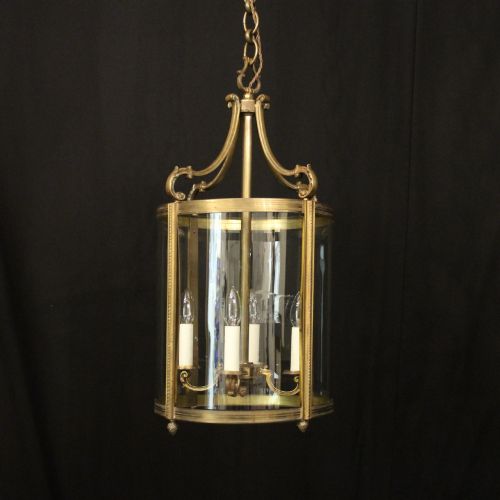
- Enclosed hanging light fixture designed primarily for corridors and entrance vestibules. These pieces frequently feature glass panels secured within a metal frame.
- Tent and waterfall chandelier
- Multi-arm lighting configuration featuring strings of crystals gathered into a tent shape above a cascading arrangement of drops. This style reflects classical French interior aesthetics.
- Convex lantern
- Hanging light featuring bowed or curved glass panels that project outward from the metal frame. The curved glass diffuses internal illumination across a wider angle.
- Crystal prism
- Cut glass pendant drop hung from the arms or crown of a fixture to refract light. Prisms vary in geometric complexity, including coffin and spear profiles.
Gilt Brass Pendant: Frequently Asked Questions
Where should a hall lantern be hung?
These fixtures suit entrance hallways, landings, and vestibules where vertical clearance permits suspended lighting.
Position the base of the lantern at a height that allows comfortable passage beneath, typically well above head height.
How do I clean a crystal chandelier?
Remove dust gently using a soft feather duster or microfiber cloth while the fixture remains supported from the ceiling.
Apply a mild soapy solution with a sponge for deeper cleaning, wiping each crystal and metal arm dry immediately afterward.
Are these vintage lights rewired?
Many surviving fixtures retain older wiring configurations that require updating to meet modern electrical safety standards.
Buyers should consult a qualified electrician to inspect internal lamp holders and test continuity before installation.
How do I identify French neoclassical style?
This aesthetic draws on classical Greek and Roman motifs, displaying symmetrical lines, urns, swags, and restrained foliate casting.
Such details appear across nineteenth-century frames and brass mounts produced in continental workshops.