




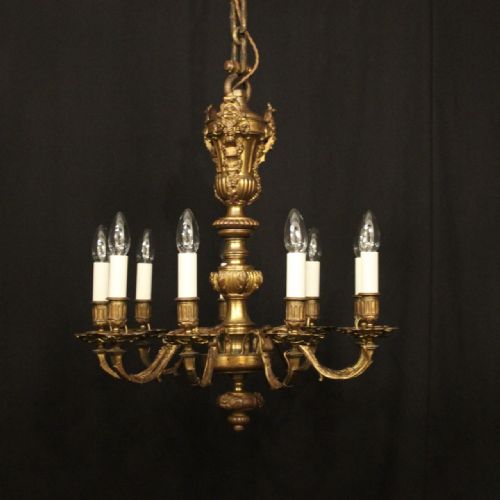
Ornate Metal Chandelier
An ornate metal chandelier brings weight and presence to a room, offering both illumination and sculptural form.
Ornate Metal Chandelier
When you search for an ornate metal chandelier, you encounter a selection spanning the nineteenth century through the nineteen-thirties, dominated by French and Italian designs. These pieces function as principal ceiling lights, pendant lights, and ceiling roses, suspended to anchor large spaces.
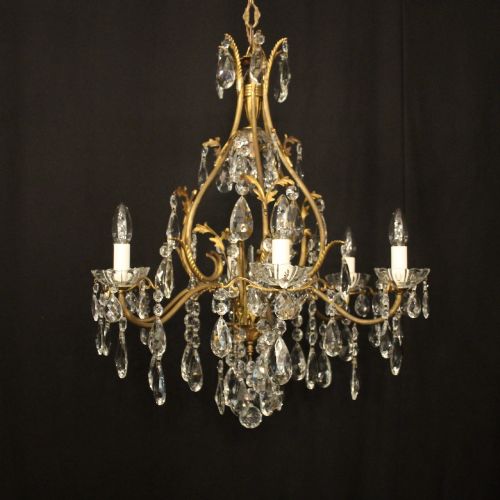
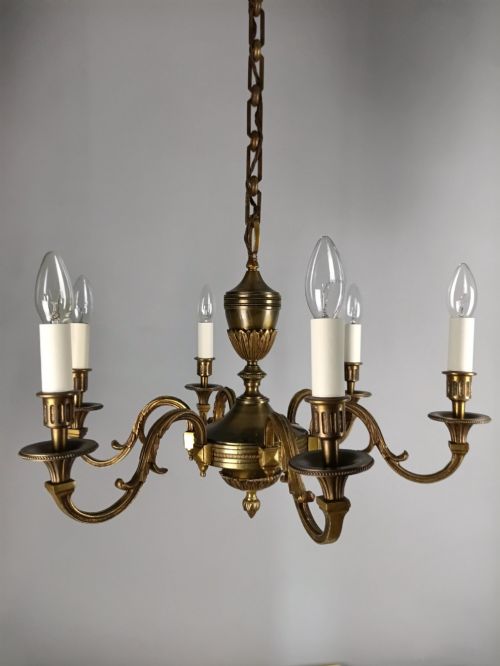
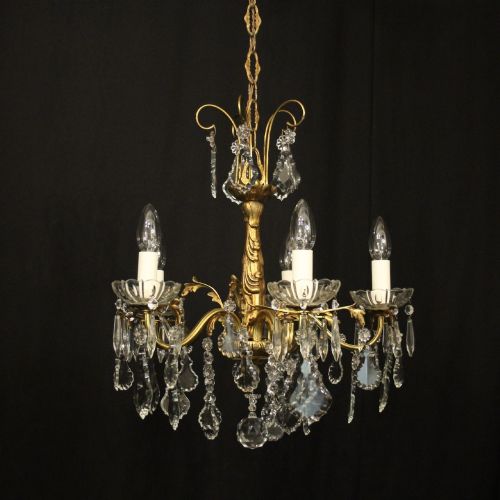
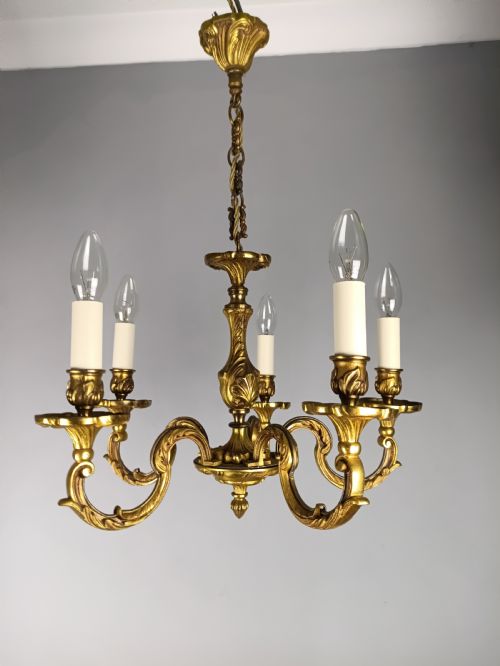
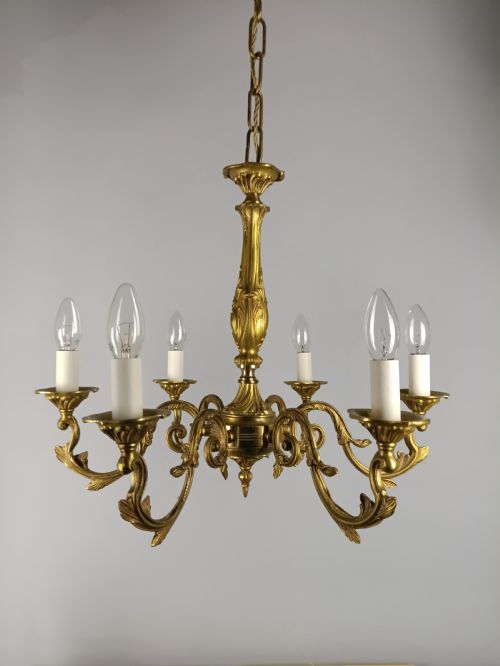
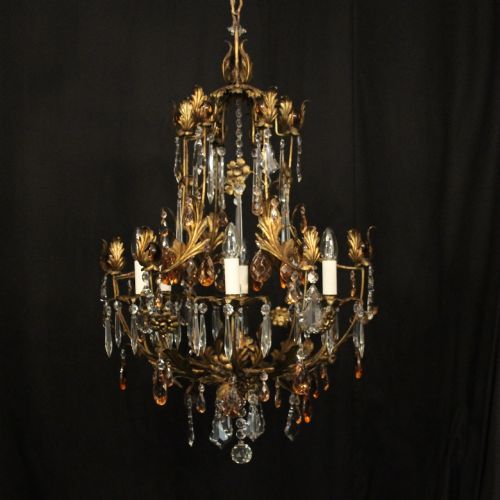
The most common examples on this page are multi-light fixtures holding between five and twelve lights, frequently rendered in brass, bronze, and gilt finishes. They draw heavily on French Rococo Revival, Italian Florentine, and Classical Revival styles, incorporating glass and crystal elements.
The assortment includes pairs and grand single pieces, reflecting domestic architecture from the eighteen-eighties to the interwar period. Each item uses metal framing to support arms, branches, and glass components designed for overhead suspension.
How they were made
Makers utilised cast bronze, brass, and ormolu to form the structural frames and arms of these fixtures, often applying gilt finishes to enrich the metal surface. These heavy metal components required robust casting techniques to support multiple light branches.
Cut glass and crystal prisms were suspended from the metal frameworks to refract light, while silvered or dark framed treatments appeared on specific Italian and French regional pieces. Wiring and gas fittings were integrated into the core metal structure, with some gasoliers later adapted for electrical use.
Ornate Metal Chandelier Retail Price Guide 2026
Typical asking prices for ornate metal chandelier among the pieces listed under this phrase on Sellingantiques today, from the lower quarter to the upper quarter. They describe what is for sale here now, not the wider market.
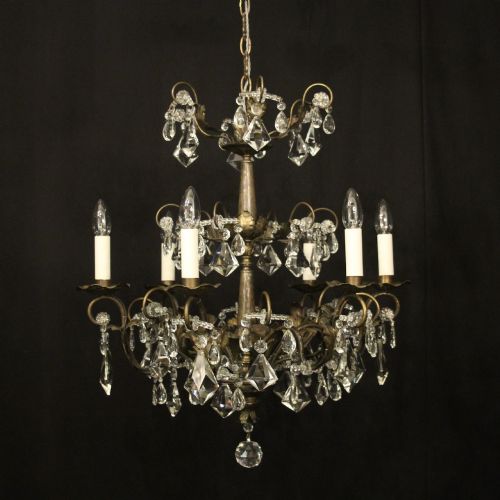
A dark framed French rococo chandelier hides its heavy metal skeleton beneath curls of iron and brass.
What varies in quality
The quality of an ornate metal chandelier rests in the crispness of the bronze or brass casting and the depth of the gilding or ormolu. Finer examples display intricate hand-chasing on the metal surfaces and use high-grade cut crystal rather than simple pressed glass.
Proportion and arm count dictate the grandeur of the piece, with larger multi-light configurations and matched pairs demonstrating superior ambition in design. The integration of the frame with high-quality suspension hardware separates standard production from exceptional work.
The Ornate Metal Chandelier Glossary
- Ormolu
- Gilded bronze, where a layer of gold amalgam is applied to a bronze base through heat processing. This technique imparts a rich, warm metallic lustre popular in nineteenth-century French lighting.
- Gasolier
- A light fixture originally designed to burn gas before being converted for electricity. These pieces often retain heavier metal branch structures to accommodate former gas supply channels.
- Ceiling rose
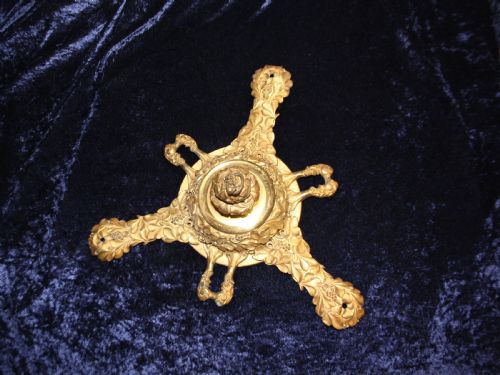
- An ornamental plaster or metal disc fixed to the ceiling around the point where a pendant light suspends. Gilt brass examples provide a decorative anchor for the chandelier chain.
- Florentine
- A decorative style originating from Florence, characterised by ornate floral and leaf motifs in carved or cast metal. This aesthetic frequently incorporates crystal drops within gilt frameworks.
Ornate Metal Chandelier: Frequently Asked Questions
How do I clean an ornate metal chandelier?
Dust the metal arms and crystal elements regularly with a soft brush to prevent grime buildup. Avoid harsh chemical cleaners that can strip gilt or ormolu finishes from the bronze and brass surfaces.
For deeper cleaning, remove crystal drops individually and wash them in warm soapy water before drying thoroughly. Ensure the power is completely disconnected at the mains before undertaking any maintenance on suspended fixtures.
How do I determine the right size?
Calculate the appropriate scale by measuring the room's dimensions and ensuring the chandelier diameter matches the proportions of the space. Consider ceiling height carefully, as multi-branch fixtures with crystal drops require adequate clearance below.
Larger options with ten or twelve lights suit high ceilings in principal reception rooms, while five-light variations fit more modest spaces. Pairs of fixtures work well in extended hallways or symmetrical drawing rooms.
What is the difference between gilt brass and ormolu?
Ormolu specifically denotes mercury-gilded bronze, a method prevalent in high-end nineteenth-century French metalwork. The process produces a deep, durable golden hue that ages with a distinct warmth.
Gilt brass involves applying gold leaf or plating to a brass alloy base, which tends to be lighter in weight and brighter in tone. Both materials were utilised across different price points to achieve a luxurious metallic finish.