
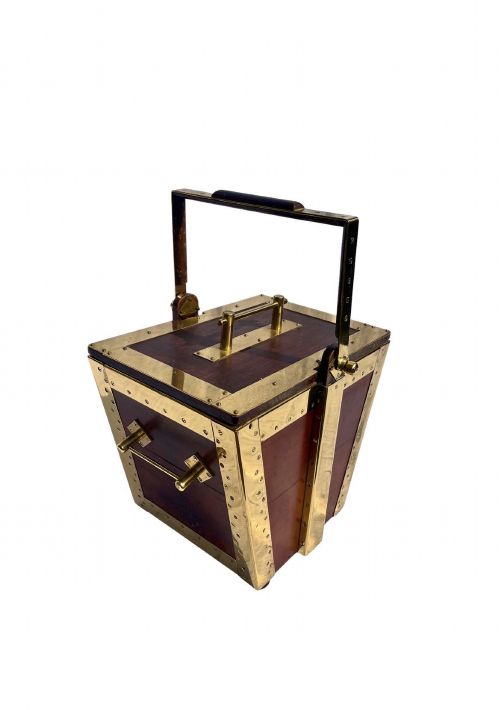
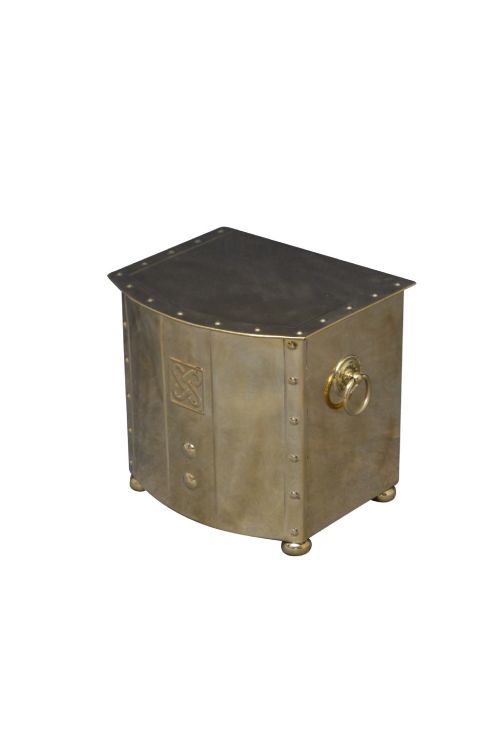


Vintage Fireside Coal Box
A vintage fireside coal box is a practical hearth accessory designed to hold solid fuel, bringing period character and metal or timber texture to a room.
Vintage Fireside Coal Box
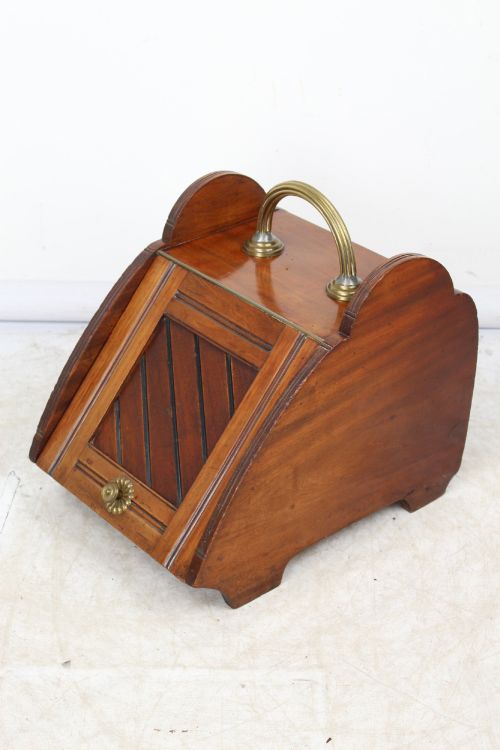
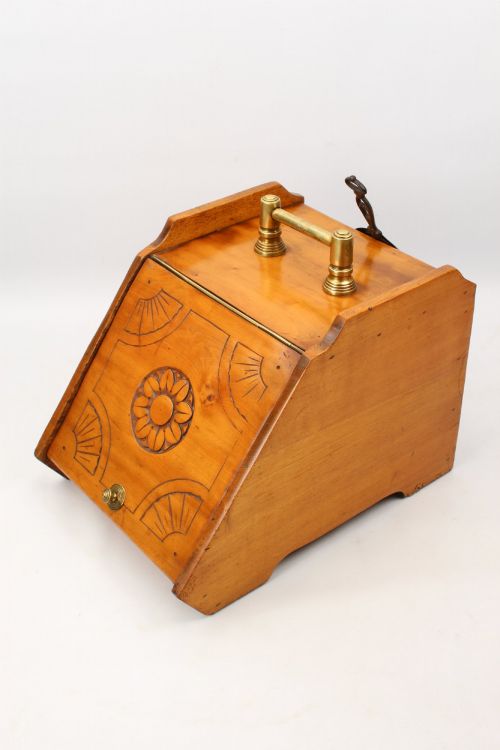
A vintage fireside coal box serves as a functional fuel store by the hearth, appearing across the Victorian, Edwardian, and early twentieth century periods. These pieces take various forms including scuttles, purdoniums, bins, and buckets designed to hold coal or logs close to the fireplace.
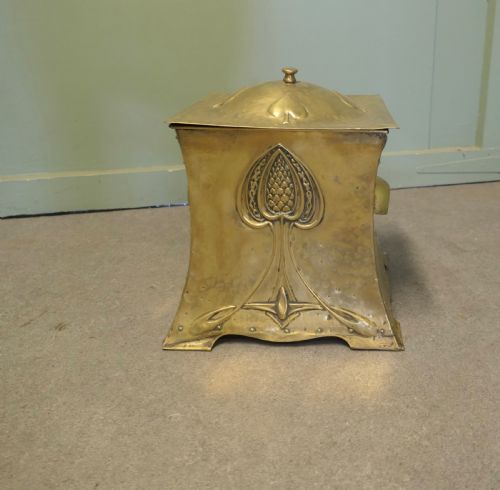
Originating from British and continental workshops, these items span styles from Arts and Crafts and Art Nouveau to Rustic Country and Regency designs. They reflect the domestic heating habits of the nineteenth and early twentieth centuries while offering decorative presence in a modern room.
How they were made
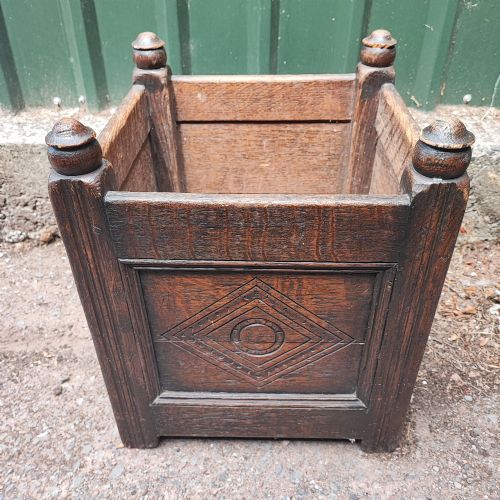
Makers constructed these boxes using a combination of durable hardwoods like mahogany, oak, and walnut, paired with hammered or polished sheet metals including brass, copper, and iron. Metal components were frequently riveted, embossed, or cast, while wooden bodies featured carved details, inlaid panels, or ormolu mounts.
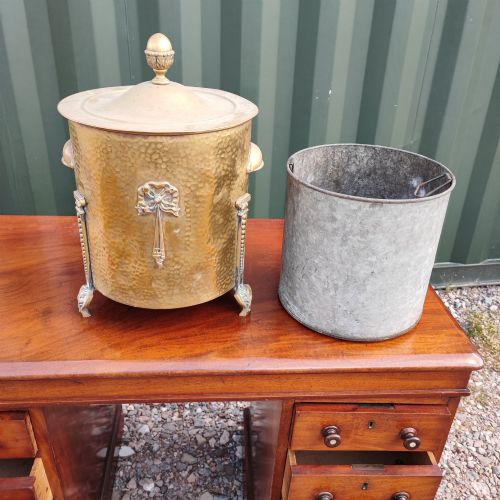
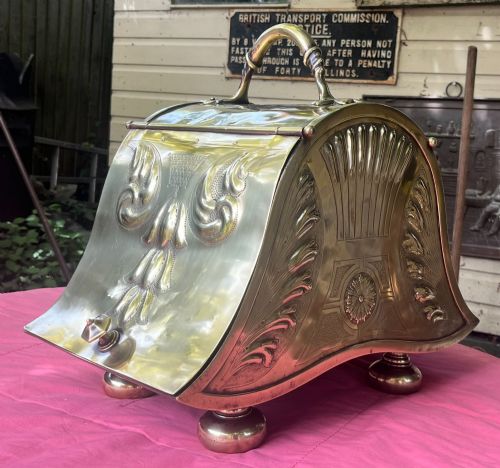
Many brass and copper examples utilised spun or beaten techniques, occasionally bearing maker stamps from firms such as Benham and Froud or Henry Loveridge. Wooden purdoniums and scuttles relied on traditional cabinetry joinery to house removable metal liners designed to contain coal dust and moisture.
What varies in quality
Quality in these pieces depends upon the weight of the metal and the selection of timber, where heavier gauge brass and figured pollard oak indicate higher grade production. Finer examples display crisp hand-beaten repoussé work, secure dovetailed joints, and intact original metal liners or matching shovels.
Decorative refinement distinguishes standard utility items from top tier examples, visible in detailed brass mounts, art nouveau motifs, or sophisticated inlay work. The presence of documented maker names or careful blacksmith forging elevates the standard of construction.
Benham and Froud·Henry Loveridge
The Vintage Fireside Coal Box Glossary
- Purdonium
- A specialised cabinet for storing coal, typically featuring a sloping drop-front door and an interior metal liner. This form became popular in late Victorian households to keep fuel tidy beside the fireplace.
- Coal Scuttle
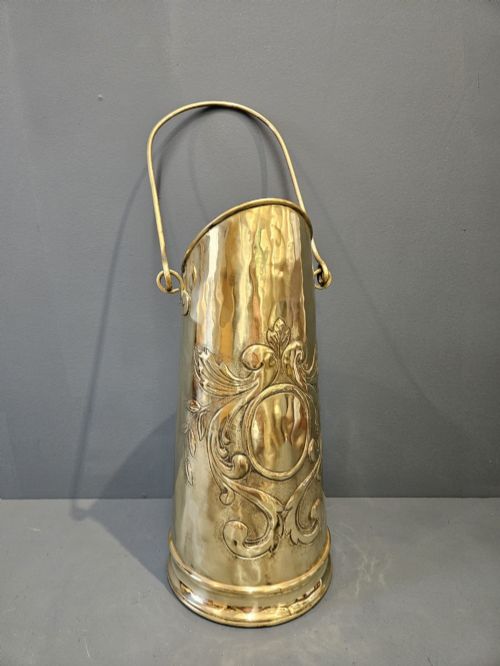
- A bucket or container designed for carrying and holding coal, often fitted with a swinging handle and a matching shovel. Traditional shapes include helmet forms and flared buckets.
- Repoussé
- A metalworking technique where the metal is hammered from the reverse side to form a raised design in relief. This ornamentation frequently appears on Arts and Crafts copper coal boxes.
- Tole Ware
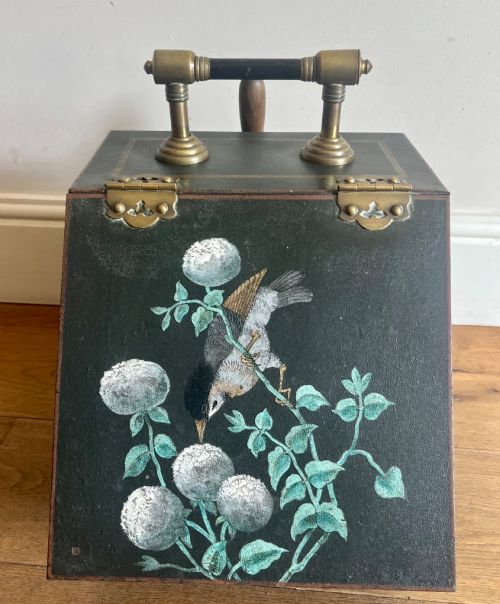
- Lacquered or enamelled metalware, usually iron or steel, painted with decorative scenes or patterns. Unusual examples of this technique appear among fireside coal containers.
- Aesthetic Period
- A late nineteenth century design movement that emphasised visual beauty over narrative meaning, reflected in simple lines and stylised floral metal panels.
Vintage Fireside Coal Box: Frequently Asked Questions
What is a coal purdonium?
A coal purdonium is a dedicated fireside cabinet designed to store fuel neatly behind a hinged or drop-down door. These pieces usually contain a removable metal box to hold the coal without spilling debris onto the floor.
They emerged in the nineteenth century as domestic coal scuttles evolved into more refined pieces of furniture meant to match the drawing room or parlour interior.
How do I clean brass and copper?
Brass and copper fireside pieces benefit from gentle cleaning with a mild soapy solution and a soft cloth to remove soot and surface dust. Avoid harsh abrasive cleaners that can strip away the historical patina accumulated over decades of use.
Leaving a degree of darker oxidisation in the recesses often highlights the embossed details and hand-beaten marks characteristic of antique metalwork.
Can I use these for logs today?
Many of these containers, particularly the larger wooden log boxes and metal bins, serve well for holding firewood beside a modern hearth. Checking that the interior liner is sound helps prevent bark debris and dirt from marking the floor.
Smaller coal scuttles function effectively as magazine holders or plant planters if solid fuel storage is no longer required in the home.
How do I date a coal box?
Dating relies on examining the construction methods, materials, and decorative style, such as the flowing organic lines typical of Art Nouveau pieces from around nineteen hundred. Victorian examples frequently employ heavy brass mountings and figured mahogany, whereas Edwardian items often show lighter inlaid woodwork.
Maker stamps on the metal or registration marks on the interior fittings can also provide a reliable guide to the exact decade of manufacture.