

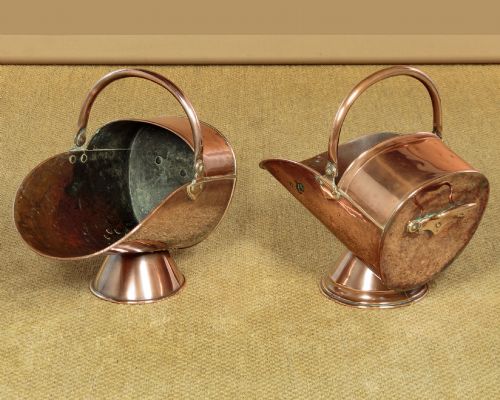

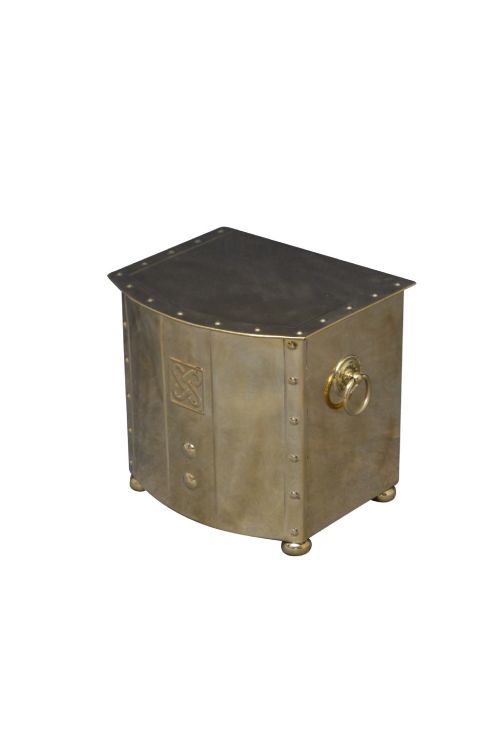

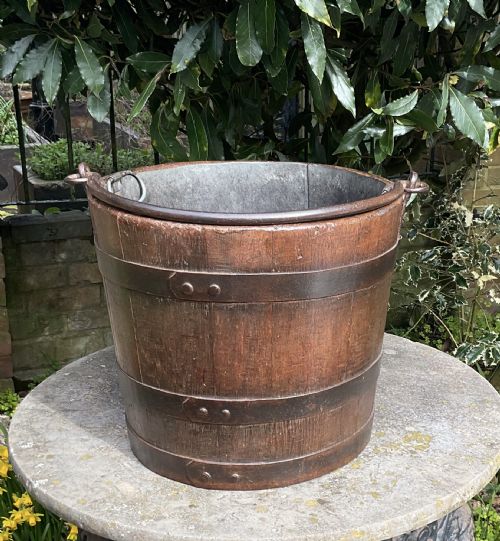


Edwardian Brass Coal Bucket
An edwardian brass coal bucket brings genuine hearthside utility and warm metallic shine to a room.
Edwardian Brass Coal Bucket
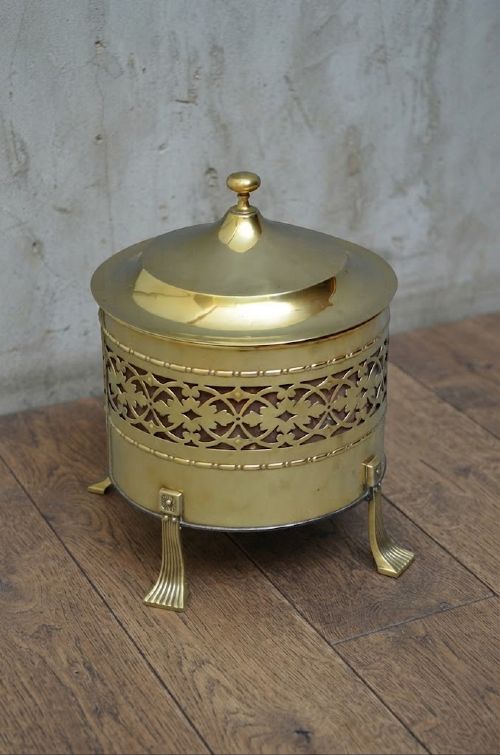
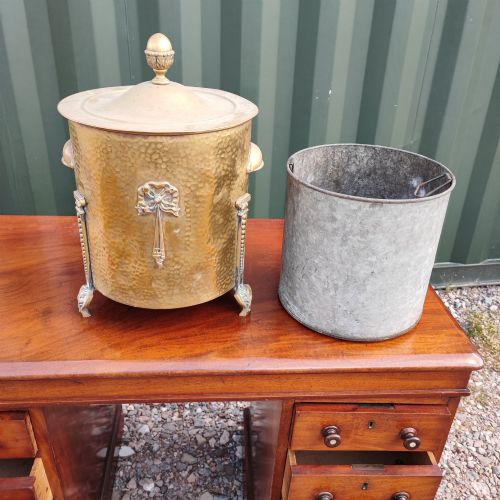
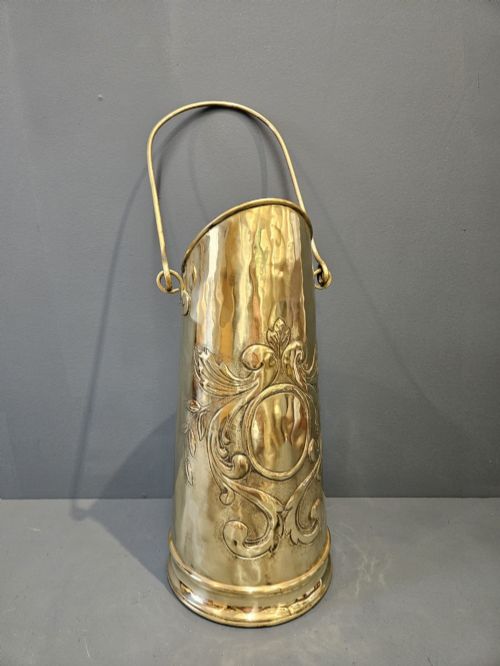
When searching for an edwardian brass coal bucket, buyers encounter sturdy domestic vessels built to hold solid fuel beside a fireplace. These utilitarian objects double as decorative fireside containers, often doubling as planters or log bins in modern settings. The pieces seen most frequently on this page combine bright brass bodies with sturdy swing handles and protective liners.
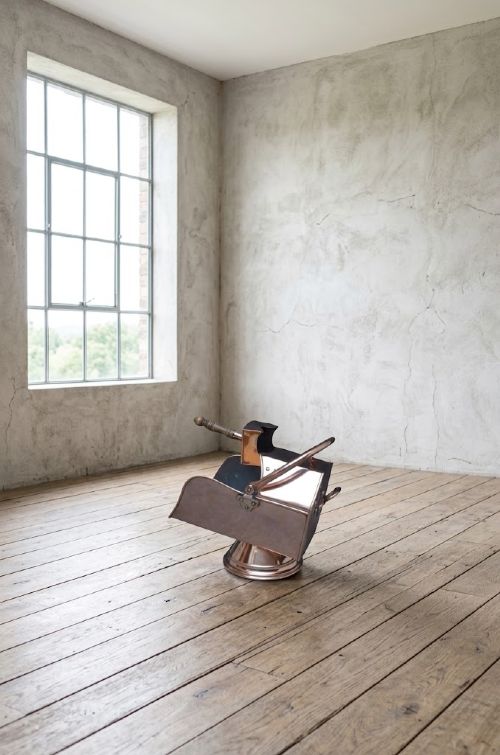
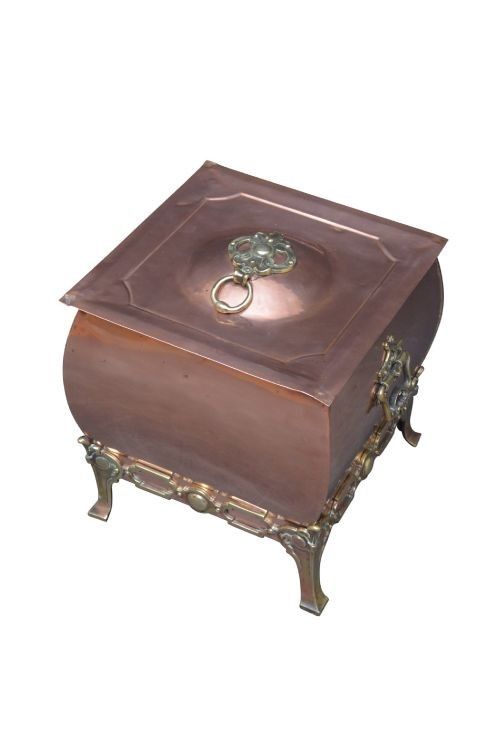
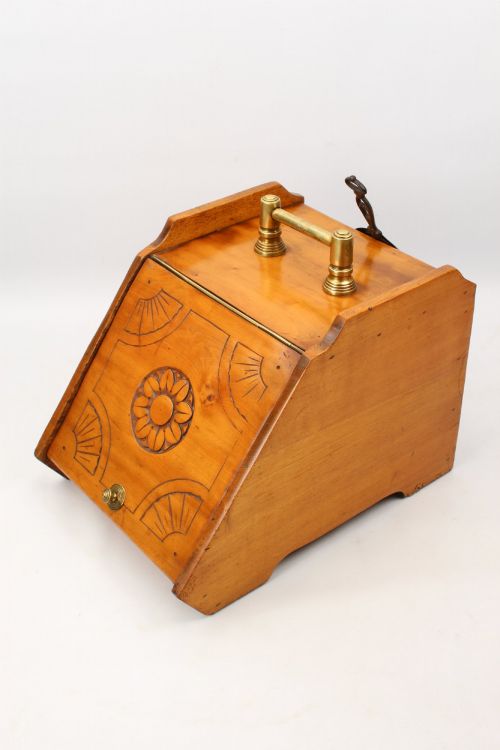
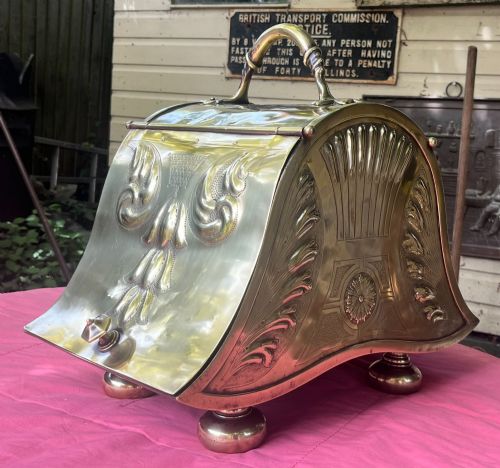
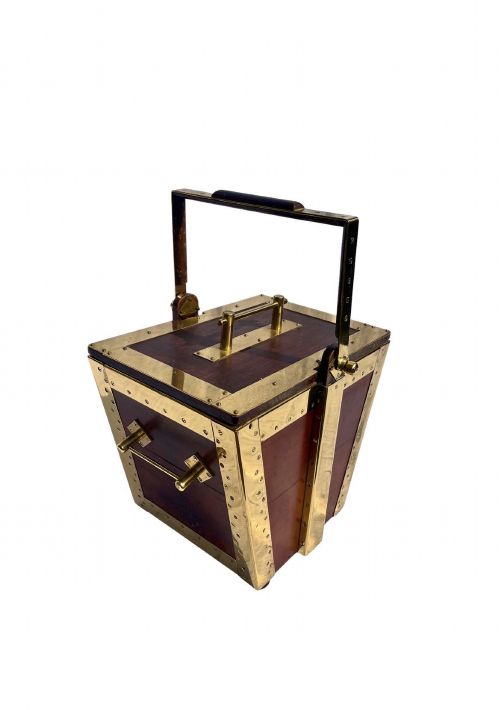
Originating largely from the Edwardian period and the late Victorian era, these items reflect an age when domestic heating relied entirely on solid fuel. Alongside standard cylindrical buckets, the inventory includes helmet-shaped scuttles, purdoniums with drop-front panels, and coopered wooden vessels mounted in brass. They appear alongside related fireside accessories such as shovels, pokers, and umbrella stands.
What Varies in Quality
The distinction between ordinary and superior pieces rests on the weight of the metal and the integrity of the construction. Heavier gauge brass resists dents and maintains its structural form under the heavy load of coal or logs, whereas thinner sheets yield easily to daily wear.
Artistic execution also separates standard domestic items from finer productions. Details such as hand-beaten surfaces, robust cast brass swing handles, dovetailed wooden joints, and original interior metal liners indicate higher workshop standards.
Listings span the late Victorian era through the Edwardian period, alongside Arts and Crafts and Art Nouveau designs.
Benham and Froud
The Edwardian Brass Coal Bucket Glossary
- Purdonium
- A box-like coal container featuring a sloping front door and an interior metal scoop or liner. This Victorian form kept fuel neatly concealed beside the hearth.
- Coal helmet
- A metal bucket shaped with a flared lip resembling a classical helmet, designed to pour coal cleanly onto the fire. They typically feature a raised arched handle overhead.
- Coopered
- Built using curved wooden staves joined edge to edge and bound by metal hoops, much like a traditional barrel. Oak and mahogany buckets often employ this technique.
- Planter
- A secondary function assigned to these metal and wooden vessels when utilised for indoor foliage rather than fuel. Many survivors adapt easily to holding large house plants.
- Fretwork
- Metal pierced with decorative openwork patterns, frequently seen on Edwardian bucket rims and mounts. This technique introduces lighter ornamental detail to heavy brass bodies.
Edwardian Brass Coal Bucket: Frequently Asked Questions
What is an edwardian brass coal bucket?
It is a domestic metal container manufactured around the early twentieth century to hold coal or kindling by the fireplace.
Most examples feature a polished brass body, a movable swing handle, and sometimes a removable metal liner for easy cleaning.
How were these buckets used originally?
Servants used them to transport solid fuel from the cellar to principal rooms for open coal fires.
They sat permanently beside the hearth as both a fuel store and a polished decorative accessory.
Can I use mine for logs today?
Many owners repurpose these vessels to hold firewood, kindling, or house plants in modern living spaces.
Checking for a watertight liner helps protect floors if storing damp wood or live plants.
How do I date an antique coal bucket?
Dating relies on material combinations, manufacturing techniques, and stylistic markers such as Arts and Crafts or Art Nouveau motifs.
Victorian and Edwardian pieces often display heavier cast brass fittings and specific riveted construction methods absent in later reproductions.