
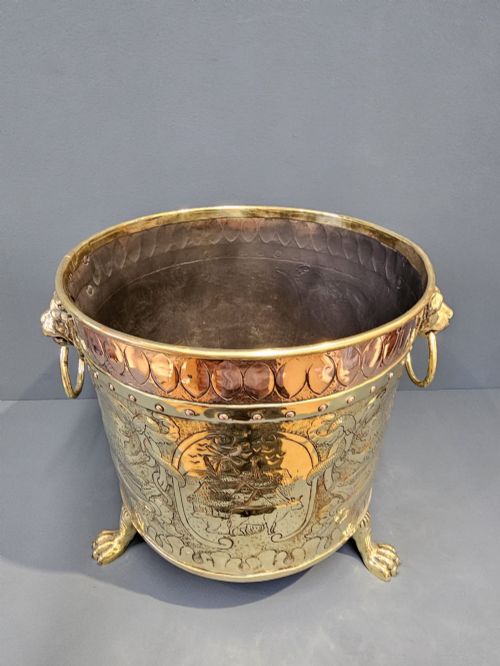
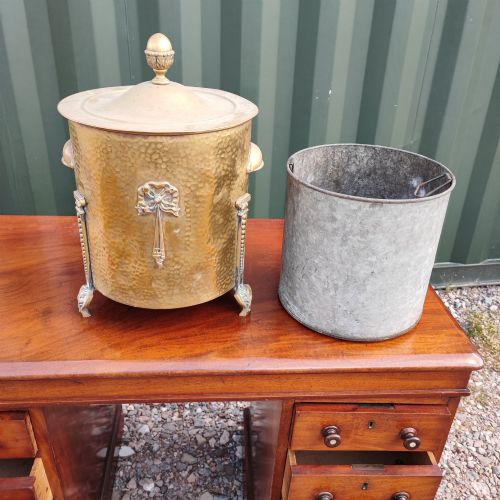
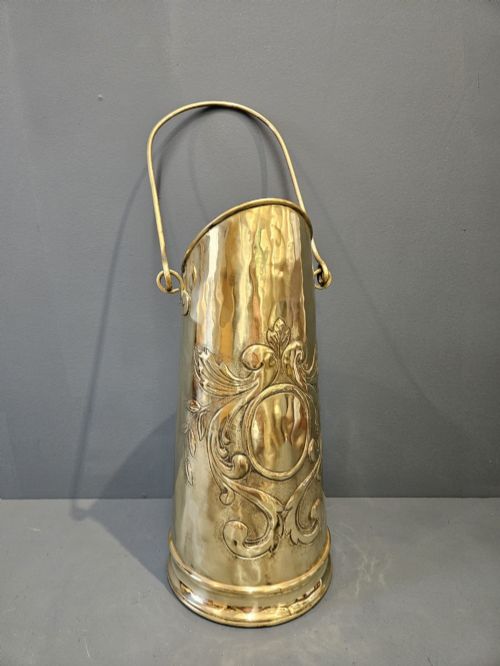
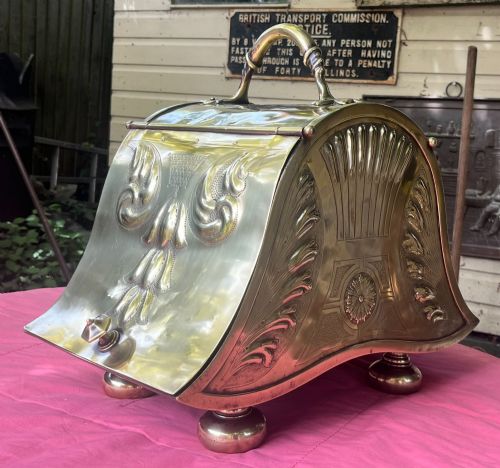
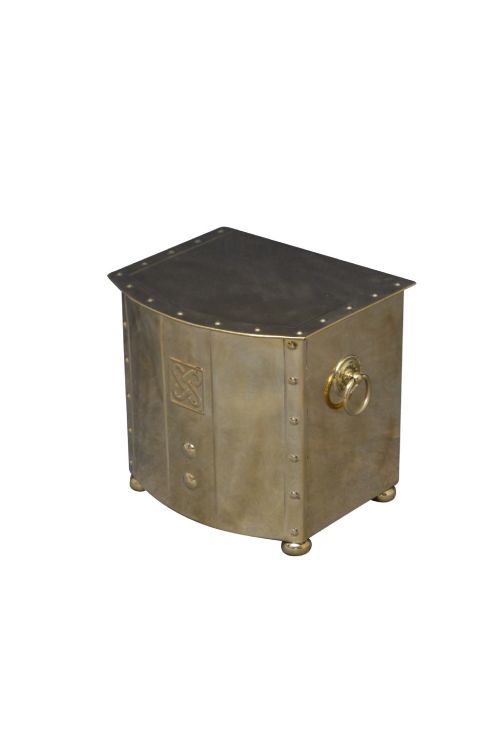


Embossed Brass Coal Scuttle
An embossed brass coal scuttle brings bright metallic texture and period utility directly to the hearth.
Embossed Brass Coal Scuttle
An embossed brass coal scuttle is a functional fireside container designed to hold solid fuel near the grate. When you search for this phrase, you encounter vessels primarily fashioned during the nineteenth century, including Victorian, Regency, and Edwardian periods.
The form varies from helmet-shaped buckets and cylindrical bins to double-lidded boxes and purdoniums. The versions most commonly met on this page are Victorian brass examples featuring raised decorative motifs hammered or stamped into the metal.
Beyond holding coal, these objects double as log bins, peat buckets, and decorative planters. They combine practical storage with the aesthetic movements of their era, touching styles such as Arts and Crafts, Art Nouveau, and Adam.
Materials and construction
Sheet brass forms the primary body of these vessels, frequently complemented by copper bands, iron linings, or wooden elements like ebonised handles and oak bases. Craftsmen shaped the metal sheets by hand or utilised early industrial presses to form cylindrical or helmet profiles.
Embossing was achieved by beating the brass from behind against a softer backing or pressing the metal into dies to raise floral, figural, or geometric patterns. Rivets, dovetail joints, and brass hinges secure the structural seams, while swing handles are typically attached via cast loops.
Some nineteenth-century brass buckets unexpectedly served as indoor plant pots before returning to fireside duty.
Judging quality and craftsmanship
Quality rests upon the thickness of the brass gauge and the crispness of the embossed detail. Heavier metal resists denting and holds its structural integrity under daily fireside use, whereas thinner sheets tend to buckle.
The distinction between standard utility items and finer pieces lies in the hand-finishing of the decorative panels and the integrity of the internal liners. Maker attribution, sturdy joinery, and well-cast handles elevate a piece from a basic fuel container to a considered decorative object.
Benham & Froud·Henry Loveridge·Petrus Ramus
The Embossed Brass Coal Scuttle Glossary
- Embossing
- The technique of raising a design in relief onto sheet metal by hammering from the reverse side or pressing through a die. This surface manipulation catches the firelight and defines the stylistic period of the piece.
- Purdonium
- A specific type of coal cabinet featuring a sloping front door and an internal metal liner or shovel. It typically stands on small feet and conceals the fuel entirely from view.
- Dinanderie
- The historical term for European brass and copper decorative objects, often encompassing hand-beaten vessels and medieval-style domestic metalwork. It applies to certain textured bins and jardinières found in nineteenth-century collections.
- Helmet bucket
- A fireside container shaped with a flared rim and a pointed lip resembling a classical helmet. This profile facilitates the pouring of coal cleanly onto the fire.
- Jardiniere
- An ornamental pot or receptacle originally intended for holding plants or flowers. Many robust brass and copper examples of this form are repurposed as fireside log bins.
Embossed Brass Coal Scuttle: Frequently Asked Questions
How do I clean an antique brass coal scuttle?
Dust the surface regularly with a soft dry cloth to prevent grime accumulation. Avoid harsh chemical polishes that strip away the aged patina accumulated over decades of fireside use.
If cleaning is necessary, use a mild soapy solution and dry thoroughly immediately afterwards. Preserving the dark crevices within the embossed patterns maintains the visual depth of the metal.
Are these coal scuttles safe to use for real fires?
Most antique metal scuttles remain entirely robust for holding logs, kindling, or bagged coal near an active hearth. Inspect the interior for original metal liners or added protective inserts that prevent moisture damage from damp fuel.
Older vessels constructed with soldered joints benefit from gentle handling when loaded with heavy materials. Using an inner bucket preserves the structural base of the outer decorative brass casing.
How do I distinguish Victorian from Regency coal scuttles?
Regency pieces often display neoclassical restraint, cleaner geometric lines, and heavier cast brass mounts reflecting earlier design influences. They frequently utilise robust double-lidded box forms with classical proportions.
Victorian examples tend towards ornate embossed floral motifs, figural tavern scenes, or asymmetric Art Nouveau curves. The introduction of industrial stamping techniques during the Victorian era allowed for more complex surface relief.
What is the difference between a coal box and a scuttle?
A coal box usually takes a rectangular cabinet form with a hinged lid or a drop-down front door, such as a purdonium. These are designed to sit flush against a hearth wall and conceal the fuel completely.
A scuttle is traditionally an open bucket or helmet-shaped vessel equipped with a pivoting swing handle for carrying fuel from an outside store. Scuttles are meant for active transport and immediate hearthside access.