
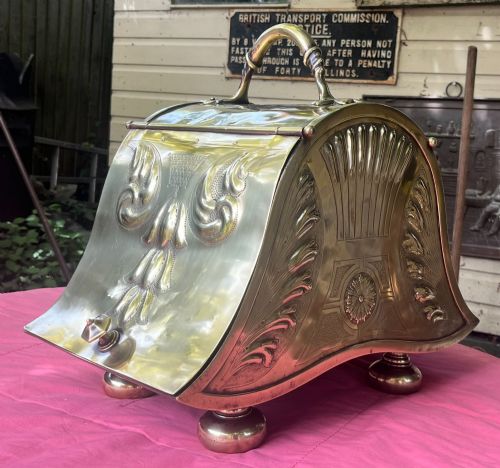
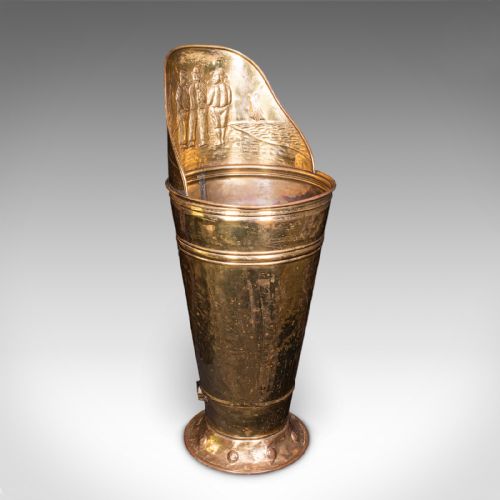


Repousse Brass Bucket
A repousse brass bucket is a fireside heavy-hitter that brings warmth and texture to a room, forged to store logs or hold plants with genuine utility.
Repousse Brass Bucket
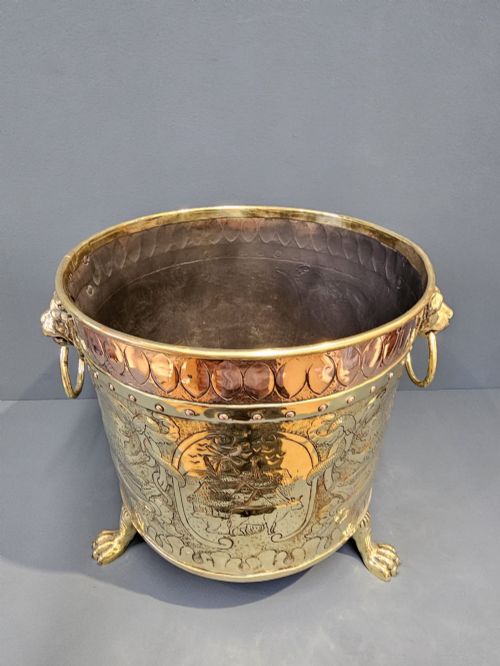
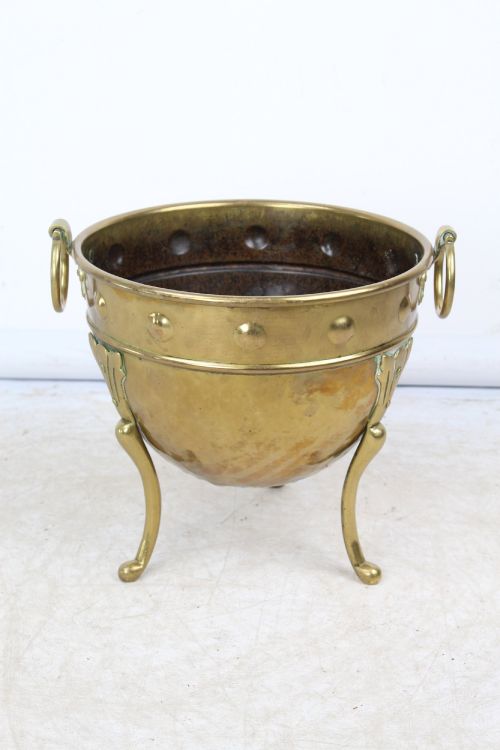
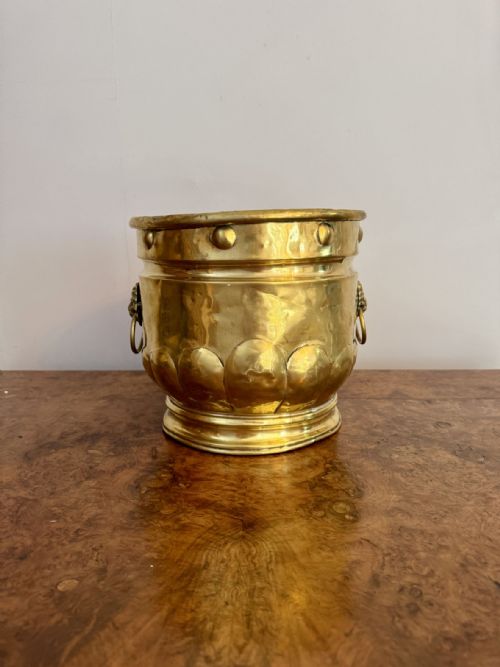
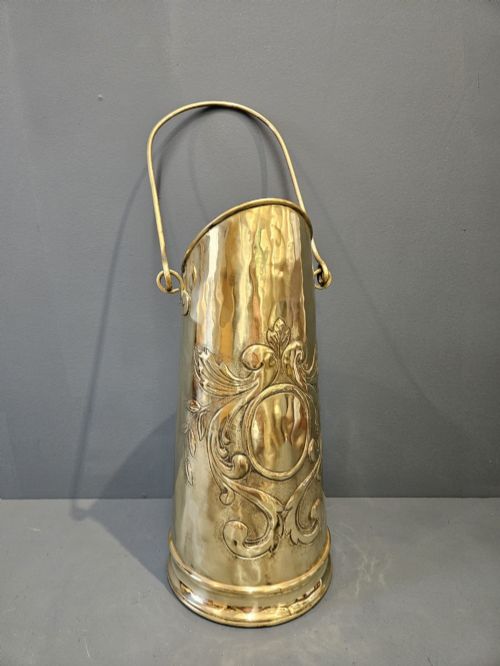
A repousse brass bucket takes several forms by the fireside, including log bins, coal scuttles, coal buckets, and planters or jardinieres. Most examples seen here date from the Victorian period through to the early twentieth century, spanning styles such as Arts and Crafts, Art Nouveau, and Dutch Revival.
The primary forms serve practical functions for fuel storage or planting, often featuring drop handles, copper bands, or hinged lids. While many are constructed entirely from brass, others combine brass bodywork with copper elements, ebonised wood details, or iron fittings.
Makers and workshops range from notable firms like Benham & Froud and Henry Loveridge to continental makers such as Petrus Ramus. The overarching aesthetic leans heavily on heavy-gauge metalwork designed for daily domestic service in country houses and urban drawing rooms alike.
Materials and construction methods
The making of these vessels relies on sheet brass and copper, shaped by hand-hammering and panel-beating. Artisans utilised repousse techniques to push the metal from the reverse side, creating raised pictorial scenes, tavern motifs, or scrolling floral patterns.
Structural integrity often required iron or copper banding to reinforce rims and bases against the heavy weight of coal or wet logs. Handles are typically cast in brass and securely riveted or bolted to the body to withstand heavy loads.
Some nineteenth-century coal buckets feature bustling tavern scenes hammered into the brass, bringing lively seventeenth-century Dutch drinking culture directly to the hearthrug.
Distinctions in quality and execution
Quality rests in the crispness of the hand-chased or repousse detail and the gauge of the brass sheet used for the body. Thicker metal resists denting and maintains its structural form under heavy use near the hearth.
The distinction between standard commercial output and workshop pieces by makers such as Benham & Froud lies in the finish of the handles, the snugness of the lids, and the depth of the metal relief.
Henry Loveridge·Petrus Ramus·Benham & Froud
The Repousse Brass Bucket Glossary
- Repousse
- A metalworking technique where the metal is hammered from the reverse side to form a raised design in relief. This creates tactile surface patterns that catch the fireside light.
- Jardiniere
- An ornamental pot or receptacle, usually ceramic or metal, designed to hold growing plants or floral arrangements. In brass, these items often double as heavy-duty log or peat holders.
- Coal Purdonium
- A specialised enclosed coal container, frequently fitted with a hinged lid and an internal shovel or liner. This form became popular in Victorian interiors to keep fuel dust contained.
- Dinanderie
- An umbrella term for European brass and copper hollowware, named after the Belgian town of Dinant. These pieces showcase centuries-old traditions of beaten and cast alloy items.
- Coal Helmet
- A traditional bucket shape featuring a wide, slanted mouth and a high arched handle, resembling a classical helmet. The design allows for easy scooping and pouring of fuel.
Repousse Brass Bucket: Frequently Asked Questions
How do I clean a brass bucket?
Use a soft cloth and a proprietary metal cleaner formulated for brass to remove tarnish while preserving the darker recessed areas of the repousse work.
Avoid abrasive pads or harsh chemical dips that strip away the natural patina accumulated over decades of fireside use.
Were these buckets only used for coal?
While many served as coal bins or scuttles by the hearth, a significant number were manufactured as jardinieres, planters, or wine coolers.
Their robust metal construction and waterproof nature made them versatile vessels for storing logs, holding indoor palms, or chilling bottles.
How do I date an antique brass bucket?
Dating relies on examining the construction seams, handle attachments, and stylistic markers such as Victorian aesthetic movement motifs or Art Nouveau sinuous lines.
Machine-rolled edges and specific maker stamps help narrow the production era to the nineteenth or early twentieth century.
Can I use these buckets for live plants?
Many metal jardinieres and planters are suitable for holding potted plants, though moisture management is essential to prevent internal corrosion.
Using a protective inner liner protects the historic brass base from standing water and soil acidity.