


Victorian Brass Log Holder
A victorian brass log holder brings warmth and metal texture to a fireside, combining utility with decorative presence.
Victorian Brass Log Holder
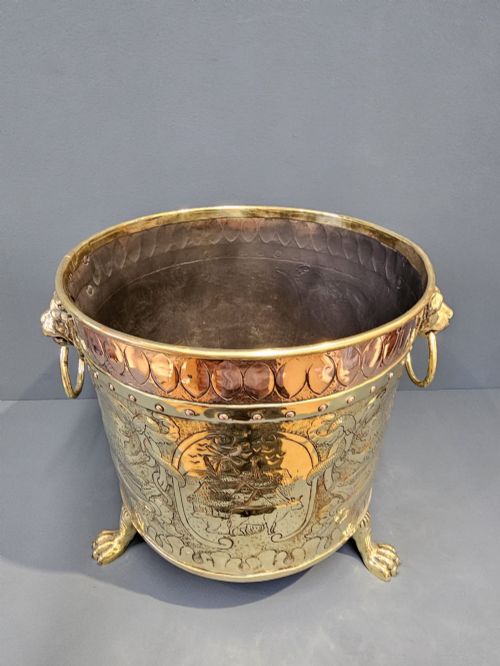
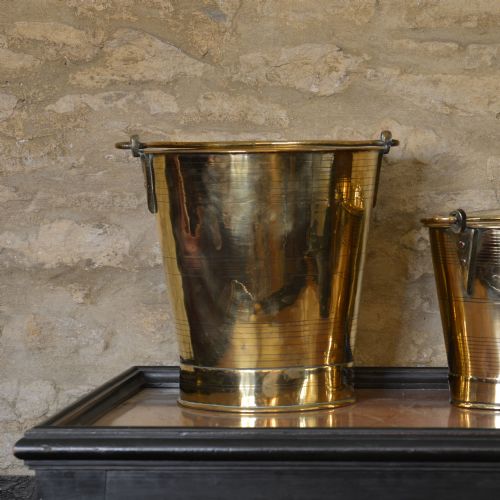
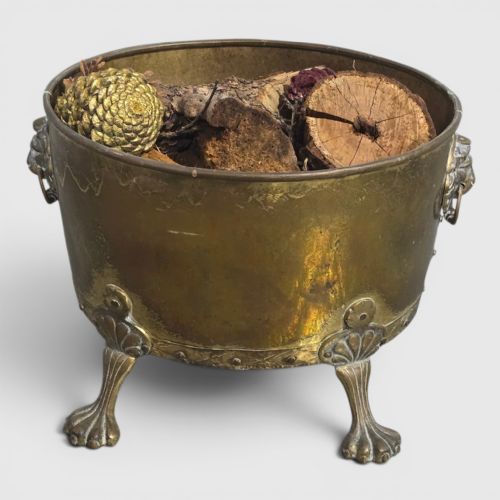
A victorian brass log holder is typically encountered as a heavy metal bucket, bin, or scuttle designed to store fuel beside a fireplace. These pieces emerge from periods spanning the mid-nineteenth century through to the early twentieth century, reflecting varied production dates across the Victorian and Edwardian eras.
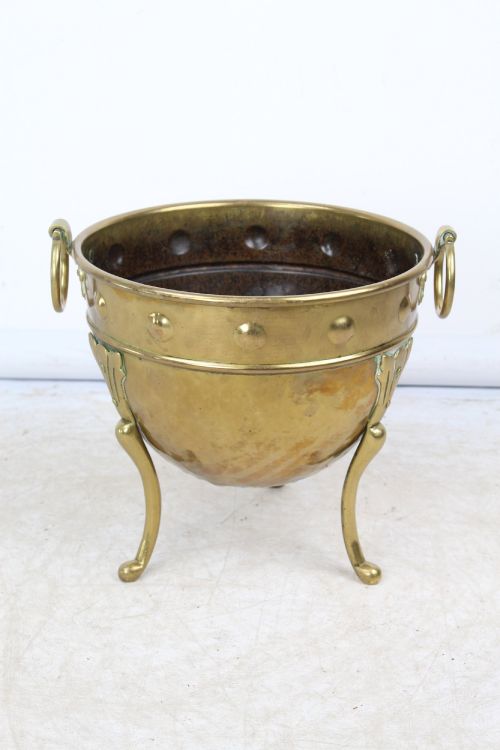
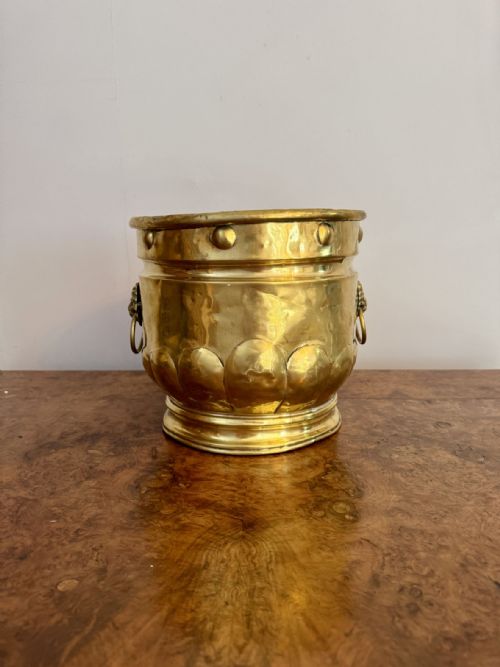
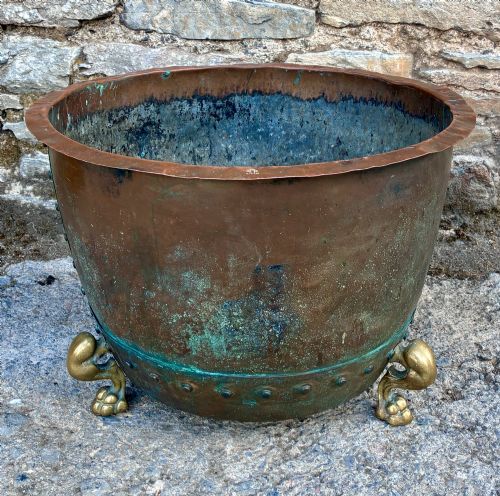
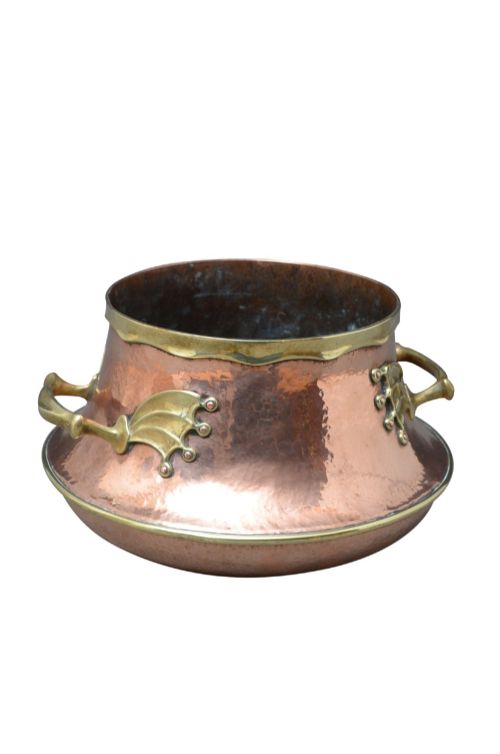
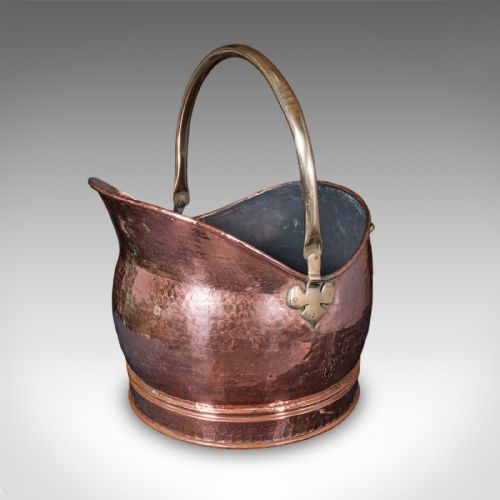
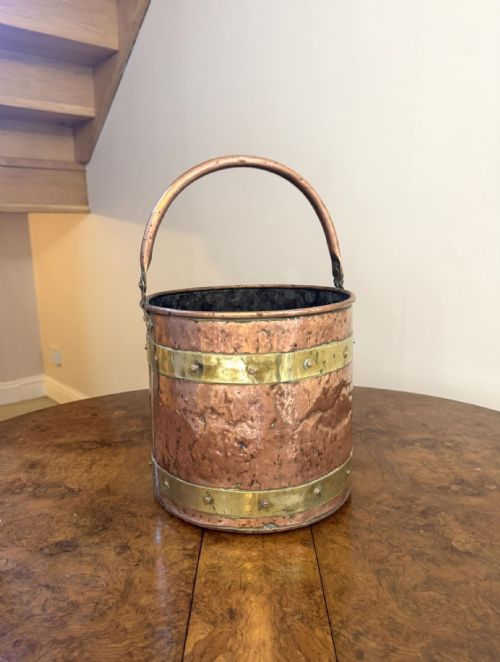
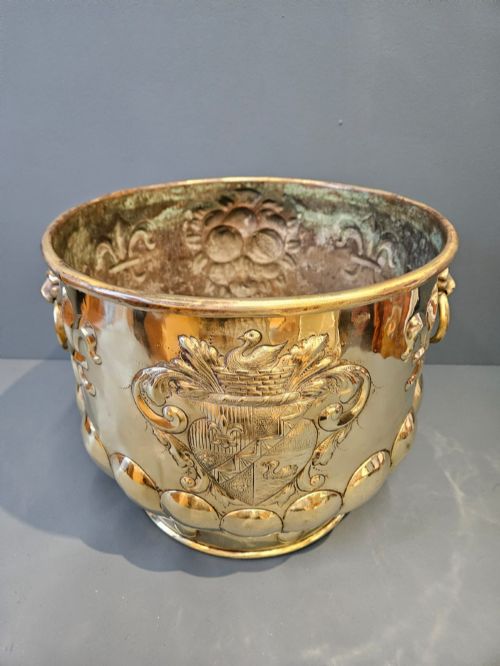
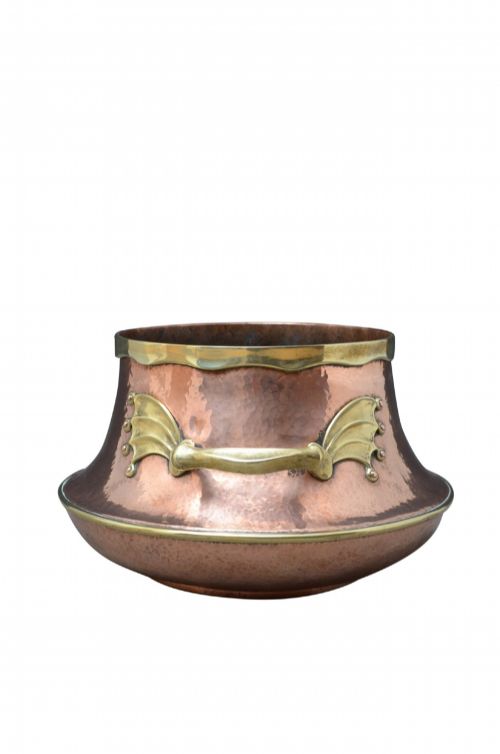
The forms on this page range from straight-sided log bins and helmet coal buckets to large planters and jardiniere vessels adapted for fireside use. Materials frequently combine brass and copper, sometimes augmented with iron, oak, or zinc liners.
Makers and styles represented include Arts and Crafts designs, Anglo-Indian work, and Dutch Revival pieces, alongside standard domestic English coal scuttles. Buyers often find vessels featuring embossed decoration, hammered surfaces, or contrasting bands of metal.
Materials and Construction
Makers utilised sheet brass and copper, joining plates with visible rivets or smooth seams to form deep cylindrical and helmet shapes. Handles, feet, and applied crests were cast separately in brass and attached to the main body.
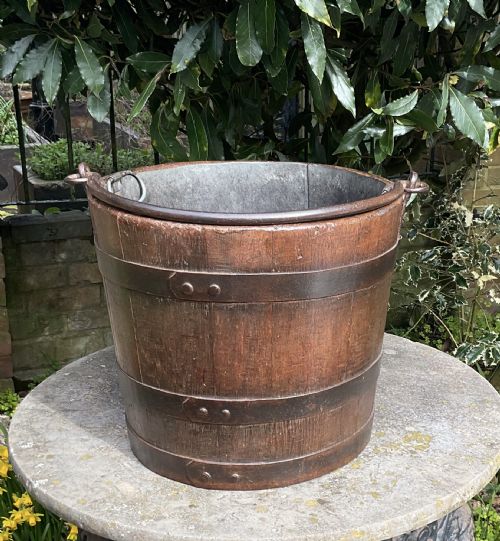
Wooden elements appear in coopered oak and mahogany buckets, bound with brass hoops and lined with metal to hold fuel safely. Wrought and cast iron components provide internal grates or structural support in related fireside accessories.
Listings feature items from the Victorian, Edwardian, and Arts and Crafts periods, constructed from brass, copper, oak, and iron.
Assessing Quality
Quality rests in the weight of the metal and the firmness of construction, where thicker gauge brass and secure riveting distinguish robust utilitarian objects from lighter decorative items. Hand-finished details, such as crisp embossing or clean hammering, separate standard production items from finer studio or workshop pieces.
The integrity of secondary materials matters greatly, particularly the presence of original metal liners in wood-bound buckets and the secure seating of handles and feet. Pieces that retain their structural soundness through decades of heavy domestic use demonstrate superior original manufacture.
Henry Loveridge·William Soutter and Sons·Petrus Ramus
The Victorian Brass Log Holder Glossary
- Dinanderie
- Brass or copper objects produced in Europe, often associated with vessel making and decorative metalwork. This term describes heavy domestic containers found in period interiors.
- Helmet scuttle
- A coal container featuring a high, pointed back and a sloping front resembling a classical helmet. These typically include a fixed rear handle and a swinging bail handle for pouring.
- Coopered
- Constructed from vertical wooden staves fitted together and bound with metal hoops, much like a barrel. This technique appears in wooden log and peat buckets.
- Jardiniere
- An ornamental pot or receptacle designed to hold plants, frequently repurposed as a log or coal bin. They often feature embossed decoration or heraldic crests on the exterior.
Victorian Brass Log Holder: Frequently Asked Questions
How were these holders originally used?
These vessels served to store coal, logs, or peat beside the hearth for daily fireplace maintenance. Their sturdy construction allowed them to carry heavy loads of fuel from outdoor stores to the grate.
Over time, many of these metal and wood containers transitioned from purely utilitarian coal scuttles into decorative fireside bins and plant holders. Their substantial capacity made them practical repositories for bulky fuel.
Can I use an antique holder for logs today?
Most metal bins and buckets remain entirely suitable for holding firewood beside a modern fireplace. The solid brass and copper construction withstands the weight and friction of logs without difficulty.
Owners should check for internal dampness or missing liners if storing unseasoned wood, as moisture can affect older metals and underlying wooden floors.
How do I clean brass and copper safely?
Routine maintenance requires only a soft cloth to remove dust and preserve the natural patina built up over decades. Aggressive polishes strip away the aged surface that collectors value.
If cleaning is necessary, mild soapy water removes soot and grime without harming the underlying metal or any historic hammered finishes.
How do I distinguish Victorian from Edwardian pieces?
Victorian examples often display heavier embossing, elaborate crests, or distinct aesthetic movement influences typical of the nineteenth century. The materials frequently combine deep copper bodies with bright brass trim.
Edwardian pieces tend toward simpler lines, reflecting the transition into the twentieth century and the rising influence of Arts and Crafts ideals. Date markers in the evidence help anchor these stylistic shifts.