
Vintage File Storage
Vintage file storage brings together period craftsmanship and practical organisation, offering sturdy timber filing cabinets and multi-drawer banks built for daily use.
Vintage File Storage
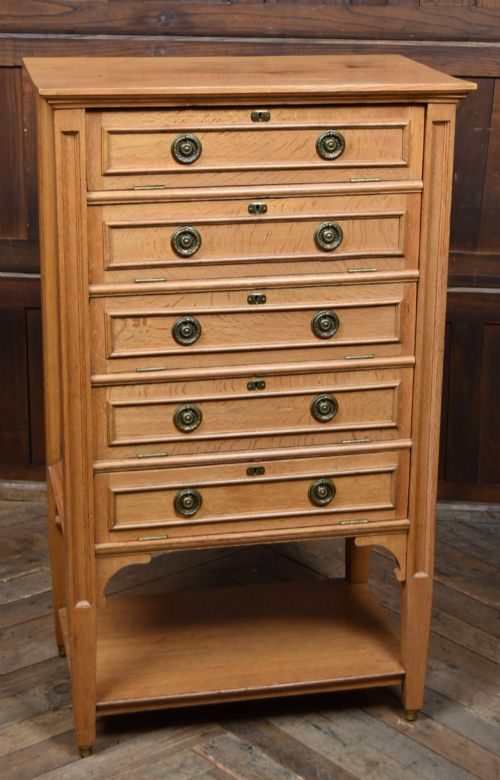
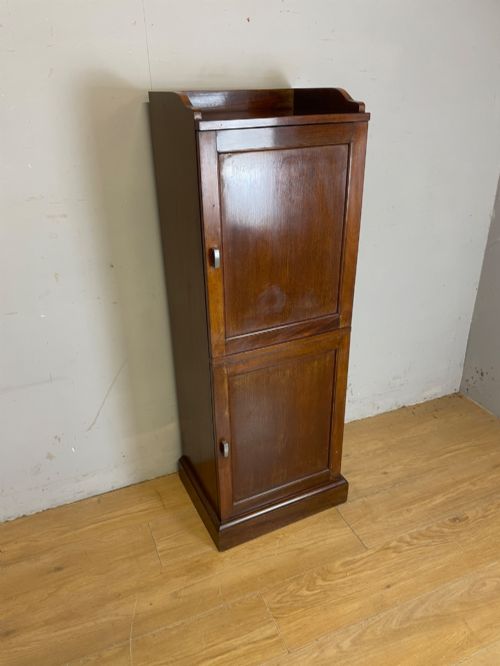
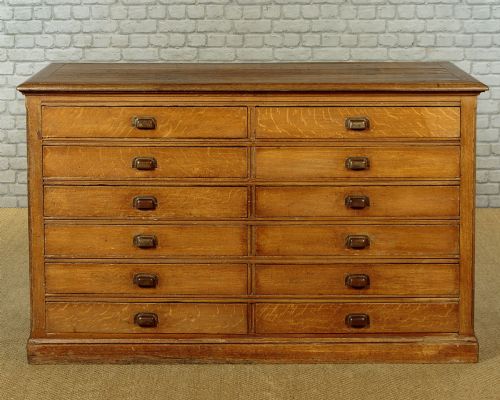
Vintage file storage comprises functional office and workshop furniture designed to sort papers, music, and small items. When searching for vintage file storage, buyers encounter various forms including filing cabinets, banks of drawers, plan chests, and music cabinets.
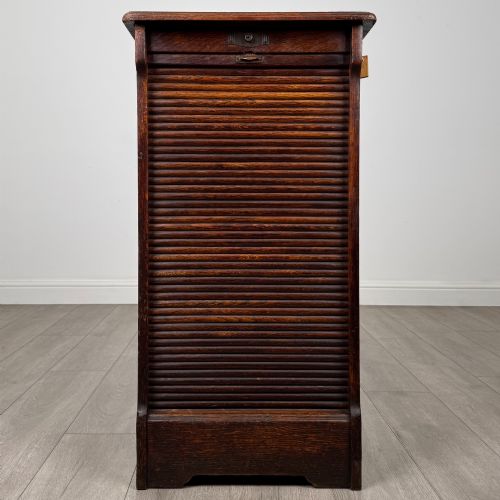
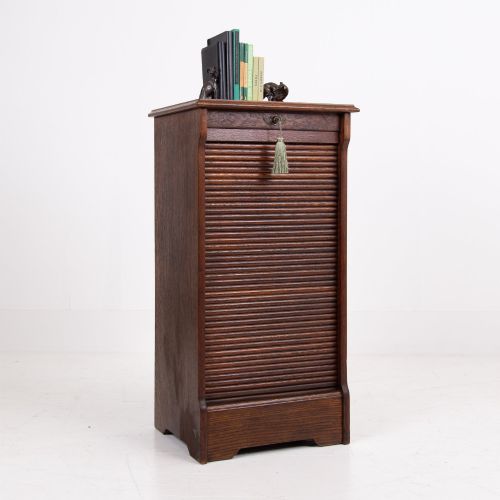
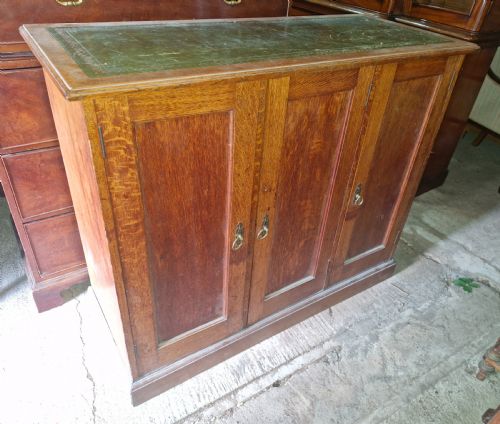
The pieces on this page span the Victorian era, the Edwardian period, and the early twentieth century up to the 1940s and 1950s. Oak and mahogany examples predominate, often featuring tambour fronts, brass hardware, and multiple internal compartments.
Buyers frequently find Edwardian and 1910s oak tambour front cabinets alongside multi-drawer mahogany office units and industrial banks of drawers. These items originate from British, French, and Anglo-Indian workshops, reflecting the administrative and commercial needs of their respective periods.
How they were made
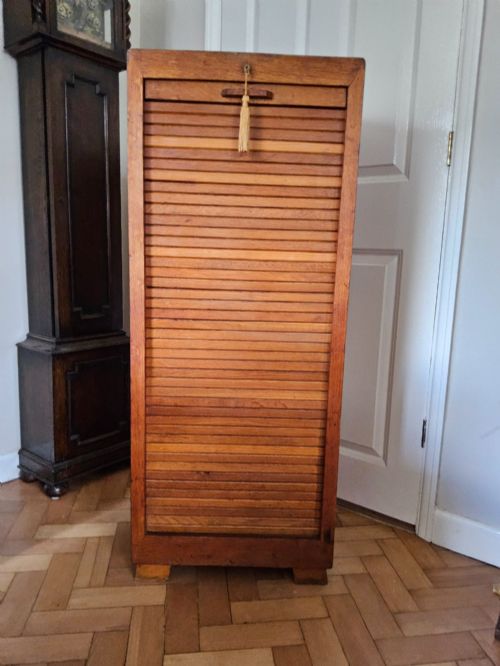
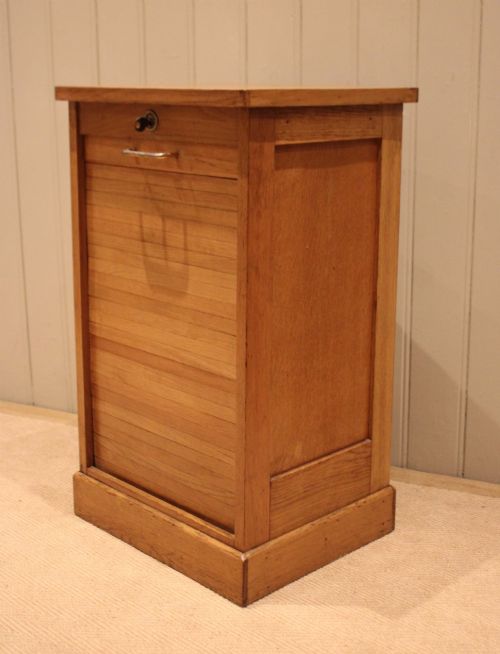
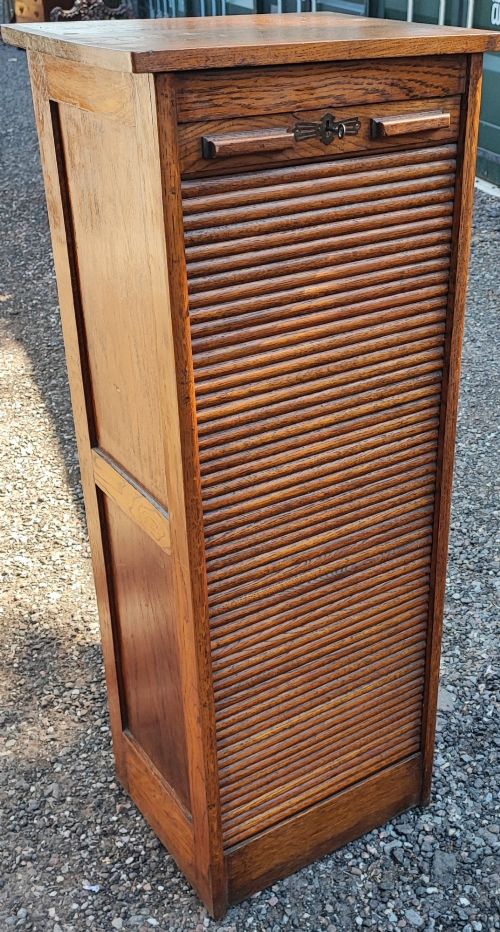
Cabinet makers utilised solid timbers such as oak, mahogany, pine, teak, and occasionally steel and brass for hardware. Tambour doors required narrow wooden slats glued to canvas backings to curve smoothly around cabinet tracks.
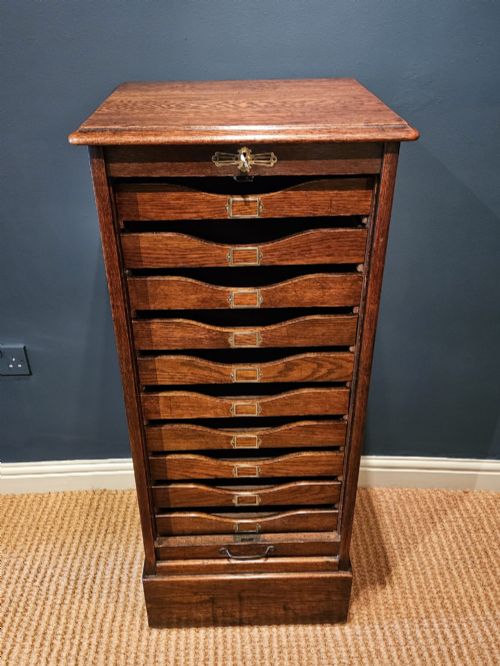
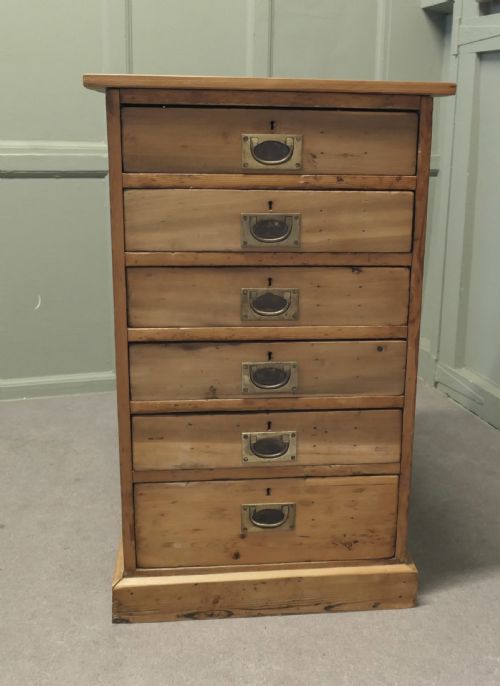
Joinery techniques relied on solid construction methods suitable for heavy office workloads. Original brass shell pulls, label holders, and period handles were integrated into the drawer designs to facilitate daily filing tasks.
Current listings feature pieces spanning the Victorian period, Edwardian era, and the 1910s to 1950s, constructed in oak, mahogany, pine, and teak.
What varies in quality
The distinction between standard utility furniture and finer pieces rests in timber selection and hardware detailing. Superior examples employ figured mahogany or quarter-sawn oak paired with original brass label holders and smooth-sliding tambour doors.
Construction depth and proportion also separate basic workshop storage from refined domestic or office pieces. Finely dovetailed drawer construction and intact patent mechanisms indicate higher grade manufacturing from the outset.
The Vintage File Storage Glossary
- Tambour front
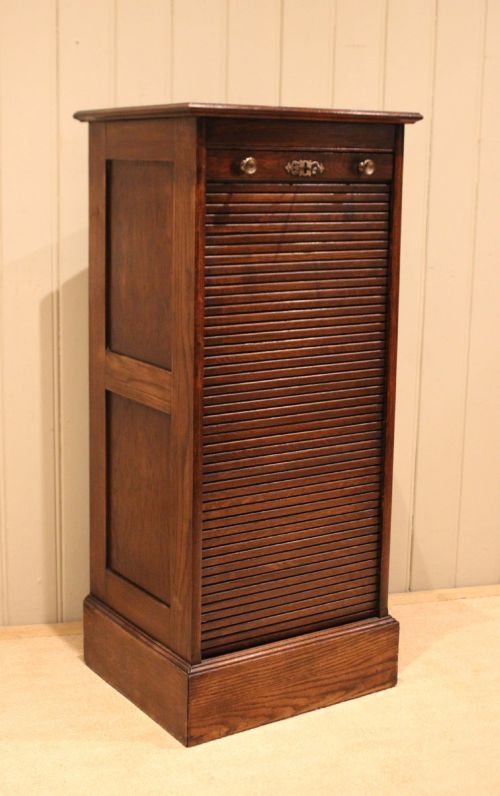
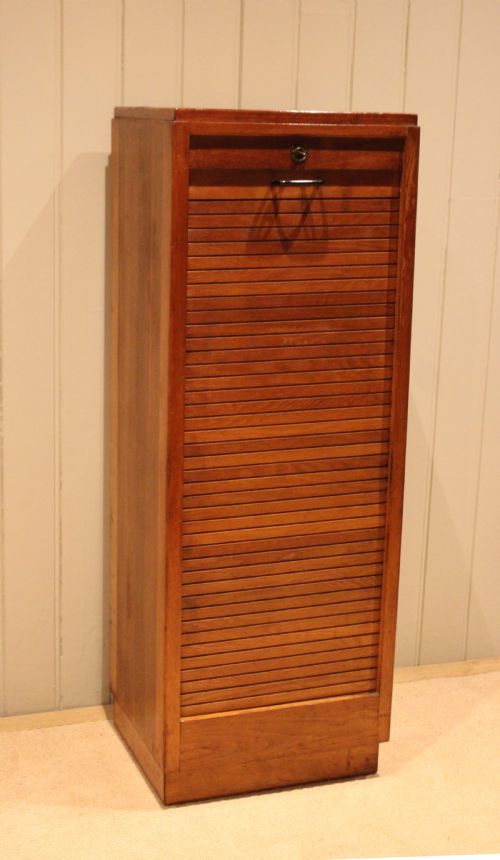
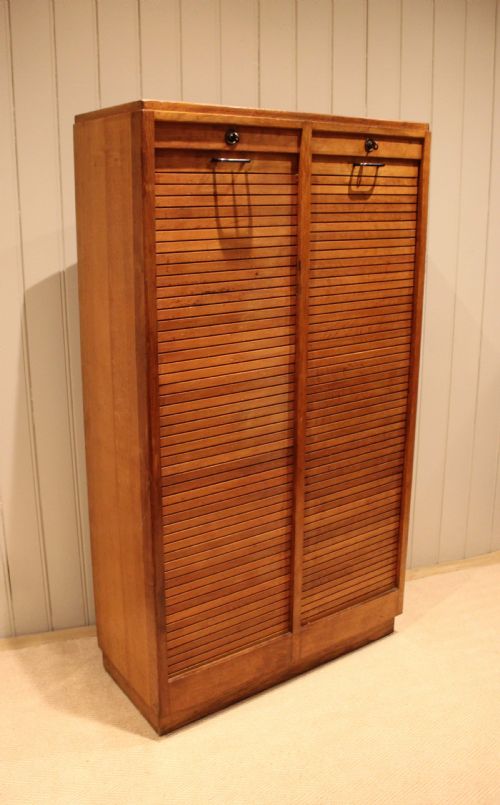
- A flexible door made of narrow wooden strips attached to canvas, allowing it to slide smoothly around the side of a cabinet. This clever mechanism concealed stored files while saving external floor space.
- Plan chest
- A wide, shallow multi-drawer cabinet designed specifically for flat architectural drawings and maps. These substantial pieces provide large horizontal surfaces for sorting documents.
- Bank of drawers
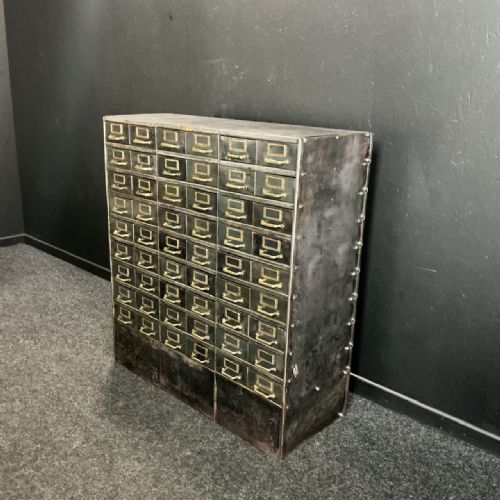
- A multi-tiered unit containing numerous small or medium drawers stacked vertically. They served commercial, workshop, and office environments for sorting paperwork and hardware.
- Shell pull
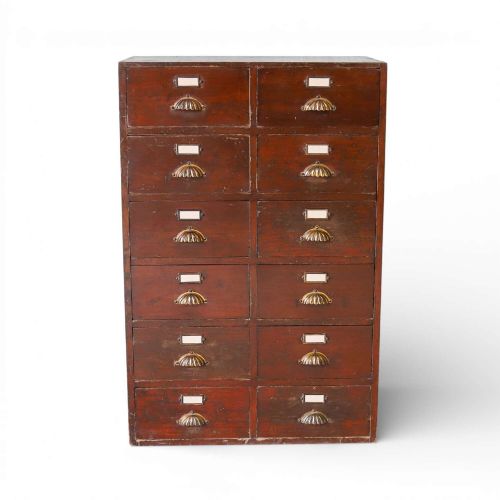
- A pressed metal or brass handle shaped like a half-shell, commonly incorporating a slot for a paper label. They feature prominently on early twentieth-century office furniture.
- Haberdashery cabinet
- A glass-fronted or multi-drawer display unit originally utilised in retail shops for storing small goods. Collectors now repurpose them for domestic organisation.
Vintage File Storage: Frequently Asked Questions
How do I use a tambour cabinet?
Tambour cabinets operate by sliding the slatted wooden door along side tracks to open or close the compartment. This design is particularly useful in tight office spaces where traditional swinging doors would obstruct movement.
Keep the internal wooden tracks clean and lightly waxed to ensure the canvas-backed slats glide smoothly without catching during daily use.
What is the difference between a plan chest and a filing cabinet?
Plan chests consist of wide, shallow drawers specifically intended to store large, flat sheets of paper such as blueprints and maps. Standard filing cabinets utilise deeper vertical drawers designed for hanging files, folders, or upright ledgers.
Selecting between them depends entirely on whether your documents require flat storage or vertical sorting.
Can I fit modern files inside antique drawers?
Many early twentieth-century filing drawers were built for specific historical paper sizes or card indexes rather than modern A4 suspension files. Measuring the internal drawer dimensions carefully before purchase ensures your paperwork will fit comfortably.
Some collectors adapt internal compartments slightly or store documents flat within shallow multi-drawer units.
How do I maintain oak filing furniture?
Maintain oak and mahogany surfaces by applying natural beeswax periodically to nourish the timber and protect the grain. Avoid placing antique wooden cabinets in direct sunlight or near heat sources to prevent the wood from warping.
Regular dusting with a soft, dry cloth preserves the original polish and brass hardware without harming the aged finish.