



Antique Card Cabinet
An antique card cabinet provides neat storage for index cards and small papers, combining practical utility with period charm.
Antique Card Cabinet
When you search for an antique card cabinet, you encounter multi-drawer units built for filing, library indexing, and office storage. These pieces originate from the Victorian, Edwardian, and mid-twentieth-century periods, capturing an era of meticulous paper organisation.
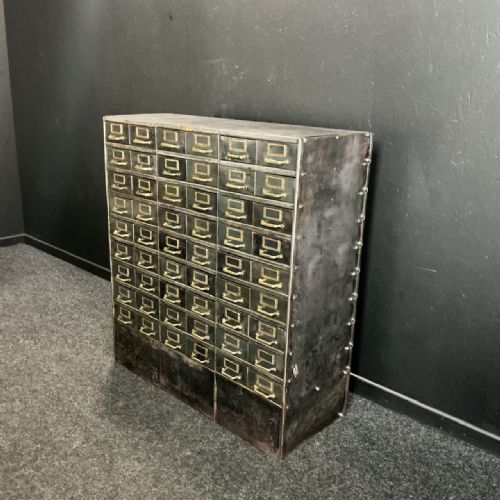
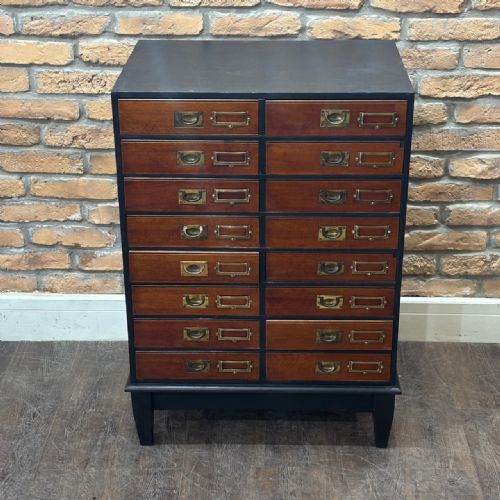
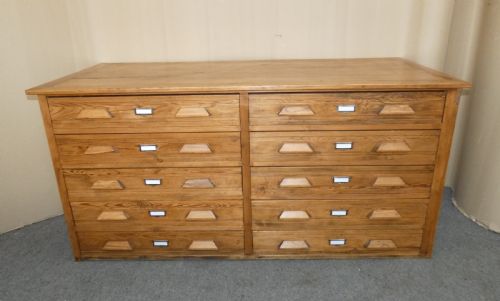
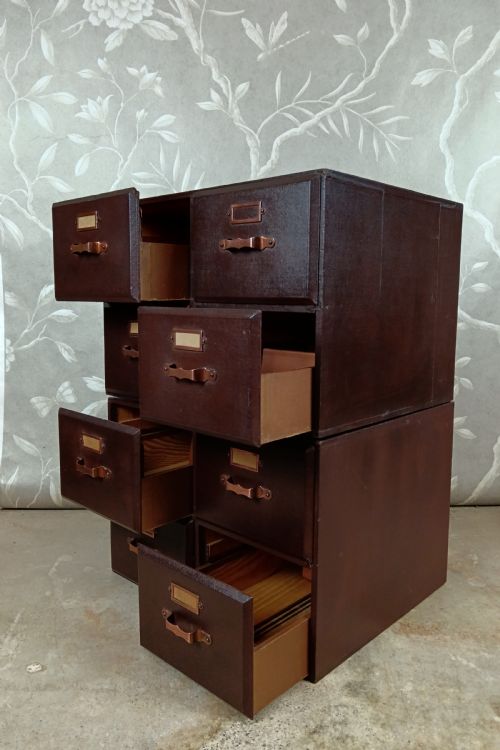
The most common examples on this page are banks of small drawers and filing cabinets constructed from oak, mahogany, and pine. You also find specialised pieces like patent letter files, haberdashery units, and games tables that double as storage.
Makers such as Shannon and Amberg produced specialised filing systems that appear among these listings alongside industrial banks of drawers and office furniture. The forms range from compact desktop index boxes to towering shop fittings with dozens of small compartments.
Materials and construction methods
Construction relies heavily on hardwoods like oak and mahogany, alongside softer utility timbers such as pine and satin walnut. Cabinetmakers utilised durable dovetail joints for the small drawers to withstand the daily friction of pulling and pushing index cards.
Metal hardware plays an essential structural role, featuring brass handles, steel label holders, and patent locking mechanisms. Surfaces are finished with polished wood veneers, cross-banding, or simple painted coats depending on whether the piece served a domestic parlour or a commercial office.
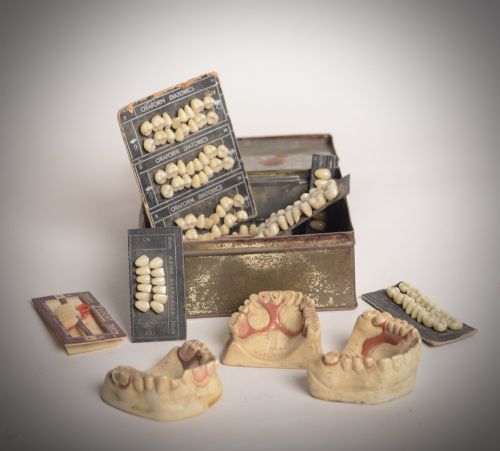
Among the neat rows of office oak and mahogany, a collection of dentist samples and human teeth occasionally peers out from the past.
Judging the quality of storage units
Quality rests on the integrity of the drawer construction and the original state of the internal mechanisms. Cabinets with smoothly sliding drawers, intact brass pull handles, and legible original label holders represent the higher standard of manufacture.
The choice of timber and decorative flourishes also separates functional utility pieces from finer domestic furniture. Examples featuring cross-banded veneers, satinwood, or patent locking systems by established makers command greater interest than plain utility pine boxes.
Amberg·Shannon
The Antique Card Cabinet Glossary
- Cross Banding
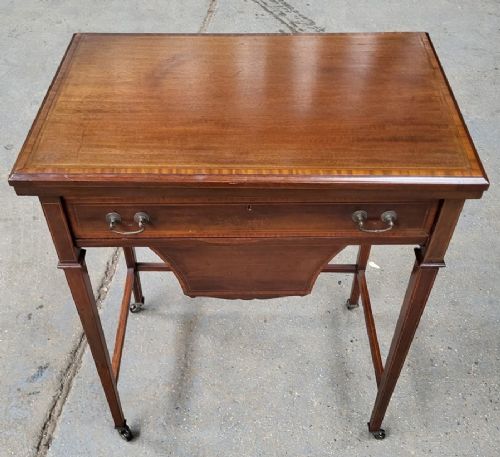
- A border technique where thin strips of veneer are laid perpendicular to the grain of the main surface. This decorative framing appears frequently on Edwardian tables and finer cabinetry.
- Haberdashery Cabinet
- A multi-drawer storage unit originally designed for retail shops to sort small dry goods. These tall banks of glass-fronted or wooden drawers are now popular for domestic organisation.
- Patent Letter File
- A specialised mechanical filing system designed to hold documents securely in alphabetical order. Amberg produced notable examples featuring indexed drop-down fronts.
- Bank of Drawers
- A multi-tiered stack of small shallow drawers built into a single housing. These units were standard equipment in offices, libraries, and workshops before modern digital filing.
Antique Card Cabinet: Frequently Asked Questions
What were antique card cabinets used for?
These cabinets stored index cards, library cataloguing systems, and business correspondence in offices and institutions.
They kept vast amounts of small paper records sorted alphabetically or numerically before modern computing took over.
How do I date an antique card cabinet?
Examine the secondary woods, the style of the brass hardware, and construction marks like dovetailing.
Victorian and Edwardian pieces often feature richer timbers like mahogany and walnut, while later 1920s and industrial examples lean towards oak, steel, and utilitarian pine.
Can I use these cabinets for modern storage?
Many collectors adapt these multi-drawer units to organise stationery, craft supplies, and jewellery at home.
The shallow drawer depths make them particularly well-suited for tidying up small desk items and loose paperwork.
Are filing cabinets different from haberdashery drawers?
Filing cabinets generally feature deep or specialised index drawers designed specifically for vertical paper storage.
Haberdashery units typically consist of numerous very shallow drawers originally intended for ribbons, buttons, and small retail stock.