



Edwardian Card Index
These edwardian card index pieces are practical office furnishings that bring tidy charm to a modern study.
Edwardian Card Index
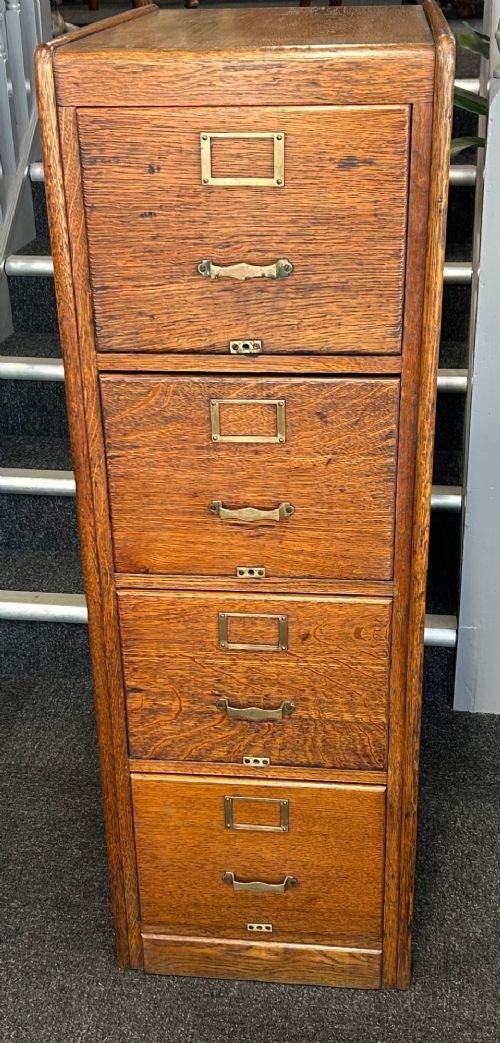
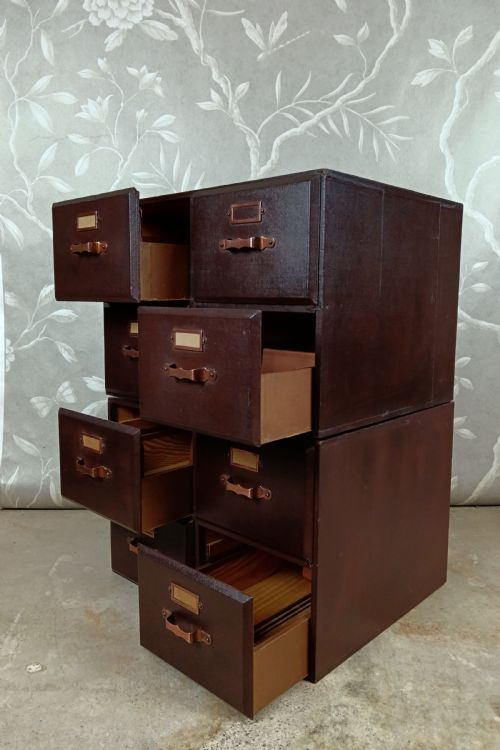
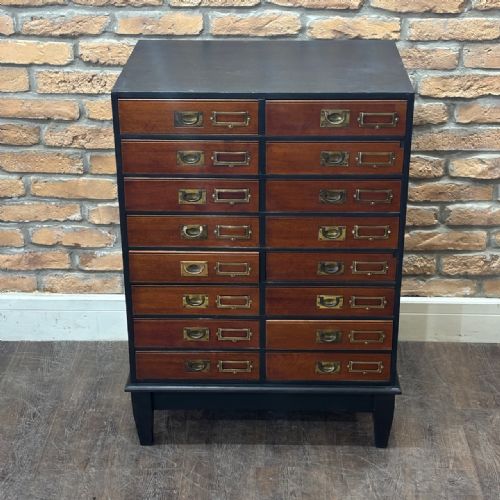
An edwardian card index comprises multi-drawer filing units designed for systematic record keeping in offices and libraries. The items appearing here span filing cabinets, bank chests of drawers, and letter files.
Most examples date from the early decades of the twentieth century, constructed primarily to hold small record cards, letters, or specimens. The forms range from compact tabletop banks to taller multi-drawer chests.
Materials vary across the selection, reflecting the utilitarian needs of the period. Oak, mahogany, walnut, and pine frequently appear, often paired with brass hardware.
Materials and construction
Cabinet makers utilised sturdy timbers such as oak, mahogany, and walnut to build these functional storage pieces. Solid wood construction ensures durability across heavy daily use in busy commercial environments.
Hardware elements like brass pulls and label holders are integrated into the drawer fronts to assist with rapid filing. Painted wood and pine finishes also appear among the more utilitarian surviving examples.
Edwardian Card Index Retail Price Guide 2026
Typical asking prices for edwardian card index among the pieces listed under this phrase on Sellingantiques today, from the lower quarter to the upper quarter. They describe what is for sale here now, not the wider market.
Assessing quality and finish
Quality rests in the selection of timber and the precision of the drawer joinery. Finer pieces display carefully chosen grain patterns in oak, mahogany, or walnut, whilst simpler utility pieces rely on painted wood or pine.
Patination and original hardware contribute significantly to the character of each cabinet. Retaining matching brass pulls and legible label holders elevates the integrity of the piece.
Amberg·Shannon
The Edwardian Card Index Glossary
- Bank of drawers
- A multi-drawer cabinet designed for organising small items or documents. These units typically feature numerous shallow compartments arranged vertically or horizontally.
- Patent letter file
- A specialised filing system featuring a mechanical mechanism to secure papers. Amberg's patent units represent notable examples of this secure storage method.
- Haberdashery cabinet
- A shop display or storage unit featuring numerous small drawers with glass fronts or pulls. They share similar multi-drawer proportions with card index systems.
- Patina
- The surface sheen and coloration developed through age and handling. This develops naturally on the timber and brass over decades of use.
Edwardian Card Index: Frequently Asked Questions
What fits inside these drawers?
These drawers were originally made to hold index cards, correspondence, or small collection items. Their shallow proportions suit stationery and flat ephemera.
Modern owners frequently repurpose them for organising craft supplies, jewellery, or desk accessories.
How do I care for the wood?
Keep these cabinets away from direct heat sources and strong sunlight to prevent the timber from drying out. An occasional application of beeswax helps nourish the grain.
Avoid excessive moisture on both the wood and the brass handles during routine cleaning.
How do I identify the period?
Early twentieth-century pieces often display characteristic brass hardware, dovetail joints, and specific timber choices like oak or walnut. Patent marks can also help pinpoint the era of manufacture.
Later mid-century examples typically show simpler pine construction and different interior configurations.