

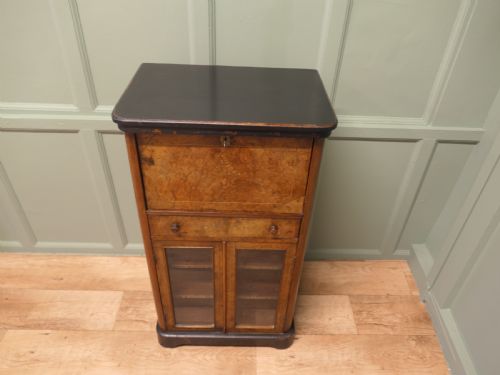


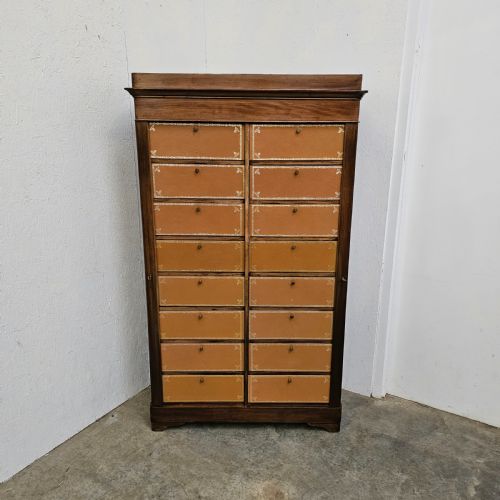

Walnut Filing Cabinet
A walnut filing cabinet brings rich timber grain and practical archive storage to a room, offering clever drawer systems and handsome Period presence.
Walnut Filing Cabinet
A walnut filing cabinet is a hardworking piece of office furniture adapted for domestic or study use, most commonly appearing in Edwardian and Victorian forms. These pieces range from tall tambour-fronted office cabinets and shallow-drawer Shannon systems to banks of small drawers and Wellington chests designed for documents.
The version you are most likely to meet on this page is the Edwardian office filing cabinet or the nineteenth-century bank of drawers, built to hold papers securely in offices or libraries. Alongside these, the archive shows collectors cabinets, jewellers cabinets, and French cartonnieres that share the same utilitarian roots.
Makers and commercial makers such as Shannon File Co. and Amberg provided specialist mechanisms alongside traditional cabinetmakers who turned out Wellington chests and shop chests. The form bridges the gap between commercial efficiency and domestic library furniture.
How they were made
Construction relies heavily on solid walnut, burr walnut, and figured walnut veneers applied to secondary woods, often complemented by satin birch or mahogany interiors. Timber selection prioritised striking grain patterns on the drawer fronts and outer carcases.
Hardware played a vital mechanical role, incorporating brass handles, escutcheons, locking bars, and tambour slats that required precise carpentry to slide smoothly. Leather inserts and glass panels also appear on specific French and English variants to complete the functional design.
Walnut Filing Cabinet Retail Price Guide 2026
Typical asking prices for walnut filing cabinet among the pieces listed under this phrase on Sellingantiques today, from the lower quarter to the upper quarter. They describe what is for sale here now, not the wider market.
Some Edwardian filing cabinets still retain their original keys, unlocking small compartments that once kept strict Victorian office secrets safe.
What varies in quality
Quality rests on the choice of timber figure, such as highly figured burr walnut against plain timber, and the sophistication of the internal mechanism like functioning tambour doors or specialist patent filing systems. The presence of original keys and makers' stamps elevates a piece above standard utility furniture.
Joinery standards distinguish utilitarian office pieces from cabinetmaker-built items, visible in drawer construction, dovetailing, and the retention of original brass hardware. The depth of polish and the preservation of the natural walnut patination separate fine examples from heavily restored or altered pieces.
Amberg·Shannon File Co.·S & H Jewells
The Walnut Filing Cabinet Glossary
- Tambour
- A flexible shutter made of narrow strips of wood glued to canvas, allowing a sliding door to curve around the corner of a cabinet.
- Shannon File
- A proprietary filing system popular in the late nineteenth and early Edwardian periods, utilising vertical arch files held within dedicated drawers.
- Wellington Chest
- A tall, narrow chest of drawers secured by a single hinged locking stile that fastens over the drawer margins and locks with a key.
- Cartonniere
- A French style of cabinet or desk organizer fitted with multiple horizontal compartments or pull-out boxes designed for papers and correspondence.
- Figured Walnut
- Timber cut from specific parts of the walnut tree, such as burls or forks, displaying intricate, swirling grain patterns highly prized for cabinet fronts.
Walnut Filing Cabinet: Frequently Asked Questions
What is a tambour front filing cabinet?
A tambour front cabinet uses a slatted wooden door that slides along a track to conceal the interior filing drawers. This mechanism allowed offices to save space by eliminating swinging doors in cramped Victorian and Edwardian workspaces.
Today, the slatted curtain provides a tactile and visually distinct feature that sets these cabinets apart from standard panel-door office furniture.
How do I date a walnut filing cabinet?
Dating relies on construction methods, hardware styles, and patent marks stamped into the drawer mechanisms or locks. Edwardian examples often feature tambour fronts and specialised office filing systems, while Victorian pieces lean toward Wellington chests and banks of brass-handled drawers.
Examining the secondary woods inside the drawers and the style of the brass handles helps narrow the period of manufacture between the mid-nineteenth and early twentieth centuries.
Were these cabinets made for offices or homes?
Many were manufactured for commercial offices, legal practices, and municipal archives, as evidenced by proprietary systems like the Shannon file and Amberg mechanisms. Businesses required secure, organised storage for growing volumes of paper records.
At the same time, smaller banks of drawers and collectors cabinets were produced for domestic libraries and studies, allowing gentlemen to store correspondence and specimens.
What is the difference between a Wellington chest and a filing cabinet?
A Wellington chest is a tall, narrow set of drawers secured by a locking side pilaster that swings or lifts to bar the drawers from opening. Traditional filing cabinets generally use sliding tambour doors or wide horizontal drawers designed specifically for horizontal document storage.
Both forms served administrative purposes in the nineteenth and early twentieth centuries, but the Wellington design prioritised vertical security for personal papers.