


Vintage Figurative Art
Vintage figurative art brings human presence and character into a room through paintings, drawings, and sculptures spanning the nineteenth century to the mid-twentieth century.
Vintage Figurative Art
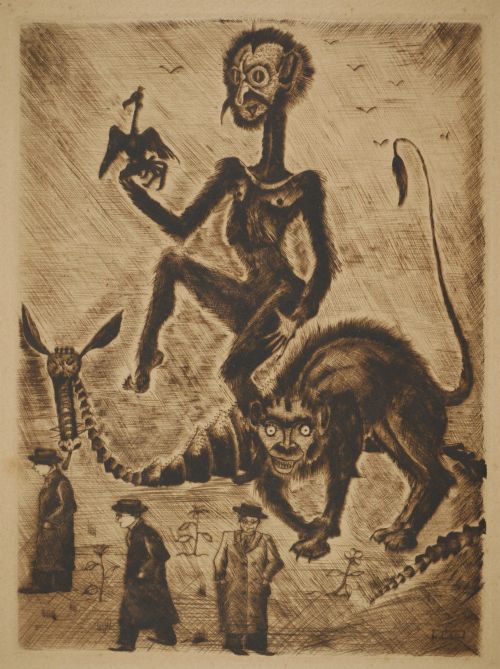
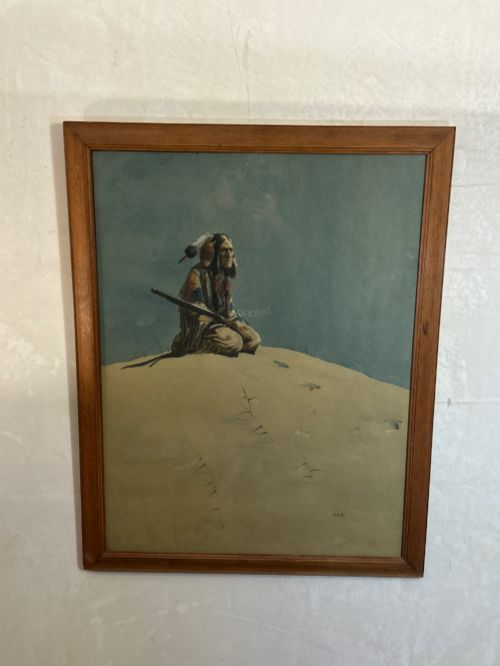
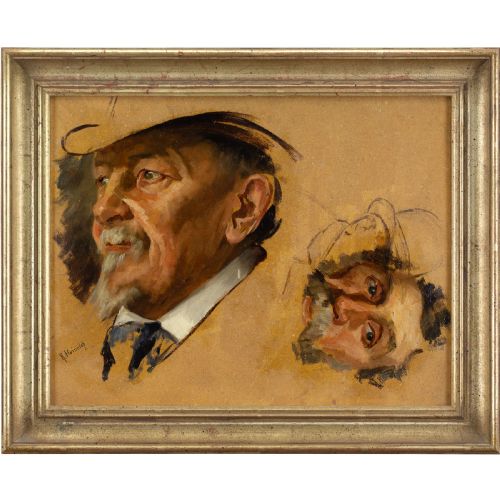
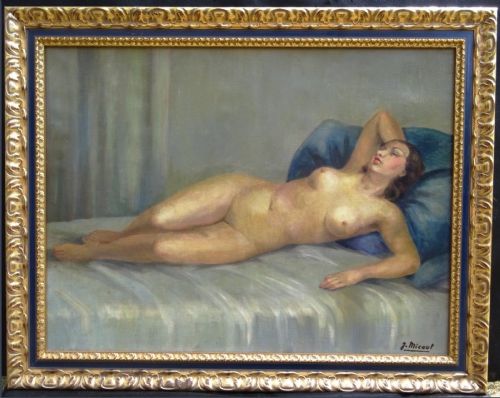
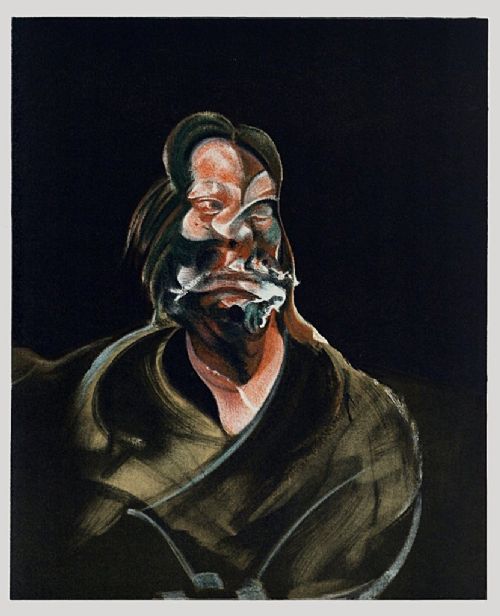
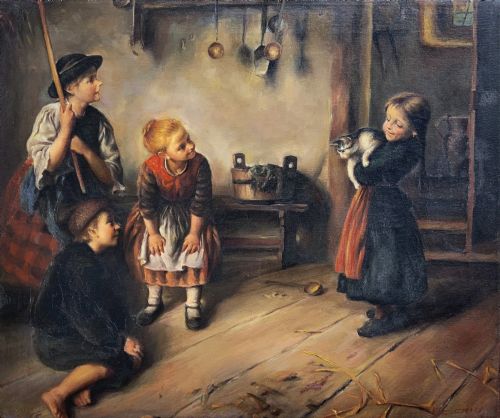
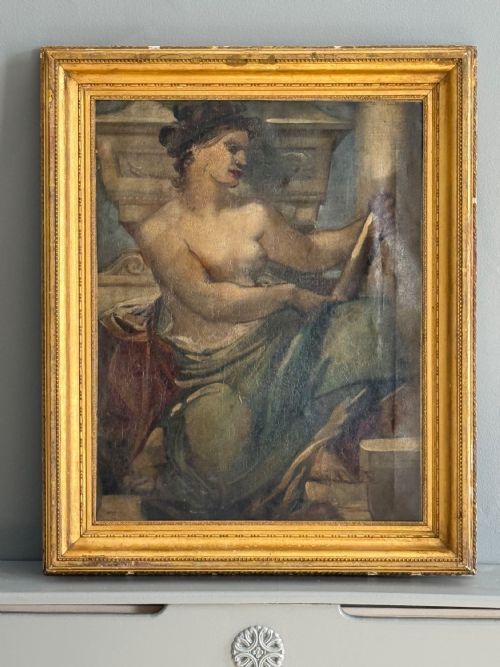
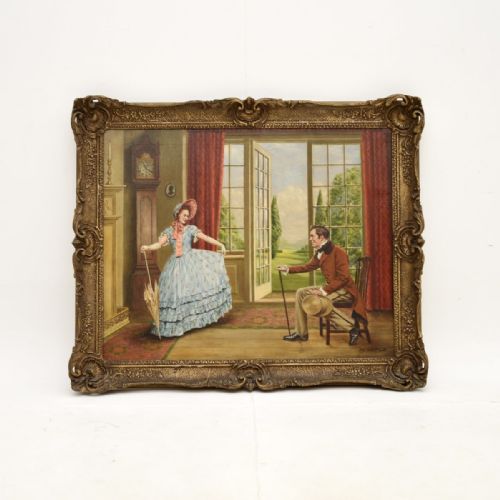
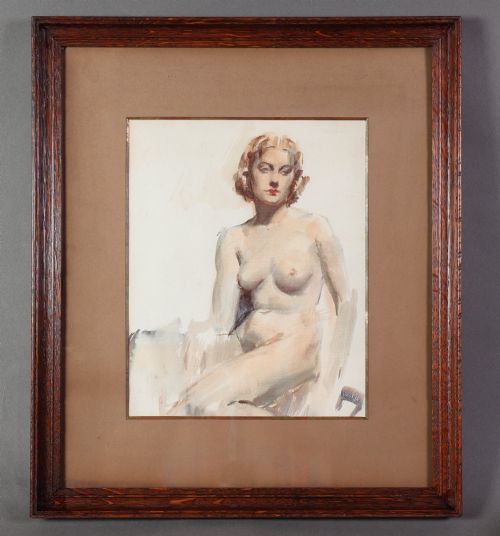
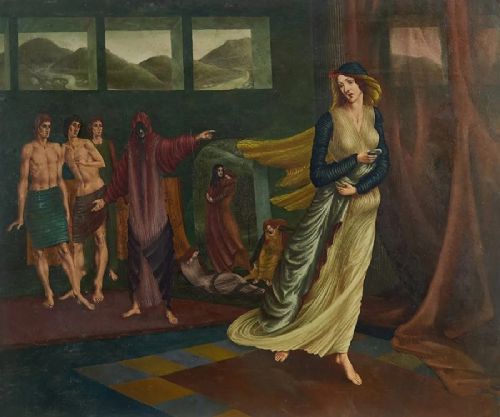
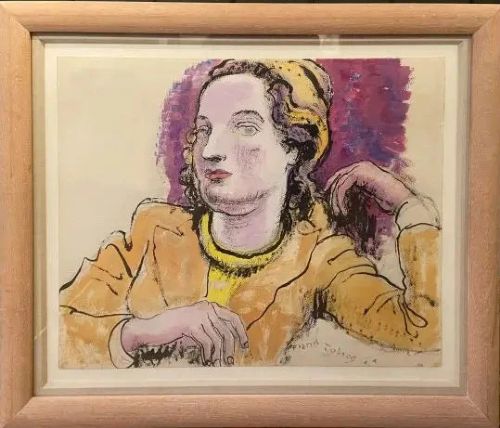
Vintage figurative art comprises works focusing on the human form, ranging from portraits and nudes to genre scenes and dancers. The selection draws primarily from the nineteenth century, Edwardian era, Art Deco period, and mid-century modernism.
Buyers encounter oil paintings on canvas, watercolours, ink drawings on paper, prints, and bronzes or alabaster sculptures. British schools, continental European artists, and named creators populate the works available.
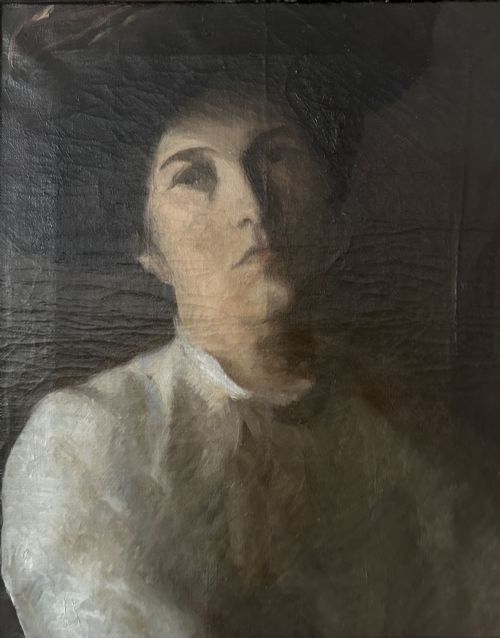
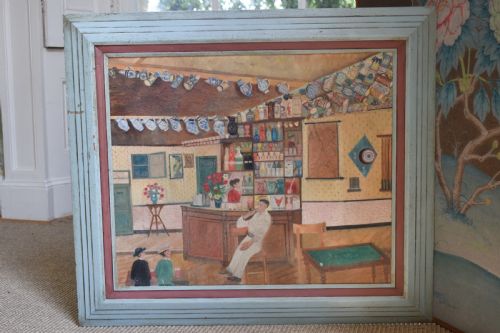
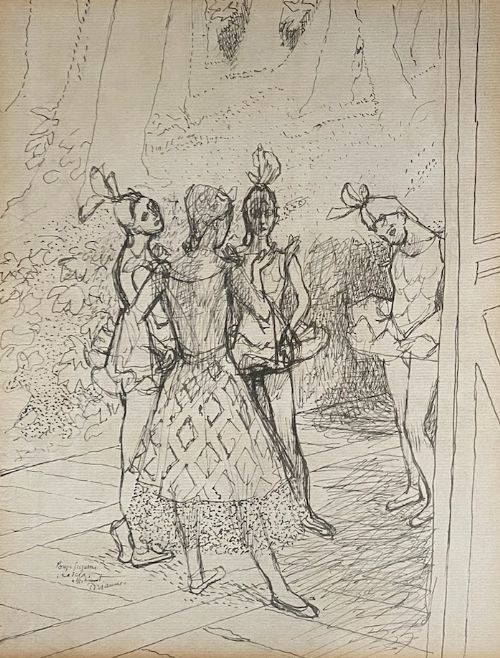
Subject matter varies widely from intimate self-portraits and theatrical backstage views to historical revivals and symbolic studies. Each piece captures a distinct social or artistic attitude from its respective decade.
Materials and technique
Artists painted in oil on canvas or panel, worked with watercolour, gouache, and ink on paper, and pulled lithographs and etchings. Canvases display varied brushwork, from smooth academic finishes to heavy impasto.
Sculptors shaped bronze and carved alabaster to render three-dimensional forms like dancers and figurative studies. Printers utilised techniques such as lithography and pochoir to reproduce graphic works.
A solitary alabaster dolphin lamp swims among the portraits, prints, and ballerinas.
Judging quality in figurative works
Quality rests on the sureness of the draftsmanship, the control of proportion, and the psychological depth of the subject. Stronger pieces reveal confident handling of line and tone, whereas weaker examples lack anatomical conviction.
The integration of medium and support matters significantly, whether in the luminosity of an oil paint layer or the crisp register of a print. Works by listed artists or established schools generally demonstrate superior technical command.
Kurt Lorein Victor Peiser·Bruno Zach·John Hassall·Josef Lorenzl·Frank Dobson·Francis Bacon·Pablo Picasso·Maurice Brianchon
The Vintage Figurative Art Glossary
- Figurative art
- Art that derives its imagery from real object sources, specifically focusing on the human figure. This encompasses portraits, nudes, and narrative scenes.
- Impasto
- Paint applied thickly to a canvas or panel, leaving the marks of the brush or palette knife visible. It adds physical texture and dimension to the surface.
- Lithograph
- A print made from a planographic process in which an image is rendered on limestone or a metal plate. Ink adheres to the greasy drawn areas and transfers to paper.
- Genre painting
- The pictorial representation of scenes from everyday life, involving ordinary people engaged in common activities. These works capture domestic interiors or street scenes.
- Etching
- A printmaking process where lines are bitten into a metal plate with acid before ink is applied and pressed onto paper. This technique produces fine, sharp linear details.
Vintage Figurative Art: Frequently Asked Questions
What periods do these pieces cover?
The works span from the nineteenth century through the Edwardian era, Art Deco period, and into the mid-twentieth century.
Items reflect stylistic movements such as impressionism, post-impressionism, modernist abstraction, and symbolist school painting.
How do I identify a print from an original painting?
Original paintings show visible brush texture, layers of pigment, and the weave of canvas or texture of paper under close inspection. Prints exhibit uniform ink application and dot or screen patterns when viewed under magnification.
Signatures on prints often indicate limited editions, whereas oil paintings bear the direct hand of the artist.
Where should I hang figurative art at home?
Portraits and genre scenes suit living rooms, studies, and hallways where viewers can observe facial expressions and narrative details at close range. Ensure works on paper and watercolours avoid direct, prolonged sunlight to prevent fading.
Pairing framed drawings with oil paintings adds texture and variety to a gallery wall arrangement.
What materials are common in these sculptures?
Sculptural pieces frequently utilise cast bronze, often associated with Art Deco dancer studies, or carved alabaster for decorative objects like lamps.
Both materials require careful dusting with a soft cloth and protection from moisture to preserve their surfaces.