




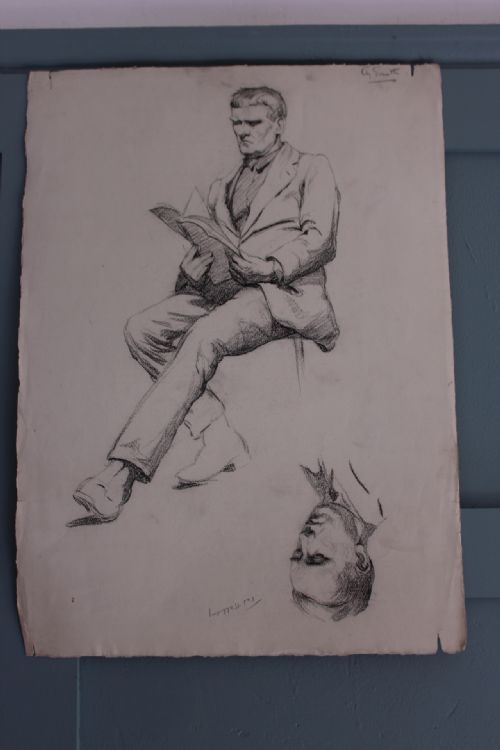


Framed Academic Pencil Drawing
A framed academic pencil drawing brings rigorous draftsmanship and historical presence to a wall, offering direct contact with rigorous studio practice.
Framed Academic Pencil Drawing
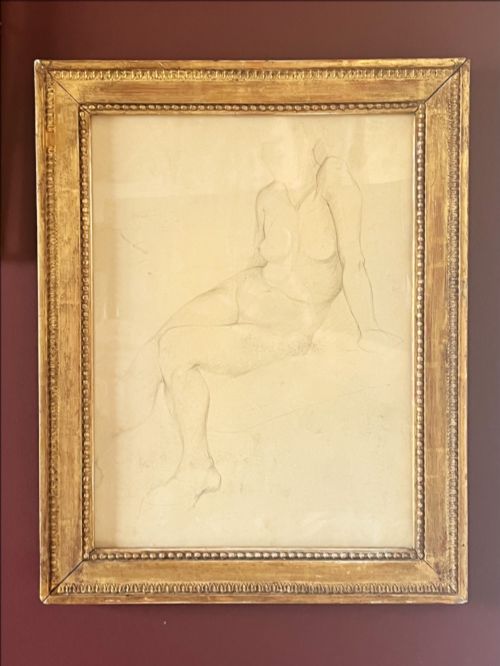
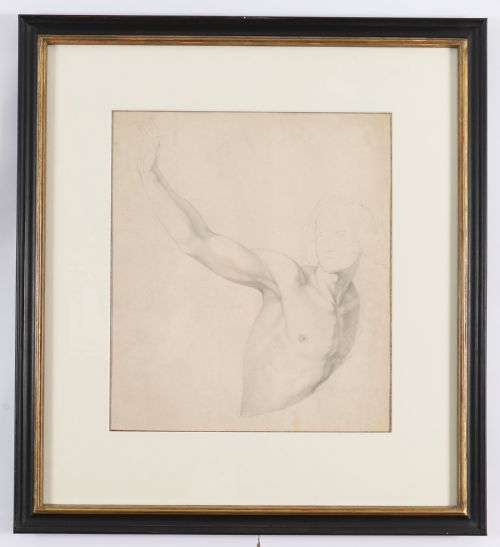
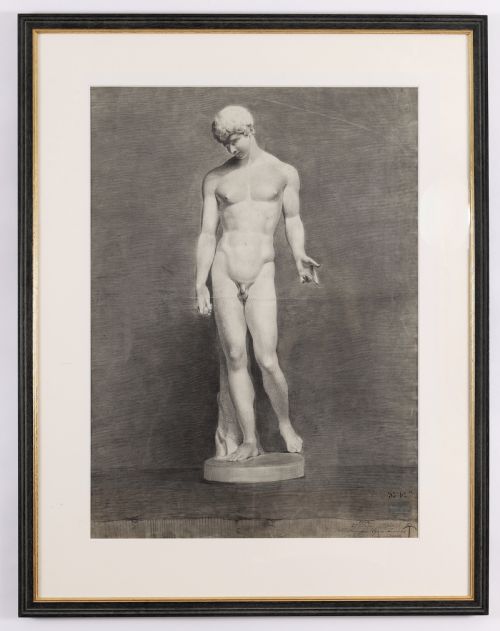
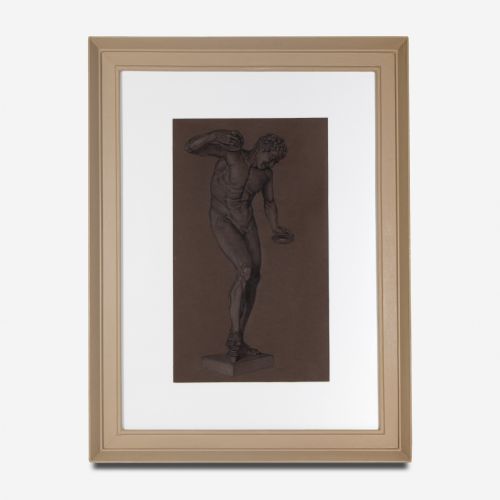
A framed academic pencil drawing represents a disciplined study of the human form, classical sculpture, or portraiture executed with graphite and charcoal on paper. When searching for a framed academic pencil drawing, collectors encounter works ranging from intense figural studies after classical sculpture to detailed nineteenth-century portraits and mid-century life drawings. These pieces originate across the eighteenth, nineteenth, and twentieth centuries, reflecting changing ideals of studio training and academic realism.
The physical format typically combines graphite or charcoal works on paper protected beneath glass and housed within timber or gilt wood frames. The surviving examples span intimate nineteenth-century sketches of children and elders to larger interpretations of antique statuary like the Capitoline Antinous. Many bear precise dates, signatures, or inscriptions linking them directly to named artists and historic English or European schools.
How they were made
The creation of these works relies fundamentally upon graphite and charcoal applied to paper sheets, utilising precise tonal graduation to build form and volume. Artists built up shadows through careful hatching and stumping, capturing the musculature of life models or the precise contours of plaster casts in the studio. Charcoal frequently provides deep, velvety blacks, while graphite allows for fine, sharp lines and subtle mid-tones.
Framing forms an integral part of the finished object, utilising wood, gilt wood, and gold leaf frames that often date from the period of execution or later curation. Glazing protects the delicate paper substrate and fragile graphite or charcoal pigment from atmospheric moisture and handling. The combination of paper, drawing medium, and timber framing preserves the immediacy of the original studio hand.
Listings span from the eighteenth century through the 1960s, encompassing styles from neoclassical studies to mid-century British life drawing.
What varies in quality
The choice of framing and the overall state of preservation also determine the distinction of a piece. Original gilt wood and gold leaf frames that complement the period of the drawing elevate the presentation significantly. Furthermore, paper that retains its original tone without excessive foxing or heavy discoloration provides a cleaner window into the historic draughtsman's intent.
Augustus John·Ernest Borough Johnson·Theobald Chartran·Cecil CP Lawson·Reginald G. Eves
The Framed Academic Pencil Drawing Glossary
- Academic Realism
- A style of painting and drawing produced under the influence of European academies of art, emphasising precise anatomical accuracy and classical proportions. This approach prioritised rigorous life drawing and mastery of traditional techniques.
- Grisaille
- A painting or drawing executed entirely in shades of grey or neutral grey-brown, often used to mimic sculpture or create a monochromatic tonal study. Artists utilised this method to focus purely on light, shadow, and three-dimensional form.
- Life drawing
- The act of drawing a live human figure from observation, serving as a cornerstone of traditional art education. These studies capture the immediate posture, gesture, and musculature of the model.
- Figural study
- A preparatory or standalone drawing focused on the human body or specific limbs to understand form and movement. Such works were central to the curriculum of historic art schools.
- Gold leaf
- Gold beaten into extremely thin plates used for gilding frames and decorative surfaces. It provides a warm, reflective border that enhances the visual weight of works on paper.
Framed Academic Pencil Drawing: Frequently Asked Questions
What is an academic pencil drawing?
An academic pencil drawing is a historic study created by artists or students learning anatomy, proportion, and shading through direct observation of models or classical sculpture.
These works record the rigorous training methods of past centuries, utilising graphite, charcoal, and paper to achieve high levels of realism.
How should I hang these drawings?
Because works on paper are sensitive to direct sunlight, these framed pieces require placement away from bright, south-facing windows to prevent fading.
Maintaining stable indoor humidity protects both the fragile paper substrate and the historic wood or gilt frames.
How do I identify the period?
The period is often indicated by the paper type, framing style, inscriptions, and artist signatures recorded on the work. Stylistic cues, such as Victorian academic realism or mid-century modernist life drawing strokes, also point toward specific eras.
Many pieces bear contemporary dates or studio stamps that reliably date their creation.
Were these made as finished art?
While many started as studio exercises or preparatory studies for larger paintings, numerous academic drawings were valued as finished works in their own right.
Skilled draughtsmen often signed and dated their tonal studies, intending them for exhibition or collection by contemporaries.