


Vintage Embroidered Throw
A vintage embroidered throw brings rich Central Asian and South Asian needlework into a room, offering tactile warmth and historic pattern.
Vintage Embroidered Throw
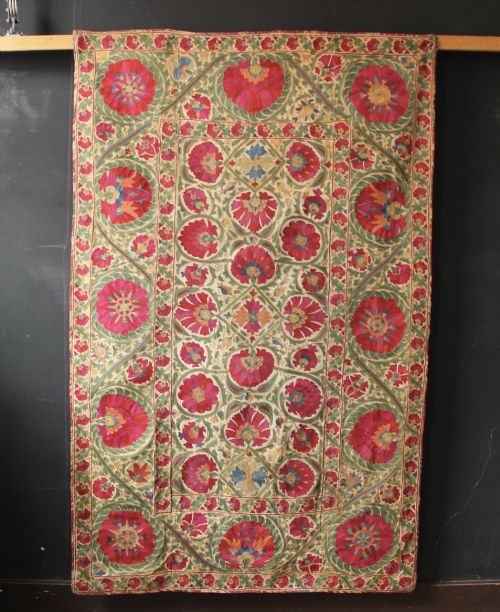
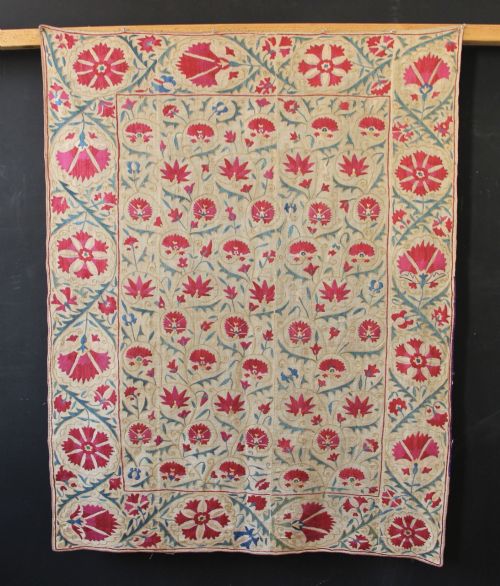
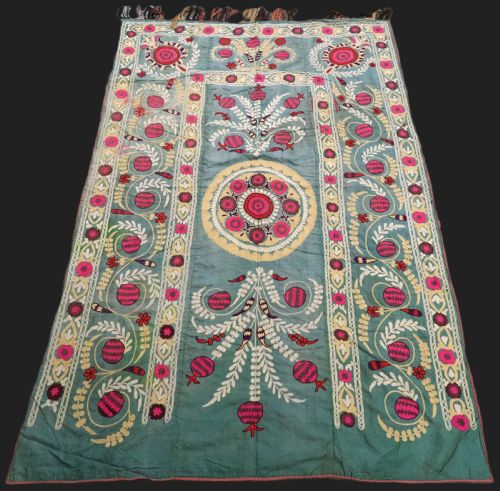
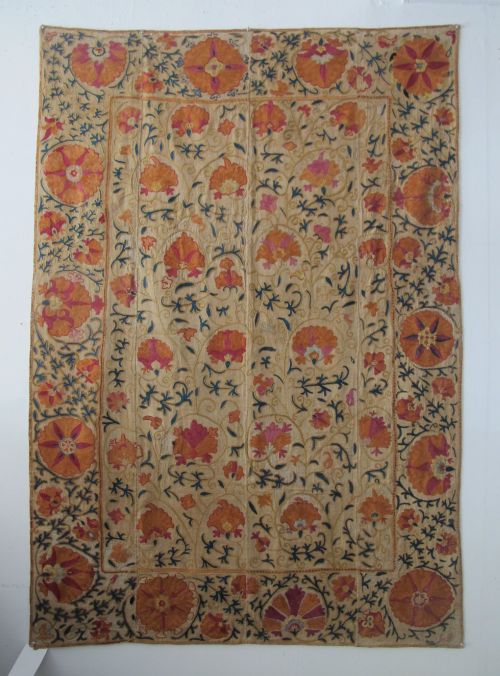
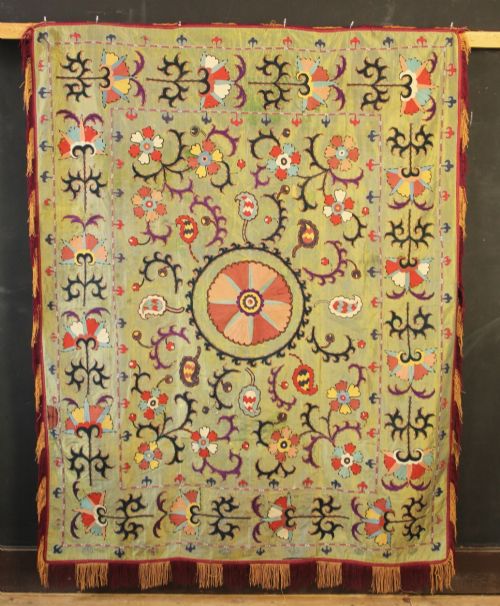
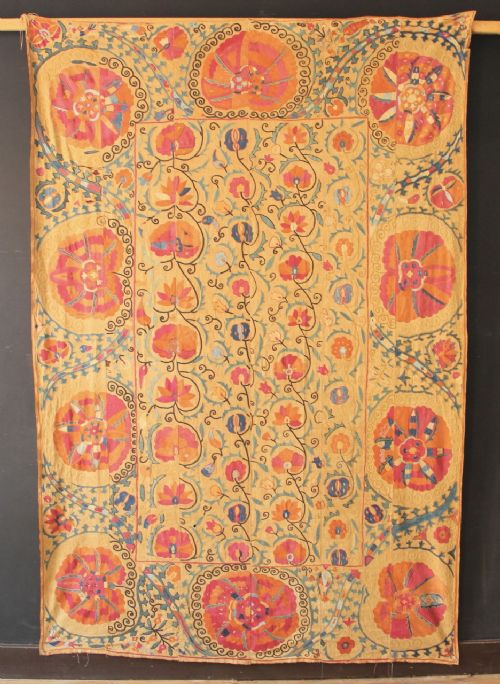
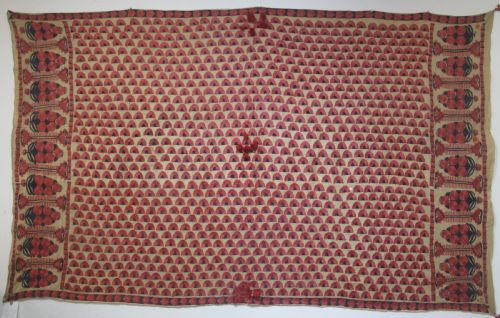
A vintage embroidered throw typically takes the form of a traditional Central Asian suzani or a South Asian shawl, serving as a decorative bedcover, wall hanging or textile drape. The listings here focus heavily on nineteenth and early twentieth-century Uzbek suzanis from regions such as Bokhara, Tashkent and Samarkand, alongside Indian and Kashmiri wedding shawls and embroidered velvet pieces.
Makers shaped these textiles as functional home coverings and ceremonial items, utilising heavy foundation cloths to support dense needlework. Buyers encounter smaller nim suzanis alongside large medallion variants and fully embroidered palak panels, each carrying distinct tribal or regional designs.
The aesthetic leans towards bold floral motifs, central stars and geometric arrangements worked in vibrant thread. These pieces bridge the gap between historic tribal artefact and practical interior textile.
How they were made
Artisans built these textiles upon foundation grounds of woven cotton, linen, wool, velvet or adras silk-cotton mix. Silk thread served as the primary medium for the elaborate needlework covering the surface.
Needleworkers applied various embroidery stitches by hand to create dense surface patterns, often working on separate panels before joining them together. The interplay between the ground fabric and the lustrous silk thread defines the physical structure of each piece.
The listings here span from the eighteenth century through to the 1930s, featuring cotton, silk, velvet, wool and linen grounds.
What varies in quality
Quality rests primarily on the density and precision of the needlework across the foundation cloth. Fully embroidered pieces or full work panels demonstrate a higher level of artisan investment than sparser designs.
The vibrancy and condition of the natural dyes and threads dictate the visual impact of the textile. Intricate regional variations and disciplined execution separate standard utility items from exceptional workshop examples.
The Vintage Embroidered Throw Glossary
- Suzani
- A traditional embroidered tribal textile from Central Asia, usually featuring bold floral or geometric motifs on a fabric ground. The word derives from the Persian term for needle.
- Nim Suzani
- A smaller half-scale version of a standard suzani wall hanging or bed cover. These pieces offer a more compact format for interior display.
- Palak
- A fully embroidered suzani type dominated by large circular medallion designs or central stars. The surface coverage is exceptionally dense.
- Adras
- A traditional hand-woven fabric made from a blend of silk and cotton yarns. It provides a stable yet lustrous ground for heavy embroidery.
- Dochala
- A type of Kashmiri embroidered wedding shawl featuring intricate needlework. These garments display fine traditional craftsmanship from South Asia.
Vintage Embroidered Throw: Frequently Asked Questions
How were suzanis used originally?
These textiles served as dowry items, wall hangings and ceremonial bed covers in Central Asian households. Families displayed them to mark significant life events and social status.
They also provided physical warmth and decorated the interior living spaces of nomadic and settled communities alike.
Can I use an antique throw on a bed?
Many buyers place these textiles across the foot of a bed or use them as lightweight decorative coverlets. Their strong foundation cloths handle gentle daily use well.
Weight and dimensions vary, so matching the textile size to the bed proportions ensures a balanced look.
How do I hang a textile on the wall?
Hanging requires distributing the weight evenly across the top edge without puncturing the historic fabric directly. Many collectors use a fabric sleeve stitched to the reverse or specialised textile clips.
Avoiding direct strong sunlight prevents the silk threads and ground dyes from fading over time.
How do I distinguish regional suzani styles?
Different towns and tribes, such as Bokhara, Tashkent and the Lakai tribe, employed distinct colour palettes and compositional structures. Tashkent pieces often favour bold palak medallions, while Lakai work displays smaller, dynamic geometric insertions.
Study of the ground fabric and specific floral arrangements helps identify the likely origin.