


Vintage Drop Front Bureau
A vintage drop front bureau brings practical writing space and concealed storage together, offering timeless timber craftsmanship for daily home organisation.
Vintage Drop Front Bureau
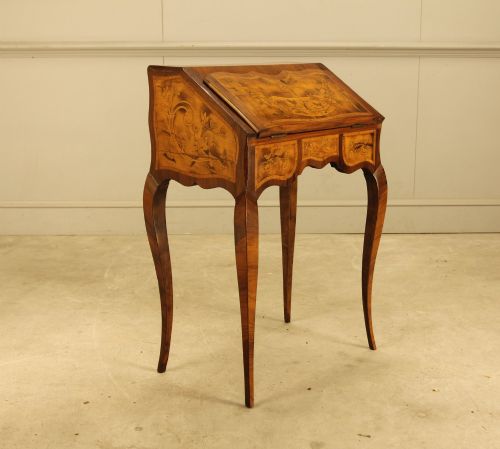
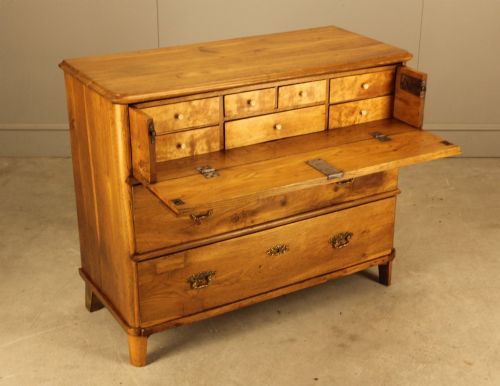
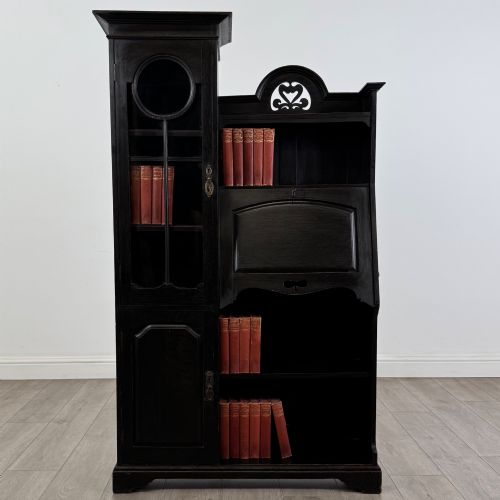
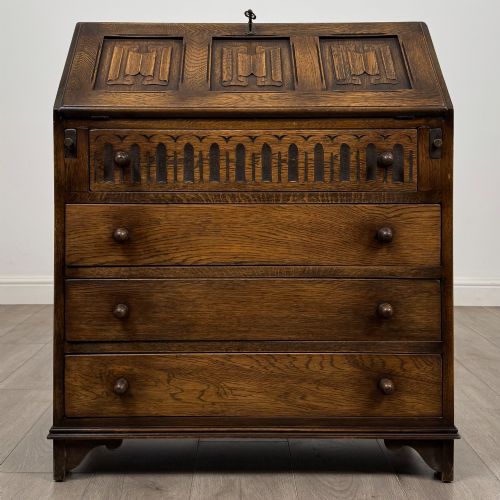
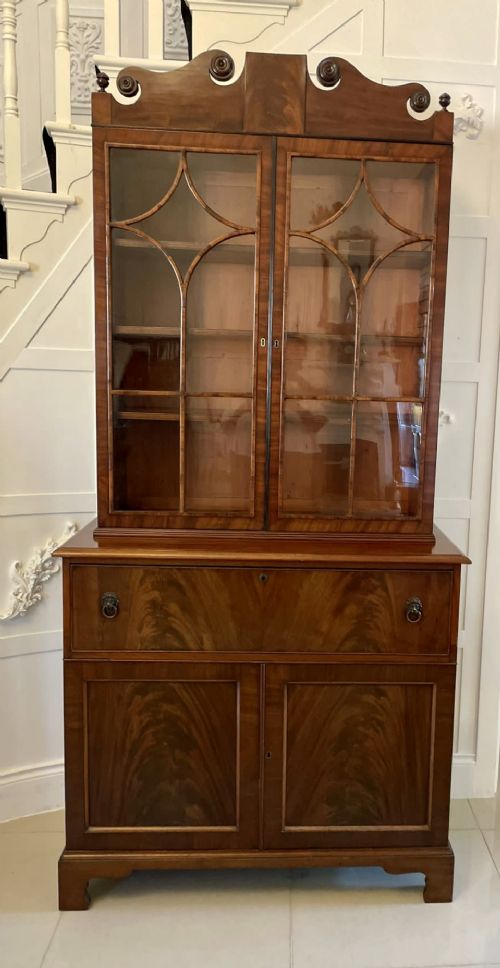
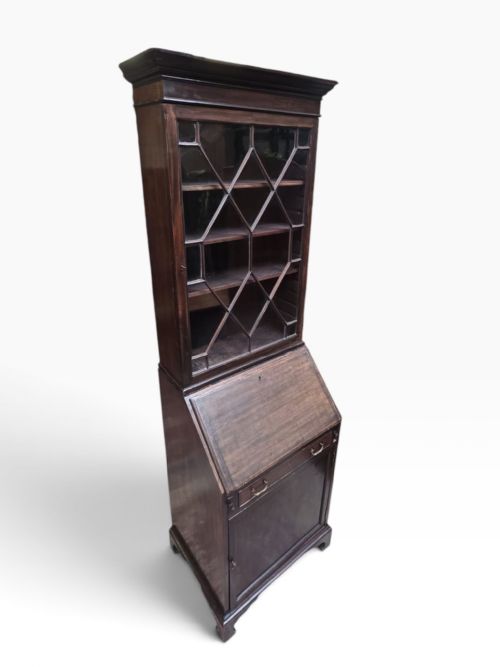
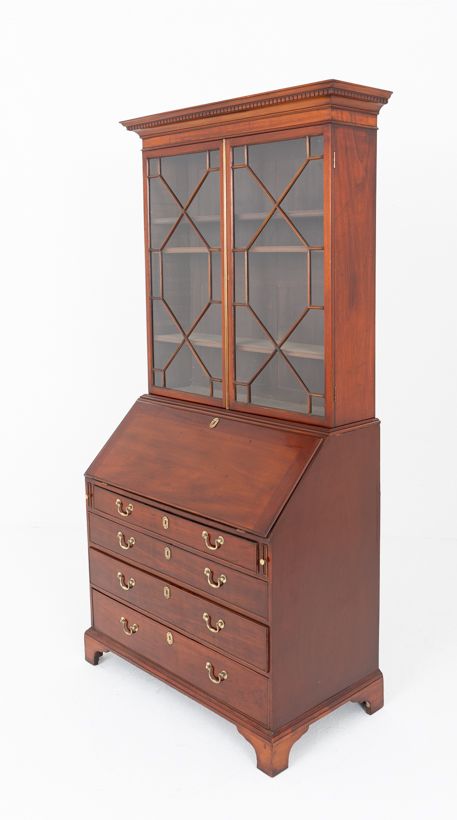
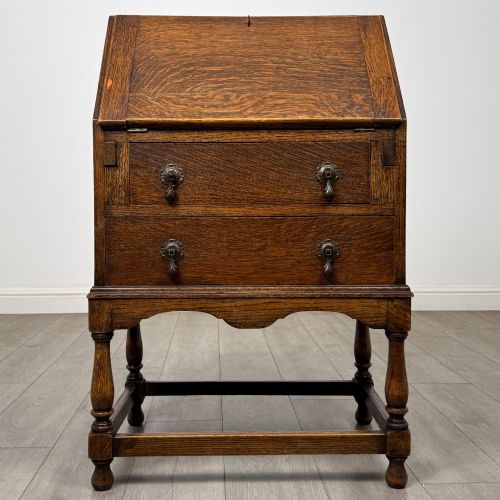
A vintage drop front bureau combines a writing surface with compartmentalised interior storage, opening downward on hinges to reveal pigeonholes and small drawers. These pieces range from compact writing desks to tall bureau bookcases that incorporate glazed upper shelves.
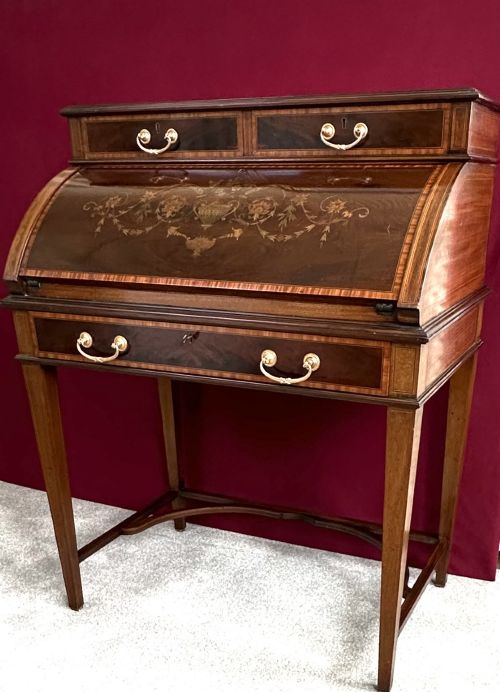
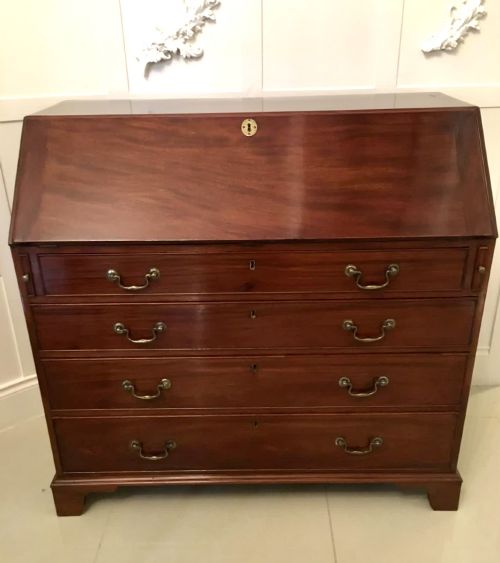
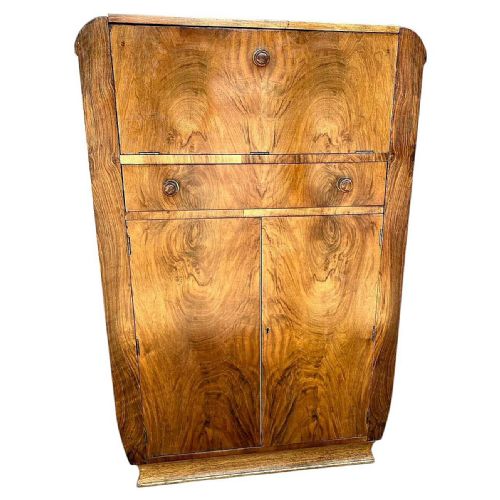
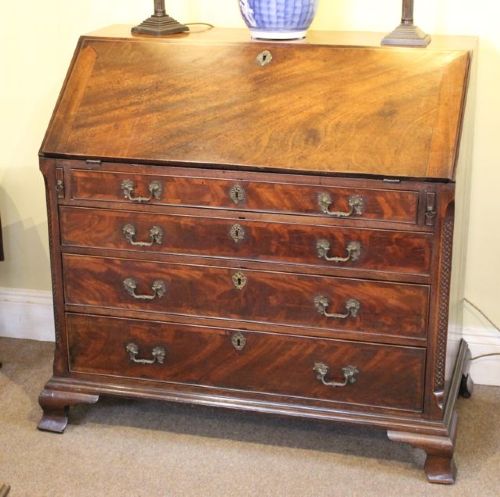
The selections span multiple eras, with Edwardian oak and walnut examples appearing frequently alongside 18th-century Georgian mahogany pieces and 1930s Art Deco designs. Buyers also encounter specialist regional variations, including Cotswold School oak and Regency secretaire cabinets.
Form follows function closely in these items, where the fall front conceals the working area when closed to maintain a tidy room. Many incorporate fitted interiors with secret compartments or matching display cabinets above.
Materials and construction methods
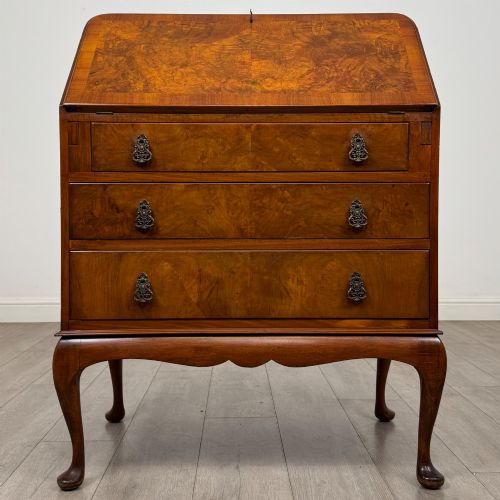
Cabinet makers utilised dense hardwoods including mahogany, oak, and walnut, frequently applying figured veneers or burr walnut to create decorative surfaces on the fall front and drawer panels. Selected pieces feature satinwood stringing, brass handles, or carved linenfold details that reflect specific period styles.
Internal drawer boxes are typically constructed with traditional joints, while larger bureau bookcases employ glass doors with timber glazing bars. Surface finishes range from French polish to waxed oak, preserving the natural grain of the timber.
Several writing cabinets cleverly conceal secret drawers behind their pigeonholes for storing unexpected valuables.
Distinguishing quality across examples
The grade of timber selection and veneer matching defines the visual impact of each piece, particularly on large flat surfaces like the fall front panel. Superior examples display continuous grain patterns and careful book-matching across the primary elevation.
Internal complexity and hardware integrity separate standard production items from workshop pieces. Finely made interiors feature shaped pigeonholes, secret drawers, and original brass fittings that operate smoothly within their housings.
Arthur Basil Reynolds·F.H. Marshall & Co Glasgow·Stanley Webb Davies·Gillows of Lancaster·Larkin
The Vintage Drop Front Bureau Glossary
- Fall front
- The hinged writing flap that pulls down to form a horizontal desk surface. It conceals the interior compartments when closed upright.
- Secretaire
- A cabinet or bookcase containing a pull-out or drop-down writing drawer or flap. This term often appears on French and Regency examples.
- Bureau bookcase
- A combination furniture form featuring a writing bureau base with an enclosed shelving unit or glazed cabinet mounted on top. These tall pieces maximise vertical storage.
- Pigeonhole
- A small, open compartment within the interior desk fitting used for sorting letters and papers. They are often flanked by miniature drawers.
- Escritoire
- A writing cabinet or desk, frequently associated with continental European designs featuring marquetry or marble tops.
Vintage Drop Front Bureau: Frequently Asked Questions
How do I use a drop front bureau?
Lower the hinged flap to horizontal position, supported by side arms or pulls, to reveal the writing surface and inner compartments. Papers and stationery store neatly inside when the flap is lifted and secured.
Fold the front upward after writing to conceal work materials and restore a clean cabinet appearance in living spaces.
Where should I place a bureau in my home?
These pieces suit living rooms, studies, and bedrooms where compact desk space is required without a permanent open workspace on display. Measure the floor clearance needed when the fall front is fully lowered.
Ensure placement avoids direct sunlight to protect timber finishes and wood veneers from fading over time.
How do I identify an Edwardian bureau?
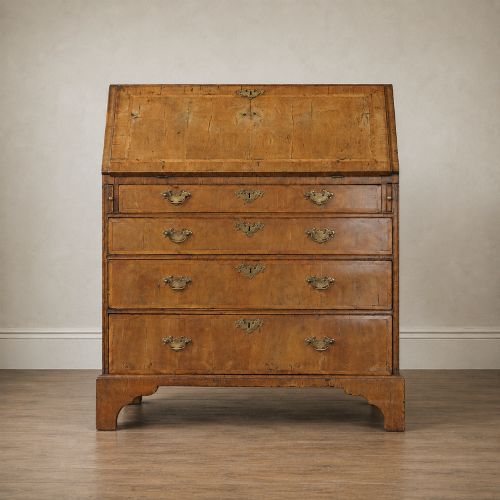
Edwardian examples frequently utilise oak or figured walnut, often displaying lighter golden tones or ebonised finishes influenced by revival styles. Construction dates typically cluster around the early 20th century.
Look for standard proportions, brass drop handles, and factory or workshop production methods typical of that period.