


Antique Italian Bureau
These antique italian bureau pieces combine architectural scale with secret writing compartments, bringing continental craftsmanship into a study.
Antique Italian Bureau
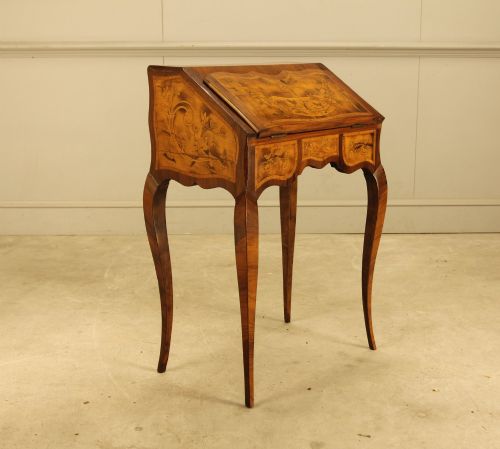
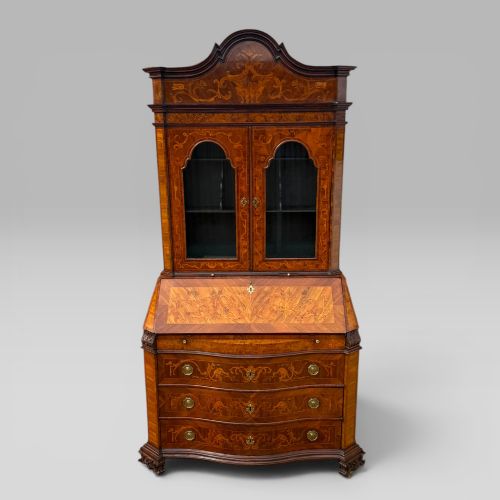
An antique italian bureau brings together sloping writing flaps and fitted internal drawers, often rising into taller bookcase or cabinet formats. These pieces range from compact travelling formats placed on tables up to monumental double dome bureau bookcases.
The selections span distinct periods including the eighteenth century alongside later nineteenth century revivals. Buyers encounter styles such as Venetian Rococo, Renaissance Revival, and Moorish Revival across these forms.
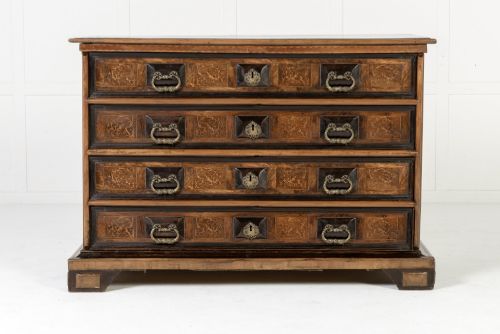
Cabinetmakers constructed these writing desks to serve both practical correspondence and grand display. The survival of bureau bookcases, commode chests, and secretaire desks demonstrates the enduring utility of continental workspace furniture.
How they were made
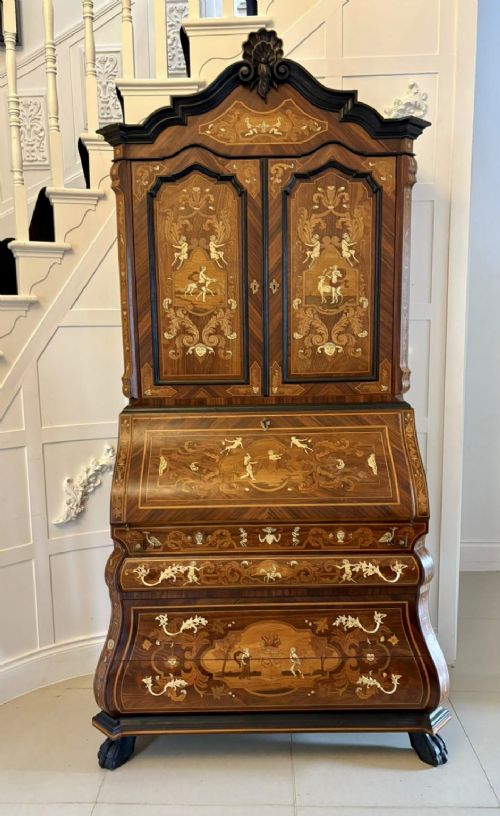
Cabinetmakers utilised structural carcases of walnut and fruitwood, applying decorative veneers including burr walnut and tulipwood across the visible surfaces. Marquetry inlays create intricate pictorial or geometric patterns that define the exterior facade.
Carved details in solid walnut and giltwood accentuate cornices, drawer surrounds, and feet. Workshops incorporated functional brass hardware to secure internal compartments, doors, and drop fronts.
Periods represented across the items extend from early eighteenth-century travelling pieces to nineteenth-century revival cabinets.
What varies in quality
The sophistication of the marquetry inlay separates standard examples from exceptional pieces, with multi-wood pictorial scenes demanding considerable skill. The choice of figured veneers, such as richly grained burr walnut or contrasting tulipwood, alters the visual depth of the surface.
Structural complexity also defines the tier of a piece, distinguishing simpler single-tier writing desks from double dome bureau bookcases with fitted upper cabinets. The execution of hand-carved elements indicates the time invested by the original workshop.
Adriano Brambilla
The Antique Italian Bureau Glossary
- Bureau bookcase
- A writing desk with a sloping flap, surmounted by an enclosed set of shelving with doors. This combination provided both private workspace and display storage for libraries.
- Marquetry
- The art of applying small pieces of veneer to a structure to form decorative patterns. Craftsmen utilised various coloured woods to achieve pictorial depth.
- Burr walnut
- Timber taken from the wart or growth on a walnut tree, yielding highly swirled grain patterns. Cabinetmakers prized this timber for principal decorative surfaces.
- Commode
- A low chest of drawers designed in a continental fashion. These pieces often feature shaped fronts and elaborate veneer work.
- Secretaire
- A desk incorporating a writing drawer or drop-down writing surface concealing pigeonholes and small drawers. This form prioritised private correspondence.
Antique Italian Bureau: Frequently Asked Questions
What is an antique italian bureau?
An antique italian bureau is a writing desk featuring a sloping fall-front that opens to reveal internal compartments and small drawers. These pieces originate from continental workshops and often appear combined with bookcase superstructures or chest bases.
Craftsmen built these items from woods like walnut and fruitwood, frequently decorating the exteriors with elaborate marquetry and figured veneers. They served as principal pieces of furniture for private correspondence and household administration.
How were bureau bookcases used?
Bureau bookcases functioned as dual-purpose furniture for writing letters and storing bound volumes behind glass or panelled doors. The drop-front provided a steady wooden surface for correspondence while concealing private papers within fitted interior pigeonholes.
The upper bookcase section allowed owners to display valued libraries while keeping texts protected from dust. This combination made them central furnishings in studies and principal rooms.
How do I date an antique italian bureau?
Dating relies on examining construction methods, timber choices, and stylistic vocabulary across the piece. Eighteenth-century examples often display Venetian Rococo forms with fluid marquetry, while nineteenth-century items frequently employ Renaissance or Moorish revival motifs.
Secondary woods inside drawers and the ageing of the veneer provide further evidence regarding the period of manufacture. Historical repair marks and the integration of brass hardware also assist in confirming age.
Where do these bureaus originate?
These pieces originate from various regions across Italy, with historical centres such as Venice and Milan producing distinct regional characteristics. Venetian workshops favoured rich walnut and floral marquetry, whereas other northern centres developed architectural revival styles.
Trade and local taste influenced the adoption of specific decorative techniques like tulipwood banding and intricate fruitwood inlays. Each region contributed distinct proportions and structural silhouettes to the tradition.
How do I care for burr walnut veneer?
Maintaining burr walnut veneer requires stable room humidity and protection from direct sunlight to prevent the timber from drying and splitting. Regular gentle dusting with a soft dry cloth preserves the polished surface without introducing moisture.
Avoid placing these items near heat sources or damp environments that could compromise the historical glue and veneer adhesion. Professional conservation advice should be sought for any structural stabilization.