


Vintage Doulton Stoneware
These vintage doulton stoneware pieces are robust British ceramics characterised by salt glazing and rich surface ornamentation, collected for their distinct Victorian and Art Nouveau aesthetic.
Vintage Doulton Stoneware
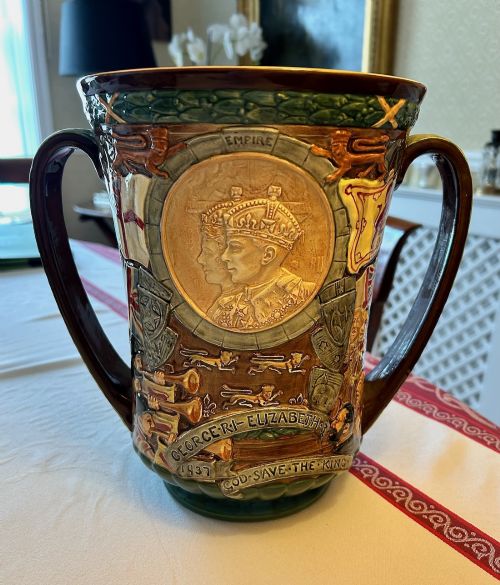
Vintage doulton stoneware encompasses sturdy utilitarian and decorative vessels produced from the late nineteenth century through to the mid twentieth century. Buyers seeking these items encounter a diverse selection of forms, ranging from utilitarian harvest jugs and tobacco jars to ornamental jardinieres, vases and commemorative loving cups.
The objects frequently reflect stylistic shifts spanning the Victorian era, Arts and Crafts movement, Art Nouveau and Art Deco periods. Surviving examples demonstrate both domestic utility and exhibition ambition, often incorporating metal mounts or specialised surface treatments.
Most entries originate from the Doulton Lambeth studios or subsequent Royal Doulton production lines. Domestic vessels such as chamber sticks, salad bowls and whiskey flasks sit alongside large architectural planters and shipping alcohol jars.
How vintage doulton stoneware was made
Makers utilised dense ceramic bodies fired at high temperatures to achieve vitrification, resulting in a durable, impermeable material suitable for holding liquids without a traditional interior glaze. Salt glazing was applied by throwing common salt into the kiln during high-temperature firing, creating a characteristic pitted texture resembling orange peel.
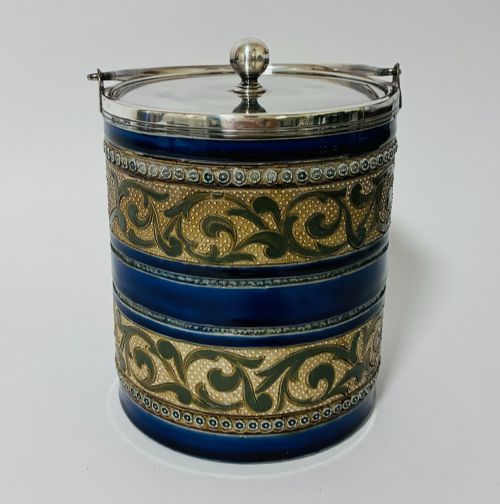
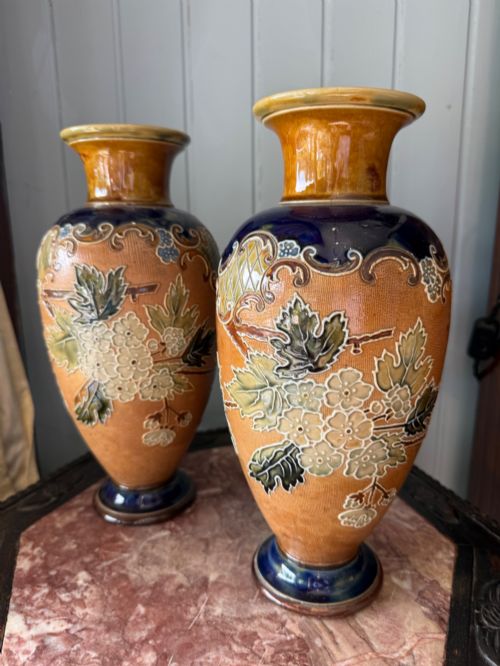
Surface decoration relied heavily on sprigged reliefs, incised patterns and applied enamel floral motifs, occasionally combined with Slater's patent lace-impressing techniques. Workshops also integrated metal elements, fitting silver rims or silver-plated collars to biscuit barrels, ewers and harvest jugs.
Listings feature stoneware from the Victorian era, Arts and Crafts movement, and Art Nouveau period, utilising salt glaze, enamel, and silver plate.
What varies in quality
Quality rests upon the crispness of the incised ornament and the success of the salt glaze reaction across the ceramic body. Pieces designed by named artists or produced for exhibitions display superior hand-execution in their modelled details and decorative motifs.
The integration of secondary materials such as hallmarked silver rims or fitted metal lids influences the overall desirability of functional vessels like harvest jugs and biscuit barrels. Condition of the delicate enamel surface accents and applied sprigged decoration similarly separates standard production from finer examples.
Frank Butler·Ethel Beard·Maud Bowden
The Vintage Doulton Stoneware Glossary
- Stoneware
- A robust ceramic pottery fired at high temperatures until vitrified and rendered non-porous. It provides a sturdy foundation for salt glazing and detailed surface carving.
- Salt glaze
- A vitreous coating formed on pottery by throwing salt into the kiln at peak temperature. This chemical reaction produces a glossy, slightly textured finish.
- Sprigged
- A method of ornamentation where moulded clay reliefs are applied to the unfired body of a vessel. These raised motifs add texture and pictorial detail.
- Jardiniere
- A large ornamental ceramic pot or stand designed to hold growing plants or flowers. They often feature prominent Art Nouveau or Arts and Crafts patterns.
- Kingsware
- A dark brown glazed pottery type produced by Doulton featuring incised pictorial designs filled with light-coloured clay. It frequently depicts historical or sporting figures.
Vintage Doulton Stoneware: Frequently Asked Questions
How are Doulton Lambeth and Royal Doulton different?
Doulton Lambeth refers specifically to the London studio renowned for its artistic stoneware and named studio pottery decorators working in the late nineteenth and early twentieth centuries. Royal Doulton encompasses the broader commercial enterprise that grew from this foundation, producing both utilitarian wares and commemorative items.
While both designations appear on vintage pieces, Lambeth items often emphasise hand-carved ornamentation and individual artistic contribution. The wider Royal Doulton output frequently utilised moulded patterns alongside specialised glazing techniques.
How were harvest jugs used?
Harvest jugs served as functional vessels for storing and pouring ale or cider during agricultural festivities and communal gatherings in the nineteenth century. Their robust salt-glazed stoneware construction kept liquids cool and protected contents during daily domestic use.
Over time, many of these utilitarian forms evolved into decorative display items, frequently enhanced with silver rims or elaborate moulded hunting motifs. Today they are collected primarily for their vernacular charm and historic relief decoration.
Can these planters be used outdoors?
Many large jardinieres and tree planter bases were manufactured from durable salt-glazed ceramic designed to withstand substantial weights and damp environments. Their dense vitrified body resists moisture absorption under standard conditions.
However, historic pieces with delicate enamel decoration or converted electrical fittings require careful handling to prevent environmental damage. Assessing the specific glaze and material thickness helps determine suitability for sheltered patio or conservatory placement.
How do I identify Art Nouveau examples?
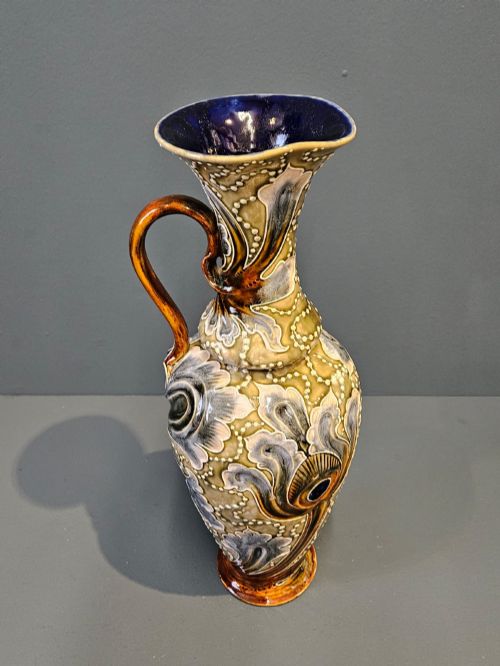
Art Nouveau pieces showcase flowing, organic motifs inspired by natural forms, including stylised floral stems and whiplash plant tendrils. These designs are frequently hand-incised into the stoneware body rather than relying solely on applied sprigs.
Such items often display asymmetrical shaping and a sophisticated palette of muted earth tones combined with lustrous glazes. Studio signatures or specific model numbers on the base assist in confirming the period.