
Vintage Document Drawers
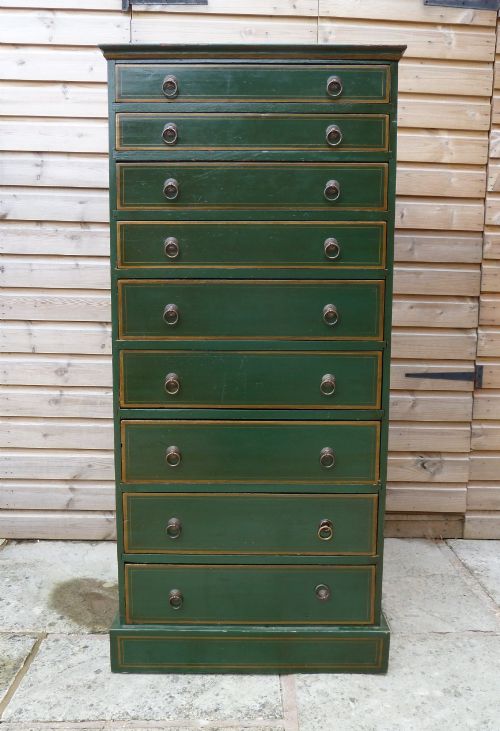
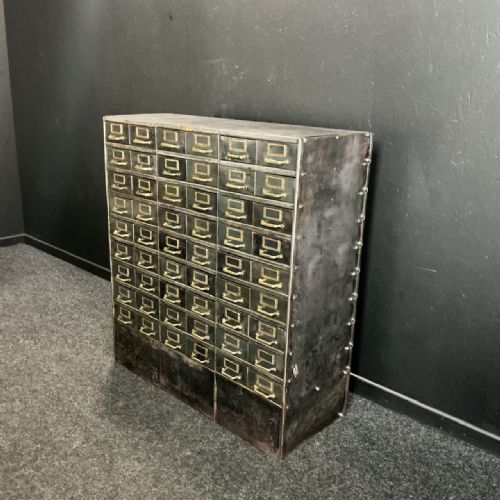
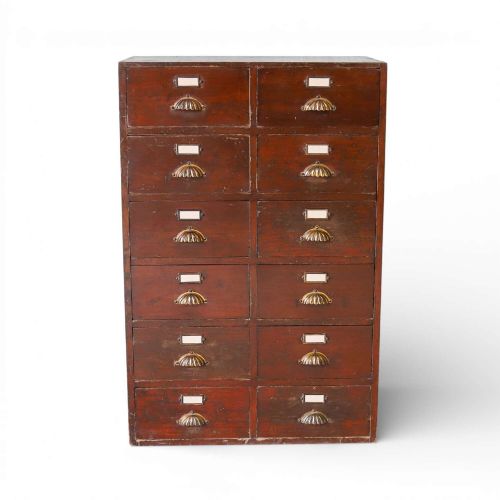
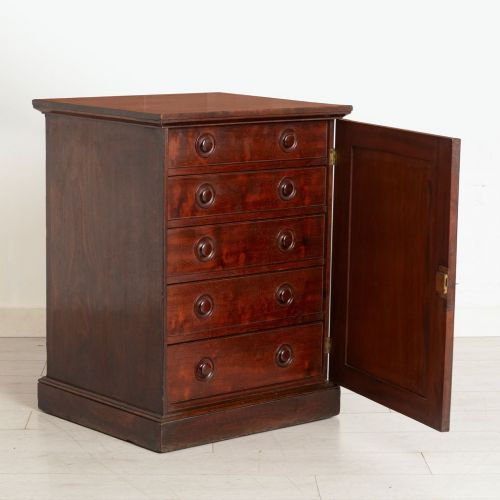
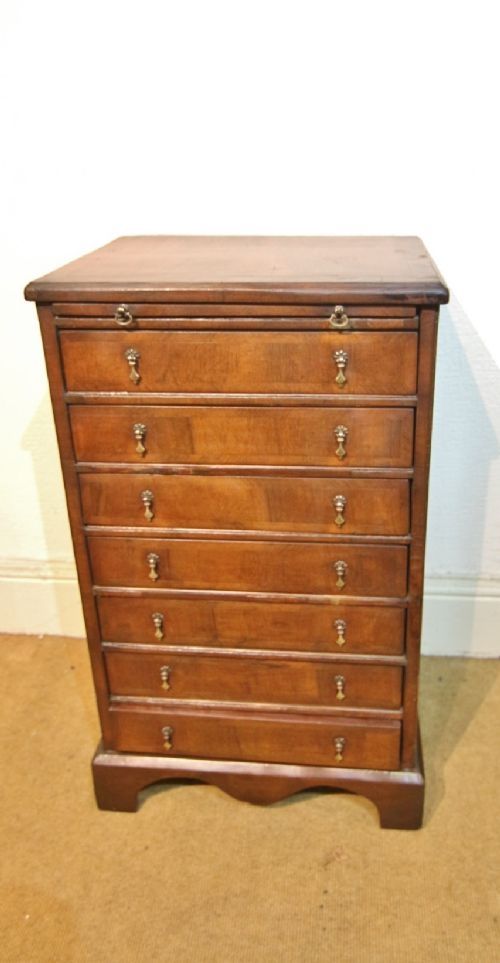
Vintage document drawers organise paper with character, spanning oak filing cabinets to mahogany banks built for the nineteenth and early twentieth centuries.
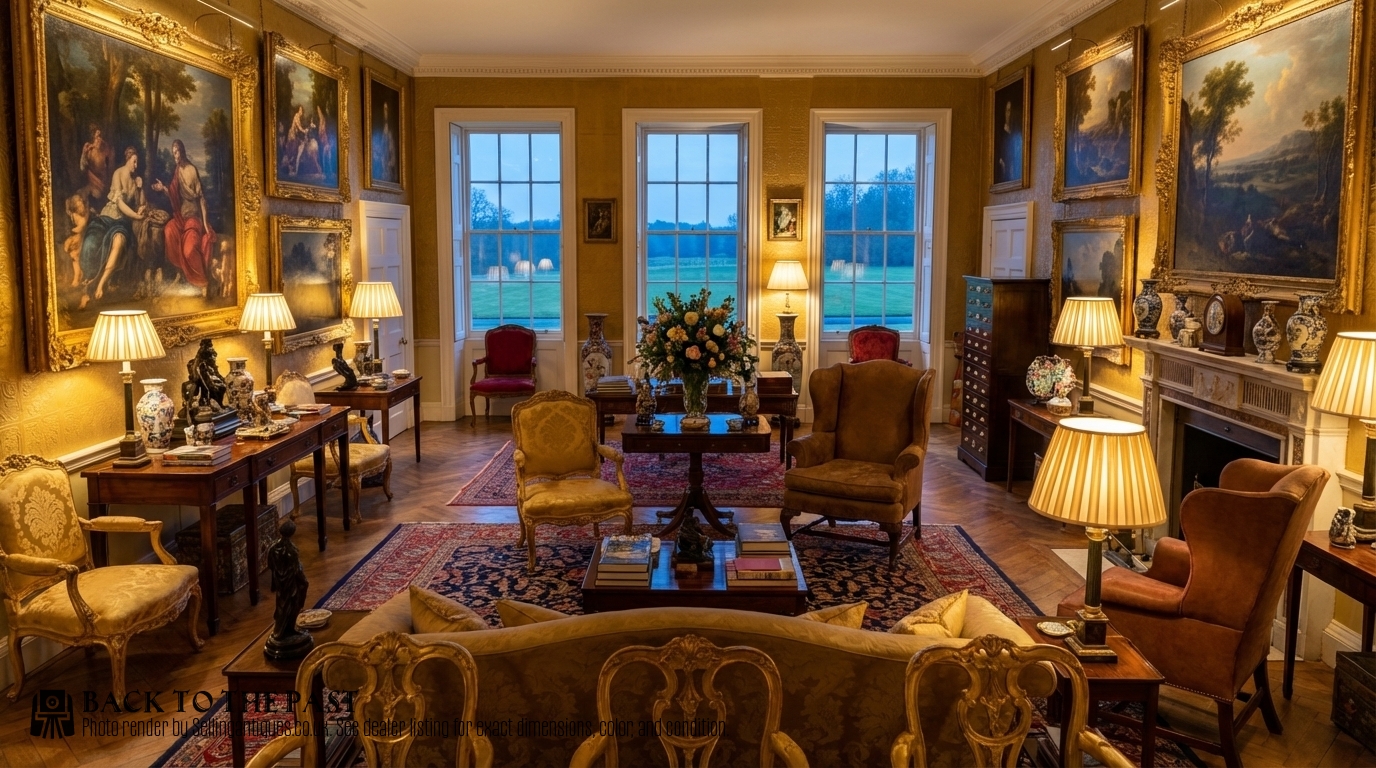
Vintage Document Drawers
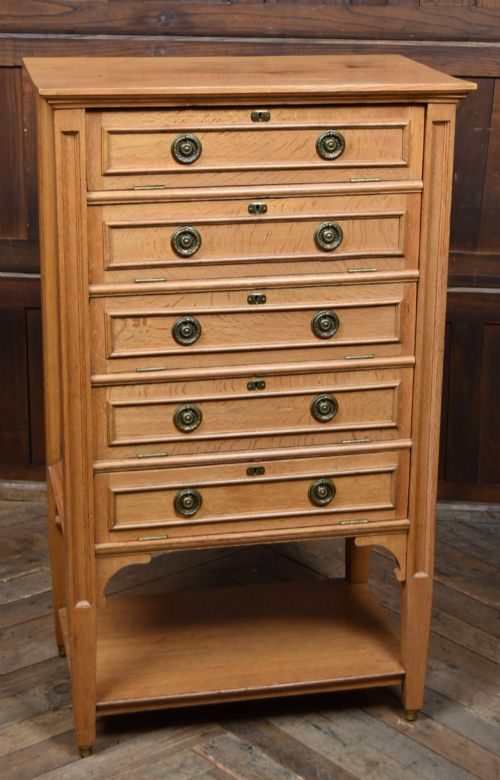
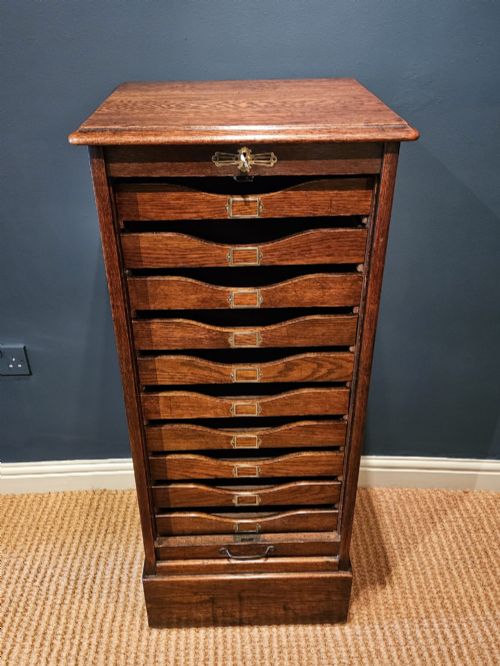
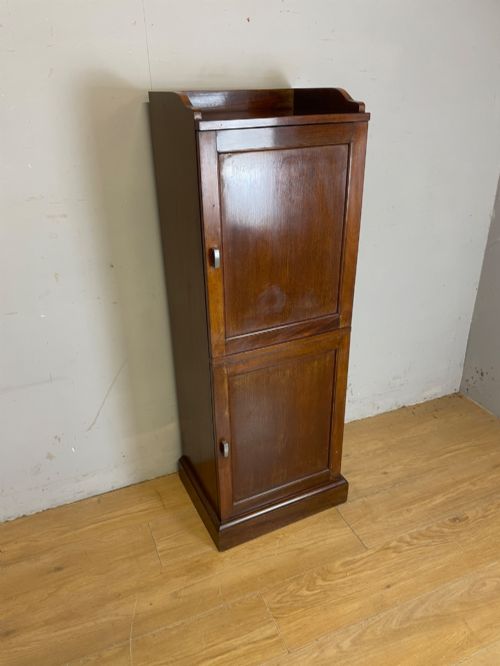
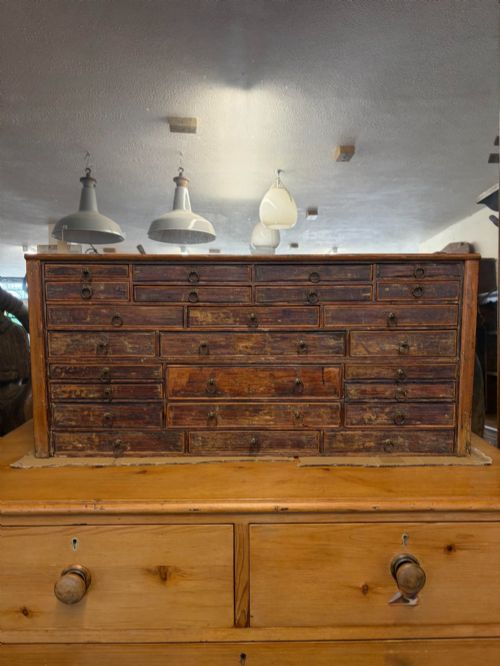
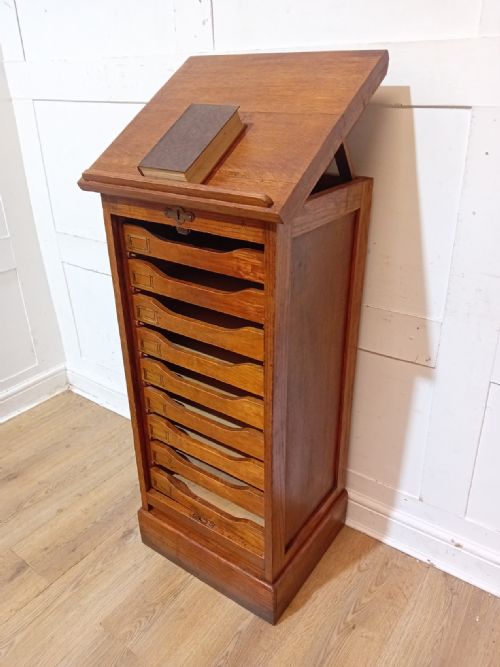
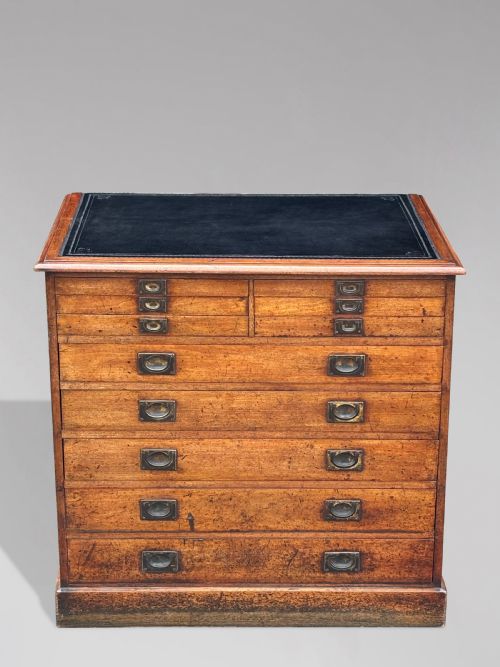
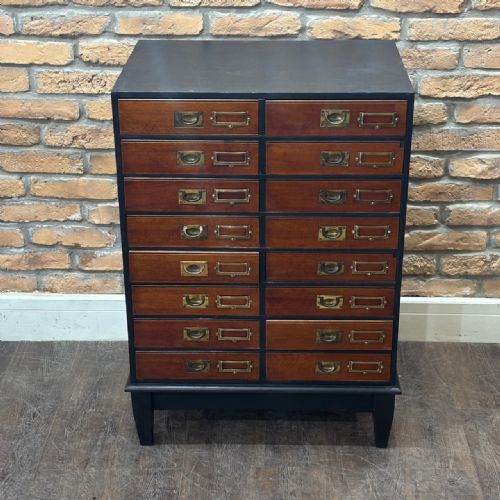
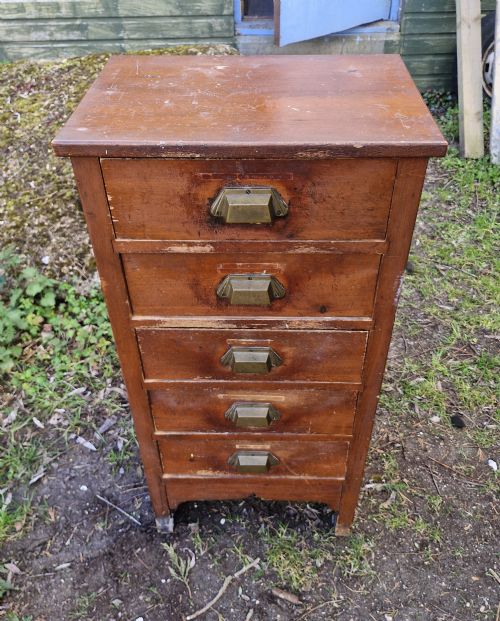
Vintage document drawers encompass practical office furniture and desktop storage designed to sort correspondence, music, and ledgers. Buyers searching for vintage document drawers will mostly encounter upright filing cabinets, banks of small drawers, and plan chests originating from the nineteenth century up to the nineteen-thirties.
The selection ranges from sturdy Edwardian oak pieces and Victorian campaign chests to industrial French post office shelves and mahogany haberdashery units. Domestic variants include music cabinets and walnut collectors' chests, reflecting the diverse ways past households and offices managed paperwork.
Materials and Construction
Cabinet makers utilised dense hardwoods such as oak, mahogany, walnut, and rosewood alongside utilitarian softwoods like pine for internal carcases and backing boards. Selected pieces incorporate tambour fronts, leather accents, and heavy brass or iron hardware to withstand daily office use.
Metal components, including steel framework and cast iron fittings, appear on industrial workshop cabinets and patent letter files. Drawer construction relies on traditional joinery, paired with cast brass pull handles and integrated label holders.
Evaluating Execution
Quality rests in the integrity of the timber selection and the precision of the drawer fit. Superior examples maintain smooth action across multiple tiers without binding, utilising properly quarter-sawn oak or figured mahogany.
Hardware integrity defines the tier of manufacture, distinguishing standard brass pulls from patent locking mechanisms and maker-stamped ironmongery. The presence of original label holders, working locks, and secondary woods matching the primary exterior elevates the standing of a piece.
Luxmore's of Ilfracombe·Maple and Co·Amberg
The Vintage Document Drawers Glossary
- Tambour front
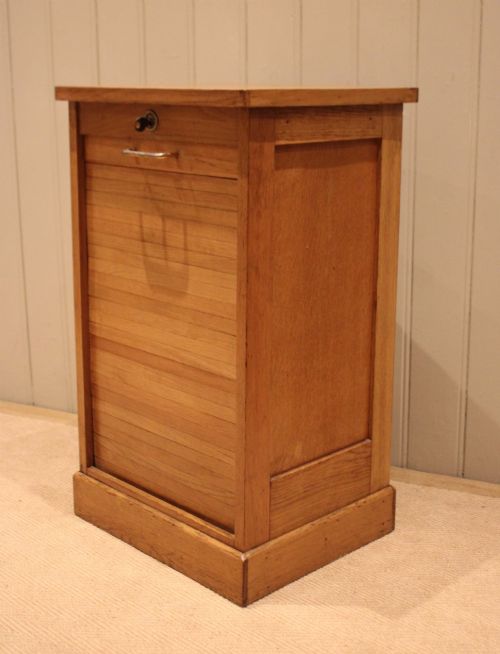
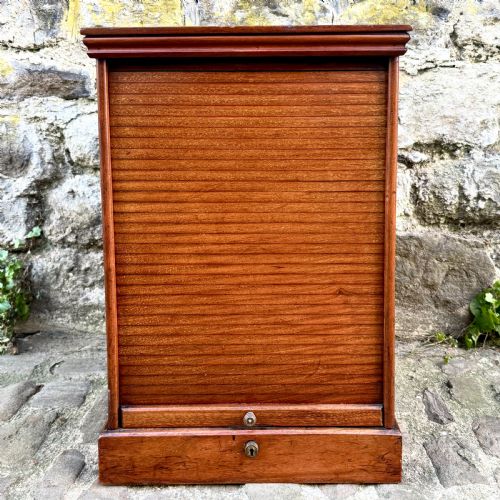
- A flexible door formed of narrow slats of wood glued to canvas, allowing it to slide smoothly around a curved track to conceal interior drawers.
- Cartonnier
- A desktop or freestanding cabinet fitted with upright leather-covered compartments or drawers specifically designed for sorting papers and documents.
- Bank of drawers
- A large multi-drawer chest built for intensive office, shop, or commercial storage rather than domestic bedroom use.
- Campaign furniture
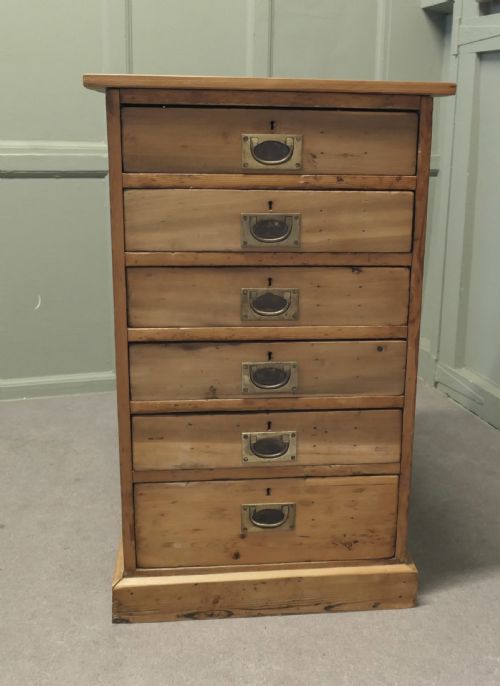
- Portable pieces constructed for travel, typically fitted with recessed brass drop handles and protective brass corners.
- Haberdashery cabinet
- Commercial storage furniture featuring numerous shallow glass-fronted or panelled drawers originally utilised for small wares and textiles.
Vintage Document Drawers: Frequently Asked Questions
What are vintage document drawers?
Vintage document drawers are historic storage pieces designed to organise papers, letters, and office supplies. They include filing cabinets, banks of small drawers, and desktop sorters from the nineteenth and early twentieth centuries.
These items were constructed for offices, banks, and domestic studies using timbers like oak and mahogany. Today they serve as practical storage solutions with distinct period character.
How do I date a document cabinet?
Dating relies on examining the timber, construction methods, and hardware style. Pieces from the Victorian and Edwardian eras often display solid oak or mahogany construction with hand-cut dovetails and cast brass handles.
Later pieces from the nineteen-twenties and thirties introduce industrial steel elements, tambour doors, and simpler mechanical fittings. Patent stamps and maker labels also provide precise manufacturing decades.
How were tambour front cabinets used?
Tambour front cabinets housed confidential files and correspondence in busy offices. The slatted wooden door slid into the cabinet body to secure contents during the working day.
This mechanism saved valuable floor space compared to hinged doors while keeping working documents accessible. They were common in Edwardian and early twentieth-century administrative environments.
Are these cabinets suitable for modern paper sizes?
Many vintage filing cabinets and drawers accommodate modern paper sizes, though internal dimensions vary by era. Older nineteenth-century pieces often suit bespoke or smaller documents rather than standard folders.
Buyers should check internal drawer measurements before purchase if intended for active daily filing. Collectors often adapt shallow drawers for stationery, art supplies, or desktop organisation.