



Wooden Map Chest
These wooden map chest pieces are sturdy multi-drawer units built for storage, combining practical utility with period character.
Wooden Map Chest
A wooden map chest provides deep, wide storage drawers originally designed for architectural plans, flat papers or botanical specimens. When you search for a wooden map chest, you encounter multi-drawer configurations spanning the Victorian, Edwardian, and industrial utility periods.
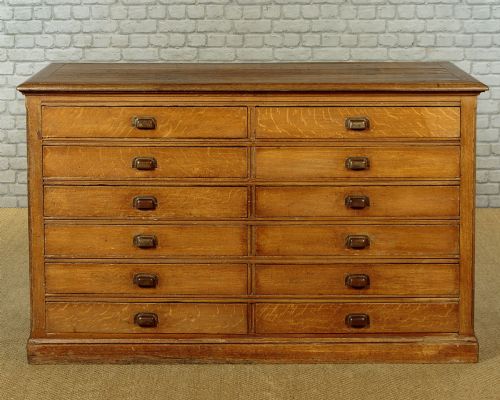
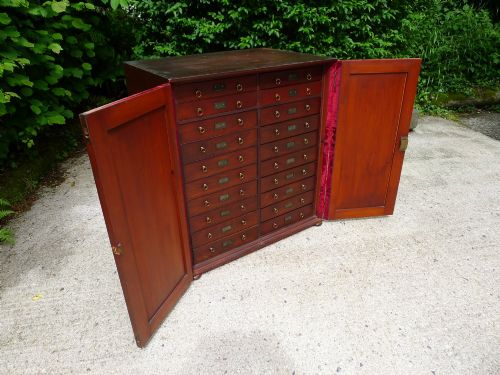
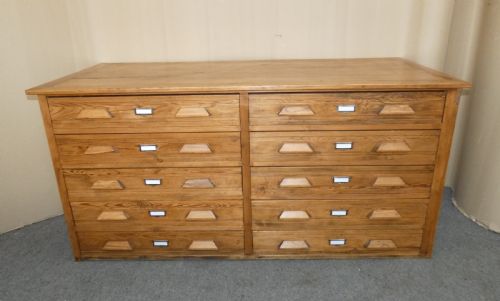
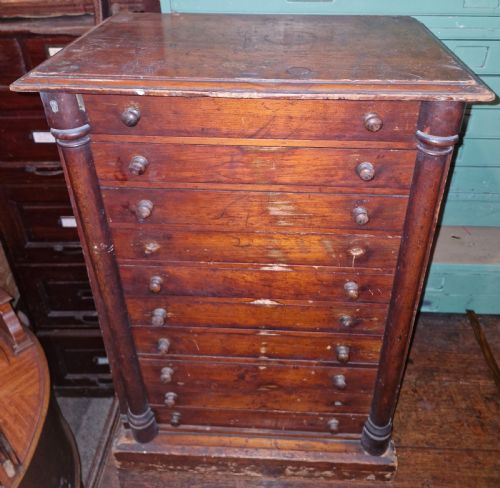
The pieces listed on this page appear as banks of drawers, collectors cabinets, specimen chests, and haberdashers drawers built from timber. These range from mid nineteenth century deal and nineteenth century pine to Edwardian Chippendale style folio cabinets and nineteen fifties plan chests.
Victorian and Arts and Crafts examples sit alongside industrial utility workshop pieces, showing how functional furniture adapted across changing decades. Each iteration offers generous drawer space housed within robust wooden cabinetry.
Materials and construction
Makers constructed these cabinets using sturdy timbers such as pine, deal, oak, mahogany, red walnut and fruitwood. These hardwoods and softwoods provided the structural integrity needed to support many drawers loaded with heavy paper or specimens.
Cabinetmakers fitted brass handles, drawer pulls and label holders to the timber fronts to withstand frequent handling. Interior surfaces sometimes feature velvet linings or glass elements to protect sensitive contents within collectors cabinets and specimen chests.
Brady cabinets once held meticulous Victorian beetle collections before finding new life storing modern artist supplies.
Distinctions in quality
Quality rests in the selection of timber and the precision of the drawer construction, where tight joinery ensures smooth movement across numerous tiers. Fine grain choices in mahogany or red walnut elevate a piece beyond standard workshop pine or deal.
Hardware execution also separates standard utility items from refined examples, particularly where cast brass pulls and inset label holders display careful finishing. The presence of specialised internal fittings like velvet linings points to higher original commission standards.
Brady
The Wooden Map Chest Glossary
- Plan chest
- A wide, shallow multi-drawer cabinet designed specifically for holding architectural drawings and large maps flat. These units prioritize horizontal surface area over vertical height.
- Collectors cabinet
- A specialised piece featuring numerous small drawers intended for organising specimens, coins, or small objects. They often include glass covers or fitted interior trays.
- Deal
- A softwood timber derived from pine or fir, commonly used in nineteenth century workshop furniture and utilitarian cabinetry. It offers a pale grain that accepts stains and polishes readily.
- Haberdashers drawers
- Multi-drawer shop or studio storage units typically featuring glass fronts or numerous shallow compartments for small goods. Collectors often repurpose them for modern studio storage.
Wooden Map Chest: Frequently Asked Questions
What were wooden map chests originally used for?
These chests served offices, architects, and institutions as secure repositories for oversized paper documents, maps, and architectural plans.
Their wide, shallow drawers prevented large sheets from curling or creasing while keeping archives organised by category.
How do I fit a wooden map chest into a modern home?
A wooden map chest functions well as a sideboard in a dining room, a central island in a study, or a media console in a living room.
The wide top surface provides ample display space while the deep drawers swallow clutter out of sight.
How do I tell Victorian pieces from later ones?
Victorian and nineteenth century pieces often feature hand-cut dovetails, heavier timber framing, and darker stained deal or mahogany finishes.
Later industrial utility and nineteen fifties examples show simpler lines, lighter pine construction, and standardised metal hardware.
What is the difference between a plan chest and a specimen chest?
Plan chests provide very wide, shallow drawers sized for architectural sheets and large maps. Specimen chests contain smaller, tighter drawer arrangements built for natural history collections and small artefacts.