


Dark Wood Filing Chest
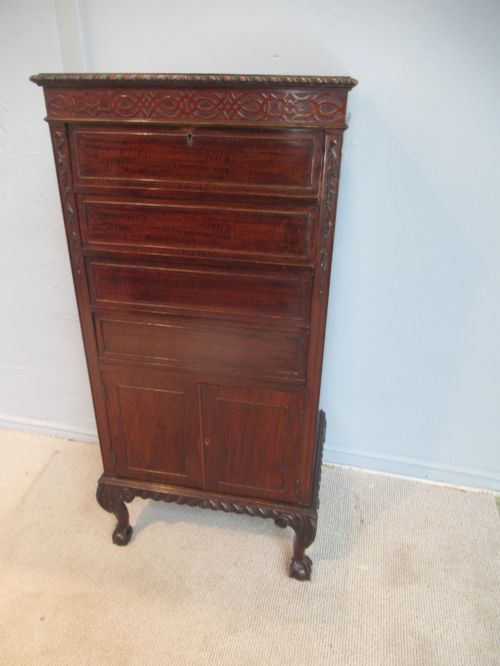
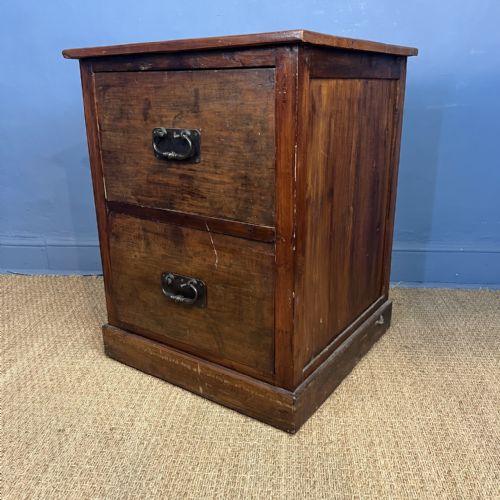
A dark wood filing chest keeps papers and folios orderly while anchoring a room with deep grain and centuries of timber work.
Dark Wood Filing Chest
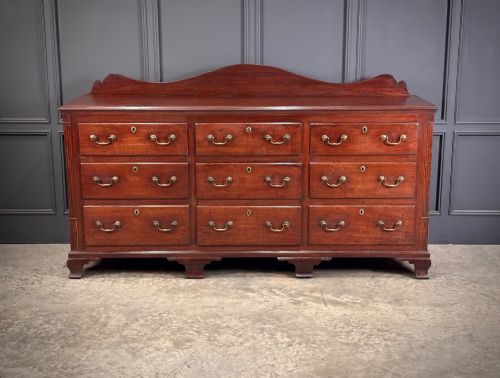
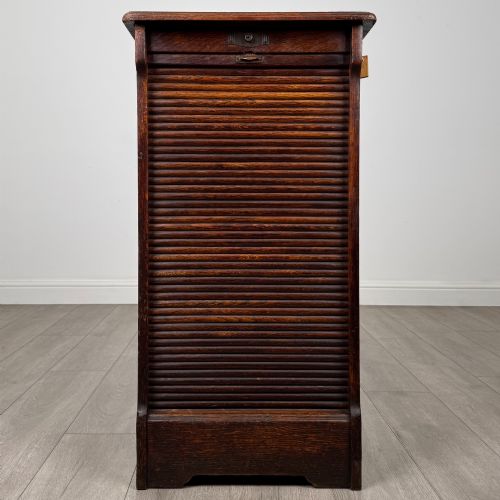
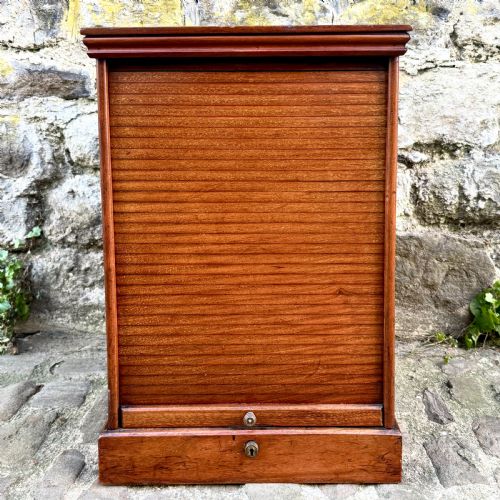
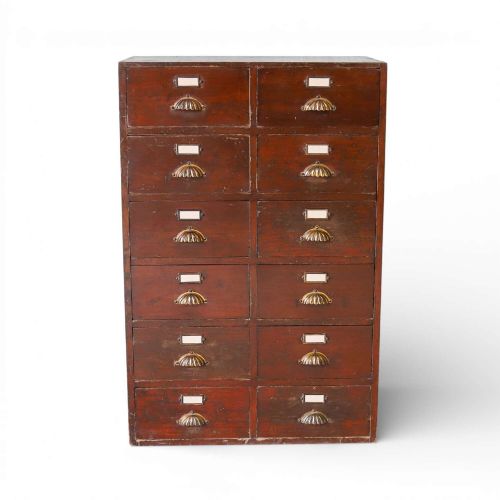
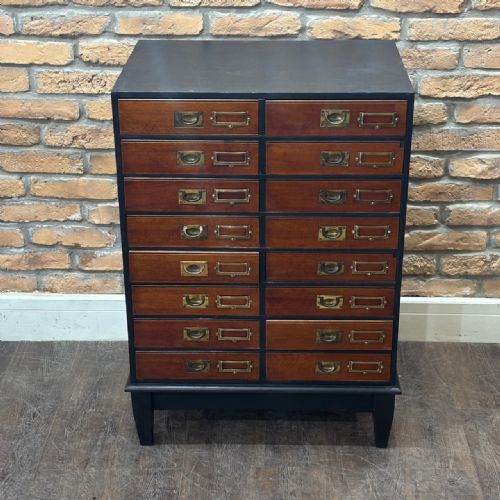
A dark wood filing chest gathers correspondence, plans, and ledgers into banks of shallow drawers, serving libraries, studies, and counting houses. When searching for a dark wood filing chest, buyers encounter multi-drawer banks, tambour fronts, and pedestal cabinets built for heavy use.
The pieces on this page span from the eighteenth century through the Edwardian era and the nineteen-twenties. Forms range from George III plan chests and Victorian collector cabinets to Edwardian oak tambour units and industrial workshop banks.
Woods such as mahogany, walnut, teak, and oak dominate these cabinets, frequently paired with brass label holders and shell pulls. They bridge domestic furniture and utilitarian storage, offering large capacities within disciplined proportions.
How they were made
Cabinet makers constructed these pieces using dense hardwoods like mahogany, teak, rosewood, and oak, selected for their stability and capacity to endure frequent drawer movement. Joinery prioritised strength, employing robust carcases to support multiple loaded drawers without sagging.
Hardware played an essential mechanical role, incorporating brass label holders, scalloped pulls, and iron fittings that withstood daily commercial or domestic administration. Surfaces received durable polishes that protected the timber while revealing the natural grain.
Some nineteenth-century banker's chests combined document drawers with concealed safe cupboards, keeping currency as safe as correspondence.
What varies in quality
Quality rests in the precision of the drawer construction and the selection of the timber. Dense grain and well-matched drawer fronts separate utilitarian storage from pieces intended for prominent display in libraries and studies.
Hardware integrity defines the superior examples, where original brass shell pulls, label holders, and working locks remain intact. The sophistication of internal mechanics, such as smooth tambour tracks or deeply graduated drawers, indicates higher workshop standards.
The Dark Wood Filing Chest Glossary
- Tambour
- A flexible shutter door formed of narrow slats of wood glued to canvas backing, allowing it to slide smoothly around a curved track to enclose shelving or filing spaces.
- Bank of drawers
- A chest featuring numerous shallow drawers stacked vertically or horizontally, originally designed for sorting documents, specimens, or workshop items.
- Graduated drawers
- A series of drawers within a single carcase that decrease in depth toward the top, creating balanced visual proportions.
- Plan chest
- A wide, shallow cabinet built specifically for storing architectural drawings, maps, and large sheets of paper flat.
- Pedestal chest
- A sturdy, freestanding unit designed to stand beside a desk or function as a structural support for a working surface.
Dark Wood Filing Chest: Frequently Asked Questions
What is a tambour cabinet?
A tambour cabinet uses a flexible slatted door that slides along a track to conceal the interior shelves or files. This mechanism allows the enclosure to open without requiring clearance space for hinged doors.
Such designs appeared frequently in Edwardian offices and libraries where floor space was at a premium and quick access to records mattered.
How do I date a multi-drawer chest?
Dating relies on timber choice, construction methods, and hardware styles. Eighteenth-century pieces display dense mahogany and hand-cut joinery, while Edwardian and later examples often incorporate oak or walnut with standardised brass label holders.
Examining the drawer linings and backboards reveals hand-planing marks on older pieces versus machine-sawn timber on twentieth-century furniture.
What were bank of drawers used for?
Banks of drawers served commerce, administration, and scientific collection by sorting papers, correspondence, and botanical or geological specimens. Their numerous shallow compartments kept items separated and easily catalogued.
Workshops, counting houses, and private studies relied upon them to maintain order among vast quantities of loose documents.
Can I use an antique filing chest in a modern study?
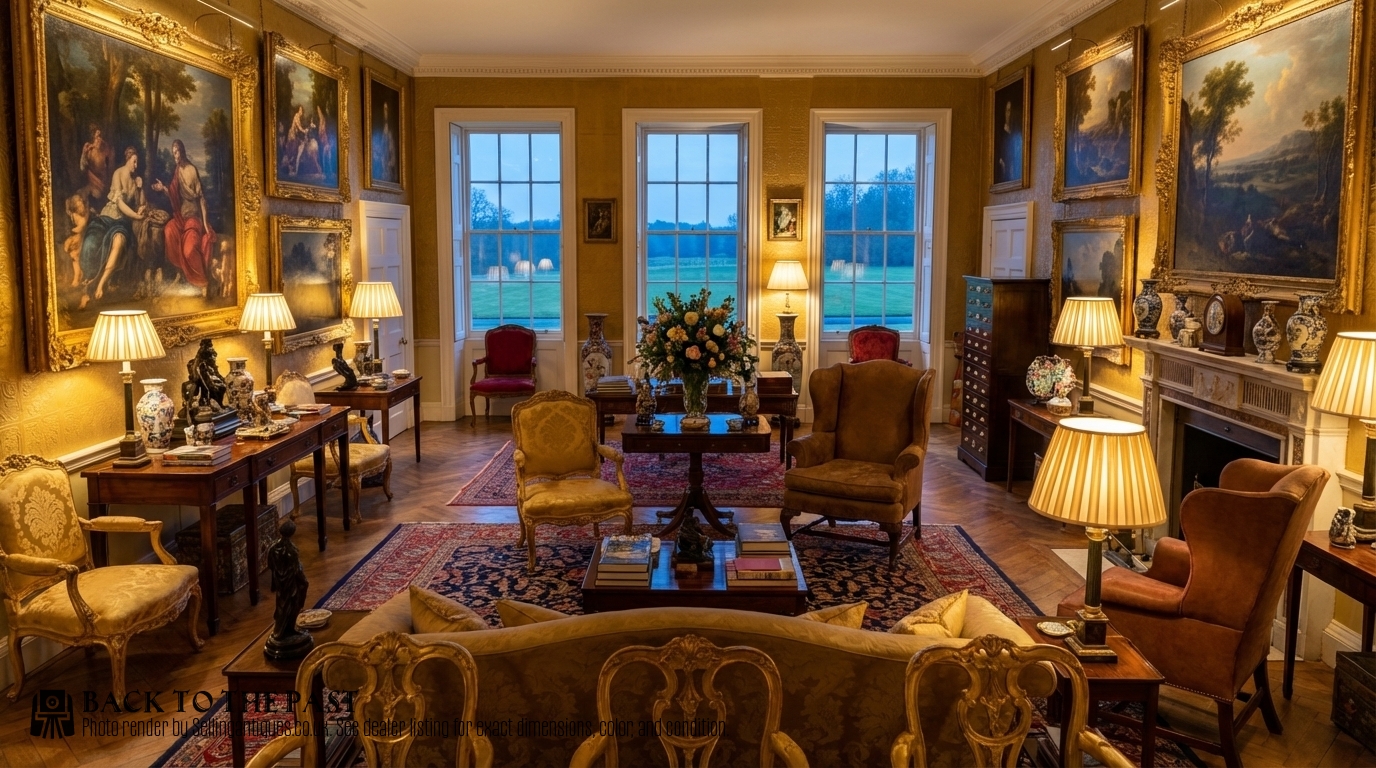
These chests integrate well into contemporary interiors because their disciplined proportions and rich timber tones complement modern architectural lines. Their shallow drawers suit the storage of stationery, laptops, and paperwork.
Placing them in a home office provides functional organisation while introducing historic cabinet work and warm wood grain into the room.