


Vintage Dining Table Chairs
These vintage dining table chairs span decades of design, offering robust seating solutions for domestic interiors and outdoor settings alike.
Vintage Dining Table Chairs
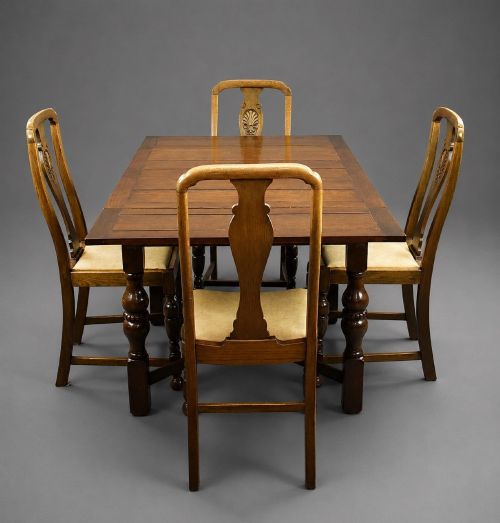
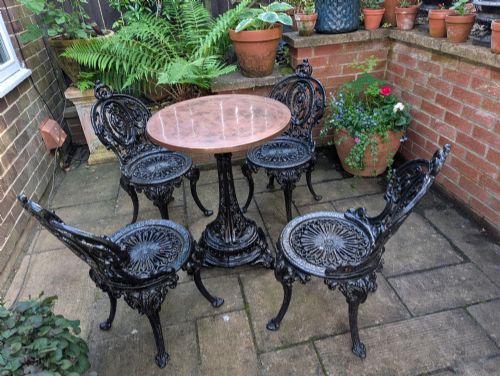
When you search for vintage dining table chairs, you encounter an array of seating options ranging from robust garden sets to formal interior suites. The pieces take the form of individual side chairs, carvers, and comprehensive dining suites paired with matching tables. The selections span periods from the nineteenth century through the Edwardian era and into the 1930s.
Indoor variations frequently emerge in dining suites featuring mahogany, oak, walnut, and exotic veneers like burr maple and calamander. Outdoor examples utilise cast iron, wrought iron, and zinc. These items serve daily seating needs while defining the stylistic character of a room or terrace.
Materials and construction
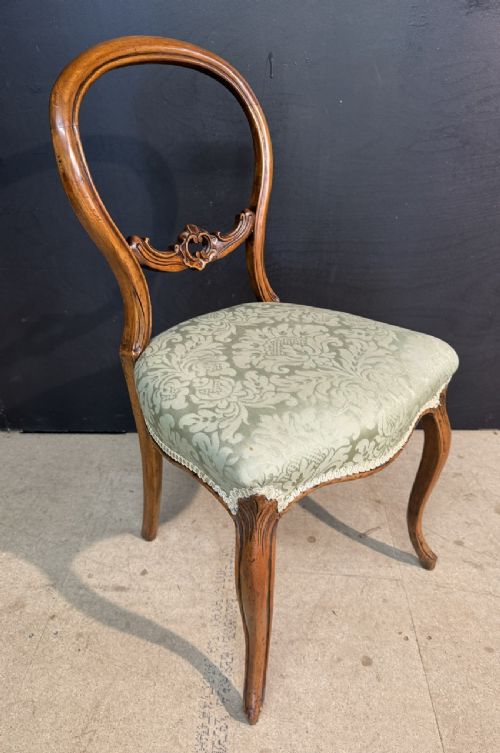
Construction methods rely heavily on solid hardwoods like oak and mahogany alongside decorative veneers such as satinwood and walnut applied to carcass frames. Joinery techniques range from traditional draw leaf mechanisms on tables to carved cabriole legs on chairs.
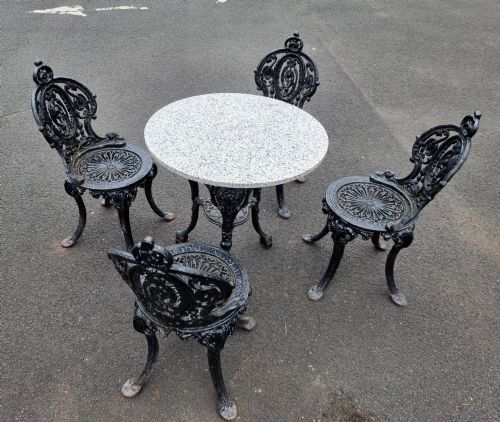
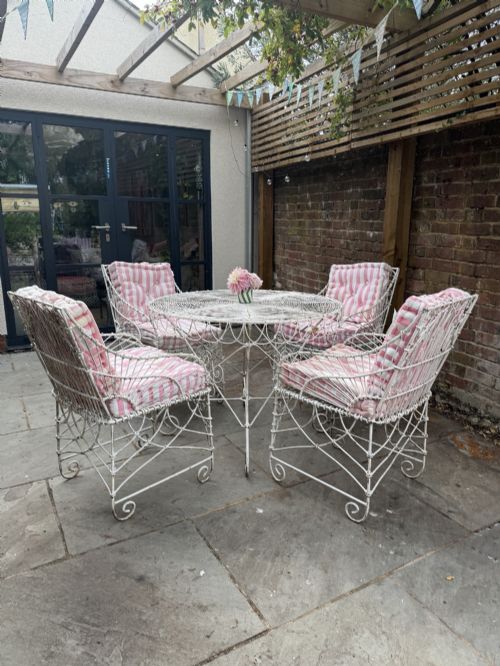
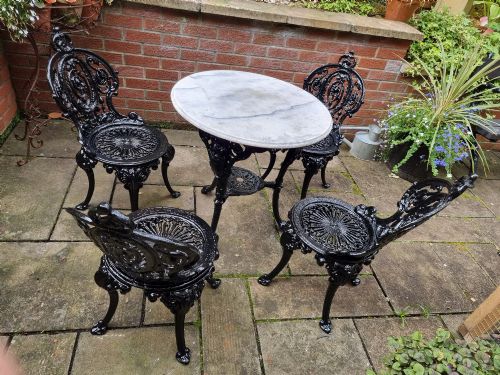
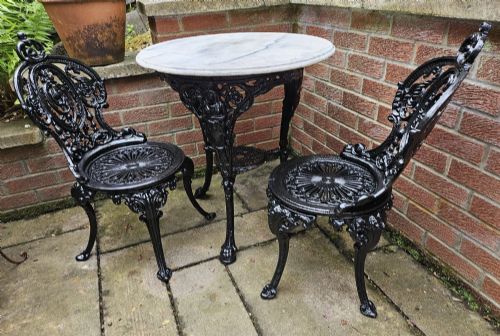
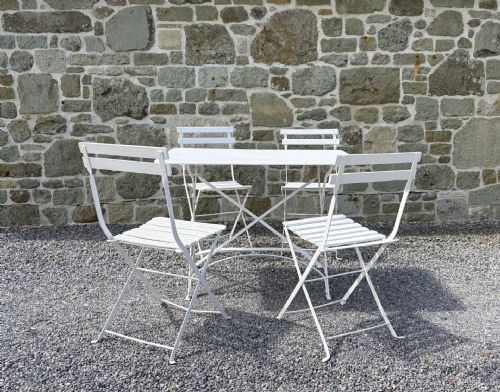
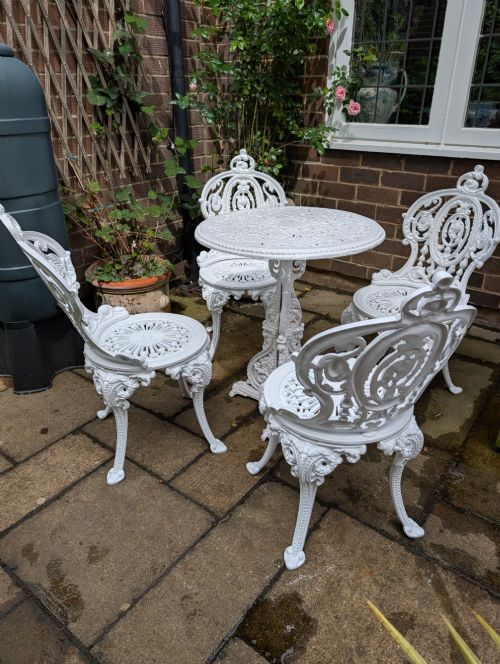
Metal garden and bistro sets utilise heavy cast iron and wrought iron, frequently paired with marble or zinc tops. Upholstered variants incorporate traditional fabric and leather seating pads secured to wooden or metal frames.
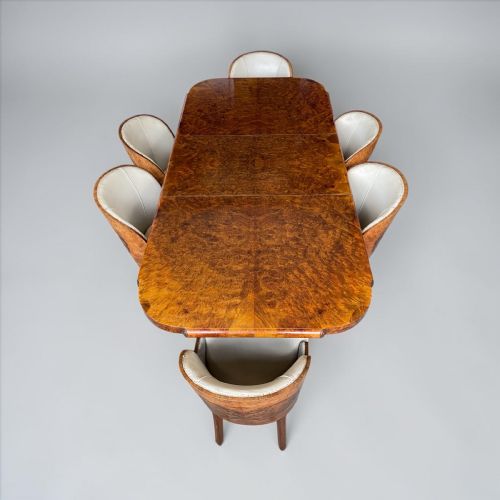
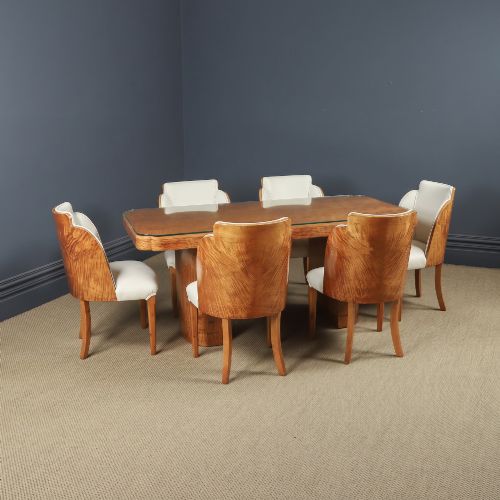
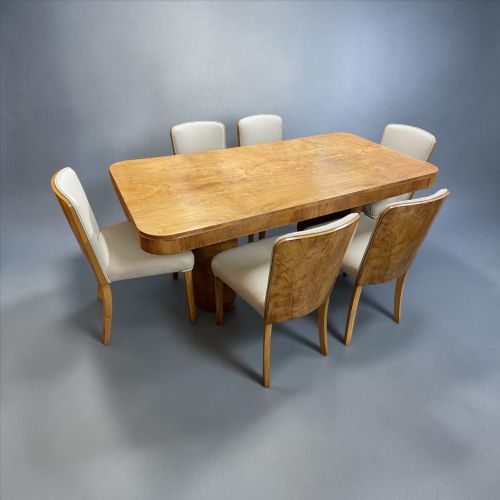
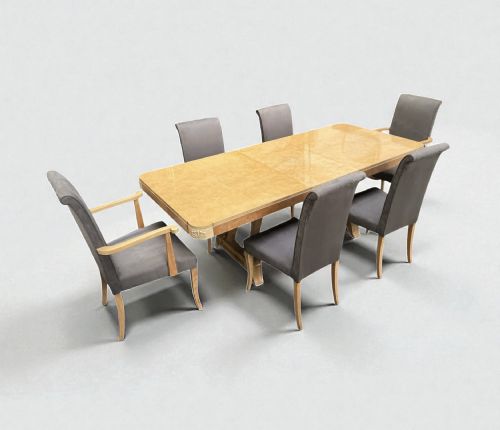
A cast iron garden table bearing a specific nineteenth-century foundry name shares page space with folding French chairs and sophisticated Art Deco maple suites.
Evaluating quality and execution
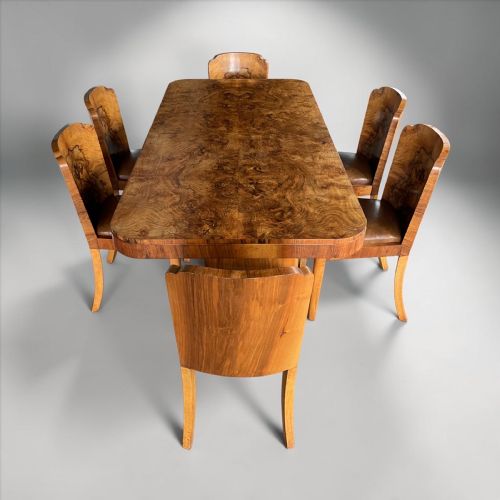
Quality separates through the integrity of timber selection and the precision of decorative carving or veneer matching. Suites featuring burr walnut, bird's eye maple, or calamander demonstrate superior material ambition compared to standard domestic oak.
Maker attribution elevates a suite significantly, particularly pieces carrying stamps or provenance from notable workshops and designers. The harmony between the table and its accompanying set of chairs dictates the cohesion of the ensemble.
Maurice Adams·Christopher Dresser·Harry and Lou Epstein·Hille·Waring
The Vintage Dining Table Chairs Glossary
- Carver
- An armchair designed with side supports, traditionally placed at the head of a dining table. These pieces match the smaller side chairs in a set.
- Draw leaf
- A dining table mechanism featuring two pull-out leaves stored beneath the main top. This design allows the surface area to expand quickly.
- Cabriole leg
- A furniture leg that curves outward at the knee and tapers inward toward the foot. This form draws inspiration from animal limbs.
- Side chair
- A chair without arms intended for general dining use. These form the majority of seats in a standard dining set.
- Veneer
- A thin layer of decorative wood applied to a foundational timber base. This technique highlights striking grains like burr walnut and macassar.
Vintage Dining Table Chairs: Frequently Asked Questions
How do I match chairs to an existing table?
Examine the timber species, period style, and leg geometry to ensure visual continuity. Suites often combine tables and chairs from the same design vocabulary.
Consider the wood finish, whether mahogany, oak, or walnut, and match the height of the chair seats to the apron of the table.
Are cast iron chairs suitable for indoor use?
Heavy cast iron and wrought iron pieces originated largely for garden, patio, and bistro settings. They provide sturdy construction for exterior environments.
When brought indoors, protect flooring surfaces beneath the iron legs and pair them with stone or wooden topped tables.
What defines an Art Deco dining suite?
Art Deco suites from the 1930s utilise exotic veneers such as bird's eye maple, calamander, and burr walnut. The forms emphasise geometric clarity and streamlined silhouettes.
Such suites frequently include matching sideboards alongside the table and leather-upholstered chairs.
How do I care for leather upholstered dining chairs?
Clean leather surfaces regularly with a soft cloth and condition the material periodically to maintain suppleness. Keep the chairs away from direct heat sources to prevent drying.
Check the stability of the frame joints beneath the upholstery during routine maintenance.