






Vintage Cutlery Box Mahogany
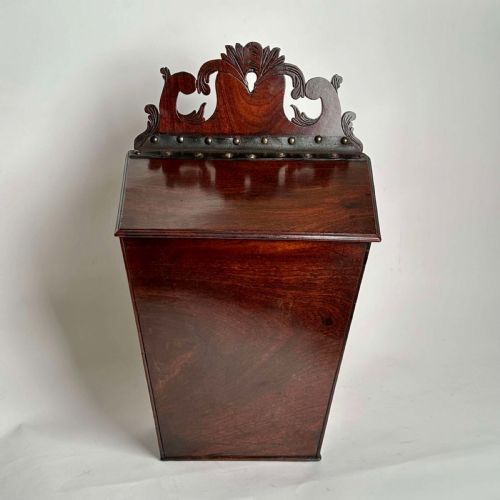
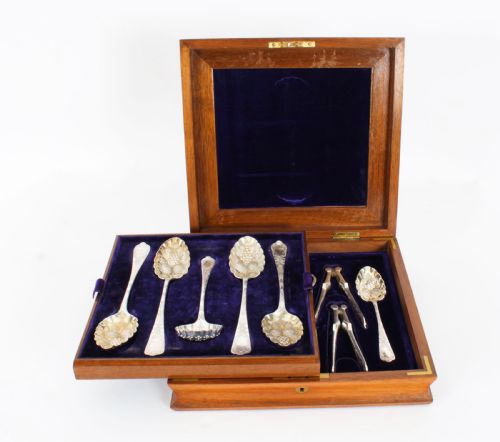
These vintage cutlery box mahogany pieces are handsome containers designed to store fine tableware, offering traditional timber elegance for the modern interior.
Vintage Cutlery Box Mahogany
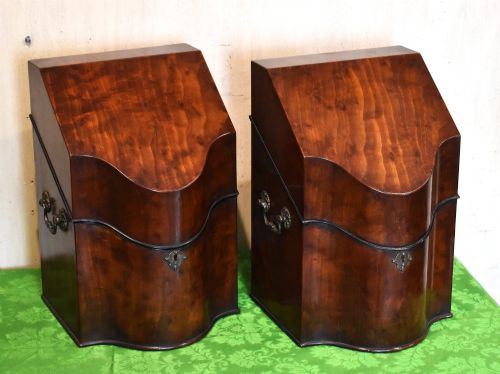
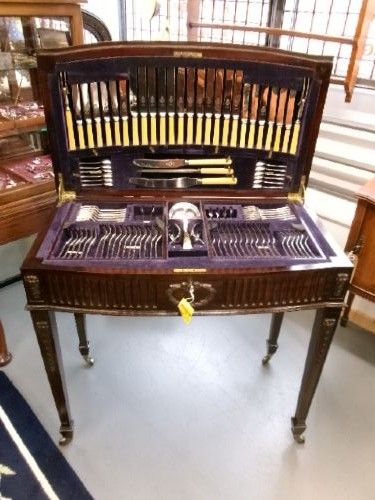
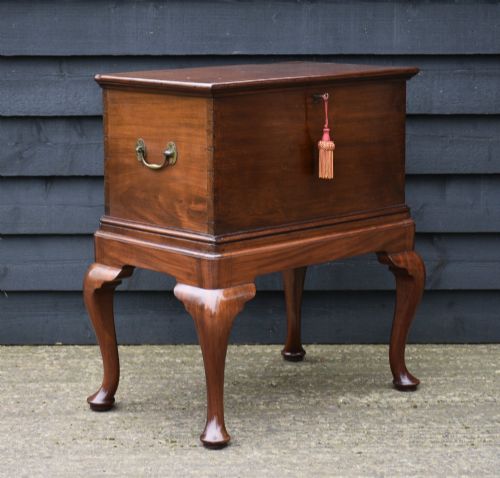
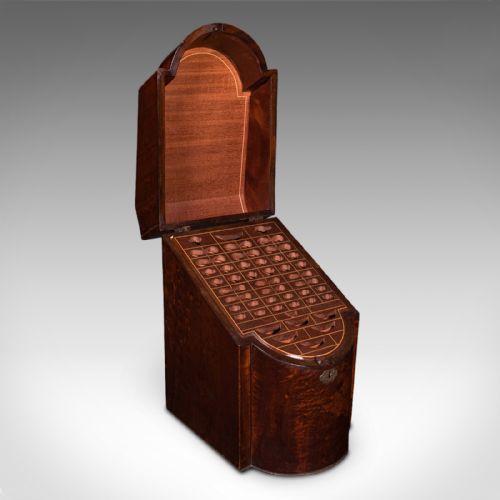
The most common forms you will encounter on this page include slope-front knife boxes, serpentine stationary boxes, and fitted canteen cabinets. These items originate from periods when keeping flatware organised and secure was an essential household priority.
Many examples demonstrate dual utility, adapting from initial service as knife boxes to hold letters or stationery over subsequent generations. Their survival reflects the enduring quality of timber containers built for wealthy households.
Materials and construction methods
Makers relied heavily on solid mahogany and rich veneers, often selecting figured timber such as plum pudding mahogany for prominent surfaces. Wood inlay added decorative contrast to the exterior panels of finer boxes.
Internal spaces frequently featured velvet linings to protect delicate metal implements from scratching during transport or storage. Brass fittings, including carrying handles, escutcheons, and hinges, provided both structural reinforcement and visual accent.
Vintage Cutlery Box Mahogany Retail Price Guide 2026
Typical asking prices for vintage cutlery box mahogany among the pieces listed under this phrase on Sellingantiques today, from the lower quarter to the upper quarter. They describe what is for sale here now, not the wider market.
The listings on this page span the Georgian, Regency, Victorian, and Edwardian periods, showcasing mahogany alongside walnut, brass, and velvet.
Markers of superior craftsmanship
Superior quality rests in the selection of the timber, where dense grain patterns and matched veneers elevate a simple container into a piece of fine furniture. The execution of serpentine fronts and delicate woodwork demonstrates the skill of the original maker.
Original brass hardware and intact internal velvet fittings contribute significantly to the desirability of a piece. Boxes that retain their structural integrity without extensive timber replacement command greater interest from collectors.
Hukin & Heath
The Vintage Cutlery Box Mahogany Glossary
- Serpentine
- A furniture front or box lid curved with a convex centre flanked by concave sides. This fluid shape required considerable woodworking skill to execute properly.
- Escutcheon
- A protective brass plate surrounding a keyhole. It prevents the surrounding timber from wearing away through repeated use.
- Plum pudding mahogany
- A highly decorative variety of mahogany timber showing mottled grain patterns resembling the surface of a traditional Christmas pudding. It was favoured for high-status cabinet work.
- Canteen
- A fitted cabinet or box designed to hold a complete set of cutlery. These containers often feature multiple internal tiers or slotted trays.
Vintage Cutlery Box Mahogany: Frequently Asked Questions
What did they use knife boxes for?
These boxes originally sat on sideboards in grand dining rooms to hold silver-handled knives and forks before and after meals. Servants would lock the lids to protect valuable tableware between uses.
Over time, many of these containers lost their original internal fittings and found new life housing letters, papers, or alternative collections on a desk.
How do I date a mahogany box?
Dating relies on examining construction techniques, hardware styles, and the character of the mahogany timber itself. Georgian and Regency pieces often display hand-cut dovetailing and particular brass handle designs unique to their decades.
Reference points include the presence of secondary woods inside and the specific slope or serpentine curve of the lid.
Are these boxes suitable for modern storage?
These containers integrate easily into contemporary homes as stylish desktop organisers, jewellery holders, or statement decor pieces on side tables. Their deep mahogany tones bring warmth and historical character to a room.
While some retain fitted interiors for specific flatware sets, others offer open wooden spaces ready for everyday use.
How do I care for antique mahogany?
Maintenance involves keeping the timber away from direct sunlight and sudden temperature changes that can dry out the wood. Occasional light dusting and gentle waxing help preserve the natural lustre of the finish.
Avoiding moisture on the velvet linings and brass fittings ensures the interior stays as well-preserved as the exterior.