

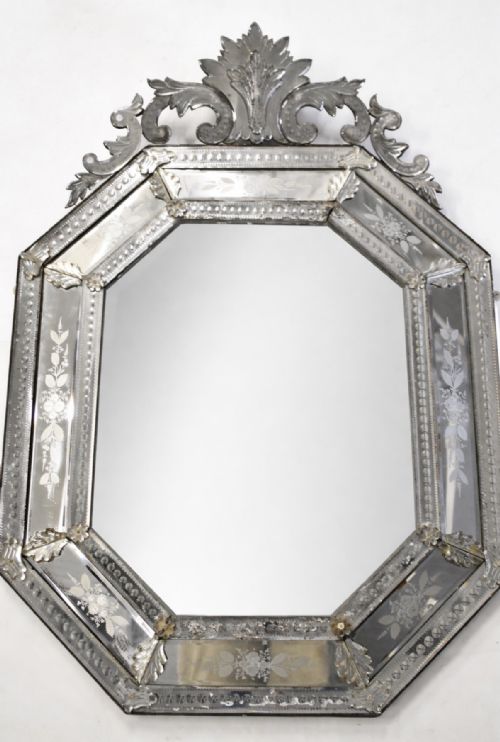


Vintage Cushion Frame Mirror
These vintage cushion frame mirror pieces bring deep, curved moulding and reflective depth to a room, drawing the eye instantly.
Vintage Cushion Frame Mirror
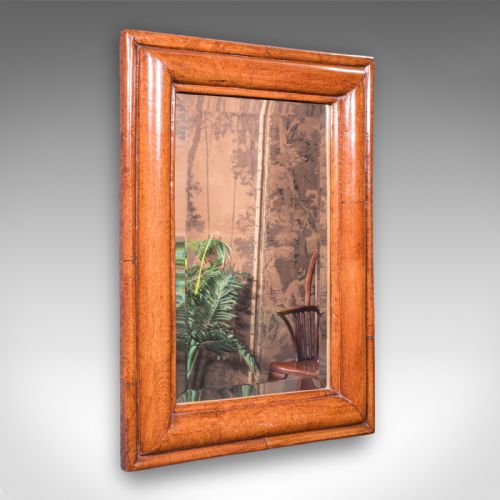
A vintage cushion frame mirror brings a distinctive convex or sloping profile to the wall, drawing attention with its dimensional depth. These pieces appear across periods from the seventeenth century through to the Edwardian era, with nineteenth century French and Venetian examples frequently meeting the eye.
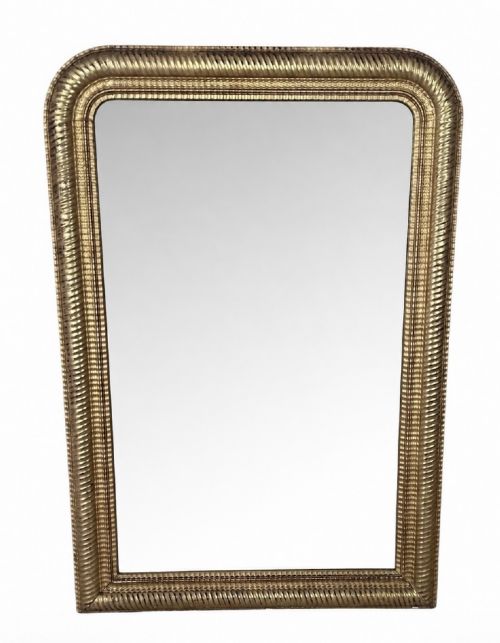
Makers shaped these wall mirrors in forms ranging from neat proportions to impressive large sizes, utilising walnut, oak, burr maple, and brass alongside painted and gilt finishes. Styles lean towards French Louis Philippe, Venetian, Georgian, and William and Mary aesthetics.
Materials and construction
Craftsmen built these frames using timbers such as walnut, oak, and burr maple, frequently applying veneer or oyster veneer to create rich grain patterns. Gesso and giltwood finishes were then applied to carved wood surfaces, creating a reflective metallic sheen.
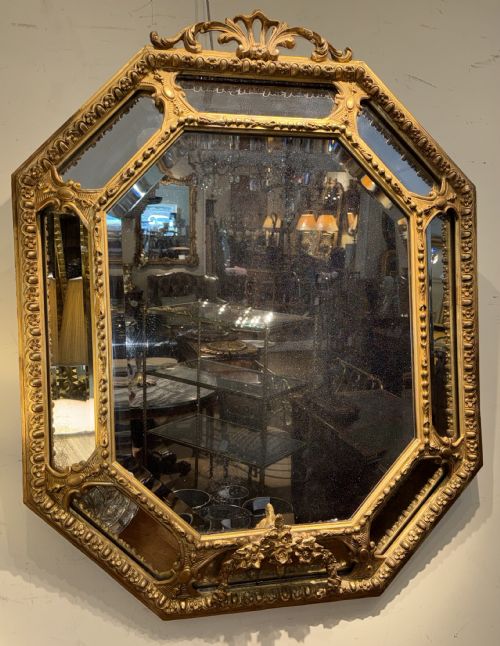
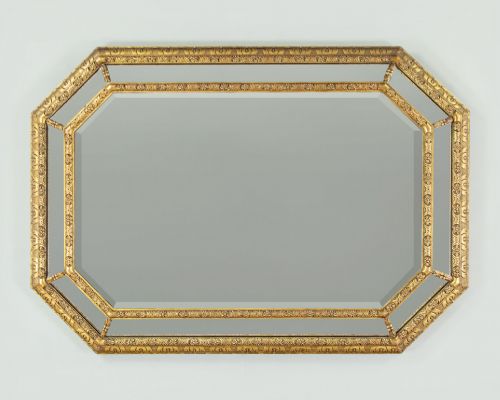
Glass plates were silvered and set into the rebated frames, sometimes accompanied by brass framing or engraved marginal plates. French and Venetian workshops utilised these labour intensive techniques to achieve the characteristic swelling profile of the cushion moulding.
Some seventeenth century oyster veneer mirrors were designed with such hypnotic wood grain that guests spent longer examining the frame than their own reflections.
Markers of quality
Quality in these pieces rests upon the crispness of the moulding and the integrity of the underlying timber or gesso work. Superior examples display finely matched veneers, such as oyster cut sections, or deeply carved wood and gesso that retains its original gilding and painted surfaces.
The depth and weight of the cushion profile contribute heavily to the presence of the mirror on the wall. Original mirror glass with appropriate age related oxidation separates pieces retaining their earliest components from those with later replacements.
The Vintage Cushion Frame Mirror Glossary
- Cushion frame
- A frame profile that curves outward from the wall toward the mirror glass, creating a pillowed or swelling effect. This design was particularly favoured in seventeenth century and nineteenth century mirror production.
- Giltwood
- Wood that has been coated with a thin layer of gold leaf or gilt paint over a prepared gesso base. It provides a bright, reflective surface that catches candle or natural light.
- Oyster veneer
- Slices cut transversely across small branches or roots of timber, producing circular or oval patterns resembling oyster shells. This technique appears on walnut pieces from the seventeenth century.
- Marginal mirror
- A mirror style where a central glass plate is surrounded by smaller, separately framed border plates of glass. These are often held by small decorative rosettes or clips.
- Louis Philippe
- A French style spanning the nineteenth century characterised by restrained curves, often seen with rounded upper corners on mirrors. It balances ornamentation with classical simplicity.
Vintage Cushion Frame Mirror: Frequently Asked Questions
Where should I hang a cushion frame mirror?
These mirrors work effectively above a mantelpiece, sideboard, or in a reception hall where their dimensional frames can catch sidelight.
Ensure the wall fixings match the substantial weight of wood, gesso, and glass.
How do I identify a 17th century mirror?
Seventeenth century examples often feature distinctive oyster veneer in walnut or intricate marquetry work.
Construction details on the reverse and the thickness of the glass plate help confirm the early period.
Are Venetian cushion mirrors different?
Venetian pieces frequently incorporate engraved glass panels within the cushion frame itself rather than relying solely on wood or gilt surfaces.
This creates an overall luminous effect across the entire face of the mirror.
How do I clean an antique mirror glass?
Use a soft, dry microfibre cloth to gently remove dust from the glass and the delicate gilt or wooden frame.
Avoid liquid cleaners that might seep behind the glass plate or damage historic silvering.