
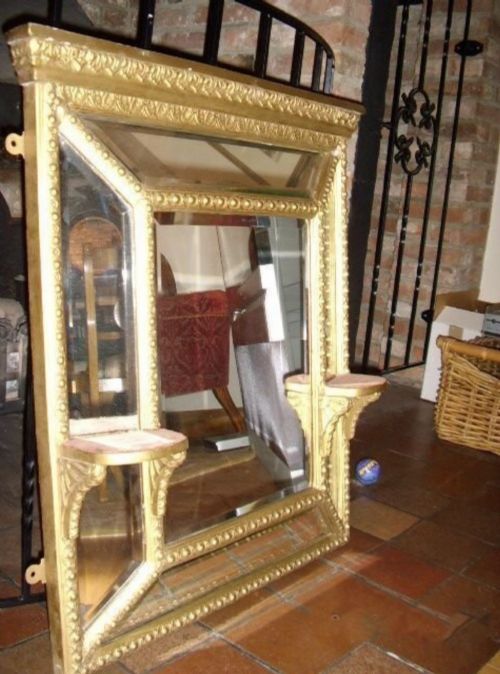
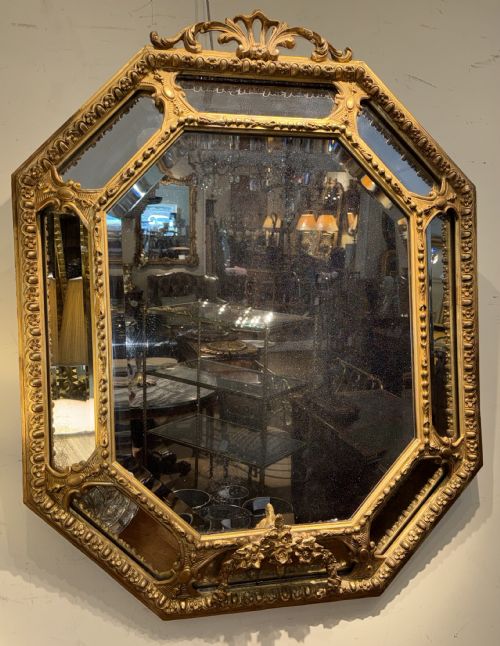
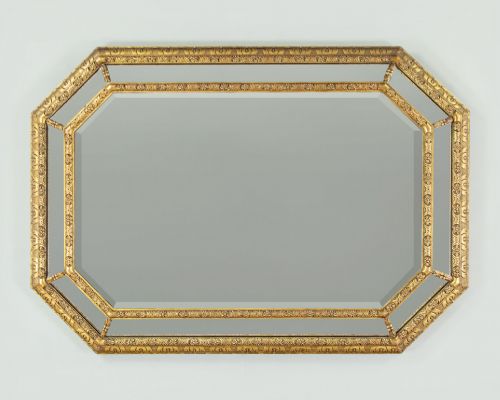

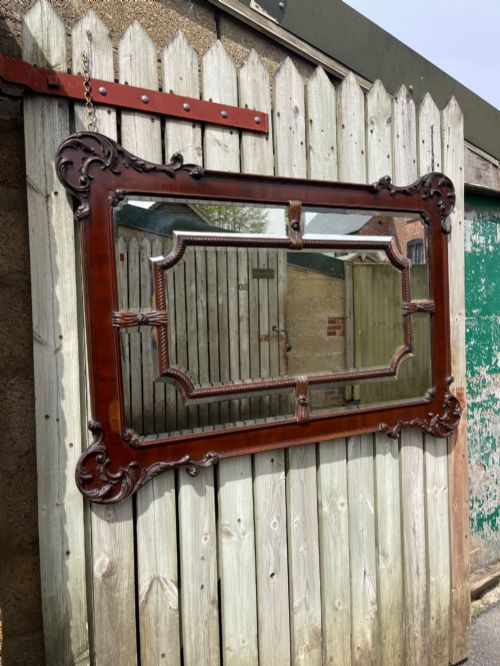
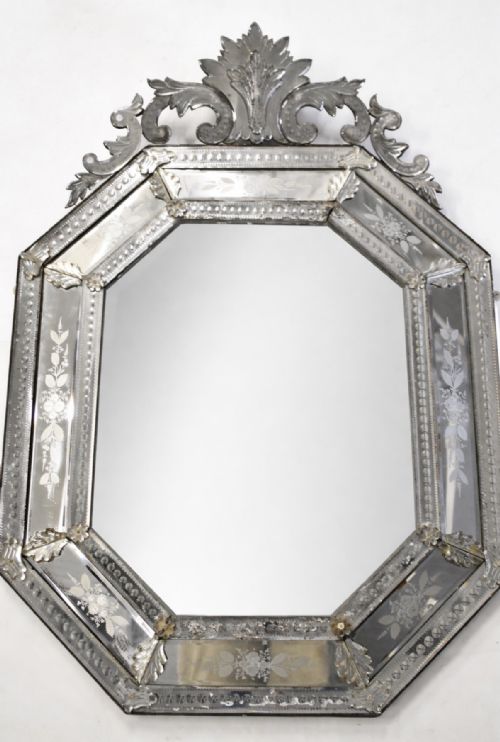


Cushion Framed Mirror
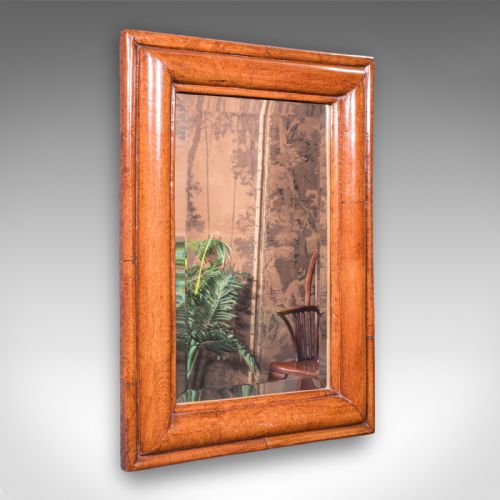
A cushion framed mirror brings deep architectural profile and layered reflection into a room through its sloping, box-like wooden frame.
Cushion Framed Mirror
A cushion framed mirror presents a distinctive rounded or sloping outer moulding that draws the eye inward toward the glass plate. This form has roots in seventeenth-century furniture design, where cabinetmakers utilised timber veneers to create rich surfaces.
The pieces on this page span from early walnut examples to nineteenth-century giltwood and brass interpretations. Wall-hanging formats dominate, though buyers also encounter overmantel versions designed to sit above a fireplace.
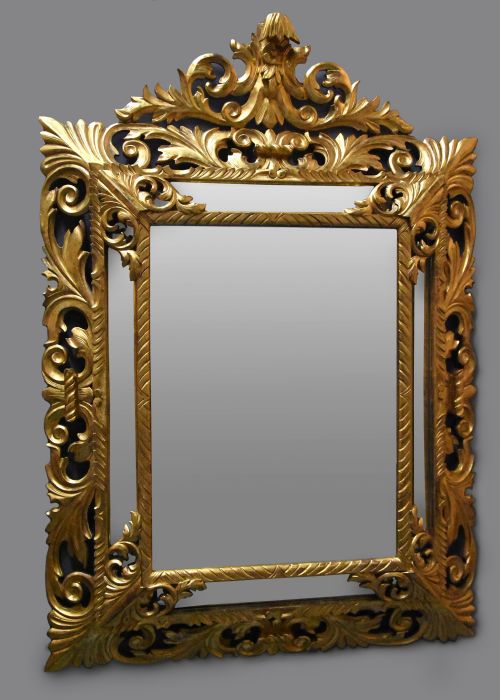
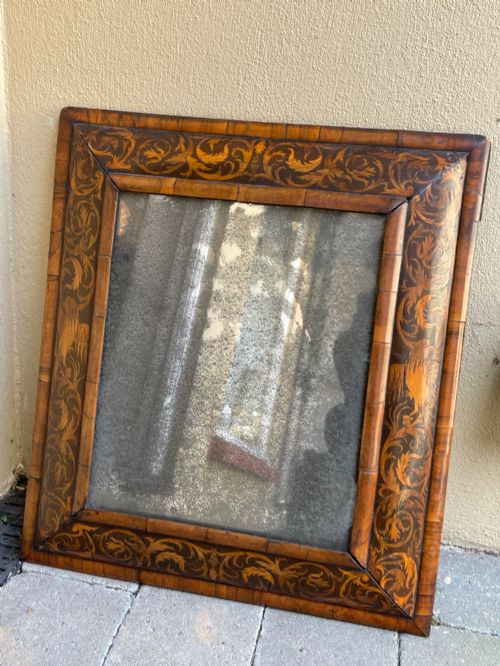
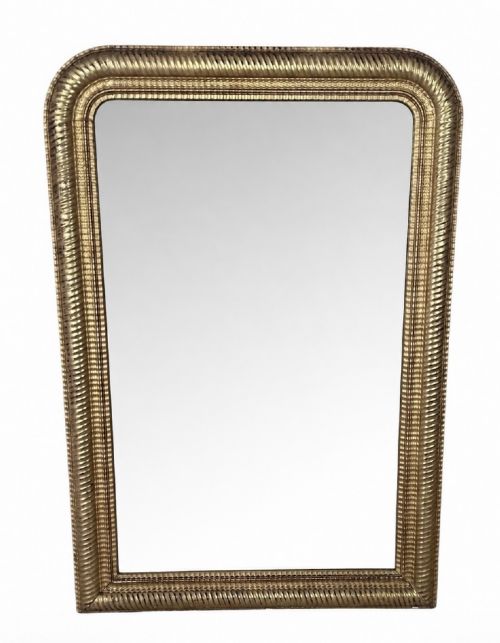
The style crosses several regional traditions, including English marquetry pieces, French Louis Philippe designs, and Italian carved giltwood works. Each origin brings specific timber choices and decorative motifs to the sloping frame.
Materials and Construction
Makers constructed the characteristic profile by building up timber frames using pine or oak carcases before applying fine veneers of walnut, burr walnut, or mahogany. Oyster veneer sections appear frequently in early examples, cut across small branches to show concentric growth rings.
Giltwood and brass constructions rely on different techniques, utilising carved gesso over wood substrates for gold leaf application or repoussé metal panels pinned directly to the frame. Glass plates range from early bevelled mercury glass to later polished mirror glass.
The inventory includes regional variations from English, French, Italian, and Dutch workshops.
Assessing Quality and Execution
Quality rests in the depth of the timber figuring and the crispness of the frame's profile. Early burr walnut and marquetry pieces show meticulous alignment of grain patterns across the sloping sides, whereas lesser examples use flat or poorly matched timber.
Surface preservation dictates the standing of a piece, separating items with original gold leaf or untouched beeswax finishes from those with later overpainting. The integrity of the glass plate, whether original mercury backing or early bevelled edge, also plays a central role.
The Cushion Framed Mirror Glossary
- Oyster veneer
- Cross-sections of small branches sliced to produce circular or oval wooden motifs. This technique is typical of late seventeenth-century cabinetmaking.
- Giltwood
- Timber carved and prepared with gesso before the application of thin gold leaf. It defines many decorative nineteenth-century frames.
- Repoussé
- Metalwork beaten from the reverse side to form raised decorative patterns in relief. Brass frames often utilise this method for floral or scrolling designs.
- Marquetry
- Inlaid wood veneers assembled to create geometric or pictorial patterns. Craftsmen applied these intricate designs across flat and sloping frame surfaces.
- Bevelled glass
- A glass plate with edges ground and polished at an acute angle to catch the light. This treatment adds a refined border effect to the reflection.
Cushion Framed Mirror: Frequently Asked Questions
Where should I hang a cushion framed mirror?
These pieces suit reception rooms, hallways, and above mantelpieces where their architectural profile can catch direct light. Their depth allows them to anchor a wall arrangement effectively.
Ensure the wall fixings match the substantial weight of timber and metal frames, particularly for larger nineteenth-century giltwood or oak examples.
How do I identify a seventeenth-century example?
Early pieces from the William and Mary or Queen Anne periods typically feature walnut timbers, oyster veneers, or intricate marquetry inlay. The framing timbers feel dense and show hand-cut construction markers.
Later nineteenth-century revivals often employ softer woods beneath heavy gesso or use brighter modern gilding methods compared to earlier patinated surfaces.
Are the mirror plates original?
Many older pieces retain their original glass, which can exhibit light foxing, minor speckling, or the darker reflectivity characteristic of mercury backing. These surface traits confirm age rather than detract from the object.
Some mirrors have received replacement glass plates over the centuries to maintain clear reflection for daily use.
How do I care for the wooden frame?
Dust the sloping mouldings gently with a dry, soft cloth to prevent particulate buildup in the recessed grain. Avoid liquid cleaners or modern polishes that can degrade historic wax or oil finishes.
Keep the mirror away from direct heat sources and damp walls to protect timber veneers from shrinking or lifting over time.