

Vintage Cultured Pearls
Vintage cultured pearls bring together the quiet lustre of farmed nacre and the intricate metalwork of twentieth-century design.
Vintage Cultured Pearls
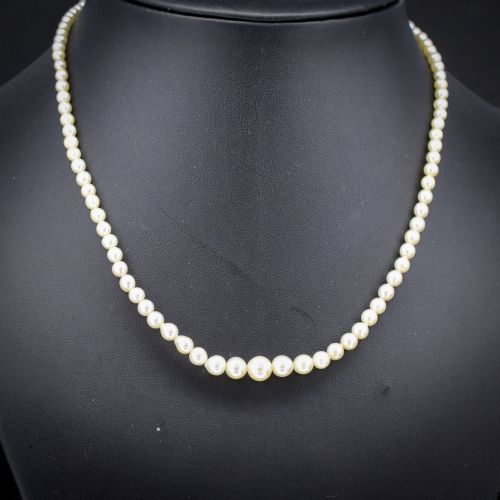
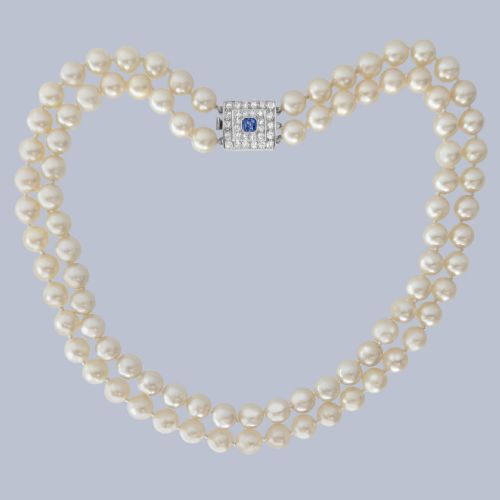
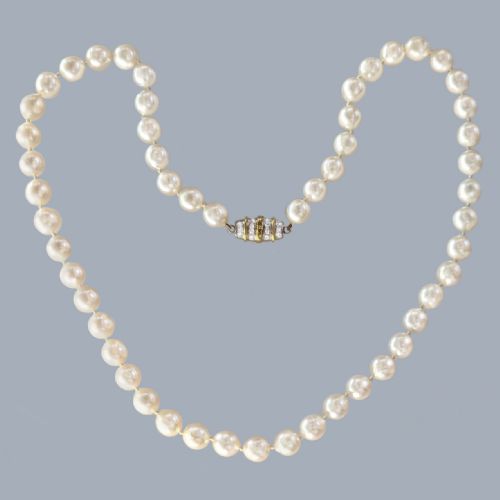
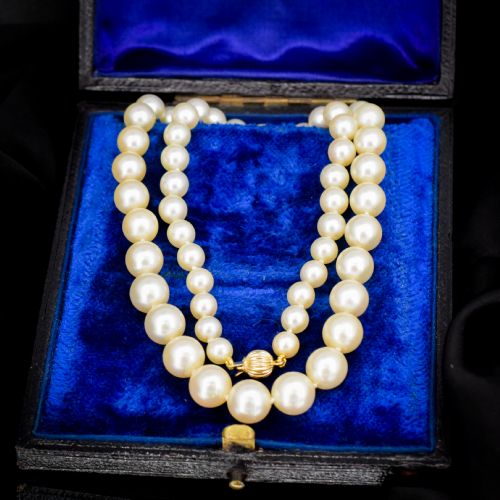
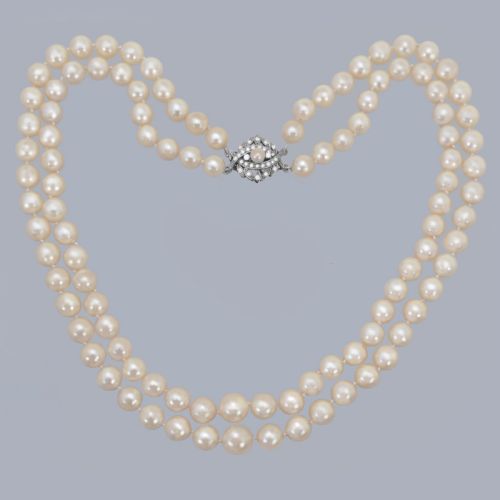
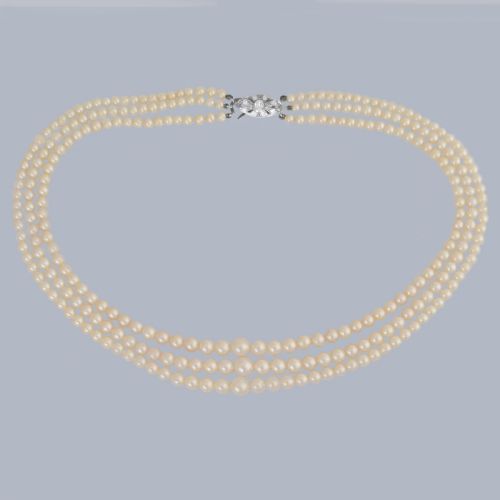
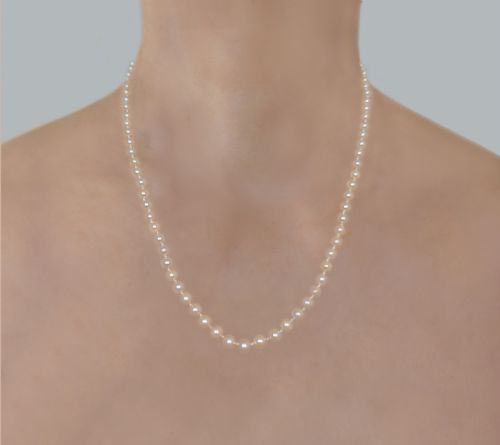
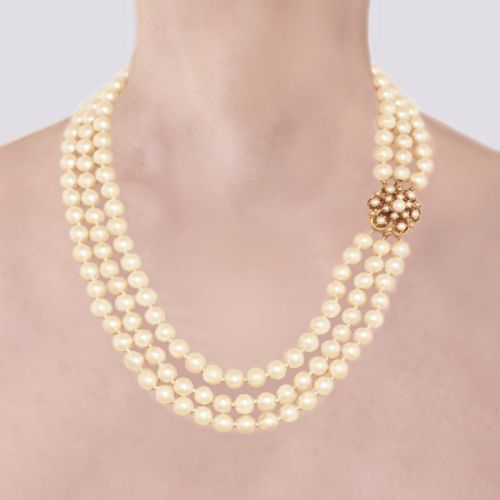
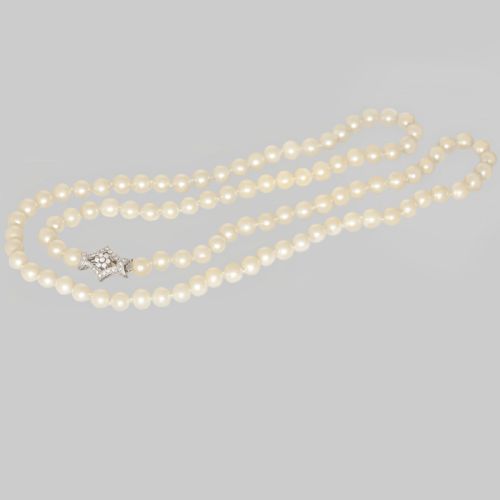
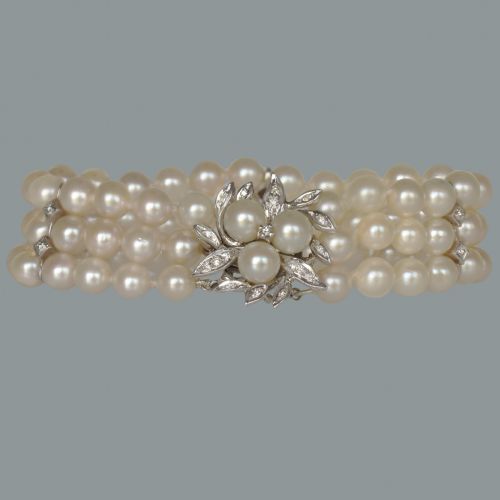
Vintage cultured pearls primarily take the form of multi-strand necklaces, chokers, and accompanying clasps set with precious stones. Buyers browsing this selection encounter pieces originating predominantly from the mid-twentieth century, alongside occasional Edwardian and Art Deco examples.
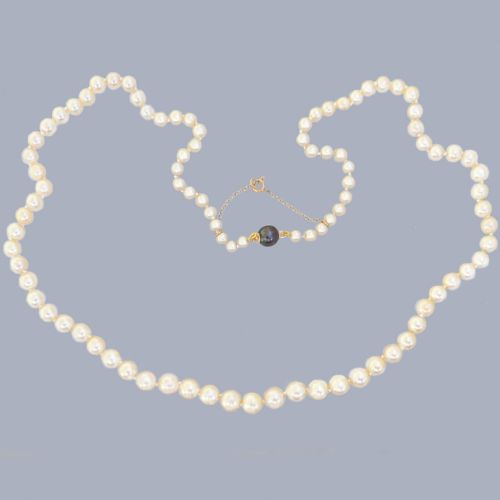
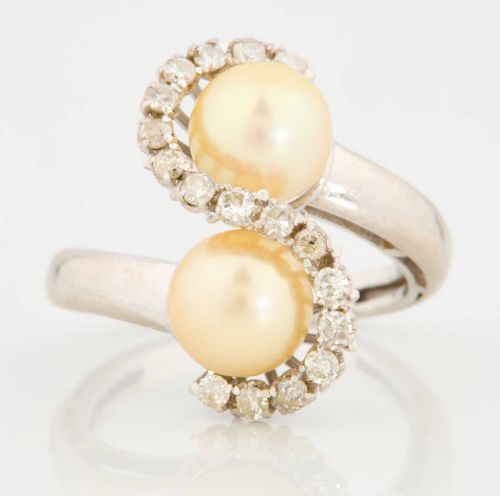
The strands range from single rows to complex multi-strand configurations, often accompanied by rings, earrings, and brooches. Most pieces showcase white or cream cultured pearls paired with yellow gold, white gold, or silver mountings.
Materials and Construction
Gems are assembled using cultured saltwater pearls threaded onto knotted silk or synthetic cords, a technique designed to prevent friction between individual spheres. Metal components rely on cast and wrought nine-carat gold, fourteen-carat gold, eighteen-carat white or yellow gold, and sterling silver.
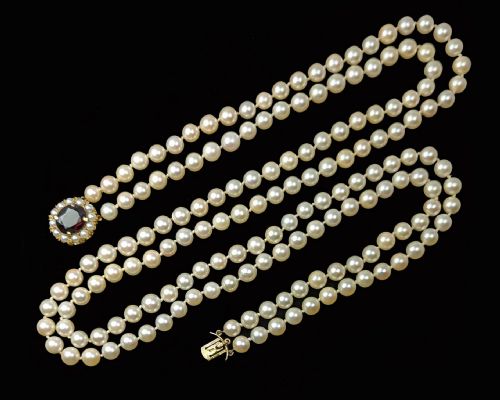
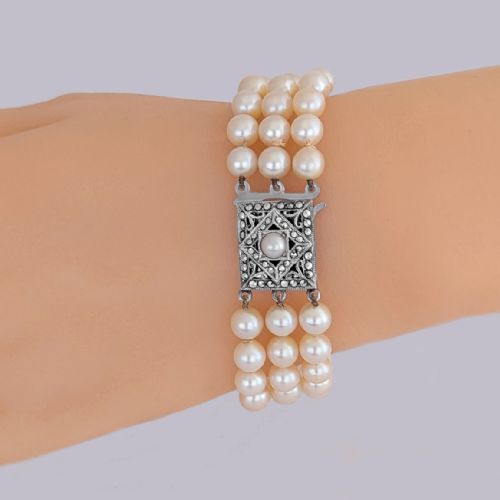
Clasps frequently incorporate precious gemstones including diamonds, sapphires, emeralds, rubies, garnets, and jade, secured in settings such as millegrain or prong work. Many strands feature specialist elements like mabe pearls, black pearls, or seed pearls arranged in floral and geometric motifs.
Listings feature pieces spanning from the nineteenth century through to the nineteen-sixties, incorporating diamonds, sapphires, emeralds, and various gold purities.
Evaluating Quality
Quality rests upon the uniformity, lustre, and surface smoothness of the pearls, alongside the complexity of the precious metalwork. Higher-tier examples display consistent sizing, deep nacre reflection, and secure hand-knotting between each individual sphere.
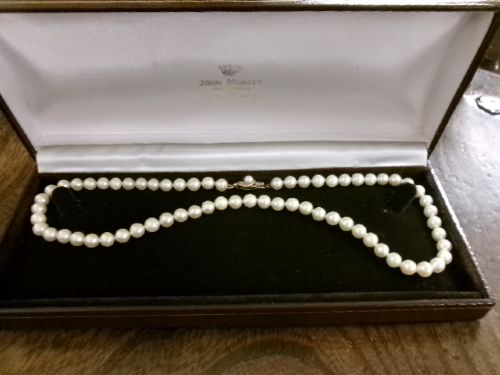
The craftsmanship of the clasp distinguishes standard pieces from finer works, particularly where complex gemstone pavé settings or certified diamonds are present. Original packaging, hallmarks, and independent gemological certificates further separate standard commercial items from superior collector pieces.
Mikimoto·Cropp & Farr
The Vintage Cultured Pearls Glossary
- Cultured pearl
- A pearl formed by the introduction of a irritant into an oyster by human intervention, allowing layers of nacre to accumulate over time. These form the primary material of the jewellery found in this collection.
- Graduated
- Describing a necklace where the pearls increase in size progressively from the clasp towards the centre front. This layout was a popular design choice throughout the mid-twentieth century.
- Mabe pearl
- A cultured blister pearl grown against the inside shell of an oyster rather than within the tissue, resulting in a hemispherical shape. They appear frequently in mid-century earrings and ring mountings.
- Millegrain
- A jewellery technique featuring a line of small bead-like metal grains along the edges of a setting, common in Art Deco and Edwardian designs. It adds a delicate texture around diamonds and gemstones.
- Saltwater pearl
- Pearls cultivated in marine pearl oysters rather than freshwater mussels, known for their distinct lustre and density. They are often accompanied by certification documents.
Vintage Cultured Pearls: Frequently Asked Questions
How should I store vintage pearl necklaces?
Store pearls flat in a lined box away from hard metals and other jewellery that might scratch the nacre. Keeping them separate prevents the silk threading from fraying prematurely.
Avoid storing them in airtight plastic containers, as pearls require a small amount of atmospheric moisture to maintain their lustre and prevent drying out.
Were these pearls recently restrung?
Many vintage strands are periodically restrung by specialists to ensure the silk cord remains strong and secure. This maintenance preserves the integrity of the piece for daily wear.
Evidence of recent restringing often appears in marketplace descriptions, indicating that the item has been prepared safely for its next owner.
What metals are used in the clasps?
Clasps across these pieces utilise nine-carat gold, fourteen-carat gold, eighteen-carat yellow or white gold, and sterling silver. Many incorporate gemstones such as diamonds, sapphires, or garnets into the metalwork.
These fastenings frequently double as decorative centrepieces, featuring floral motifs, box catches, or intricate filigree designs typical of their period of origin.
How can I tell an Art Deco clasp from a mid-century one?
Art Deco clasps typically showcase geometric lines, platinum or white gold settings, and rose-cut or old-cut diamonds. They reflect the architectural styles of the nineteen-twenties and nineteen-thirties.
Mid-century clasps often lean towards organic floral motifs, yellow gold, and coloured stones like sapphires, amethysts, or garnets, echoing the design shifts of the nineteen-fifties and nineteen-sixties.