
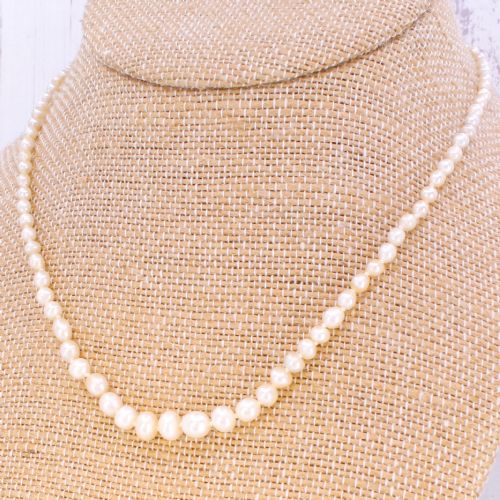
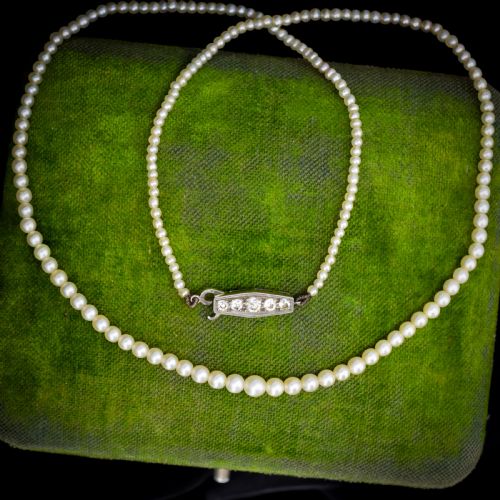
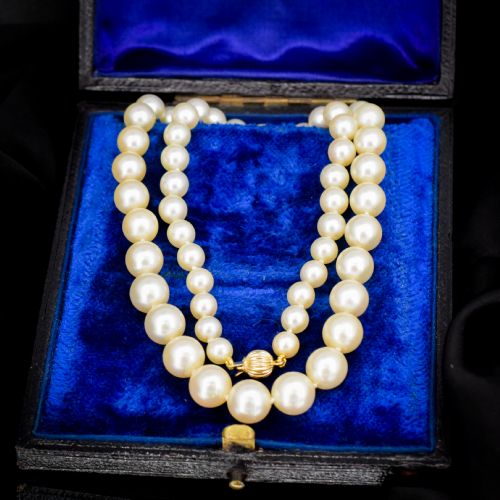
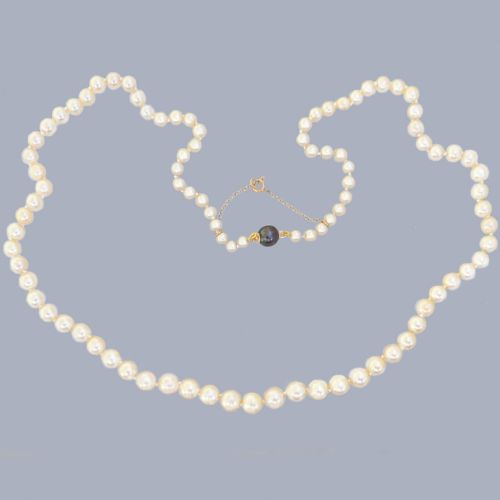
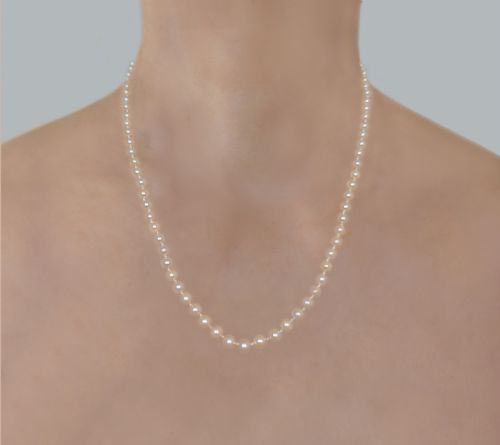
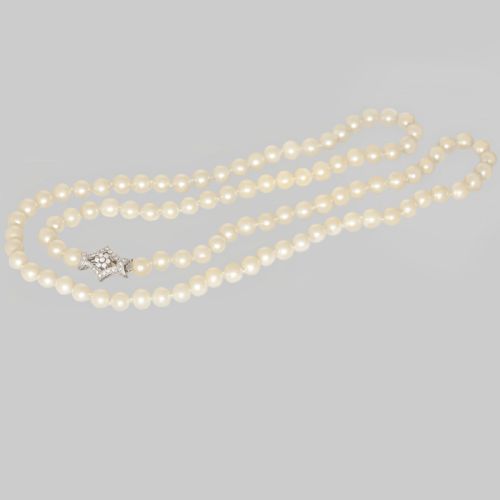


Single Strand Pearl Necklace
A single strand pearl necklace carries timeless elegance, offering a classic necklet configuration that moves effortlessly from day wear to formal attire.
Single Strand Pearl Necklace
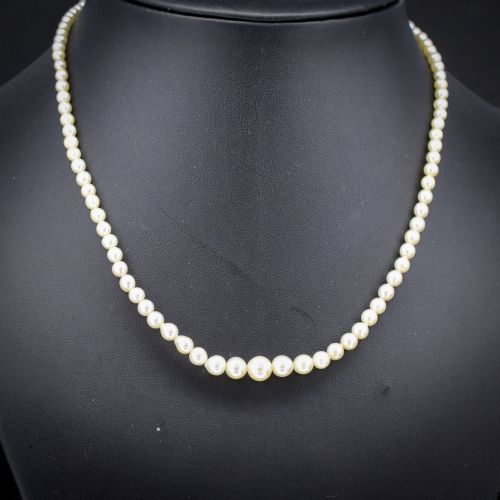
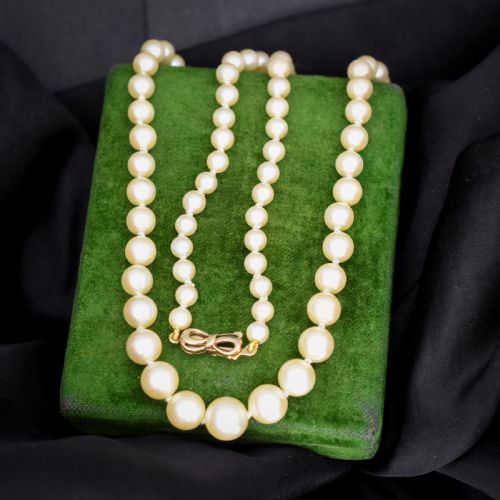
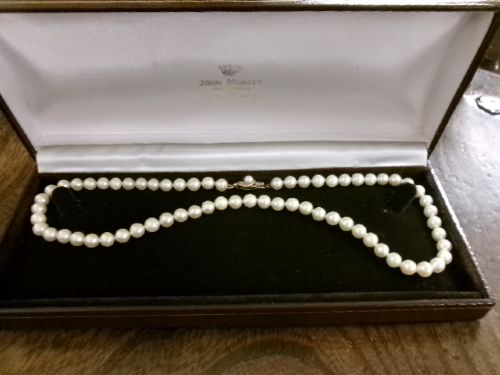
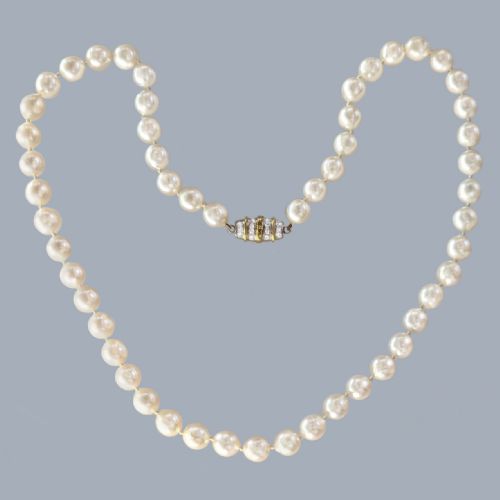
A single strand pearl necklace brings together matched or graduated pearls on a simple thread, often finished with a decorative clasp in gold or silver. Buyers search for this item to secure a versatile piece of jewellery suitable for both everyday wear and formal occasions.
The options span several historical periods, with pieces originating from the Georgian era through to the Edwardian period, Art Deco style, and mid-century decades. This page presents a wide selection of lengths, ranging from shorter chokers to long sautoir designs.
Most examples rely on cultured or natural pearls, paired with precious metal clasps set with gemstones such as diamonds, rubies, sapphires, garnets, or emeralds. The variety in clasp design often mirrors the prevailing decorative tastes of its specific decade.
Construction and Materials
Pearls are strung together, traditionally on silk thread with individual knots tied between each pearl to prevent loss if the cord snaps and to protect the nacre from friction. Clasps are fashioned from white gold, yellow gold, platinum, or silver, frequently incorporating intricate metalwork.
Gemstones including diamonds, sapphires, rubies, and garnets are set into the clasps using period-appropriate techniques like pave or claw settings. Metal components often bear hallmarks indicating the gold carat or silver standard and the country of origin.
Single Strand Pearl Necklace Retail Price Guide 2026
Typical asking prices for single strand pearl necklace among the pieces listed under this phrase on Sellingantiques today, from the lower quarter to the upper quarter. They describe what is for sale here now, not the wider market.
Some long strands measure over fifty inches, offering enough length to wrap multiple times or swing freely like a 1920s flapper accessory.
Markers of Quality
The fineness of a single strand pearl necklace depends heavily on the lustre, uniformity, and surface smoothness of the pearls themselves, alongside the complexity of the clasp. Natural saltwater pearls and top-tier cultured varieties command attention for their deep nacre and orient.
Clasp craftsmanship separates standard examples from exceptional ones, particularly when precious stones like old-cut diamonds, rubies, or sapphires are integrated into platinum or 18ct gold mountings. Secure knotting between each pearl and the presence of formal gem reports further elevate the standing of a piece.
Cropp and Farr·Unoaerre Italian·Kutchinsky·Chanel
The Single Strand Pearl Necklace Glossary
- Cultured pearl
- A pearl created by introducing an irritant into an oyster or mollusc under controlled conditions. This method produces pearls with regular shapes and reliable lustre suitable for fine jewellery.
- Nacre
- The iridescent organic-inorganic composite material secreted by pearl-producing molluscs to form the pearl. Thicker layers of nacre contribute directly to a deeper shine and greater durability.
- Sautoir
- A very long necklace, often exceeding fifty inches, which can be worn doubled or left loose. This style gained popularity during the Art Deco and mid-century periods.
- Graduated pearls
- Pearls of increasing size arranged along the strand so the largest rests at the front near the clasp. This traditional layout frames the neckline effectively.
- Clasp
- The mechanical closure situated at the back or side of the necklace, frequently functioning as a decorative element set with diamonds or coloured gemstones.
Single Strand Pearl Necklace: Frequently Asked Questions
How are pearls traditionally strung?
Pearls are threaded onto silk cord with an individual knot tied between each pearl. This secures the strand and protects the surface of each pearl from rubbing against its neighbour.
Over time, silk stretches and weakens, meaning older pieces benefit from periodic re-stringing by a professional jeweller to maintain structural integrity.
What lengths do these necklaces come in?
Lengths vary widely from shorter chokers resting high on the neck to standard sixteen or seventeen-inch strands. Longer multi-foot options, known as sautoirs, allow the wearer to drape the necklace in multiple loops.
Choosing a length depends on personal preference and the neckline of the garments with which it will be paired.
How can I identify the period of a clasp?
Clasps often display stylistic hallmarks of their era, such as geometric platinum mountings from the Art Deco period or floral garnet clusters typical of Victorian and mid-century designs. Hallmarks stamped on the metal components provide official markers for the metal purity and country of origin.
Examining the setting style of any accompanying diamonds or coloured stones also helps date the piece accurately.
Are all pearls on these necklaces natural?
The inventory includes a mix of natural saltwater pearls, cultured pearls, freshwater pearls, and simulated alternatives. Natural saltwater pearls are organic formations without human intervention, whereas cultured pearls start with a human-inserted nucleus.
Gem reports often accompany significant pieces to verify the origin and type of the pearls used.
How do I care for a pearl necklace?
Pearls are relatively soft organic gems that require gentle handling to preserve their nacre and lustre. Cosmetics, perfumes, and hairsprays should be applied before putting on the necklace to avoid chemical damage.
Storage should involve a soft pouch separate from harder metal jewellery to prevent scratching the surface.