
Victorian Pearl Necklace
A victorian pearl necklace brings together period gold and lustrous organic gems in pendants, lockets, and chains designed to catch the light.
Victorian Pearl Necklace
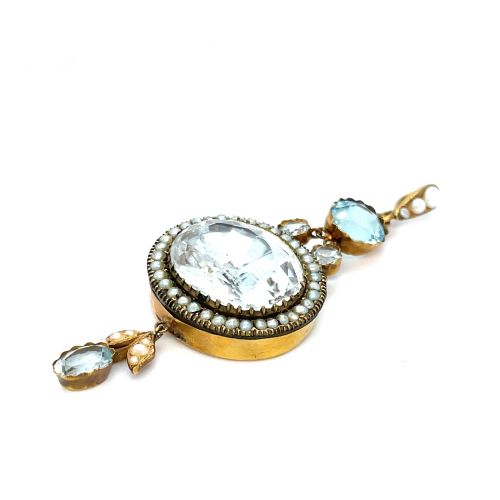
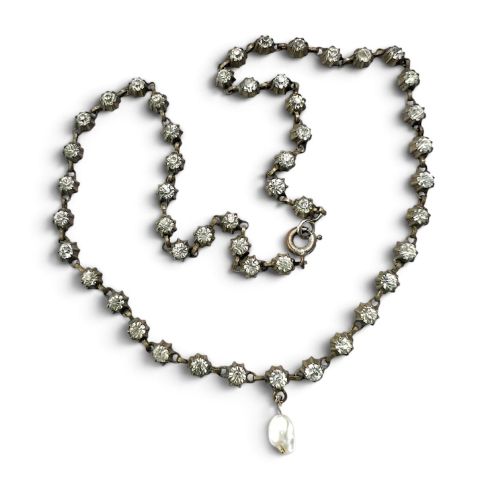
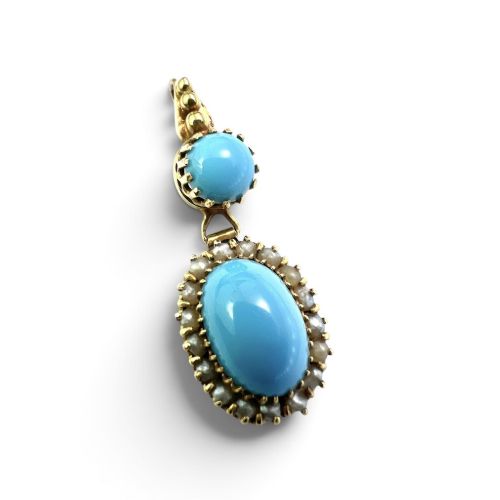
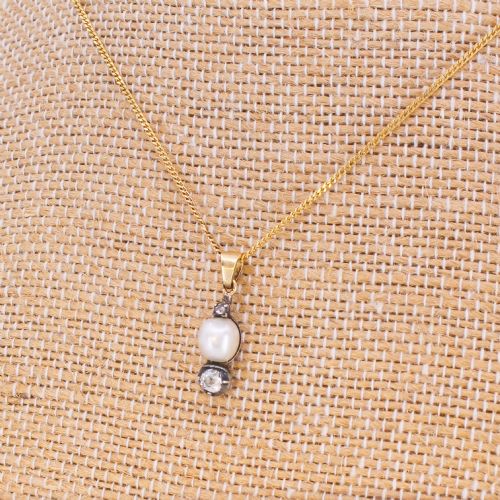
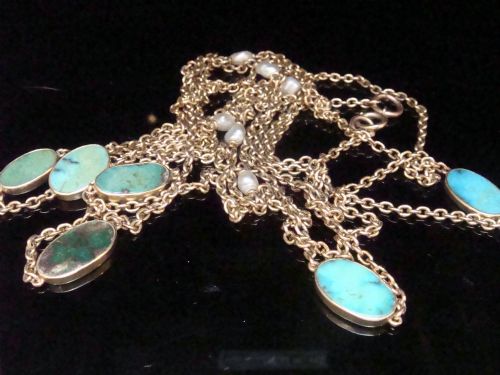
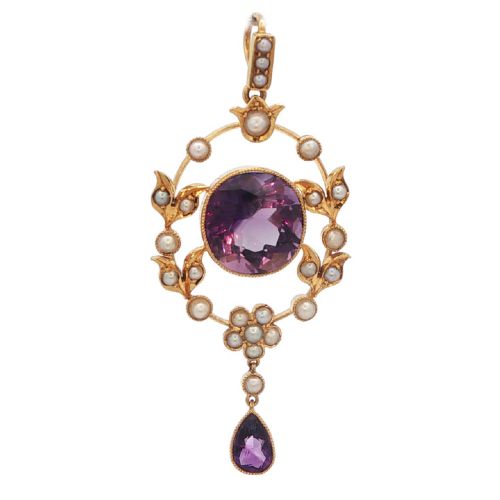
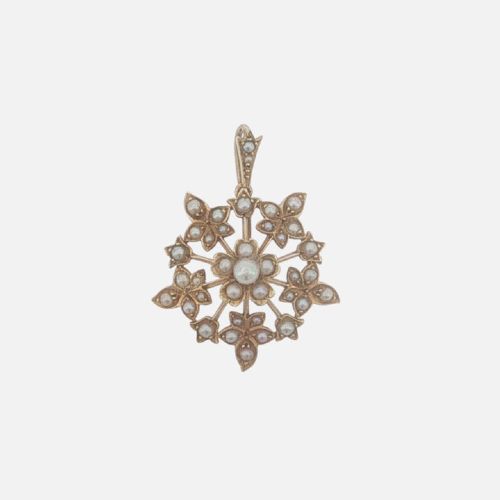
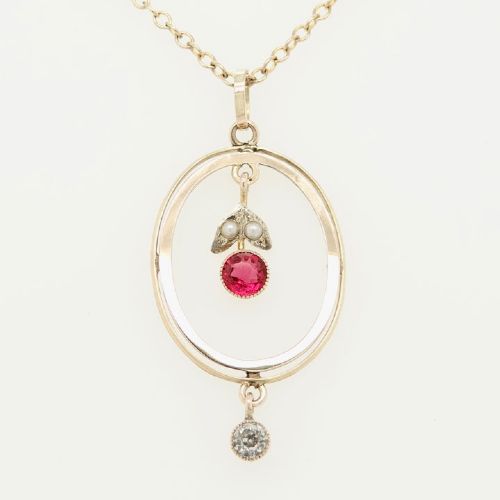
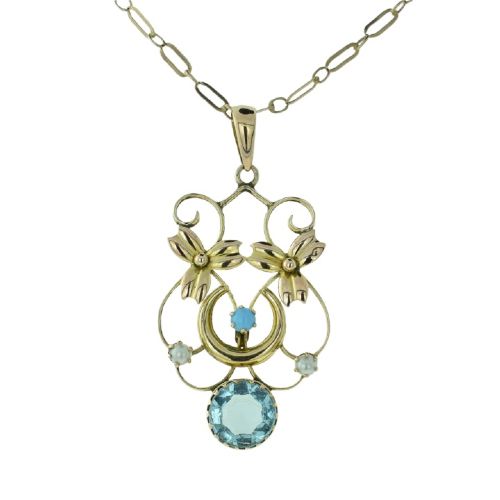
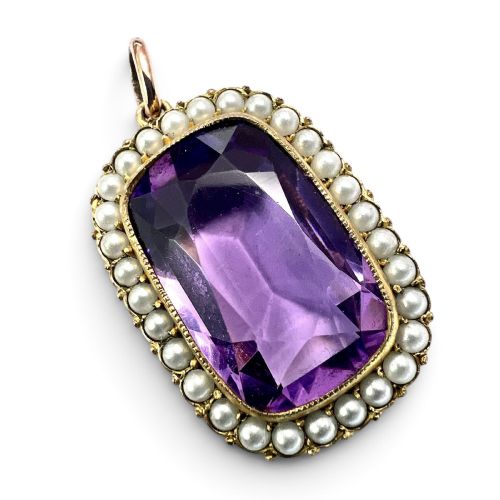
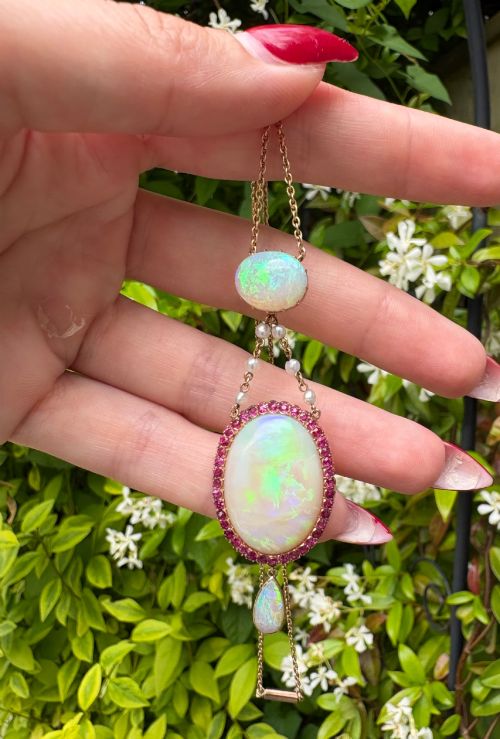
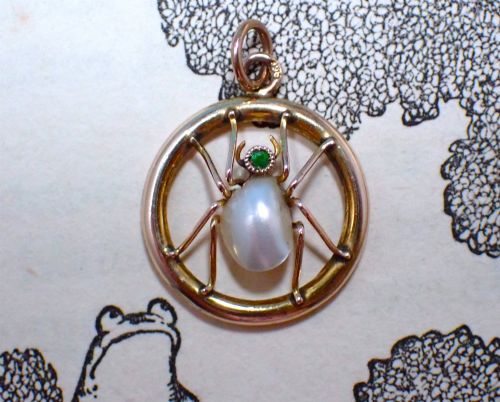
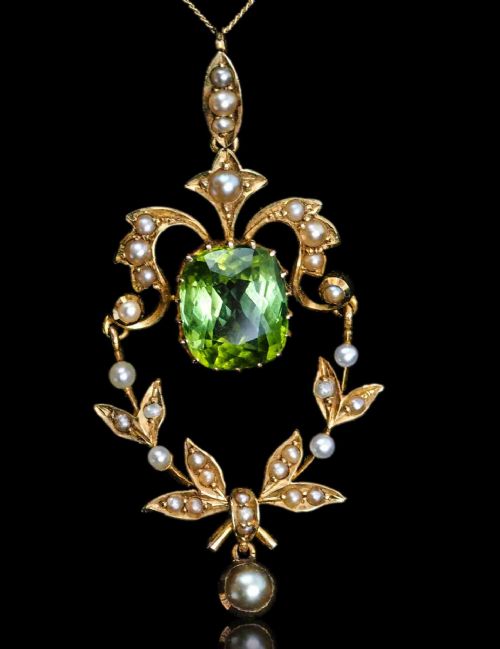
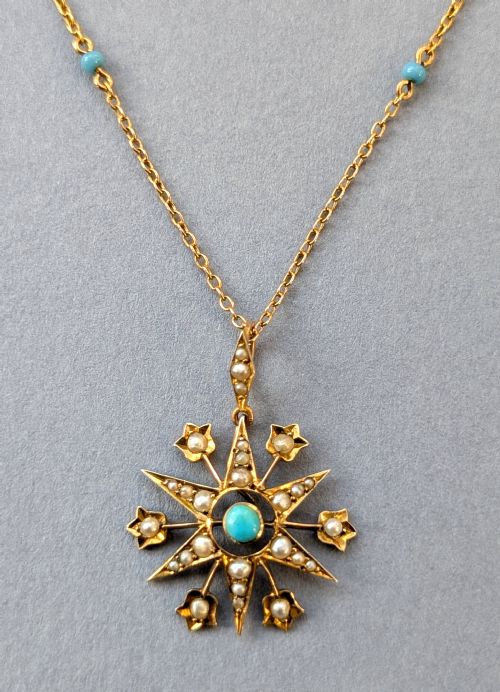
A victorian pearl necklace typically combines natural or seed pearls with nine-carat or fifteen-carat yellow gold, often incorporating coloured gems such as amethyst, turquoise, and peridot. The forms range from delicate lavalier pendants and starburst clusters to longuard chains and multi-gem drop necklaces.
Most examples originate from the nineteenth century or the early twentieth century, spanning periods from early Victorian through Edwardian revivals. Pendant necklaces and convertible brooch-pendants dominate the selection, reflecting the versatile jewellery habits of the era.
How they were made
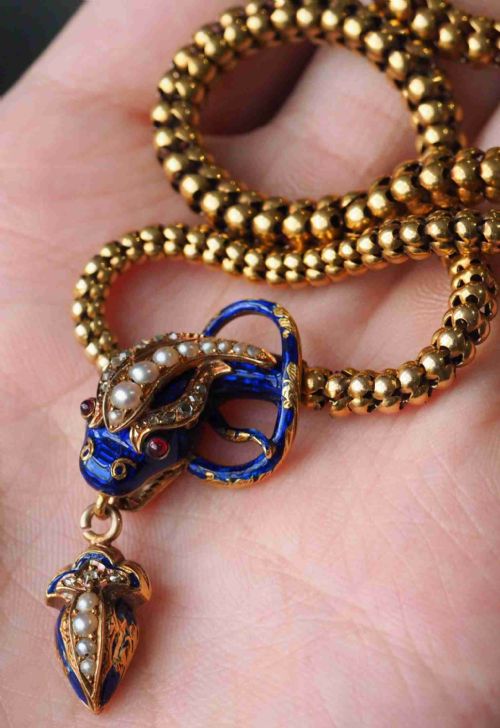
Goldsmiths of the nineteenth century shaped nine-carat, fifteen-carat, and eighteen-carat gold into hollow or solid settings, wirework chains, and cast motifs like serpents, stars, and floral sprays. Seed pearls and natural pearls were threaded, pegged, or secured in claw and collet settings alongside diamonds, garnets, and foiled crystals.
Enamelling, foil-backing, and silver-topped gold techniques appear frequently, supporting complex Renaissance Revival and Holbeinesque designs. Makers integrated hinged lockets, interchangeable drops, and integrated boxes to house these intricate works.
Victorian Pearl Necklace Retail Price Guide 2026
Typical asking prices for victorian pearl necklace among the pieces listed under this phrase on Sellingantiques today, from the lower quarter to the upper quarter. They describe what is for sale here now, not the wider market.
Listings feature fifteen-carat gold alongside nine-carat and eighteen-carat gold, paired with turquoise, amethyst, and diamond.
What varies in quality
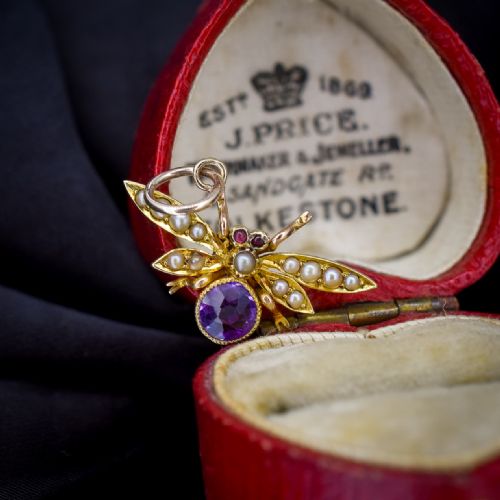
Quality rests in the structural integrity of the goldwork and the matching of the pearls, where uniform lustre, secure setting pegs, and thoughtful weight distribution elevate a piece. Superior examples display crisp chasing on motifs like bows, stars, and insects alongside well-matched coloured stones that complement rather than overpower the pearls.
Maker attribution and original presentation boxes often accompany finer survivals, indicating workshops of higher repute. The complexity of the metalwork, such as articulated fringe drops or layered enamel and diamond clusters, dictates the upper tier of the range.
Murrle Bennett·Hamilton Co
The Victorian Pearl Necklace Glossary
- Seed pearl
- A very small, naturally occurring pearl, often drilled and strung together in quantity or used to pave floral and geometric motifs.
- Lavalier
- A pendant necklace featuring a central drop suspended from a finer chain, popular during the late nineteenth and early twentieth centuries.
- Holbeinesque
- A revival style drawing on sixteenth-century Renaissance portraiture, characterised by heavy geometric goldwork, enamel, and multi-gem drops.
- Longuard chain
- An extra-long chain designed to be doubled around the neck or fitted with a watch or pendant at the drop.
- Riviere
- A necklace composed of a continuous line of gemstones of identical or graduated size, linked closely together.
Victorian Pearl Necklace: Frequently Asked Questions
What is a seed pearl necklace?
A seed pearl necklace uses tiny, naturally formed pearls clustered together to create delicate floral, star, or crescent shapes. These pieces often feature fine gold wirework supporting the tiny gems.
Craftsmen in the Victorian period favoured seed pearls for delicate bridal and mourning jewellery alike, utilising their soft white glow against yellow gold.
How do I wear a longuard chain?
A longuard chain is designed with generous length, allowing you to loop it twice around the neck or secure it with a clasp at the front. Many include a slide or clip for hanging watches and lockets.
Originating in the nineteenth century for practical timekeeping, these chains now function primarily as statement layering necklaces.
Are Victorian pearls natural?
Many pearls found in nineteenth-century jewellery are natural saltwater or freshwater pearls formed organically without human intervention. Cultured pearls became widespread later, but early pieces rely on natural specimens.
Examining the drill holes and nacre under magnification reveals the organic growth layers characteristic of natural pearls from this era.
What is a Holbeinesque pendant?
A Holbeinesque pendant mimics the ornate, heavy style of sixteenth-century court jewellery depicted in Hans Holbein's portraits. These pieces combine pearls with coloured stones, enamel, and structured gold settings.
Victorian revivalists embraced this Renaissance aesthetic to create rich, multi-layered pendant necklaces that hang from substantial gold chains.