
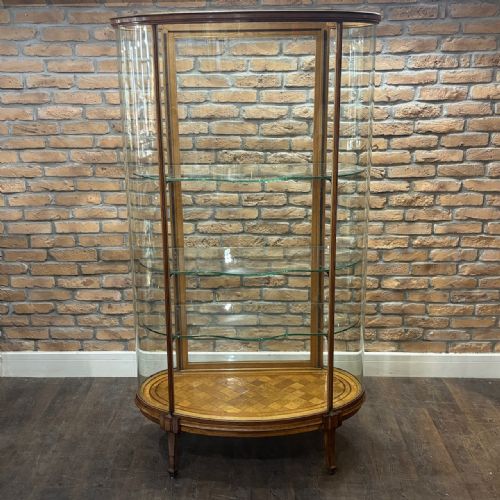
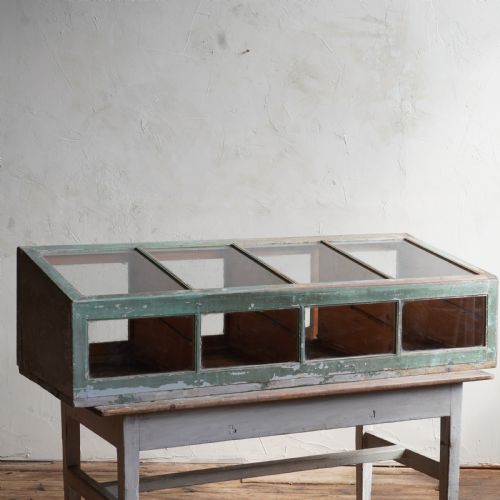
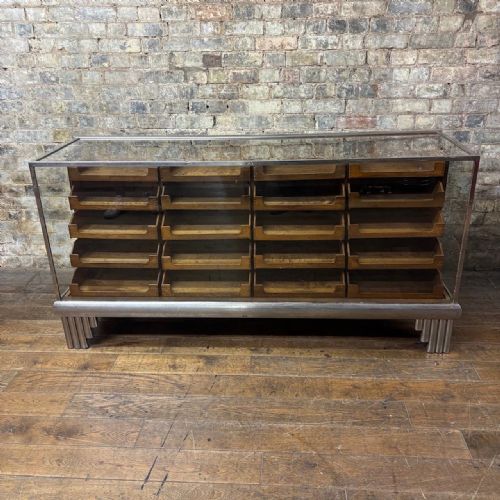
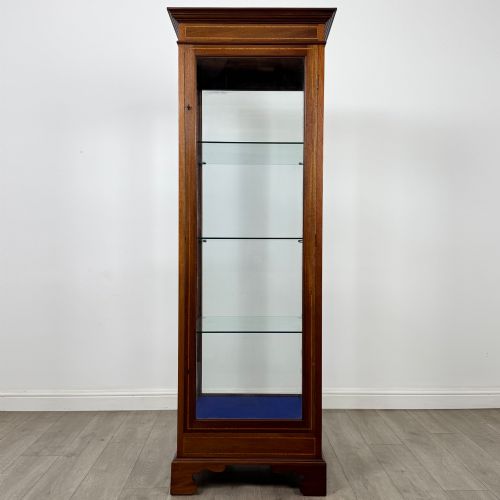


Vintage Counter Display Cabinet
A vintage counter display cabinet holds the merchandise of past merchants, bringing commercial heritage directly into domestic rooms with glazed panels and timber frames.
Vintage Counter Display Cabinet
A vintage counter display cabinet is a commercial fixture designed to present retail goods to customers while protecting them behind glass. These pieces span from the late nineteenth century through the Art Deco period, encompassing Edwardian and Victorian commercial fittings.
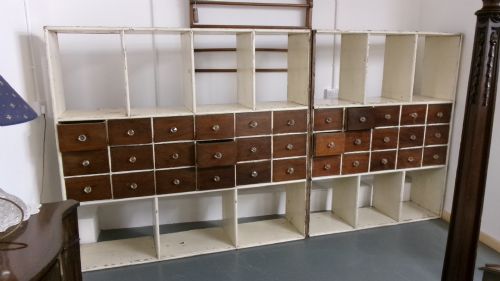
The selections range from compact countertop cases to large freestanding shop display counters and banks of drawers. Buyers encounter specialised pieces such as haberdashery cabinets, chemist shop fittings, and chocolate advertising units.
Origins vary from British workshop productions to French museum display cases and Hungarian pine shop fittings. Each form reflects the specific retail trades of grocery, pharmacy, and drapery for which they were originally built.
How They Were Made
Cabinetmakers utilised dense hardwoods like mahogany and oak for structural frames, alongside pine for secondary timbers and drawer carcasses. Metal elements including brass, chrome, and aluminium appeared in later twentieth-century frames and hardware.
Glazing formed the primary surface material, enclosing merchandise on multiple sides to maximise visibility. Construction methods prioritized utilitarian strength, resulting in durable joints and functional layouts suited to daily mercantile use.
Periods represented span from the Victorian era through Edwardian designs to 1930s Art Deco.
What Varies in Quality
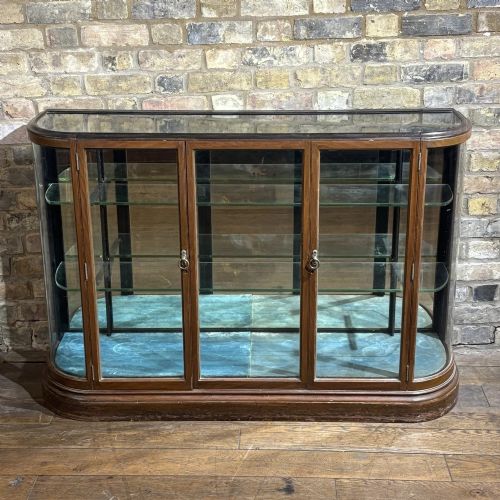
The standard of timber selection and joinery distinguishes workshop output, from utilitarian pine carcasses to refined mahogany frames with curved bow ends. Cabinet proportions and the presence of specialised interior elements like mirrored backs or multi-drawer banks dictate the grade of a piece.
Original surface finishes, whether polished wood, ebonized treatments, or authentic period paint, affect the integrity of the object. Maker attribution through brass plaques or branded lettering elevates the status of commercial fittings.
F. Sage & Co.·Dudley & Co·Manoah Rhodes & Sons Ltd
The Vintage Counter Display Cabinet Glossary
- Haberdashery cabinet
- A specialised storage unit featuring multiple shallow drawers, originally designed for ribbons, threads, and sewing notions.
- Vitrine
- A glass-paneled display case used for presenting delicate objects or merchandise.
- Ebonized
- Wood treated with a finish to imitate expensive ebony.
- Bow end
- A cabinet termination curved in a convex sweep.
- Shop fitting
- Furniture built specifically for commercial retail interiors.
Vintage Counter Display Cabinet: Frequently Asked Questions
How were display cabinets used in shops?
Merchants placed these cabinets on counters or shop floors to showcase small valuable goods while keeping them secure from handling.
Customers viewed items through glass panels while shopkeepers accessed the interior through rear doors or drawers.
Can I use these cabinets at home?
These pieces adapt well to domestic interiors for displaying collections, tableware, or personal items in living spaces and kitchens.
Countertop models sit easily on sideboards, while larger freestanding units function as standalone storage.
How do I identify the period?
Period identification relies on timber choices, construction techniques, and stylistic markers such as Art Deco geometric lines or Victorian mahogany framing.
Maker signatures, trade labels, and original advertising branding also point to specific decades.
What is an advertising display cabinet?
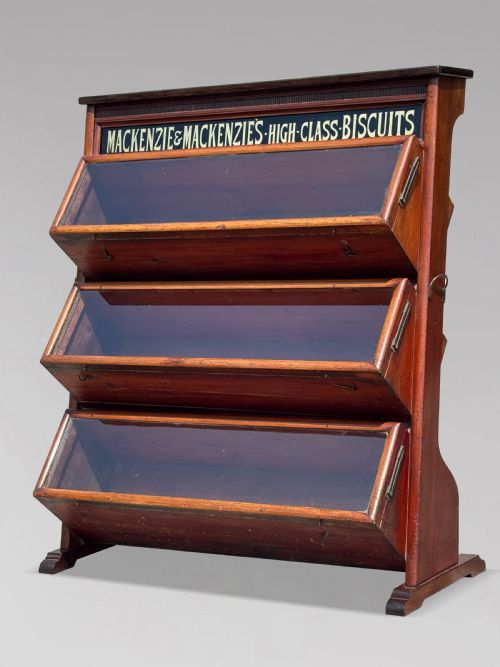
These cabinets incorporate brand names and graphics for products like chocolate, sewing cottons, or pharmaceuticals directly onto the glass or woodwork.
Manufacturers produced them to supply retailers who stocked their specific commercial goods.